Home Advice Career development
What a probation period means, and when you're protected
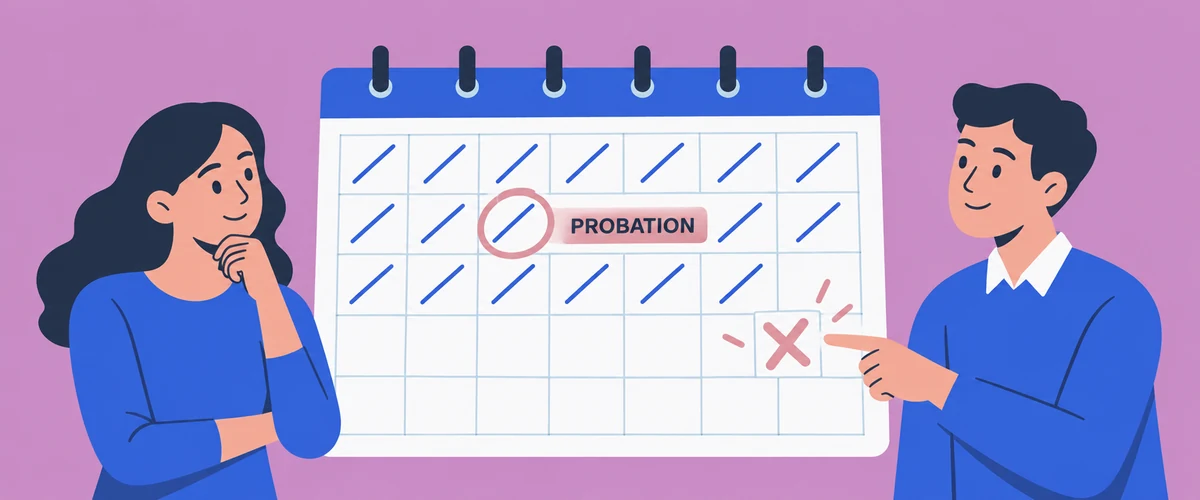
Key takeaways
- Probation is a contract term your employer chooses, commonly 3 to 6 months. Unfair dismissal protection starts on a separate date set by the Fair Work Act, 6 months, or 12 months at a small business with fewer than 15 employees.
- These two dates often don't match. A 3-month probation at a large employer doesn't bring forward your unfair dismissal protection to month 3, it still starts at month 6.
- You can be fired during probation, but you're still entitled to notice and any unused leave paid out. It isn't a period without rights.
Probation is a term of your contract. Unfair dismissal protection starts on a separate date set by the Fair Work Act, and the two often don't match.
A probation period is a trial phase at the start of a job, usually 3 to 6 months, where your employer decides how long it runs. It exists to check the role is a genuine fit before treating the position as settled.
Probation and unfair dismissal protection run on separate clocks
Probation length is a contract term, so your employer sets it. The Fair Work Ombudsman confirms it's usually 3 to 6 months, and there's no law that fixes it at any particular number.
Unfair dismissal protection starts on a completely different date, set by the Fair Work Act itself rather than your contract: 6 months of service, or 12 months if your employer has fewer than 15 employees. This is called the minimum employment period, and it runs regardless of what your contract says your probation is.
Because the two dates are worked out in different ways, one by agreement and one by statute, they often don't line up.
- 3-month probation at a large employer: you pass probation at month 3, but unfair dismissal protection still doesn't start until month 6. There's a 3-month gap where you've passed probation but aren't yet protected.
- 6-month probation at a small business (fewer than 15 employees): passing probation at month 6 doesn't bring the protection forward either, since the minimum employment period there is 12 months. The gap is wider again.
| Period | Who sets it | Usual length | What it decides |
|---|---|---|---|
| Probation period | Your employer, as a term of your contract | Usually 3 to 6 months | When the role is treated as a settled fit rather than a trial |
| Minimum employment period | The Fair Work Act | 6 months of service, or 12 months if your employer has fewer than 15 employees | When unfair dismissal protection starts |
Fair Work's own probation page doesn't mention the minimum employment period, which is one reason the connection between them is easy to miss. The two are governed by entirely separate parts of your employment, one contractual, one statutory, and neither one shortens the other.
So working out where you stand means keeping track of two dates rather than one. The first is the end of the probation period written into your contract. The second is either 6 or 12 months from the day you started, depending on the size of your employer.
Can you be fired during probation
Yes. An employer can end your employment during probation more easily than later on, since unfair dismissal protection likely hasn't started yet regardless of whether you're still technically "on probation".
That doesn't leave you without entitlements. Fair Work is explicit: if you don't pass probation, you're still entitled to receive notice when your employment ends, and to have any unused accumulated annual leave paid out. You also keep every other National Employment Standards entitlement while you're on probation, including accruing paid leave, the same as any other employee.
Can you resign during probation
Yes, and the notice you owe when you resign works the same way it does for any resignation: it comes from your contract, not from the National Employment Standards. Many contracts set a shorter notice period specifically for probation, sometimes as little as a few days or one week, so it's worth checking yours rather than assuming a standard month applies. How to write a resignation letter that leaves on good terms covers how to work out your actual notice period and what your last day affects.
Related articles

Farewell message to a colleague
Farewell message examples for a colleague who's leaving, from close teammates and managers to retirements and team cards, plus what to write.

Highest paying jobs in Australia, by median pay
The ATO top 10 ranks average taxable income rather than salaries. This page ranks 264 Australian occupations by typical full-time pay instead, with hours, entry requirements and projected growth alongside, and a filter for jobs that don't need a degree.
SMART goals at work, with examples for different jobs
What SMART goals are, where the idea came from, examples for six different jobs, and how to use them in performance reviews and career plans.