Home Advice
Career advice
Practical guides to the parts of Australian working life that are hardest to get straight: what you’re paid, what you’re owed, what to say in an interview, and how to leave well.

- Resume templateA clean Australian resume you can fill in and send.
- Career quizAnswer a few questions, get real roles back with pay and demand.
- Salary calculatorYour take-home pay, against the real median for your occupation.
- Browse rolesPay, day-to-day and where it leads, for 350 occupations.
Salary advice
Browse all
How to ask for a pay rise, and back it up with real numbers
What national wage growth looks like right now, how to work out a figure for your own role, wording you can adapt for the conversation, and what to do if the answer is no.
Read the guide
Salary sacrifice
Salary sacrifice is an agreement with your employer to give up part of your future pre-tax pay in exchange for benefits of similar value, such as extra super, a car through a novated lease, or everyday expenses if you work for a charity or public hospital.

The average salary in Australia (2026)
Full-time adults in Australia averaged $2,083.70 a week in May 2026. Several measures get called the average salary, and this explains which one fits your situation.
Career development
Browse all
Farewell message to a colleague
Farewell message examples for a colleague who's leaving, from close teammates and managers to retirements and team cards, plus what to write.

Highest paying jobs in Australia, by median pay
The ATO top 10 ranks average taxable income rather than salaries. This page ranks 264 Australian occupations by typical full-time pay instead, with hours, entry requirements and projected growth alongside, and a filter for jobs that don't need a degree.

SMART goals at work, with examples for different jobs
What SMART goals are, where the idea came from, examples for six different jobs, and how to use them in performance reviews and career plans.

The most useful degrees in Australia, by graduate outcomes
Graduate employment rates and starting salaries for every study area, from the 2025 Graduate Outcomes Survey, plus which professions are in shortage.
Resumes
Browse all
How to write a resume with no work experience
How to write a resume with no paid work experience, with what to list instead, the order to use and example entries for school leavers and graduates.

Should you put references on your resume?
Whether to write references available on request on an Australian resume, what the official guidance says, and how to have a referee list ready before you need it.

Skills to put on your resume (with skills finder)
A resume skills section built for the job you're applying for. Search your occupation to see the specialist skills, tools and general skills it calls for, with worked examples and what to write if you have no work history yet.
Cover letters
Browse all
Do you still need a cover letter in 2026?
Most advice online says skip the cover letter unless the ad asks for one. Australian government careers guidance says include one by default. This explains where the two positions differ and how to keep yours readable by an automated screen.

How long should a cover letter be
A cover letter should usually fit on one page. That's the standard in Australian government careers guidance.

How to start a cover letter
Starting a cover letter comes down to two decisions: who you address it to, and what your first paragraph says.
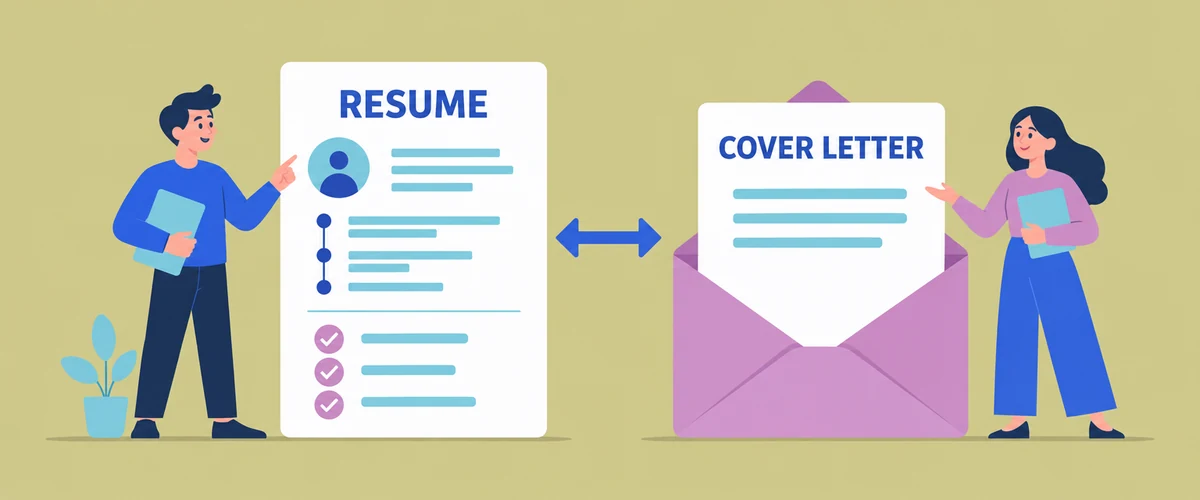
What goes in the cover letter and what goes in the resume
Your resume is the full record of what you've done: your jobs, dates, qualifications and skills, set out so an employer can scan it quickly.
Leave, benefits & entitlements
Browse all
Workplace skills
Browse all
Communication skills at work
Communication skills are the abilities you use to understand what other people need at work and to get your own information across to them.

Hard skills and soft skills
Hard skills are the technical abilities a particular job calls for, such as preparing a pay run, framing a wall or writing code.

Problem solving skills
Problem solving skills are what let you notice that something at work isn't going to plan, work out why, choose a fix and check that it worked.

Time management at work
Time management at work comes down to a few decisions you make again and again: what gets your attention first, how you protect time for work that needs concentration, and how you adjust when the day doesn't go to plan.
Job interviews
Browse all
How to prepare for a job interview
What to work through before a job interview: a prep sheet built from the job ad, the stories that cover most questions, and the questions an interviewer can't lawfully ask in Australia.

Questions to ask the interviewer
Near the end of most interviews, you'll be asked whether you have any questions. It helps to have two or three ready, chosen because you genuinely want to know the answers.

What to wear to an interview
A good rule for most job interviews is to dress a step more formally than the people who already do the job.
Resigning
Browse all
How to resign without burning bridges
Resigning well mostly comes down to the conversation and the few weeks that follow it. The letter matters, but it's short and it goes into a file.

How to write a resignation email (with examples)
A resignation email does the same job as a resignation letter: it says you're resigning and gives your last day.

How to write a resignation letter that leaves on good terms
A resignation letter template you can copy, five more for the situations that are harder to word, and what the last day you write down does to your final pay. No email address required.

Notice period when resigning
A notice period is the time between telling your employer you're resigning and your last day of work. There's no single length that applies to everyone.
Job search
Browse all
How to change careers, and which moves are realistic
Data on 1,573 career moves across 350 Australian occupations shows 63.3% need no more than a short course, though skill overlap alone won't tell you which ones. Six worked examples, and how to check your own move.

Year 10 work experience
How Year 10 work experience works in Australia, with the rules for every state and territory, placement ideas and a sample email to a business.
Employment types & entitlements
Browse all
Casual employment rights in Australia
Casual employment law changed in August 2024. What casual employees get under the National Employment Standards, the pathway to a permanent role, and whether you can be let go without notice.

Casual, part time or full time
The difference between casual, part-time and full-time work comes down to two separate questions. The first is whether your employer has made a firm commitment to ongoing work.
Redundancy
Browse all
Is redundancy pay taxed?
Redundancy pay is partly tax-free, but only up to a limit, and only when the redundancy is genuine in the tax sense.

Severance pay explained
In Australia, severance pay usually means redundancy pay: the lump sum an employer pays when your job is made redundant.

Voluntary redundancy and whether to take it
When an employer calls for volunteers before cutting jobs, the decision lands with you: put your hand up and leave with a package, or stay and see what the business looks like afterwards.

What you're owed when you're made redundant
What a genuine redundancy payout should include, the Fair Work redundancy pay scale, the ATO tax-free amount for the 2026-27 financial year, and how a lump sum can affect when JobSeeker starts.
Interview questions
Browse all
Behavioural interview questions and how to answer them
How to answer behavioural interview questions using STAR, with common questions, what they test, an example answer and tips for follow-up questions.

How to address key selection criteria
How to address key selection criteria in Australian job applications, with current public sector formats, the STAR method and an example response.

How to answer the strengths and weaknesses question
How to choose a strength and a weakness for your job interview, what to avoid, and example answers for roles from retail to data analysis.

How to answer why should we hire you in an interview
How to answer "why should we hire you" in a job interview, with example answers for a first job, a career change and an experienced candidate.
Applying for jobs
Browse all
How to ask someone to be your referee (with examples)
Four short messages to copy when you ask someone to be your referee, how to check they can give you a strong reference, and what to do if they say no or sound unsure.

How to decline a job offer, even one you've accepted
Four templates: the standard decline, declining for a better offer, declining over salary, and the harder case of backing out after you've already said yes.

How to follow up on a job application
When to follow up on a job application or interview, who to contact, what to say by email or phone, and when to stop waiting and move on.

How to write a job application email (with examples)
What to write in a job application email, how to word the subject line, whether to attach your cover letter, and how to name and format your files.
Workplace wellbeing
Browse all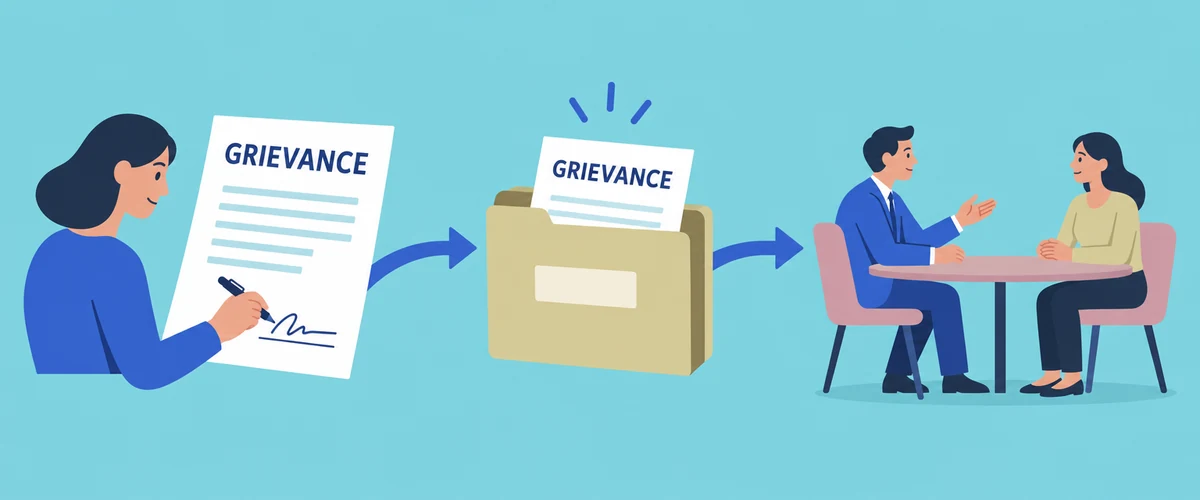
Raising a formal grievance
A formal grievance is a complaint you put to your employer in writing and ask it to deal with through a set process.

Resolving conflict at work
Most conflict at work is ordinary. Two people want different things, see the same problem differently, or have let a small irritation build up over a few weeks.

What happens when you report workplace bullying
What a Fair Work Commission stop-bullying order can and can't do, who can apply, how long the process usually takes, and where a general protections claim fits.

Workplace discrimination
How workplace discrimination works in Australia, the federal, Fair Work and state complaint options, their time limits and where to get help.
Working life
Browse all
Tools and templates
The parts of a career move that are quicker to calculate than to read about. All free, none of them ask for your email.
More advice topics
Browse careers by industry
Pay, demand and entry requirements across every occupation we cover.
- Agriculture & Animals
- Automotive
- Business & Analytics
- Creative & Design
- Education & Training
- Energy & Resources
- Engineering
- Finance & Accounting
- Government & Community
- Healthcare & Nursing
- Hospitality & Tourism
- HR & Administration
- IT & Software
- Legal & Compliance
- Manufacturing & Production
- Marketing & Media
- Personal Services
- Retail & Sales
- Science & Environment
- Sport & Recreation
- Trades & Construction
- Transport & Logistics