Communication skills at work
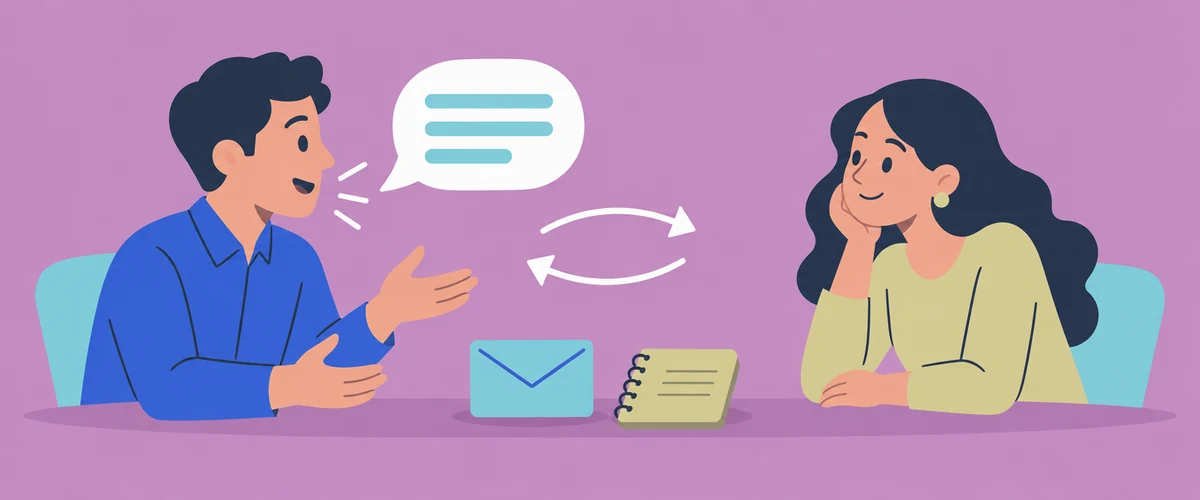
Communication skills are the abilities you use to understand what other people need at work and to get your own information across to them. They cover speaking, listening, writing and the non-verbal signals that go with all three, such as tone of voice and facial expression. They also include a less obvious judgement: choosing the right way to deliver a message, whether that's a quick word at someone's desk, a phone call or a written email that people can refer back to.
Almost every job relies on them, although what good communication looks like changes from one role to the next. A nurse's handover, an electrician's safety briefing and a customer service reply all need clear information, but each has its own conventions, vocabulary and audience. Below are the main types, how they develop, some practical ways to improve them and how to show them to an employer.
The main types of communication skills
Lists of communication skills vary, and there's no single official set. These groupings cover what most jobs draw on.
- Verbal communication: explaining, instructing, asking questions and contributing in conversations and meetings, in person, on the phone or on a video call.
- Listening: taking in what someone has said, checking you've understood it and responding to what they actually meant.
- Written communication: emails, messages, reports, case notes, forms and any other writing that someone else needs to read and act on.
- Non-verbal communication: tone, pace, facial expression, posture and gesture, which shape how your words are received.
- Adapting to the audience and setting: adjusting your language, level of detail and formality for the person in front of you, and choosing a suitable channel for the message.
Australia's Core Skills for Work Developmental Framework, published by the federal government to describe non-technical skills that underpin work, treats communicating for work as using communication to achieve work outcomes. It breaks the skill into four focus areas: following the communication practices of a workplace, speaking and listening, understanding and acting on messages, and getting your own message across. A message at work has done its job when the other person understands it well enough to act on it.
Verbal communication
Much of the verbal communication in a job is routine: greeting a customer, answering the phone, giving someone directions or passing on an update. These exchanges go more smoothly when you know what you want the other person to take away. If you're explaining a process to a new starter, for example, it can help to give the overall goal first and then the steps, so each step makes sense as you go.
In meetings, contributing well usually means making your point in a sentence or two, linking it to what's already been said and leaving room for others. If you find it hard to speak up, preparing one or two points beforehand can make it easier to join in.
Workplaces also have their own spoken conventions. The way you'd raise a problem with a colleague you work beside every day is often different from the way you'd raise it with a senior manager or a client. Picking up those unwritten rules is part of settling into any new job, and it's reasonable to ask a trusted colleague how things are usually done.
Listening
Listening is easy to leave off a list of communication skills, but a clearly explained instruction still goes wrong if it isn't fully taken in. Good listening means paying attention to the detail, noticing what the person seems most concerned about and checking your understanding before you act.
Two habits help in most situations. The first is asking a clarifying question when an instruction could be read more than one way, such as "When you say by the end of the week, do you mean Friday morning or close of business?" The second is summarising back what you've heard: "So you'd like the draft by Thursday, and the figures can wait until next week?" Both give the other person a chance to correct a misunderstanding before it turns into extra work.
Written communication
Written messages don't come with a tone of voice or a chance to clarify on the spot, so they need to carry more of the meaning on their own. A few principles apply to most workplace writing:
- Put the purpose early. If you need a decision, an answer or an action, say so in the first line or two, then give the background.
- Match the length to the task. A quick question can be one sentence. A report that someone will use to make a decision needs enough detail to support it.
- Use words your reader knows. Technical terms are fine with colleagues who share them, but a client or someone from another team may need a plainer explanation.
- Make it easy to act on. Dates, names, numbers and next steps are easier to find when they aren't buried in the middle of a long paragraph.
Before sending anything important, it's worth reading it once as the recipient would. If they could reasonably reply "What do you need from me?", the message probably needs another line. Choosing the channel is part of the same skill. Something complicated or sensitive is often better discussed in person or on a call first, then confirmed in writing so everyone has the same record. A simple update that people only need to know about may suit an email or a team message.
Non-verbal communication
Non-verbal communication includes your tone, facial expressions, eye contact, posture and gestures. These signals can reinforce what you're saying or contradict it. Saying "happy to help" in a flat voice while looking at your screen sends a different message from saying it while turning to face the person.
Interpreting non-verbal signals takes some care, because they don't have a fixed meaning. Expectations around eye contact, personal space and gesture differ between cultures, and some people find sustained eye contact uncomfortable, so a lack of it doesn't necessarily mean someone isn't interested. If you're unsure how a message has landed, asking is usually more reliable than reading body language.
On a phone call, your tone and pace have to do the work your expression would do in person. On video, looking towards the camera when you speak and nodding while others talk can show you're following.
How communication skills develop
Communication skills keep developing throughout a working life, and most people are stronger in some situations than others. The Core Skills for Work framework describes five stages of performance, from novice to expert, which give a sense of what progress can look like:
- At the early stages, people tend to rely on scripts and templates for routine tasks, such as a standard greeting or a set email format, and ask questions when encouraged to.
- A capable performer takes part in a range of formal and informal conversations about their role, asks clarifying questions and adjusts their language and style for familiar audiences.
- At the expert end, people take the lead in complex conversations, draw out other people's ideas and adapt their approach for different situations.
The framework also notes that performance depends on context. Someone who communicates confidently in a job they know well may be less sure of themselves in a new workplace or industry. Skills built outside paid work, such as organising a community group or coaching a junior sports team, are transferable skills that can also carry over into a job.
How to improve your communication skills
Improvement tends to come from practice in real situations, combined with some feedback on how it went. These approaches suit most jobs:
- Ask for specific feedback. "Was that email clear?" or "Did my update in the meeting give you what you needed?" is easier for a manager or colleague to answer than a general question about how you communicate.
- Notice what works for others. Pay attention to the colleagues whose emails are easy to act on or whose explanations people follow, and consider what they do differently.
- Prepare for conversations that matter. Before a meeting, a performance review or a difficult phone call, write down the two or three points you want to make and any questions you need answered.
- Practise summarising. After a meeting or a long set of instructions, write a short summary of the decisions and next steps. Sharing it can help the rest of the team too.
- Take on tasks that stretch the skill. Training a new starter, presenting at a team meeting or writing a process guide gives you practice with a different audience.
Showing communication skills on your resume and in an interview
Employers do look for these skills when they hire. A Jobs and Skills Australia survey asked 499 employers who had recently recruited what they looked for, between August and October 2022. At the application stage, 17% named communication and interpersonal skills. At interview, 22% did, making them the fourth most commonly mentioned quality. Employers could give more than one answer, and the survey grouped communication with interpersonal skills.
"Excellent communication skills" is a common line on resumes, though, so on its own it tells an employer very little. It's more convincing to describe a situation where your communication made a difference to the work. The skills for your resume guide covers how to build a skills section; for communication specifically, it helps to name the audience, the format or the outcome.
These example resume lines show the difference. Adjust the details so they reflect your own work:
- Generic: "Excellent written and verbal communication skills." More specific: "Wrote weekly project updates for clients with no technical background."
- Generic: "Strong customer service communication." More specific: "Handled phone enquiries and complaints for a busy reception desk, escalating only issues that needed a manager."
- Generic: "Good team communicator." More specific: "Ran the daily start-of-shift briefing for a kitchen team of eight."
In an interview, your communication skills are on show from the first question, often tell me about yourself. Answering clearly, listening to what you're actually asked and checking when a question is unclear all demonstrate the skill as you go. If you're asked for an example of communicating well, preparing a short story in advance helps, and preparing for an interview explains how to structure one using the STAR method. A clear, well-targeted cover letter is also a piece of evidence in itself, because it's often the first thing an employer reads from you.
Article sources
- Department of Employment and Workplace Relations, Core Skills for Work Developmental Framework
- Jobs and Skills Australia survey
- Department of Employment and Workplace Relations, pdf
- Department of Employment and Workplace Relations, pdf
- Department of Employment and Workplace Relations, australian core skills framework acsf
- Jobs and Skills Australia, How employers recruit Report
- Jobs and Skills Australia, australian skills classification
- Jobs and Skills Australia, national skills taxonomy
Related articles
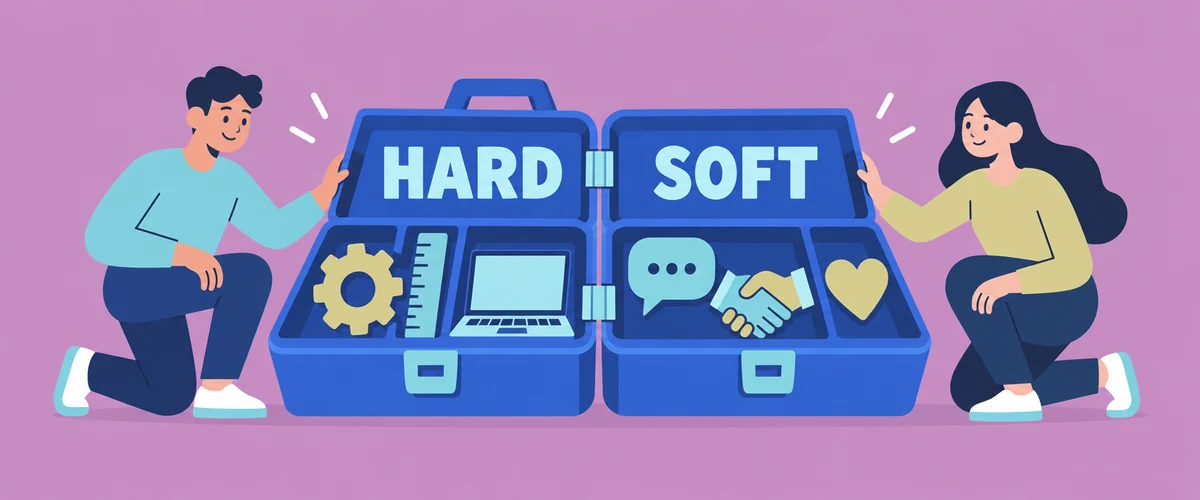
Hard skills and soft skills
Hard skills are the technical abilities a particular job calls for, such as preparing a pay run, framing a wall or writing code.
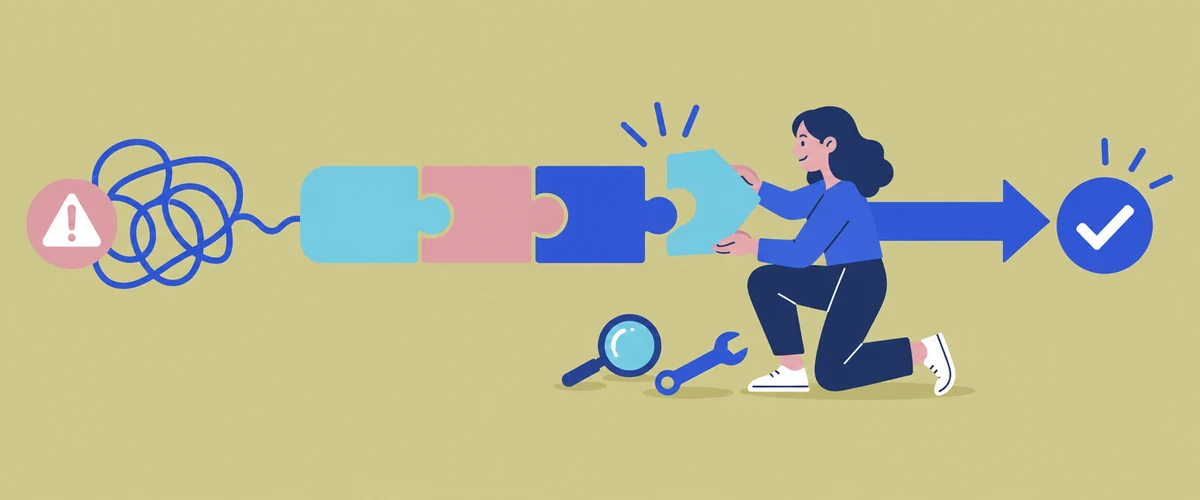
Problem solving skills
Problem solving skills are what let you notice that something at work isn't going to plan, work out why, choose a fix and check that it worked.
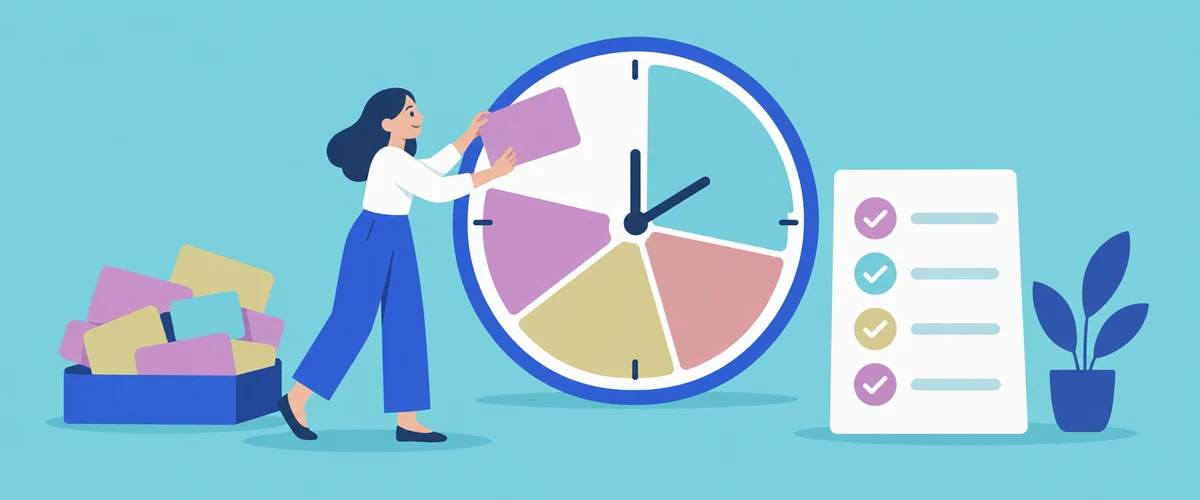
Time management at work
Time management at work comes down to a few decisions you make again and again: what gets your attention first, how you protect time for work that needs concentration, and how you adjust when the day doesn't go to plan.