Do you still need a cover letter in 2026?

Key takeaways
- If a job ad asks for a cover letter, it isn't optional. Leaving it out is usually enough to have your application set aside.
- When the job ad doesn't mention one, Australian government careers guidance defaults to including a short one anyway. That's a firmer standard than most international recruiter advice, which says skip it unless asked.
- If you do write one, simple formatting matters more than clever wording. Tables, columns and unusual fonts can be mangled by automated application systems before a person ever reads it.
Whether a cover letter is still expected depends a lot on which guidance you happen to read, and the Australian government advice is firmer than most of what ranks for the question.
When the job ad requests one, the answer is straightforward: write it, since skipping a requested document is usually enough on its own to have an application set aside. The harder question is what to do when the ad doesn't mention a cover letter at all, and the guidance you find on that point does not agree with itself.
Where the advice splits
Most of what ranks for this question arrives at a similar answer. Recruiter blogs, discussion threads and international careers sites tend to suggest writing one for a role you particularly want, skipping it for high-volume or automated applications, and treating it as optional whenever the ad says it's optional.
Australian government careers guidance sets a firmer default. Youth Central, run by the Victorian Government, says: "You should always include a cover letter, unless the job advertisement clearly says not to." JobAccess, the Australian Government's own employment service, says: "Most job applications need a cover letter."
Neither government source hedges the way the recruiter advice does, and both positions are reasonable once you notice who each one is written for. The international advice speaks to someone weighing up whether an extra document is worth the effort. The government guidance speaks to someone who could be passed over for leaving a document out. Where the ad says nothing either way, writing a short letter costs you an hour and covers you against the stricter reading.
When it's reasonable to leave it out
The advice online is on firmer ground about the exceptions, and there are a few situations where a cover letter has nowhere to do its work:
- The application system gives you nowhere to attach one
- The ad explicitly says a cover letter isn't needed
- You're applying through a very high-volume automated process where a resume is genuinely all that gets reviewed at the first stage
Outside those specific cases, the safer default is to include one.
If you write one, make sure it survives the screening
A carefully worded cover letter is wasted if the system reading it can't make sense of the formatting. JobAccess's guidance on this is aimed at making sure an application actually gets through an automated system, and it is worth following whatever your situation:
- Use a standard font like Calibri or Arial, around 12 point
- Avoid tables, columns or graphics, which some automated systems can't read properly
- Put your name and phone number in the header or footer of every page, in case pages get separated
- Number your pages
- Leave real space between paragraphs and in the margins
Plain formatting won't improve what a letter says, but it does mean the version a person reads is the one you wrote. From there, how to start a cover letter covers what to write first.
Related articles
How long should a cover letter be
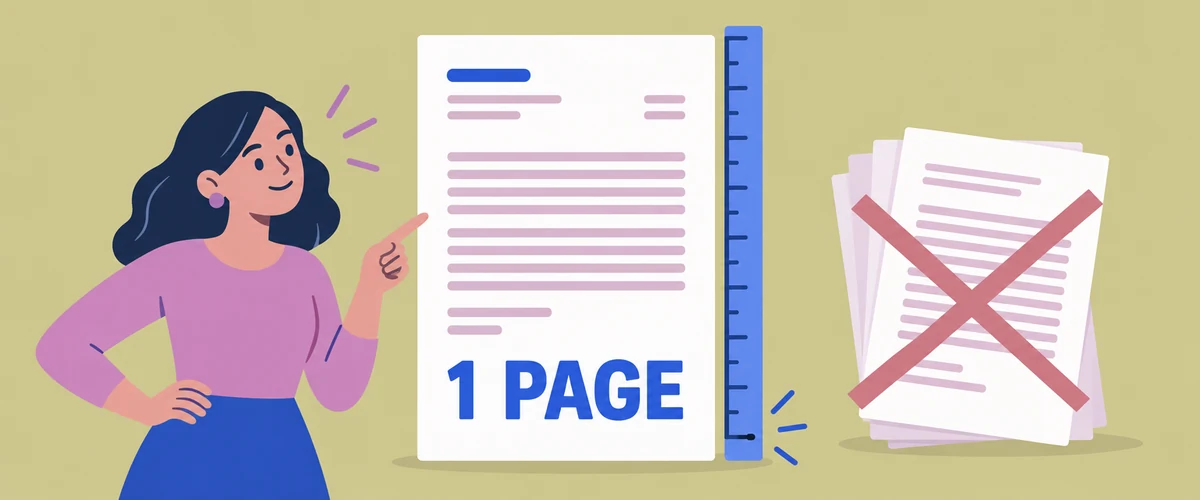
A cover letter should usually fit on one page. That's the standard in Australian government careers guidance.

How to start a cover letter
Starting a cover letter comes down to two decisions: who you address it to, and what your first paragraph says.
What goes in the cover letter and what goes in the resume
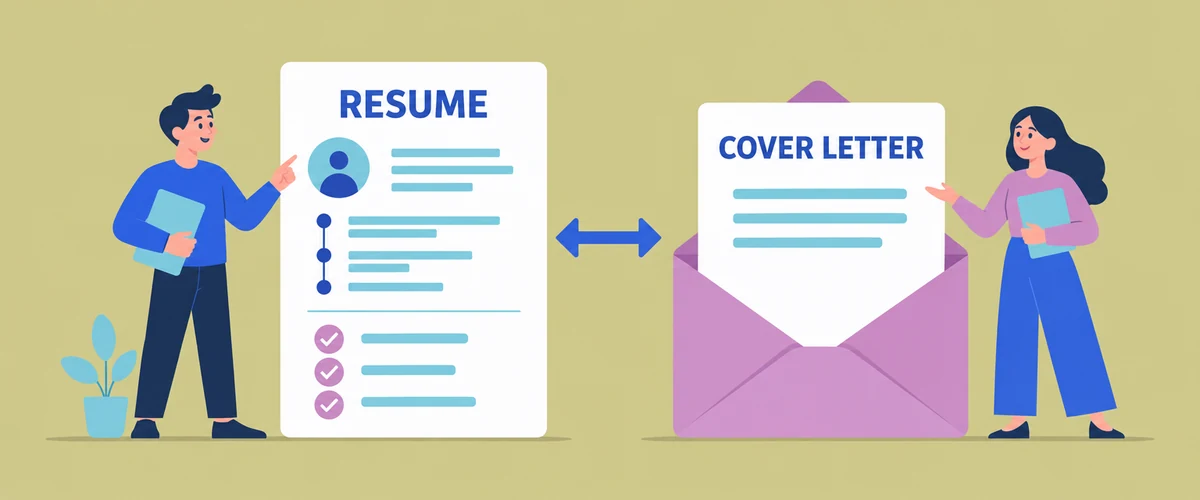
Your resume is the full record of what you've done: your jobs, dates, qualifications and skills, set out so an employer can scan it quickly.