How long should a cover letter be
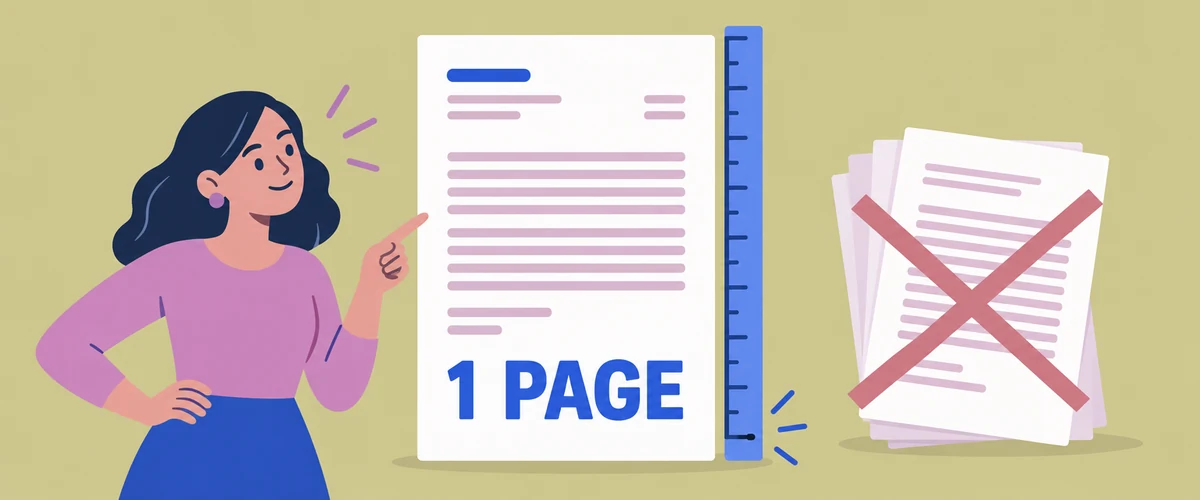
A cover letter should usually fit on one page.
That's the standard in Australian government careers guidance. [Youth Central](https://www.youthcentral.vic.gov.au/jobs/resumes-and-cover-letters/how-write-cover-letter) says not to write more than one page, and the [Queensland Government](https://www.qld.gov.au/jobs/finding/resume) says a one-page letter is all you need. [Careers Vic](https://www.careers.vic.gov.au/how-to-apply/how-to-apply-for-a-job) describes a good cover letter as usually one page. The main exception is when the job ad or application pack sets its own length, which is common for public sector roles. In that case, follow the instruction in the ad.
What fits on one page
On an A4 page with standard margins and an 11 or 12 point font, a letter has room for roughly 400 to 500 words of body text. That's after your contact details, the date, the greeting and the sign-off are in place. A letter that sits comfortably on the page, with space between paragraphs, is often closer to 250 to 400 words.
That's usually enough for three to five short paragraphs. The first names the job and gives the reader a reason to keep going, covered in more detail in how to start a cover letter. One or two paragraphs in the middle show how your experience matches what the role needs, using a specific example or two. A short closing paragraph says you'd welcome the chance to discuss the role and points the reader to your resume.
A page is enough because your resume already holds the detail. Youth Central describes the cover letter as a summary of your resume and suggests letting the resume tell the whole story. So the letter only needs to pick out what matters most for this role and explain why it fits. A short bullet list of relevant skills is fine if it helps the reader see the match quickly, and Youth Central suggests this too.
A letter well under a page isn't a problem in itself. If three tight paragraphs cover why you're applying and what you'd bring, there's no need to add more. The risk with a very short letter is that it says nothing specific to the job, and in that case a concrete example of relevant work will help more than extra length.
When a longer letter is expected
Public sector applications are the most common exception. Many state and federal agencies ask the cover letter to do more than introduce you, because it also carries your response to the role's selection criteria or focus capabilities, and the expected length grows to match.
- NSW Government: the Department of Communities and Justice and NSW Department of Education both describe a good cover letter as brief, usually one to two pages, with specific examples of what you've done.
- Australian Public Service: the Australian Public Service Commission says many agencies now want your CV and a one or two page document setting out how your skills and experience fit the job. Some call this a pitch, and the limit might be set in pages or as a word count such as 1,000 words.
- Victorian Government: Careers Vic says that when a job has key selection criteria, you may be asked to answer them in a separate document or include your responses in the cover letter. Check which one the ad wants before deciding how long yours needs to be.
Whatever the limit, treat it as a maximum. The APSC advises sticking to any word or page limit that has been set, and its list of things to avoid includes writing lengthy responses. A panel reading dozens of applications will usually find a clear page and a half easier to assess than two crowded pages.
The job ad, position description and any information pack are the places to look for the limit. If they don't say, or the instructions seem to conflict, the contact officer named in the ad can tell you what the panel expects.
If the application uses a text box
Some online application forms ask you to type or paste your cover letter or pitch into a text box instead of uploading a document. These boxes may have a word or character limit, and the form might cut off anything over it or refuse to submit.
It can help to write your response in a document first, where you can edit and spell check it, then paste it in and check the whole response made it through. Formatting such as bold text, bullets and line spacing may not carry across, so read it again in the box and add back any paragraph breaks that disappeared. If the limit is in characters, check whether it counts spaces, because that can make a real difference to how much you can say.
How to shorten a cover letter
If your draft runs long, cutting content is more effective than squeezing it onto the page with a smaller font or narrower margins. A page crammed to the edges is harder to read, and the DCJ guidance suggests a simple, professional font at 11 point.
These edits usually free up the most space:
- Remove what repeats your resume. Keep a detail only if the letter adds something the resume can't, such as why that experience matters for this job.
- Use your strongest examples. One well-explained example tends to do more than several listed briefly. The APSC gives similar advice for selection criteria, suggesting one or two of your strongest examples.
- Keep one idea to each paragraph. The Australian Government Style Manual recommends one idea per paragraph and keeping letters as short as possible by leaving out unnecessary detail.
- Cut general claims you haven't shown. Describing yourself as hardworking or a great communicator takes up space without giving the reader anything to check. An example of the work does that job better.
If your letter does run to a second page because the ad allows it, put your name and phone number on each page and number the pages, so nothing is lost if pages are separated. There's more on formatting a letter so automated application systems can read it in the guide on whether you need a cover letter.
Related articles

Do you still need a cover letter in 2026?
Most advice online says skip the cover letter unless the ad asks for one. Australian government careers guidance says include one by default. This explains where the two positions differ and how to keep yours readable by an automated screen.

How to start a cover letter
Starting a cover letter comes down to two decisions: who you address it to, and what your first paragraph says.
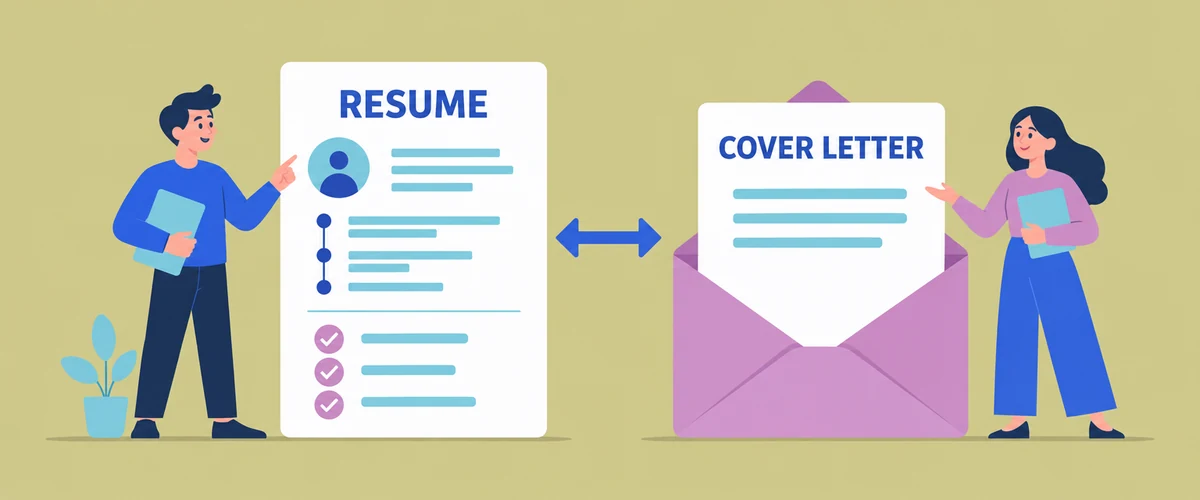
What goes in the cover letter and what goes in the resume
Your resume is the full record of what you've done: your jobs, dates, qualifications and skills, set out so an employer can scan it quickly.