Trade Measurement Inspector
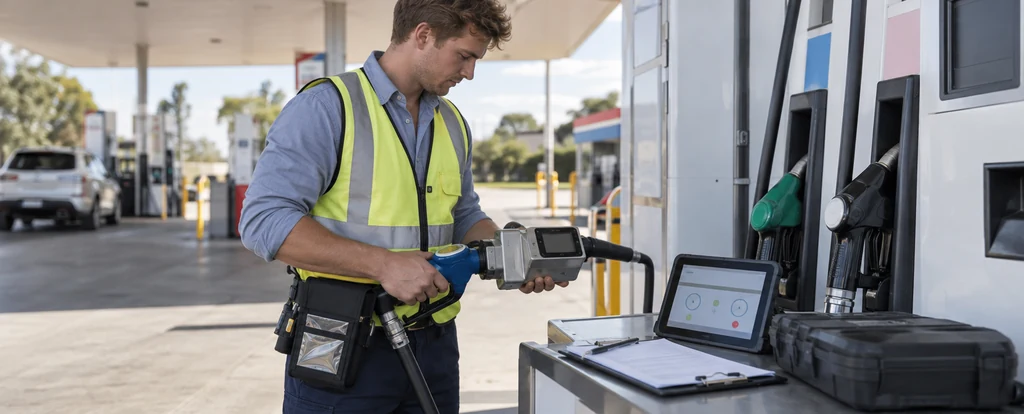
Trade measurement inspectors check the scales, fuel dispensers, weighbridges and packaged goods used in trade, so that customers get the amount they pay for.
- Median salary*
- $83,200
4.0%vs last year, before tax
- People employed*
- 400
0.0%vs last year
- Projected growth*
- +2%
to 2035
- AI exposure*
- Moderate
- automation risk
- Average hours*
- 38/wk
−2h vs all jobs
- Shortage status*
- Not in shortage
national
Most trade measurement inspectors work for a state or territory fair trading or measurement agency, and the National Measurement Institute maintains the standards they test against. Days are spent on the road visiting service stations, shops, markets, factories and weighbridges rather than sitting at a desk. The job sits close to other inspection and compliance roles, but what sets it apart is the instrument itself: testing it against certified standards, sealing it when it passes and explaining the requirements to the business that uses it.
How much do trade measurement inspectors earn?
The median full-time salary for a trade measurement inspector is $83,200 per annum, before tax, up $17,400 since 2018.
Most trade measurement inspectors are public servants, so pay follows the classification and enterprise agreement of the agency they join rather than a negotiated salary. Allowances for travel and higher duties sit on top of the base rate, and some schedules include weekend or early morning work at markets and depots. Movement between classifications is usually tied to the qualifications and responsibilities the agency recognises.
What does a trade measurement inspector do day to day?
The list below is what fills most weeks; the exact mix shifts with seniority and whatever stage the current work is at.
- Testing scales, fuel dispensers, weighbridges and packaged goods against certified standards
- Visiting shops, markets, service stations and factories to inspect instruments in use
- Investigating complaints from customers and businesses about short measure
- Sealing instruments that pass and issuing notices when they do not
- Explaining measurement and labelling requirements to retailers and manufacturers
What skills do trade measurement inspectors need?
Employers look for regulatory compliance, regulatory and administrative law, operations management, backed by Calibration management software fluency and strong attention to detail.
Specialist skills
- Regulatory compliance
- Regulatory and administrative law
- Operations management
Software and tools
- Calibration management software
- Trade measurement inspection systems
- Mobile inspection apps
- Microsoft Excel
General skills
- Attention to detail
- Problem solving
- Written communication
- Stakeholder management
Is the job growing?
About 400 people work as trade measurement inspectors in Australia, and employment is projected to grow 2% over the decade to 2035. That's modest growth: demand is steady rather than booming.
How do you become a trade measurement inspector?
Here's the path most trade measurement inspectors take, step by step.
- 1Build a base qualification
Year 12 is the usual minimum, and entrants often arrive from a trade, laboratory, retail or warehousing background where they have handled measuring equipment. A certificate III or IV in a technical or government field strengthens an application.
- 2Apply through a state or territory agency
Recruitment runs through the fair trading or measurement agency in each state or territory, with a police check and sometimes a working with children check. Intakes are small and irregular, so it pays to watch agency recruitment pages rather than wait for a general advertisement.
- 3Complete agency training and a certificate IV
New inspectors learn the national trade measurement law and the instrument types they will test, usually alongside a certificate IV in government or compliance. This training is generally paid and completed on the job.
- 4Build competence across instrument types
Fuel dispensers, weighbridges, prepackaged goods and retail scales each have their own testing procedures and tolerances. Inspectors who can cover several of them, and who give evidence that holds up if a matter is disputed, take on the more complex investigations and specialist roles.
Ready to apply as a trade measurement inspector?
Whether you're working toward becoming a trade measurement inspector or already are one and want a hand with the next step (sharpening your resume for ATS screening, tightening your cover letter, or knowing what you'll actually be asked at interview), here are examples grounded in this specific role, not generic templates.
What jobs can a trade measurement inspector move to?
Moving into Regulatory Affairs Manager typically comes with the biggest pay rise, worth $41,600 a year more on average.
| Move to | Typical pay change | Overlap | Retraining |
|---|---|---|---|
| Regulatory Affairs Manager Steps up to lead regulatory compliance strategy, using inspection experience and requiring further study in regulatory affairs. | +$41,600 | 41% | requalify |
| Transport Operations Inspector Uses the same inspection and enforcement approach to check transport operations against safety and compliance requirements. | +$5,200 | 59% | short course |
| Compliance Officer Moves into broader regulatory compliance work, applying inspection and enforcement skills to monitor adherence with fair trading laws. | +$4,200 | 53% | short course |
| ISO Auditor Applies auditing and standards knowledge to assess management systems, building on the inspector's compliance and measurement background. | −$9,400 | 37% | reskill |
Moves are chosen from Jobs and Skills Australia's Data on Occupation Mobility, which follows income tax records between 2011-12 and 2020-21, together with entry requirements and skill overlap. A known move is one people were seen making in that data. Pay change compares median full-time pay for the two roles.
Who works as a trade measurement inspector?
The typical trade measurement inspector is 45 years old; 70% are men, 85% work full-time, and full-timers average 38 hours a week.
- 45
- Median age
- 30%
- Female share
- 85%
- Full-time
- −2h
- vs all-jobs avg
What's it like being a trade measurement inspector?
The work runs on a schedule of site visits, so it suits someone who likes being out and about and finishing what they start. Each visit follows the same shape: test the instrument against certified standards, record the result and either seal it or tell the business what has to change. Much of it is done alone, and the pressure comes from getting the evidence right when a business disagrees with the finding.
What people like
- Every site is different. A week can take in a suburban service station, a wholesale market, a food factory and a public weighbridge, so the setting changes even when the testing procedure does not.
- The answer is measurable. Either the instrument is within tolerance or it isn't, and you can show the business the test that produced the result.
- The public benefit is direct. A fuel dispenser or retail scale that is out by a small margin costs customers money on every transaction, and correcting it is the point of the job.
- You organise your own rounds. Inspectors plan their own visit schedules across a region, which gives some control over how the day is shaped.
What people find hard
- Difficult conversations are routine. Telling a small business that its scales fail the test, and following up with a notice when nothing changes, is a regular part of the work.
- Long drives on regional rounds. Inspectors responsible for country areas can spend hours travelling between sites, with occasional nights away from home.
- Few openings. The occupation is small and concentrated in the public sector, so vacancies depend on recruitment rounds rather than steady turnover.
- Enforcement paperwork has to stand up. Records, photographs and statements need to be precise enough to support a prosecution if a matter goes further, which takes time after the site visit is over.
Based on our synthesis of professional-body surveys and public accounts of the role, not first-person verified reviews.
Which industries employ trade measurement inspectors?
Public administration and safety employs the largest share of trade measurement inspectors, followed by Professional, scientific and technical services.
Top employing industries
- 1Public administration and safety
- 2Professional, scientific and technical services
- 3Retail trade
- 4Manufacturing
Ranked by employment share; the source doesn't publish an exact percentage per industry.
| Certificate III/IV | 34% | |
|---|---|---|
| Diploma / Advanced Diploma | 26% | |
| Bachelor degree | 20% | |
| Year 12 or below | 20% |
Will AI replace trade measurement inspectors?
AI and automation reach the paperwork around this job more than the testing itself, so exposure sits at a moderate level. Calibration management software already tracks instrument histories and schedules, and mobile inspection apps cut the time spent writing up results, but the physical verification with certified weights and the legal decision about a breach both stay with the inspector.
Share of typical working time by exposure level
- Field testing and inspection of instrumentsSomeone still has to carry the test weights to the site, run the check on a fuel dispenser or retail scale and confirm the reading, though an app now records the outcome on the spot rather than on paper.40%low
- Reports, notices and recordsTemplates and calibration management systems draft much of the routine paperwork, leaving the inspector to supply the facts and sign off on a notice that carries legal weight.25%moderate
- Complaint investigation and evidence gatheringSoftware can pull up an instrument's history and flag patterns across a region quickly, but deciding whether a complaint is substantiated still depends on what the inspector measured and saw.20%moderate
- Advising retailers and explaining requirementsThis is a conversation about what the law requires and what the business has to change, and it depends on reading how the site actually operates.15%low
Common questions about becoming a trade measurement inspector
Straight answers to the questions people ask most.
How much do trade measurement inspectors earn?
Trade measurement inspectors earn a median of $83,200 per year before tax, as a guide. Because almost all of them are public servants, the figure depends on the classification and enterprise agreement of the agency they work for, and travel allowances or higher duties can add to it.
How do you become a trade measurement inspector?
Most people enter through a recruitment round at a state or territory fair trading or measurement agency, then complete paid in-house training and a certificate IV in government or compliance. A trade, laboratory or retail background helps, because it means you already know how measuring equipment is used. Police checks are standard, and some agencies also require a working with children check.
Are trade measurement inspectors in demand?
Trade measurement inspectors are currently not in shortage, and employment is projected to grow 2% over the decade to 2035. About 400 people work in the role nationally, so openings are limited and usually appear as public sector recruitment rounds rather than continuous hiring. Watching individual agency job pages is more useful than waiting for a general advertisement.
Will AI replace trade measurement inspectors?
Automation has taken over more of the paperwork than the testing. Calibration management systems, mobile forms and data analysis now handle scheduling, instrument histories and spotting odd patterns, but a person still has to run the physical test with certified weights and decide whether a breach has occurred. The work is more likely to change in how evidence is recorded than to disappear.
What can trade measurement inspectors move into?
Many move into wider compliance and inspection work, where the same investigative and enforcement skills carry over. A compliance officer role brings $4,200 more and covers fair trading and consumer law more broadly, while a transport operations inspector role pays $5,200 more and applies the same approach to transport safety. Regulatory affairs manager pays $41,600 more, though it usually needs further study in regulatory affairs and a step into leading strategy rather than doing inspections.
Do trade measurement inspectors work alone?
Most site visits are done solo, with the inspector arriving unannounced and working through the test on their own. Joint visits happen when an investigation involves another agency, such as police or local council officers, and new inspectors are paired with an experienced colleague while they learn.
Related roles
- Compliance Officer
- Transport Operations Inspector
- ISO Auditor
- Regulatory Affairs Manager
- Compliance Officer
- Transport Operations Inspector
Not sure this is you? Take the career quiz and get a ranked shortlist of roles that fit how you like to work.