Aerospace Engineer
Aerospace engineers design and test the structures, engines and control systems that keep aircraft and spacecraft flying safely.
- Median salary
- $137,700
4.2%vs last year, before tax
- People employed
- 1,400
0.0%vs last year
- Projected growth
- +23%
to 2035
- AI exposure*
- Moderate
- automation risk
- Average hours
- 42/wk
+2h vs all jobs
- Shortage status
- In shortage
national
Most aerospace engineers work for defence contractors, civil aviation manufacturers, research agencies or space companies, in teams that bring together structures, propulsion, avionics and software specialists. The role runs from a first concept through simulation and physical testing to the certification evidence a regulator signs off. It is often confused with aircraft maintenance engineering, which keeps existing aircraft airworthy rather than designing new systems.
How much do aerospace engineers earn?
The median full-time salary for an aerospace engineer is $137,700 per annum, before tax, up $29,000 since 2018.
Pay follows the employer more than the job title: defence contractors and large manufacturers work under enterprise agreements that set bands by classification, while smaller consultancies and space companies negotiate more individually. A security clearance, chartered status through Engineers Australia and a specialisation such as avionics or propulsion all tend to lift offers. Project-based contracts can pay well but usually trade away leave and long-term security.
What does an aerospace engineer do day to day?
The list below is what fills most weeks; the exact mix shifts with seniority and whatever stage the current work is at.
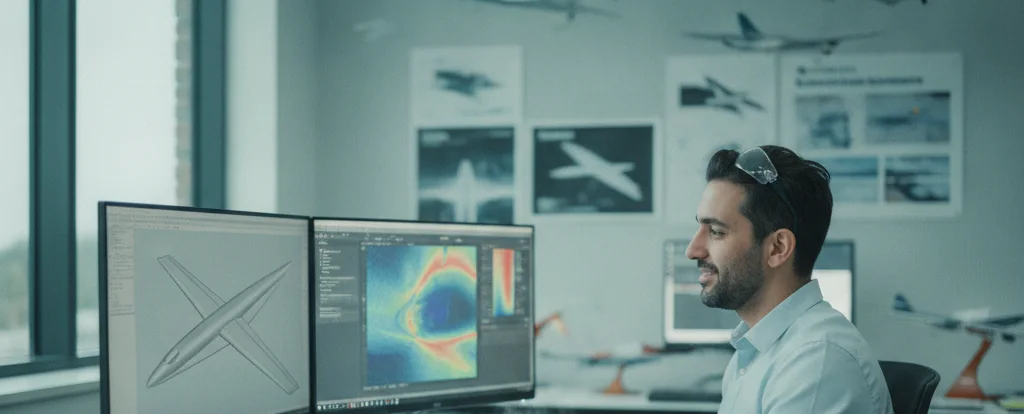
- Modelling a wing, engine mount or control system in CAD, then running simulations to see how it holds up
- Trading design changes with structures, propulsion and avionics teams until a component works for everyone
- Working through test data from wind tunnels, ground rigs or flight trials to check a design behaves as predicted
- Writing specifications and certification evidence in enough detail for a regulator or customer to sign off
- Revisiting a design more than once when certification requirements or test results force changes
What skills do aerospace engineers need?
Employers look for engineering design and analysis, cAD and technical drawing, project engineering and delivery, backed by CATIA fluency and strong problem solving.
Specialist skills
- Engineering design and analysis
- CAD and technical drawing
- Project engineering and delivery
- Regulatory compliance
- Data analysis
Software and tools
- CATIA
- ANSYS
- MATLAB
- NX (Siemens)
- Git
General skills
- Problem solving
- Attention to detail
- Stakeholder management
Is the job growing?
About 1,400 people work as aerospace engineers in Australia, and employment is projected to grow 23% over the decade to 2035. That's very strong growth. Few roles in Australia are expanding this fast, and it points to solid demand for years to come.
How do you become an aerospace engineer?
Here's the path most aerospace engineers take, step by step.
- 1Complete an accredited engineering degree
A four-year Bachelor of Engineering in aerospace, aeronautical or mechanical engineering with aerospace electives is the standard entry, and it needs to be accredited by Engineers Australia for later registration. The most common qualification people in the role hold is Bachelor degree, at 56% of the workforce.
- 2Add a postgraduate qualification if you are coming from another discipline
Mechanical, electrical and mechatronics graduates often bridge into aerospace through a masters, which takes one to two years and covers aerodynamics, flight dynamics and structures. It is a common path for people already working in defence or aviation.
- 3Get industry experience while you study
Vacation programs, internships and cadetships with manufacturers, defence contractors and research agencies are the main way into graduate intakes, and university rocketry, drone or Formula SAE teams give you something concrete to talk about in interviews.
- 4Apply for graduate programs
Large employers such as Boeing, Airbus Australia, BAE Systems and the Defence Science and Technology Group recruit a year ahead, and many roles require Australian citizenship and a security clearance that can take months to process.
- 5Work toward chartered status
Engineers Australia offers Chartered status after roughly four years of practice and a competency assessment. It is expected for senior and certifying roles and is also used for skills assessment if you trained overseas.
Ready to apply as an aerospace engineer?
Whether you're working toward becoming an aerospace engineer or already are one and want a hand with the next step (sharpening your resume for ATS screening, tightening your cover letter, or knowing what you'll actually be asked at interview), here are examples grounded in this specific role, not generic templates.
What jobs can an aerospace engineer move to?
Moving into Engineering Manager typically comes with the biggest pay rise, worth $45,300 a year more on average.
| Move to | Typical pay change | Overlap | Retraining |
|---|---|---|---|
| Engineering Manager Aerospace engineers bring systems design and technical leadership, and can move into engineering management with further qualification.Known move | +$45,300 | 13% | requalify |
| Mechanical Engineer Aerospace engineers share aerodynamics, structures and mechanical design skills, so moving into mechanical engineering needs little retraining.Known move | −$1,800 | 79% | minimal |
| Electrical Engineer Aerospace engineers bring avionics and systems knowledge, and moving into electrical engineering needs a short course to bridge the gap.Known move | −$4,900 | 58% | short course |
| Aircraft Maintenance Engineer Aerospace engineers understand aircraft systems and airworthiness, but moving into aircraft maintenance requires a trade apprenticeship and licensing.Known move | −$34,700 | 15% | requalify |
Moves are chosen from Jobs and Skills Australia's Data on Occupation Mobility, which follows income tax records between 2011-12 and 2020-21, together with entry requirements and skill overlap. A known move is one people were seen making in that data. Pay change compares median full-time pay for the two roles.
Who works as an aerospace engineer?
The typical aerospace engineer is 37 years old; 89% are men, 91% work full-time, and full-timers average 42 hours a week.
- 37
- Median age
- 11%
- Female share
- 91%
- Full-time
- +2h
- vs all-jobs avg
What's it like being an aerospace engineer?
The work runs on long cycles. A design can pass through years of analysis, review and certification before anything is built, so much of the week goes into models, documents and meetings rather than anywhere near an aircraft. It suits people who like precision, can hold a design in their head across several disciplines, and are comfortable not seeing the finished product for a long time.
What people like
- Your decisions end up in something that flies. The link between a calculation and a real aircraft, satellite or engine is unusually direct, and a design you worked on can stay in service for decades.
- The problems cross disciplines. Getting a component to work means understanding what structures, propulsion, avionics and manufacturing each need, so the job stays varied and the people you deal with know things you don't.
- Testing tells you whether you were right. Wind tunnel runs, ground rigs and flight trials give a clear answer that a model alone can't, which is satisfying for people who like evidence over opinion.
- A small field where specialists are known. Australia has a compact aerospace sector, so expertise in areas such as avionics, propulsion or flight mechanics travels quickly between employers.
What people find hard
- Certification is slow and heavily documented. Proving a design is safe means writing and reviewing large evidence packages against airworthiness standards, and that paperwork is a real share of the job.
- Timelines are measured in years. Between concept, testing and sign-off, a change you make this month may not fly until well into the next decade.
- The work concentrates in a few employers. Defence and civil aviation programs dominate, which limits where you can live, and some roles are open only to Australian citizens who can hold a clearance.
- The interesting physics is a small part of the week. Meetings, emails and review cycles take up more time than the analysis most people picture when they choose the degree.
Based on our synthesis of professional-body surveys and public accounts of the role, not first-person verified reviews.
Which industries employ aerospace engineers?
Public Administration and Safety employs the largest share of aerospace engineers, followed by Manufacturing.
Top employing industries
- 1Public Administration and Safety
- 2Manufacturing
- 3Professional, Scientific and Technical Services
Ranked by employment share; the source doesn't publish an exact percentage per industry.
| Bachelor degree | 56.3% | |
|---|---|---|
| Postgraduate | 29.2% | |
| Diploma / Advanced Diploma | 5.5% | |
| Certificate III/IV | 4.1% | |
| Year 12 or below | 3.4% |
Will AI replace aerospace engineers?
This is a moderately exposed role. Simulation, drafting and data analysis carry most of the exposure, and tools such as CATIA, NX, ANSYS and MATLAB already handle calculations that engineers once worked through by hand. What AI does not do is decide what to model: choosing the loads and materials, judging whether a result makes physical sense, and arguing the design through a certifier who will not accept a model's word for it.
Share of typical working time by exposure level
- Running structural, aerodynamic and thermal simulationsFaster solvers and better setup tools mean an engineer can test far more design variants in the same week than a decade ago.30%high
- Modelling and revising CAD assemblies and drawingsParametric and generative tools draft options quickly, but the model still has to be built to the manufacturer's and certifier's conventions.25%high
- Coordinating design changes across disciplines and with customersAgreeing a fix between structures, propulsion and avionics teams, and getting a customer or regulator to accept it, runs on relationships and negotiation.25%low
- Preparing certification evidence and specificationsDrafting and checking documents against airworthiness standards is partly automated, while the engineering argument behind them is not.20%moderate
Moves least exposed to AI
These career moves from aerospace engineer work are rated low for AI exposure:
- Aircraft Maintenance Engineer
Some skill overlap (15%), requalify to get there, and a low automation-risk profile.
Common questions about becoming an aerospace engineer
Straight answers to the questions people ask most.
How much do aerospace engineers earn?
Aerospace engineers earn a median $137,700 per year before tax. Where you land against that depends most on your employer and clearance, because defence contractors pay under enterprise agreements with defined bands while smaller firms negotiate case by case, and the figure is a national median rather than a starting rate.
How do you become an aerospace engineer?
The usual route is a four-year accredited engineering degree, aerospace or mechanical with aerospace electives, followed by a graduate program with a manufacturer, defence contractor or research agency. Some people add a masters after a different engineering degree, and Australian citizenship matters early because many of the largest employers work on cleared defence programs.
Are aerospace engineers in demand in Australia?
Aerospace engineers are currently in shortage nationally, and employment is projected to grow 23% over the decade to 2035 over the decade to 2035. About 1,400 people work in the role nationally, so demand is tied to a small number of defence, aviation and space programs rather than spread across the economy.
Will AI replace aerospace engineers?
AI speeds up the analysis and drafting parts of the job rather than replacing the engineer. Machine learning tools can propose structural layouts and flag aerodynamic problems in test data, but someone still has to set the loads and materials, judge whether a result is physically sensible, and defend the design to a certifier.
What else can aerospace engineers do?
Mechanical engineering shares the design, analysis and materials skills, so the move needs almost no retraining. Electrical engineering takes a short course to bridge avionics and systems knowledge, and median pay there is $4,900 less than in aerospace engineering. Engineering management pays $45,300 more and usually calls for further qualification, which suits engineers who want to lead teams and own budgets.
Do you need a security clearance to work as an aerospace engineer?
Many Australian aerospace roles sit on defence programs and require a security clearance, which normally means Australian citizenship and a background check that can take months. Civil aviation, research and space roles generally don't need one, so a clearance widens your options rather than being the only way in.
Related roles
- Engineering Manager
- Mechanical Engineer
- Aircraft Maintenance Engineer
- Electrical Engineer
- Mechanical Engineer
- Aircraft Maintenance Engineer
Not sure this is you? Take the career quiz and get a ranked shortlist of roles that fit how you like to work.