Art Director
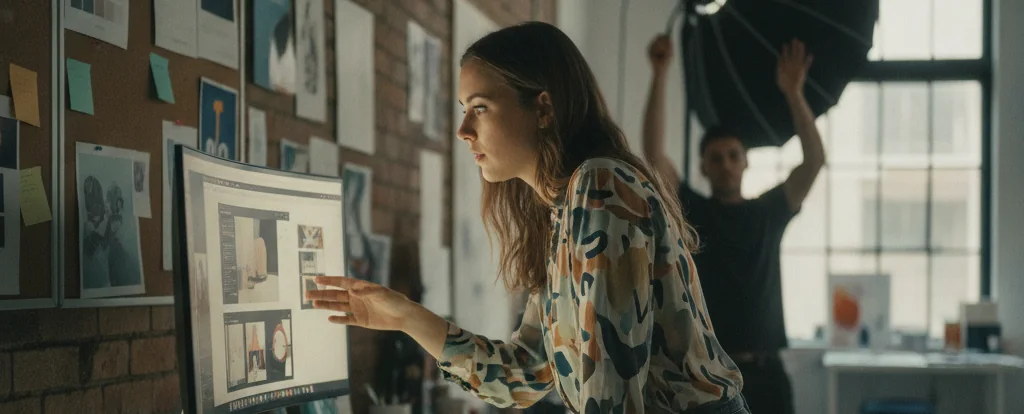
Art directors set the visual direction for a campaign, publication or production, then guide the designers, photographers and stylists who build it.
- Median salary
- $102,700
3.7%vs last year, before tax
- People employed
- 220
10.0%vs last year
- Projected growth
- +19.1%
to 2035
- AI exposure*
- Moderate
- automation risk
- Average hours
- 46/wk
+6h vs all jobs
- Shortage status
- Not in shortage
national
Art directors work in advertising agencies, publishing houses, film and television production companies and in-house brand teams, where the look of a campaign, magazine issue or screen production is theirs to control. They sit between the creative concept and its execution, briefing photographers, designers and stylists, then checking the results against the brief. The role is often confused with a creative director, who sets strategy across several projects at once, while an art director usually owns the visual execution of one.
How much do art directors earn?
The median full-time salary for an art director is $102,700 per annum, before tax, up $21,200 since 2018.
What you earn depends on the sector, the size of the employer and how senior your title is, so an agency, a broadcaster, a publisher and a small studio can sit at quite different points. Freelance day rates can look strong because they cover pitch time, your own software and the quiet months between contracts. In larger broadcasters and publishers an enterprise agreement usually sets clearer bands than a small studio will.
What does an art director do day to day?
The list below is what fills most weeks; the exact mix shifts with seniority and whatever stage the current work is at.
- Sketching and refining a visual concept before it goes to a client, editor or director
- Briefing photographers, designers and production crews on the look a shoot or spread needs to achieve
- Reviewing drafts and sending work back until the colour, type and composition read as one piece
- Presenting a creative direction to a client or stakeholder, then adjusting it once the room has had its say
- Solving problems on set or in production so a shoot, print run or launch doesn't fall over
What skills do art directors need?
Employers look for visual design, creative software production, content creation and writing, backed by Adobe Creative Suite (Photoshop, Illustrator, InDesign) fluency and strong stakeholder management.
Specialist skills
- Visual design
- Creative software production
- Content creation and writing
- Project management
Software and tools
- Adobe Creative Suite (Photoshop, Illustrator, InDesign)
- Figma
- Sketch
- Presentation software (PowerPoint, Keynote)
- Project management tools (Asana, Monday.com)
General skills
- Stakeholder management
- Presenting and data storytelling
- Written communication
- Problem solving
Is the job growing?
About 220 people work as art directors in Australia, and employment is projected to grow 19.1% over the decade to 2035. That's healthy, above-average growth, and the role should stay in solid demand.
How do you become an art director?
Here's the path most art directors take, step by step.
- 1Study design or visual communication
A bachelor degree in graphic design, visual communication or a related field is the most common background, held by about 45% of people working as art directors. A diploma from TAFE can lead to the same work, particularly if your portfolio is strong.
- 2Build a portfolio that shows thinking, not just finished files
Studios and agencies hire on the portfolio, so include concept sketches, moodboards and the reasoning behind a direction alongside the finished campaign. Internships, freelance briefs and student projects all count while you are starting out.
- 3Start in a design or production role
Most art directors begin as graphic designers, multimedia designers or production assistants, where they learn to take a brief and work to a deadline. Expect a few years at this level before you lead a project's visual direction.
- 4Take the visual lead on a project
The step up comes from running a shoot, owning the look of a campaign or leading a small team of designers, which is what the title describes. Moving between agencies or sectors is common around this point.
Ready to apply as an art director?
Whether you're working toward becoming an art director or already are one and want a hand with the next step (sharpening your resume for ATS screening, tightening your cover letter, or knowing what you'll actually be asked at interview), here are examples grounded in this specific role, not generic templates.
What jobs can an art director move to?
None of the roles art directors typically move into pay more than the role itself. Production Designer is the closest match. If a bigger salary is the goal, moving up into a senior or principal position within the role is usually the faster route than moving sideways.
| Move to | Typical pay change | Overlap | Retraining |
|---|---|---|---|
| Production Designer Art directors already lead a production's visual build, so stepping into production design extends that craft with greater authority over sets and locations. | −$3,900 | 43% | reskill |
| Film and Television Producer Art directors bring visual storytelling and on-set knowledge to producing, though they need to build budgeting, scheduling and project leadership skills.Known move | −$6,500 | 33% | reskill |
| Video Producer Art directors can move into video producing, applying visual direction and campaign experience to manage video projects from concept to delivery. | −$9,100 | 82% | minimal |
| Film and Television Director Art directors already shape visual style and direct creative teams, so moving into directing uses the same storytelling and set leadership.Known move | −$22,100 | 78% | minimal |
| Publishing Editor Art directors in publishing can move into editorial leadership, carrying layout and content judgement into commissioning and text editing. | −$37,700 | 50% | short course |
Moves are chosen from Jobs and Skills Australia's Data on Occupation Mobility, which follows income tax records between 2011-12 and 2020-21, together with entry requirements and skill overlap. A known move is one people were seen making in that data. Pay change compares median full-time pay for the two roles.
Who works as an art director?
The typical art director is 45 years old; 57% are men, 83% work full-time, and full-timers average 46 hours a week.
- 45
- Median age
- 43%
- Female share
- 83%
- Full-time
- +6h
- vs all-jobs avg
What's it like being an art director?
Art direction runs in projects: a brief or a pitch, a round of concepts, then production, where the pressure sits and the hours stretch. A good deal of the job is persuasion, getting a client or editor to back a direction and then keeping the team aligned to it while the brief shifts underneath. It suits people who enjoy solving a visual problem in public and can hold a strong idea through several rounds of feedback.
What people like
- Seeing a concept land. A client or editor approving the direction you argued for is the moment the job runs on, and the work after that gets more detailed and more interesting.
- Working across craft. You deal with photographers, illustrators, set builders, retouchers and printers, so the week moves between skills you don't personally practise.
- A finished thing you can point at. A campaign on a billboard, a magazine issue, the look of a film: the work reaches an end point, which is not true of every creative job.
- Creative leadership without the management load. You set direction for a small group of designers and freelancers, which is authority over the work rather than over performance reviews and budgets.
What people find hard
- Feedback that reopens a settled decision. Clients and editors can sign off on a direction and then question it weeks later, which means rebuilding work that had already been agreed.
- The gap between the idea and the budget. A concept that needs a full location shoot may become a studio set with one model, and the art director is the one who has to make that work visually.
- Long weeks around production. Shoots, print deadlines and launches bunch up, and full-time art directors average 46 hours a week across the year.
- The pitch treadmill in agencies. Agencies ask for speculative concepts to win work that may never run, so effort sometimes disappears with a lost pitch.
Based on our synthesis of professional-body surveys and public accounts of the role, not first-person verified reviews.
Which industries employ art directors?
Information Media and Telecommunications employs the largest share of art directors, followed by Arts and Recreation Services.
Top employing industries
- 1Information Media and Telecommunications
- 2Arts and Recreation Services
- 3Professional, Scientific and Technical Services
Ranked by employment share; the source doesn't publish an exact percentage per industry.
| Bachelor degree | 44.6% | |
|---|---|---|
| Year 12 or below | 16.3% | |
| Diploma / Advanced Diploma | 14.4% | |
| Postgraduate | 12.2% | |
| Certificate III/IV | 4.1% |
Will AI replace art directors?
AI has taken over much of the labour of producing and adapting visual assets, and it is now a normal part of concept exploration, so art directors tend to use it rather than compete with it. What it does not do is decide how a brand or a story should feel, direct a shoot on the day, or hold a room through a difficult pitch, which is where the role's value still sits.
Share of typical working time by exposure level
- Directing shoots and productionSomebody still has to be on set choosing the frame, adjusting the lighting and getting a performance out of the subject.30%low
- Concept development and moodboardsGenerative tools can produce dozens of reference images in an afternoon, so the work shifts to selecting, editing and arguing for one direction.25%moderate
- Pitching to clients and leading the teamAI can build a slicker deck, but reading a room and keeping a client committed to a direction stays human work.25%moderate
- Producing and adapting finished artworkCutting a campaign across formats and cleaning up files is increasingly automated, and template systems handle much of the resizing without a designer.20%high
Moves least exposed to AI
These career moves from art director work are rated low for AI exposure:
- Film and Television Director
High skill overlap (78%), little retraining to get there, and a low automation-risk profile.
Common questions about becoming an art director
Straight answers to the questions people ask most.
How much do art directors earn?
Art directors earn a median of $102,700 per year before tax. That figure covers a wide field, from small studios to large agencies and broadcasters, and pay rises with the scale of the projects you lead and how senior your title is.
How do you become an art director?
Most art directors start as designers or production assistants and move up after a few years of leading visual work. A degree or diploma in design or visual communication helps, but the portfolio and the projects you have already run matter more at hiring time.
Are art directors in demand?
Art directors are currently not in shortage, and employment is projected to grow 19.1% over the decade to 2035. About 220 people work in the role, so the field is small and a strong portfolio and industry contacts count for a lot when openings appear.
Will AI replace art directors?
AI has absorbed much of the routine production work, from generating concept variations to resizing artwork across formats, and it is becoming a normal part of the toolkit rather than a replacement for the role. What it does not do is decide how a brand or a story should feel, direct a photographer on the day, or hold a client to a direction through several rounds of feedback.
What is the difference between an art director and a creative director?
An art director owns the visual execution of a project, while a creative director sets strategy across several projects and often manages the art directors. In smaller studios the two jobs overlap, and the move upward usually comes from a broader portfolio rather than another qualification.
Where can art directors move next?
Film and television directing overlaps closely with art direction, since both involve shaping a visual story and leading a set, and video producing draws on the same campaign and visual skills. Production design extends the craft with more authority over sets and locations. Many art directors also move into freelance work or set up their own studio, which is often where earnings grow.
Related roles
- Film and Television Producer
- Film and Television Director
- Production Designer
- Video Producer
- Publishing Editor
- Production Assistant
Not sure this is you? Take the career quiz and get a ranked shortlist of roles that fit how you like to work.