Art Therapist
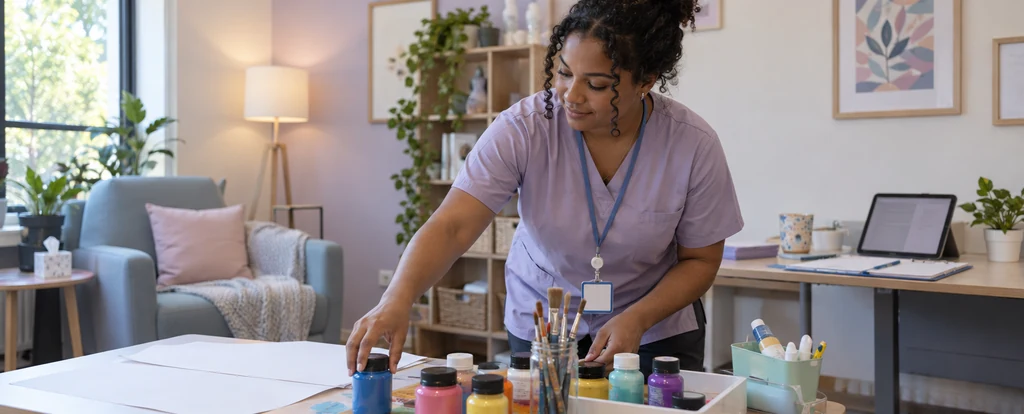
Art therapists use art making as the therapy itself, helping people put difficult feelings into images and objects when words are not enough.
- Median salary*
- $78,000
3.6%vs last year, before tax
- People employed*
- 1,300
0.0%vs last year
- Projected growth
- +34%
to 2035
- AI exposure*
- Low
- automation risk
- Average hours*
- 38/wk
−2h vs all jobs
- Shortage status
- Not in shortage
national
Art therapists work in hospitals, mental health services, schools, aged care and private practice, usually alongside psychologists, nurses, social workers and teachers. What sets the role apart from art teaching or general counselling is that the client's choices of materials, images and process carry the clinical meaning, and the therapist reads them against the client's goals. Registration is not mandatory in Australia, and the profession is largely self-regulated through professional membership, with most practitioners holding a master's degree.
How much do art therapists earn?
The median full-time salary for an art therapist is $78,000 per annum, before tax, up $16,600 since 2018.
Pay varies more by employer than by the work itself: public hospitals and health services apply their own enterprise agreements, while community organisations, schools and private practice set their own rates. Fixed-term contracts are common in grant-funded programs, so it is worth checking whether a role is ongoing before comparing it with hospital work. In private practice, earnings depend on how many clients you can carry and what they or their funding scheme will pay.
What does an art therapist do day to day?
The list below is what fills most weeks; the exact mix shifts with seniority and whatever stage the current work is at.
- Assessing clients' needs and goals, and working out whether art therapy suits them
- Planning and running individual and group art therapy sessions
- Introducing art materials and helping clients work with them at their own pace
- Reading what clients make and how they make it, and using that in their therapy
- Writing progress notes and coordinating with the wider care team
What skills do art therapists need?
Employers look for patient care and support, clinical assessment and treatment, care planning and coordination, backed by Cliniko fluency and strong empathy and interpersonal care.
Specialist skills
- Patient care and support
- Clinical assessment and treatment
- Care planning and coordination
- Counselling and support work
- Health education and advice
Software and tools
- Cliniko
- Coreplus
- Coviu
- Zoom
- Microsoft Office
General skills
- Empathy and interpersonal care
- Written communication
- Attention to detail
Is the job growing?
About 1,300 people work as art therapists in Australia, and employment is projected to grow 34% over the decade to 2035. That's very strong growth. Few roles in Australia are expanding this fast, and it points to solid demand for years to come.
How do you become an art therapist?
Here's the path most art therapists take, step by step.
- 1Start with a degree in a related field
Most art therapists begin with a bachelor degree in art, psychology, social work, education or another health discipline. It takes three years full time and builds the grounding in human development, counselling and studio practice that master's programs expect.
- 2Complete a master's degree in art therapy
A master's is the usual qualification for clinical practice and generally takes two years full time, including supervised placements. Entry usually requires a degree plus a portfolio or evidence of ongoing studio work, and some universities also interview applicants.
- 3Do your supervised hours and apply for professional membership
Graduates complete supervised clinical practice before applying to ANZACATA, the peak body for creative arts therapies in Australia. Registration is not mandatory, but membership is what most employers look for and what private clients check.
- 4Clear the checks and clearances employers ask for
Hospitals, schools, aged care providers and community services generally require a Working with Children Check and a police check, and some roles ask for first aid training or the employer's own credentialing process.
Ready to apply as an art therapist?
Whether you're working toward becoming an art therapist or already are one and want a hand with the next step (sharpening your resume for ATS screening, tightening your cover letter, or knowing what you'll actually be asked at interview), here are examples grounded in this specific role, not generic templates.
What jobs can an art therapist move to?
Moving into Occupational Therapist typically comes with the biggest pay rise, worth $21,500 a year more on average.
| Move to | Typical pay change | Overlap | Retraining |
|---|---|---|---|
| Occupational Therapist Art therapists bring therapeutic and creative skills but need an occupational therapy degree to practise as an occupational therapist.Known move | +$21,500 | 70% | requalify |
| Disability Support Worker Art therapists can apply creative engagement and mental health knowledge to disability support work with a short course.Known move | +$13,600 | 55% | short course |
| Play Therapist Art therapists can move into play therapy, using creative therapeutic skills and adding specialist play therapy training. | +$5,200 | 79% | short course |
Moves are chosen from Jobs and Skills Australia's Data on Occupation Mobility, which follows income tax records between 2011-12 and 2020-21, together with entry requirements and skill overlap. A known move is one people were seen making in that data. Pay change compares median full-time pay for the two roles.
Who works as an art therapist?
The typical art therapist is 42 years old; 85% are women, 55% work full-time, and full-timers average 38 hours a week.
- 42
- Median age
- 85%
- Female share
- 55%
- Full-time
- −2h
- vs all-jobs avg
What's it like being an art therapist?
Art therapy runs to a slower rhythm than most clinical work, with progress measured over months and sessions long enough to let a client finish what they started. Much of the week goes to sessions and the notes that follow, plus meetings with the care team and the planning that keeps referrals coming. The work suits people who are comfortable with mess, silence and strong feeling, and who can hold a clinical frame while the client decides what a session is about.
What people like
- You see change show up in the artwork. A client who could not talk about a loss early on may paint it later, and the shift often appears in the images before it appears in conversation.
- The art gives people a way in when talking stalls. Children, teenagers and adults who find face-to-face counselling confronting often settle faster with materials in front of them.
- The settings vary. A week might include a hospital ward, a school group and an individual session in private practice, each with different materials and different pressures.
- Sessions run at a human pace. You are not moving people through in fifteen-minute blocks, which gives you room to notice what a client does with the time.
What people find hard
- Many positions depend on short-term funding. Art therapy roles often sit inside grant-funded programs, which can mean fixed-term contracts rather than ongoing employment.
- The clinical load can be heavy. Much of the work involves trauma, grief or serious illness, so regular supervision and your own support matter as much as they do in any counselling role.
- Materials and cleanup are part of the job. You will be ordering paint, washing brushes and finding somewhere to dry a wet canvas in a building that was not designed for it.
- You spend time explaining the role. Referrers and families sometimes expect art classes, so part of the work is describing what therapy involves and why it is not a hobby group.
Based on our synthesis of professional-body surveys and public accounts of the role, not first-person verified reviews.
Which industries employ art therapists?
Hospitals employs the largest share of art therapists, followed by Mental health services.
Top employing industries
- 1Hospitals
- 2Mental health services
- 3Education and training
- 4Social assistance services
- 5Other health care services
Ranked by employment share; the source doesn't publish an exact percentage per industry.
| Bachelor degree | 52% | |
|---|---|---|
| Postgraduate | 26% | |
| Diploma / Advanced Diploma | 13% | |
| Other | 9% |
Will AI replace art therapists?
Art therapy sits at the low end of AI exposure because the therapy is the relationship and the making rather than the administration around it. Tools can draft notes, transcribe sessions and suggest activity ideas, but they cannot hold a room, notice what a client avoids in a painting, or judge when to stay quiet. Expect the documentation load to shrink rather than the clinical work.
Share of typical working time by exposure level
- Running art therapy sessions with clientsSitting with someone while they paint, sculpt or build, and noticing what they return to, is the part of the job that depends on presence and cannot be handed to software.35%low
- Assessing clients and setting therapy goalsSoftware can score standard assessment questionnaires, but deciding what a client needs from art therapy draws on the therapist's judgement and the relationship built over early sessions.25%moderate
- Writing progress notes and reportsSpeech-to-text and note-drafting tools already cut the time spent on session notes and reports to referrers, though the therapist still reviews, corrects and signs them.20%high
- Talking with families, carers and the care teamCoordinating with a ward team or explaining progress to a parent depends on reading the room and negotiating next steps, which automation does not reach.20%low
Common questions about becoming an art therapist
Straight answers to the questions people ask most.
How much do art therapists earn in Australia?
Art therapists earn a median of $78,000 per annum, before tax. That figure covers full-time workers, and pay moves with the employer and the contract type, from state health agreements in hospitals to hourly rates in private practice.
How do you become an art therapist?
The usual route is a bachelor degree in a related field followed by a master's degree in art therapy, which includes supervised clinical placements. After graduating, most practitioners apply for professional membership with ANZACATA, which employers treat as the sign of a qualified therapist even though registration is not mandatory.
Are art therapists in demand in Australia?
Art therapists are currently not in shortage, and employment is projected to grow 34% over the decade to 2035. The occupation is small, so openings tend to appear in hospitals, mental health services, schools and community organisations rather than in large yearly intakes, and building relationships with referrers helps.
Will AI replace art therapists?
Not the therapy itself, which depends on presence, relationship and reading what a client makes in the room. AI tools are already useful for drafting session notes, summarising reports and suggesting activity ideas, so expect the paperwork to shrink while the clinical hours stay much the same.
What careers can art therapists move into?
Play therapy is a common move, using the same creative and child-focused skills with extra specialist training, and occupational therapy is another, though it requires a full degree and pays about $21,500 more. Some art therapists move into disability support work, where pay is about $13,600 more. Many experienced practitioners build a private practice, often alongside part-time employment, and that is usually where earnings grow.
Do you need to be registered to work as an art therapist?
No. Art therapy is not a registered profession in Australia, so there is no national licence or AHPRA registration. Employers instead look for a master's degree and professional association membership, and some hospital roles add their own credentialing.
Related roles
- Occupational Therapist
- Play Therapist
- Disability Support Worker
- Disability Support Worker
- Aged Care Worker
- Naturopath
Not sure this is you? Take the career quiz and get a ranked shortlist of roles that fit how you like to work.