Audiologist
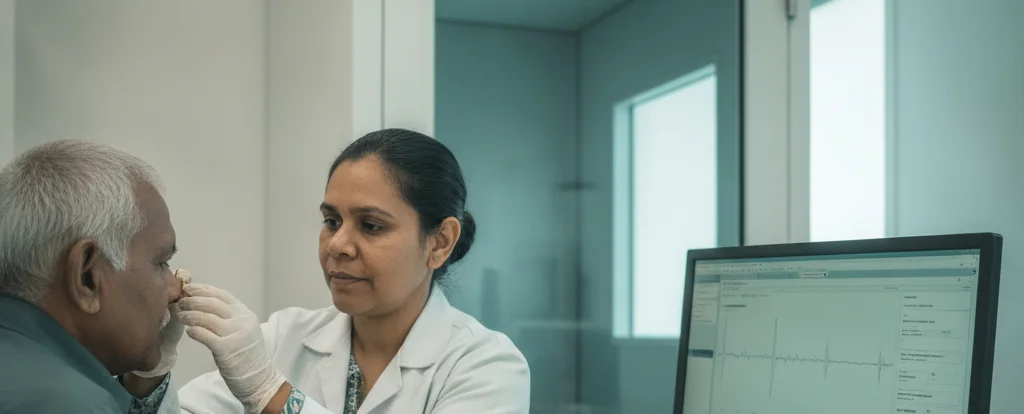
Audiologists test hearing and balance, work out what is going wrong, and fit the hearing aids and other devices that help people communicate day to day.
- Median salary
- $104,200
4.4%vs last year, before tax
- People employed
- 2,600
4.0%vs last year
- Projected growth
- +32.7%
to 2035
- AI exposure*
- Low
- automation risk
- Average hours
- 40/wk
matches all-jobs average
- Shortage status
- In shortage
national
Audiologists work in private clinics, hospital audiology departments, community health services and aged care, seeing clients for hearing assessments, hearing aid fittings, balance testing and follow-up reviews. Unlike most allied health professions they are not registered through AHPRA; instead they hold certification with Audiology Australia or the Australian College of Audiology. The role is often confused with an audiometrist, who tests hearing and fits basic devices but does not diagnose and manage the full range of hearing and balance conditions.
How much do audiologists earn?
The median full-time salary for an audiologist is $104,200 per annum, before tax, up $22,000 since 2018.
Pay varies most with the sector and the funding model: public hospital and community health positions follow an award or enterprise agreement, while private clinics often combine a base salary with bonuses linked to hearing aid sales. Experience, certification level and the amount of diagnostic or cochlear implant work you take on also move the figure, and rural and remote roles sometimes carry extra allowances. Earning more usually means a senior clinical role, managing a clinic or owning a practice.
What does an audiologist do day to day?
The list below is what fills most weeks; the exact mix shifts with seniority and whatever stage the current work is at.
- Testing hearing and balance, then explaining what the results mean to someone who is anxious about losing it
- Programming and fine-tuning a hearing aid in the room, adjusting to the client's feedback until speech sounds clear
- Troubleshooting a device that keeps cutting out for a regular client who relies on it every day
- Working with cochlear implant recipients through fitting, mapping and the months of rehabilitation that follow
- Writing up assessment reports and conferring with the GP or ENT specialist who referred the client
What skills do audiologists need?
Employers look for clinical assessment and treatment, patient care and support, health education and advice, backed by Audiometer fluency and strong written communication.
Specialist skills
- Clinical assessment and treatment
- Patient care and support
- Health education and advice
- Care planning and coordination
Software and tools
- Audiometer
- Hearing Aid Programming Software
- Tympanometer
- Otoscope
- Clinical Assessment Records (paper/digital)
General skills
- Written communication
- Attention to detail
- Problem solving
Is the job growing?
About 2,600 people work as audiologists in Australia, and employment is projected to grow 32.7% over the decade to 2035. That's very strong growth. Few roles in Australia are expanding this fast, and it points to solid demand for years to come.
How do you become an audiologist?
Here's the path most audiologists take, step by step.
- 1Complete an undergraduate degree
Most entrants start with a bachelor degree in science, health science or a related field, because entry to the master's is competitive and depends on your grades and prerequisite subjects.
- 2Complete an accredited Master of Audiology
This is the qualification that leads to practice, usually two years full time with clinical placements built in. Places are limited and offered by a small number of universities.
- 3Finish your supervised clinical practice
Placements during the master's are where you learn to test real clients and fit real devices under supervision, and they are the main thing employers ask about at interview.
- 4Gain certification
Certification through Audiology Australia or the Australian College of Audiology signals that you meet the profession's standards, and keeping it requires ongoing professional development each year.
Ready to apply as an audiologist?
Whether you're working toward becoming an audiologist or already are one and want a hand with the next step (sharpening your resume for ATS screening, tightening your cover letter, or knowing what you'll actually be asked at interview), here are examples grounded in this specific role, not generic templates.
What jobs can an audiologist move to?
We don't list lateral moves for audiologists: leaving means a full new qualification rather than a career move, and the realistic routes in are covered under how to become one.
Who works as an audiologist?
The typical audiologist is 37 years old; 77% are women, 63% work full-time, and full-timers average 40 hours a week.
- 37
- Median age
- 77%
- Female share
- 63%
- Full-time
- +0h
- vs all-jobs avg
What's it like being an audiologist?
The day is appointment-based and almost entirely one to one, so the pace comes from a steady stream of clients rather than emergencies, and much of the skill lies in putting people at ease while you test them. You build long relationships with clients who return for reviews, adjustments and new devices, and the work mixes diagnostic testing, device technology and counselling. It suits someone patient and attentive to detail who is comfortable explaining technical things clearly and sitting with people who are unhappy about what they are hearing.
What people like
- You see the result in the room. When a hearing aid is tuned well, the client responds immediately, which gives the technical work a visible payoff.
- Clients return over years. Reviews, adjustments and upgrades mean you get to know people and their families, rather than starting from scratch each visit.
- A genuine mix of skills. A single day can move between balance testing, fitting software, device troubleshooting and a difficult conversation about hearing loss.
- Predictable hours and scope. Appointments are scheduled, the work is non-invasive and outpatient, and there is very little of the on-call pressure found in other clinical roles.
What people find hard
- Resistance to hearing aids. Many people arrive embarrassed or unwilling, so part of the job is working against the stigma of hearing loss rather than the hearing loss itself.
- Cost lands in your appointment. Hearing aids are expensive, and clients who are upset about prices or what a government program will cover often take it out on the person in front of them.
- Repetitive testing and report writing. The standard test battery is much the same for every client, and the paperwork behind each assessment has to be done properly.
- Progress can be slow. Rehabilitation and adjustment to a new device take months, and not every client sticks with it, which can feel like work that does not land.
Based on our synthesis of professional-body surveys and public accounts of the role, not first-person verified reviews.
Which industries employ audiologists?
Health Care and Social Assistance employs the largest share of audiologists, followed by Manufacturing.
Top employing industries
- 1Health Care and Social Assistance
- 2Manufacturing
Ranked by employment share; the source doesn't publish an exact percentage per industry.
| Postgraduate | 87.6% | |
|---|---|---|
| Bachelor degree | 8.3% | |
| Diploma / Advanced Diploma | 1.7% | |
| Year 12 or below | 1.4% | |
| Certificate III/IV | 0.8% |
Will AI replace audiologists?
Audiology is rated low for AI exposure because the core of the job is a trained clinician testing a person, interpreting results that are rarely clear-cut and then getting someone to use a device they may not want. Automated audiometry, fitting software that generates a prescription from the audiogram and remote follow-up tools already do part of the measurement and programming work. What they do not do is judge when a result does not fit the picture, or handle the conversation that follows it.
Share of typical working time by exposure level
- Hearing and balance testingAutomated systems can run parts of a pure-tone test on their own, but you still choose which tests to run and interpret the pattern they form.30%moderate
- Counselling clients about hearing lossExplaining what hearing loss means for work, family and social life, and helping someone accept a device, is a conversation that depends on reading the person in front of you.30%low
- Hearing aid fitting and programmingFitting software produces a first fit from the audiogram in seconds, and the rest of the appointment is spent adjusting it to what the client says they hear in the street or at dinner.20%high
- Reports and communication with referrersDrafting tools speed up assessment letters, but the findings and recommendations still have to be your own clinical judgement.20%moderate
Common questions about becoming an audiologist
Straight answers to the questions people ask most.
How much do audiologists earn in Australia?
Audiologists working full time earn a median of $104,200 per annum, before tax. Pay depends heavily on whether you are in the public system on an enterprise agreement or in a private clinic with bonuses tied to device sales, so figures differ between employers. Senior clinical, management and practice-ownership roles sit above the median.
How do you become an audiologist?
The standard route is an undergraduate degree followed by an accredited Master of Audiology, which takes about two years full time and includes supervised clinical placements. After that you seek certification with Audiology Australia or the Australian College of Audiology. Entry to the master's is competitive, so your undergraduate grades matter more than the specific degree you choose.
Are audiologists in demand in Australia?
Audiologists are currently in shortage nationally, and employment is projected to grow 32.7% over the decade to 2035 over the decade. Demand comes largely from an ageing population and the growing use of hearing services in aged care and community health. The main constraint on entering the field is the small number of accredited master's places rather than the amount of work available.
Will AI replace audiologists?
No, and the work is rated low for AI exposure. Automated audiometry can run parts of a hearing test and fitting software can generate a first-fit prescription from an audiogram, but deciding what the results mean, adjusting a device to a person's real-world complaints and persuading someone to wear it are clinical tasks. Those tools change how quickly the technical parts are done, not who is responsible for the client.
What can an audiologist move into?
Audiometrists are the closest group, and some move across by completing an accredited master's and certification, a step that typically comes with $28,800 more in pay. Beyond that, experienced audiologists often move into clinic management or open their own practice, which is where earnings grow most. Others specialise in cochlear implants, paediatric audiology or vestibular assessment.
Do audiologists need to be registered?
Audiologists are not registered under the national AHPRA scheme, so there is no registration number to hold. Instead the profession certifies its own through Audiology Australia and the Australian College of Audiology, and most employers expect you to hold one of those credentials. Certification carries continuing professional development requirements each year.
Related roles
Not sure this is you? Take the career quiz and get a ranked shortlist of roles that fit how you like to work.