Bookmaker
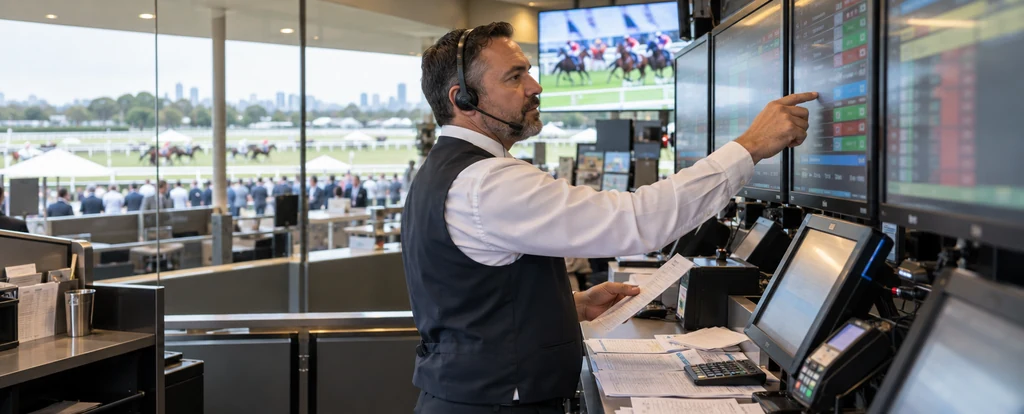
Bookmakers set the odds on racing and sport, take bets at those prices and carry the risk on whether they win or lose.
- Median salary*
- $65,000
4.5%vs last year, before tax
- People employed
- 430
7.5%vs last year
- Projected growth
- +7.6%
to 2035
- AI exposure*
- Moderate
- automation risk
- Average hours
- 42/wk
+2h vs all jobs
- Shortage status
- Not in shortage
national
Bookmakers work on racecourses, in betting shops and, increasingly, online, pricing markets for racing, sport and other events. The difference from a betting clerk is that the bookmaker sets the odds and holds the risk of the result, while a clerk processes transactions at prices someone else has set. Each state and territory licences bookmakers separately, and a licence usually involves probity checks and a financial guarantee lodged with the regulator.
How much do bookmakers earn?
The median full-time salary for a bookmaker is $65,000 per annum, before tax, up $13,800 since 2018.
How a bookmaker is paid depends on the arrangement they work under. Corporate bookmakers are usually employees on a base wage plus penalty rates for weekends and public holidays, while on-course bookmakers earn from the margin between the prices they offer and the results they settle, so income rises and falls with turnover and a run of results. Licence type, sector and location all shift the figure.
What does a bookmaker do day to day?
The list below is what fills most weeks; the exact mix shifts with seniority and whatever stage the current work is at.
- Setting odds on races, sports and other events, then moving them as money comes in
- Taking bets at the track, over the counter or through an online platform
- Tracking exposure across markets so no single result leaves the book badly caught
- Paying out winning bets and keeping the records the regulator expects
- Watching for unusual betting patterns and checking customers meet licensing conditions
What skills do bookmakers need?
Employers look for risk and internal controls, regulatory compliance, selling and negotiation, backed by Odds compilation software fluency and strong customer service.
Specialist skills
- Risk and internal controls
- Regulatory compliance
- Selling and negotiation
- Financial analysis and modelling
Software and tools
- Odds compilation software
- Betting terminal software
- Point of sale systems
- Microsoft Excel
- Online wagering platforms
General skills
- Customer service
- Attention to detail
- Problem solving
- Written communication
Is the job growing?
About 430 people work as bookmakers in Australia, and employment is projected to grow 7.6% over the decade to 2035. That's modest growth: demand is steady rather than booming.
How do you become a bookmaker?
Here's the path most bookmakers take, step by step.
- 1Finish Year 12 or equivalent
No degree is required to be licensed. Around 44% of people in the role hold Year 12 or below as their highest qualification, although a bachelor degree is common among those working in corporate trading and risk teams.
- 2Learn the trade from the inside
Most people start as a betting clerk, as a clerk to an on-course bookmaker or in a corporate trading team, where they learn how a market is framed, how money moves it and how bets are settled. These are paid jobs and the usual way in.
- 3Apply for a bookmaker's licence in your state or territory
Each state and territory has its own regulator and its own conditions, which typically cover a probity check, a financial guarantee or deposit and a course or exam on the betting rules. You cannot take bets as a bookmaker without it.
- 4Set up the operation
That means insurance, terminal or platform access, a bankroll to settle losing days and, for on-course bookmakers, being listed for the meetings you want to field at. Corporate roles supply the platform and systems instead.
- 5Build turnover and a client base
Regulars and larger turnover are what let a book support bigger positions and absorb a poor run, so the early years are often small and cautious.
Ready to apply as a bookmaker?
Whether you're working toward becoming a bookmaker or already are one and want a hand with the next step (sharpening your resume for ATS screening, tightening your cover letter, or knowing what you'll actually be asked at interview), here are examples grounded in this specific role, not generic templates.
What jobs can a bookmaker move to?
Moving into Insurance Broker typically comes with the biggest pay rise, worth $69,000 a year more on average.
| Move to | Typical pay change | Overlap | Retraining |
|---|---|---|---|
| Insurance Broker Bookmakers' odds setting and financial risk assessment transfer to insurance broking, with a short course in insurance products and compliance. | +$69,000 | 67% | short course |
| Personal Banker Bookmakers' financial product advice and customer risk assessment suit personal banking, with a short course in lending and banking products. | +$18,700 | 59% | short course |
| Bank Teller Bookmakers bring cash handling, customer service and numeracy to bank telling, with retraining in banking procedures and products. | +$18,700 | 32% | reskill |
| Accounts Officer Bookmakers' numerical and record-keeping skills suit accounts work, with retraining in accounting software and office procedures. | +$10,000 | 25% | reskill |
| Bookkeeper Bookmakers bring cash handling, odds arithmetic and record keeping, and can retrain in accounting software to keep business books.Known move | +$7,800 | 17% | reskill |
Moves are chosen from Jobs and Skills Australia's Data on Occupation Mobility, which follows income tax records between 2011-12 and 2020-21, together with entry requirements and skill overlap. A known move is one people were seen making in that data. Pay change compares median full-time pay for the two roles.
Who works as a bookmaker?
The typical bookmaker is 38 years old; 91% are men, 81% work full-time, and full-timers average 42 hours a week.
- 38
- Median age
- 9%
- Female share
- 81%
- Full-time
- +2h
- vs all-jobs avg
What's it like being a bookmaker?
The job runs to the racing and sporting calendar rather than a Monday to Friday week, with long days on course and quiet spells in between. Prices move constantly, so much of the work is watching a market and deciding when to take more risk and when to trim it. It suits someone comfortable with numbers, quick decisions and the fact that a single result can go against them.
What people like
- The price is your call. Setting your own odds and being proved right against the rest of the market is the core satisfaction of the job.
- Results settle the same day. You know by the end of a race meeting whether the book worked, which suits people who like feedback they can measure.
- The sport is part of the work. Form, scratchings and fixtures are things you follow because they feed the prices, not just out of interest.
- Regulars become a client base. Punters who bet with you week after week are what keeps an on-course or shop book turning over.
What people find hard
- One result can undo a good week. Because the bookmaker carries the risk, a long-priced winner or a late plunge comes straight out of the business, with no employer to absorb it.
- Weekends and public holidays set the schedule. Saturday race meetings, carnival weeks and evening fixtures are when the money is on, so days off usually fall midweek.
- Compliance sits on top of the trading. Licence conditions, responsible gambling obligations and record keeping have to be met whether the day was profitable or not.
- The wagering market keeps consolidating. Large online operators hold most of the turnover, which leaves independent on-course bookmakers competing for a smaller share.
Based on our synthesis of professional-body surveys and public accounts of the role, not first-person verified reviews.
Which industries employ bookmakers?
Arts and Recreation Services employs the largest share of bookmakers.
Top employing industries
- 1Arts and Recreation Services
Ranked by employment share; the source doesn't publish an exact percentage per industry.
| Year 12 or below | 43.7% | |
|---|---|---|
| Bachelor degree | 32.1% | |
| Certificate III/IV | 7.2% | |
| Diploma / Advanced Diploma | 6.5% | |
| Postgraduate | 6% |
Will AI replace bookmakers?
Bookmakers sit in the moderate range: the pricing side of the job has been reshaped by algorithms and automated trading platforms, while the licensed, customer-facing side has changed far less. Corporate bookmakers now price markets with software instead of by hand, and on-course operators use the same platforms to lay off risk. The licence, the risk decision and the relationship with the punter stay with a person.
Share of typical working time by exposure level
- Setting and moving oddsAlgorithms price most racing and sports markets in real time and adjust them as money arrives, so a bookmaker now supervises a model rather than building a book by hand.30%high
- Managing risk and exposureTrading software totals liability across markets and flags positions that need trimming, but deciding how much exposure to carry through a Saturday is still a judgement call.25%moderate
- Taking and settling betsTerminals and apps do the arithmetic, yet the transaction is still face to face or over the phone, including checking that a punter is in a state to keep betting.25%low
- Licensing, records and responsible gambling checksReporting systems assemble turnover and bet records for the regulator, but the bookmaker decides what gets reported and answers for the licence conditions.20%moderate
Common questions about becoming a bookmaker
Straight answers to the questions people ask most.
How much do bookmakers earn?
Bookmakers earn a median $65,000 per year before tax. That average spans corporate bookmakers on wages and on-course operators whose income moves with turnover and results, so treat it as a guide rather than a rate you can count on.
How do you become a bookmaker in Australia?
You need a bookmaker's licence from the regulator in your state or territory, and most people learn the work first as a betting clerk or in a corporate trading team. Licences typically involve a probity check, a financial guarantee and a course or exam on the betting rules.
Are bookmakers in demand?
Bookmakers are currently not in shortage, and employment is projected to grow 7.6% over the decade to 2035. The occupation is small and wagering is consolidating around large online operators, so openings depend on licences being available and on individual operators hiring. Your state or territory regulator publishes the licensed operators you could approach.
Will AI replace bookmakers?
AI has already changed how prices are set, with algorithms pricing most racing and sports markets continuously and corporate operators using trading software to move odds as money comes in. On-course bookmaking, dealings with punters and the licence itself still sit with a person, so the job is most exposed at the pricing and risk end.
What can bookmakers move into?
The risk and pricing side of the job transfers to insurance broking, where pay is $69,000 more and the work also turns on assessing financial risk, and to personal banking, where pay is $18,700 more. Some move into bookkeeping, drawing on the cash handling and record keeping. Running your own book is the other path, and it is often where earnings grow.
Do you need a degree to be a bookmaker?
No, and no qualification is required beyond the licence itself. What you do need is the state or territory licence, the numeracy to price a market and the temperament to carry risk.
Related roles
Not sure this is you? Take the career quiz and get a ranked shortlist of roles that fit how you like to work.