Dermatologist
A dermatologist is a specialist doctor who diagnoses and treats conditions of the skin, hair and nails, from skin cancers to chronic conditions such as eczema and psoriasis.
- Median salary*
- $218,400
3.7%vs last year, before tax
- People employed
- 670
4.3%vs last year
- Projected growth
- +33%
to 2035
- AI exposure*
- Moderate
- automation risk
- Average hours
- 46/wk
+6h vs all jobs
- Shortage status
- In shortage
national
Dermatologists consult in private rooms, public hospital clinics and, increasingly, over video for triage and follow-up. They are the specialists general practitioners refer to when a rash does not settle, a lesion needs assessing, or a condition needs biologics or surgery, which is a different job from the skin check a GP does in a standard consult. The specialty is small, and many dermatologists combine private practice with a hospital, teaching or research appointment.
How much do dermatologists earn?
The median full-time salary for a dermatologist is $218,400 per annum, before tax, up $45,100 since 2018.
Setting matters more than seniority here: salaried public hospital specialists are paid under an enterprise agreement with defined increments, while private practitioners bill Medicare, set their own fees and carry the practice costs. Earnings therefore follow consultation volume, how much of the week is spent on procedures such as excisions and Mohs surgery, and whether the practice is run full time or alongside a hospital appointment. Part-time practice is common, particularly for those splitting a public session with private rooms.
What does a dermatologist do day to day?
The list below is what fills most weeks; the exact mix shifts with seniority and whatever stage the current work is at.
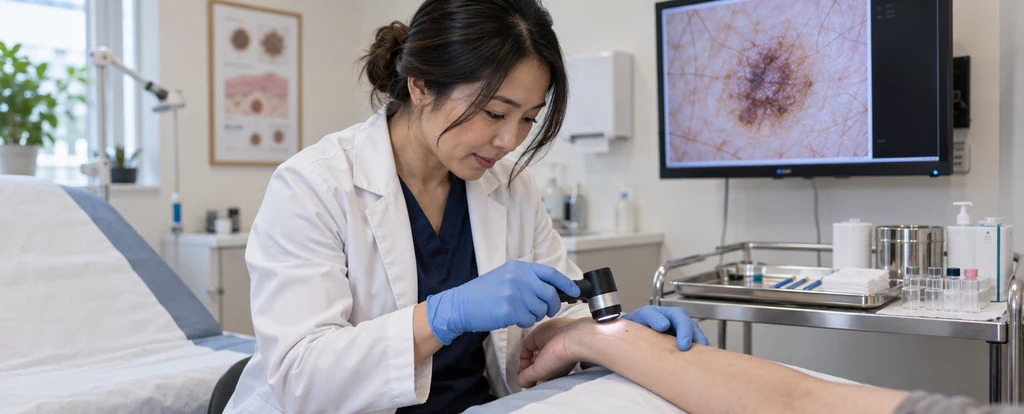
- Examining skin, hair and nails to reach a diagnosis, often using a dermoscope to look at lesions at higher magnification
- Performing skin biopsies, excisions, cryotherapy and laser treatment, sometimes in a dedicated procedure list
- Prescribing topical, systemic and biologic treatments and adjusting them as a condition responds
- Reviewing pathology, patch test and allergy results, then following up patients with melanoma or severe skin disease
- Advising patients on sun protection and skin cancer prevention and writing back to the referring doctor
What skills do dermatologists need?
Employers look for clinical assessment and treatment, patient care and support, medication management, backed by MedicalDirector fluency and strong attention to detail.
Specialist skills
- Clinical assessment and treatment
- Patient care and support
- Medication management
- Health education and advice
Software and tools
- MedicalDirector
- Best Practice Software
- MoleMax dermoscopy system
- FotoFinder imaging system
General skills
- Attention to detail
- Written communication
- Problem solving
Is the job growing?
About 670 people work as dermatologists in Australia, and employment is projected to grow 33% over the decade to 2035. That's very strong growth. Few roles in Australia are expanding this fast, and it points to solid demand for years to come.
How do you become a dermatologist?
Here's the path most dermatologists take, step by step.
- 1Complete a medical degree
The entry point is an accredited medical program, either a five or six year undergraduate degree or a four year graduate entry course. Undergraduate entry is competitive and depends on academic results plus the UCAT.
- 2Work through internship and prevocational years
After graduating you complete an internship and then work as a resident medical officer, usually for two or three years. These years are paid, and the hospital rotations and references you gather are what specialist selection panels assess.
- 3Apply for dermatology training
Training is run by the Australasian College of Dermatologists and takes about four years, including research or elective terms. Places are limited nationally, so many applicants apply more than once and some spend a year or two in another specialty first.
- 4Complete fellowship and specialist registration
Passing the fellowship examinations makes you a Fellow of the Australasian College of Dermatologists, which supports registration as a specialist with AHPRA. From there you can move into private practice, a hospital appointment, or a mix of both.
- 5Consider the general practice route in
Some dermatologists enter training after finishing general practice training and working in skin cancer medicine. That background strengthens an application and leaves a career to fall back on if a training place does not come through.
Ready to apply as a dermatologist?
Whether you're working toward becoming a dermatologist or already are one and want a hand with the next step (sharpening your resume for ATS screening, tightening your cover letter, or knowing what you'll actually be asked at interview), here are examples grounded in this specific role, not generic templates.
What jobs can a dermatologist move to?
We don't list lateral moves for dermatologists: leaving means a full new qualification rather than a career move, and the realistic routes in are covered under how to become one.
Who works as a dermatologist?
The typical dermatologist is 46 years old; 56% are women, 65% work full-time, and full-timers average 46 hours a week.
- 46
- Median age
- 56%
- Female share
- 65%
- Full-time
- +6h
- vs all-jobs avg
What's it like being a dermatologist?
The week is a mix of consulting sessions, procedure lists and correspondence, with private appointments usually booked every 15 to 20 minutes and longer slots in hospital clinics. Almost all of the work is planned outpatient care, so the rhythm is more predictable than surgery or emergency medicine, though the lists stay full. Full-time dermatologists average 46 hours a week.
What people like
- Catching skin cancers early. A short excision in a morning list can change a patient's outlook, and the pathology report usually confirms it within days.
- Medical and procedural work in the same job. A day can move from starting someone on a biologic for psoriasis to excising a melanoma and reviewing a child's eczema, which is broader than purely surgical or purely consultative specialties.
- Patients you follow for years. Chronic conditions such as psoriasis, acne and eczema bring people back regularly, so you see whether a treatment works over the long term rather than judging it at one appointment.
- Predictable hours once trained. Consulting and day procedure work means most dermatologists keep evenings and weekends free, apart from on-call duties during hospital appointments.
What people find hard
- Short appointment times. A full private list moves quickly, and 15 minutes is rarely enough for a patient who arrives with several unrelated concerns.
- Public referral lists that stay long. Hospital dermatology clinics work through more referrals than they can see, so part of a public week goes to triage and prioritising rather than treatment.
- Paperwork and billing. Letters to referring doctors, Medicare item numbers and practice administration take hours that have little to do with the medicine.
- Delivering melanoma diagnoses. Telling someone their lesion is a melanoma, then managing their follow-up and their family's questions, carries a weight that does not ease with repetition.
Based on our synthesis of professional-body surveys and public accounts of the role, not first-person verified reviews.
Which industries employ dermatologists?
Health Care and Social Assistance employs the largest share of dermatologists.
Top employing industries
- 1Health Care and Social Assistance
Ranked by employment share; the source doesn't publish an exact percentage per industry.
| Postgraduate | 56.5% | |
|---|---|---|
| Bachelor degree | 35.6% | |
| Diploma / Advanced Diploma | 3.9% | |
| Year 12 or below | 0.9% | |
| Certificate III/IV | 0.4% |
Will AI replace dermatologists?
Dermatology sits in the middle: it is a visually driven specialty, and image analysis tools now assist with dermoscopy, lesion mapping and the tracking of moles over time. Teledermatology also handles some triage and follow-up that used to require a room booking. What keeps the exposure moderate is that the diagnosis still depends on a specialist examining the patient, taking a history and deciding what to cut, prescribe or watch.
Share of typical working time by exposure level
- Biopsies, excisions and other proceduresCutting out a lesion, closing the wound and managing the margins afterwards remain hands-on work, even where robotic or automated tools are being trialled.30%low
- Diagnosing rashes and skin diseaseSoftware can suggest a differential for a common rash, but atypical presentations, medication reactions and skin disease in children still need a clinician to weigh the history and examination.25%moderate
- Skin cancer checks and dermoscopyDermoscopy systems such as FotoFinder store images and can flag lesions that have changed since the last visit, which speeds up a full body check without replacing the decision to biopsy.25%moderate
- Clinic notes, referral letters and follow-upDictation and drafting tools now write much of the letter back to the referring GP and the patient recall notes, leaving the specialist to check and sign off.20%high
Common questions about becoming a dermatologist
Straight answers to the questions people ask most.
How much do dermatologists earn?
Dermatologists earn a median of $218,400 per year before tax. The figure is a guide, because where you work matters more than seniority: salaried hospital posts follow an enterprise agreement, while private practitioners bill Medicare and set their own fees, so earnings track the mix of procedural work and the number of sessions you run.
How do you become a dermatologist in Australia?
You complete a medical degree, work as an intern and resident medical officer for two or three years, then win a place in the Australasian College of Dermatologists training program, which takes about four years. Fellowship examinations follow, and passing them supports specialist registration with AHPRA.
Are dermatologists in demand in Australia?
Dermatologists are currently in shortage nationally, and employment is projected to grow 33% over the decade to 2035. The constraint on entering the specialty is the small number of training places rather than the volume of patient need, so the contest is for a registrar position, not for work once you hold the fellowship.
Will AI replace dermatologists?
Not the job as a whole. Image-based work such as dermoscopy and lesion tracking is already assisted by tools like MoleMax and FotoFinder, and teledermatology platforms carry some triage and follow-up, but in Australia those tools flag and record lesions for a specialist to assess rather than diagnosing on their own. Procedures, prescribing decisions and years of managing chronic skin disease still depend on a clinician seeing the patient.
What roles do dermatologists move from or into?
Most trainees come from hospital resident medical officer posts or from general practice, where doctors have already built skin cancer and chronic disease experience. Median pay for dermatologists is $91,200 more than for general practitioners, though the gap depends on how much procedural work each does. Once qualified, many run their own practice or join a group, and owning or sharing a practice is often where earnings grow.
Do dermatologists work in public hospitals?
Many do, usually alongside private consulting. Public appointments cover complex medical dermatology, paediatric cases and severe conditions that private practice refers on, and they often come with teaching and registrar supervision.
Related roles
Not sure this is you? Take the career quiz and get a ranked shortlist of roles that fit how you like to work.