Home Manufacturing & Production
Industrial Spray Painter
Industrial spray painters apply the protective and decorative coatings that keep manufactured goods, structures and equipment from corroding.
- Median salary*
- $71,800
4.5%vs last year, before tax
- People employed
- 5,900
1.7%vs last year
- Projected growth
- +5.8%
to 2035
- AI exposure*
- Moderate
- automation risk
- Average hours
- 44/wk
+4h vs all jobs
- Shortage status
- In shortage
national
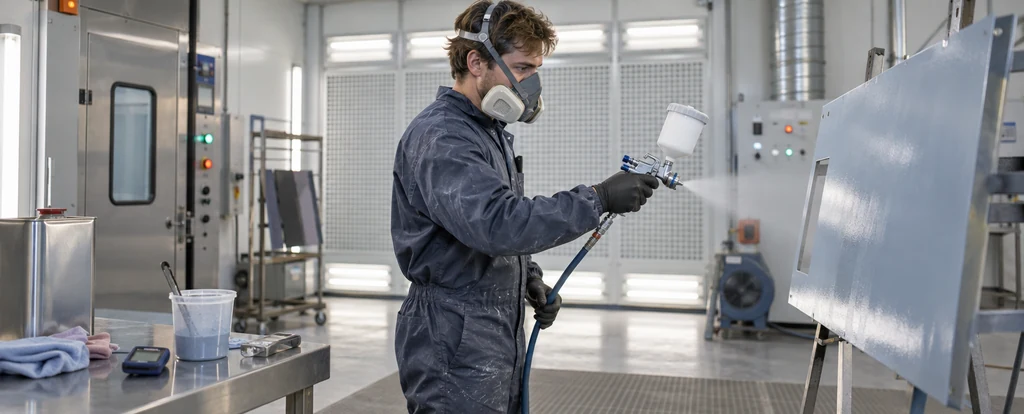
Industrial spray painters prepare metal, timber and composite surfaces and apply primer, paint and protective coatings with spray equipment. They work in manufacturing plants and finishing workshops, and on construction and infrastructure sites, often spraying inside a booth and always behind a respirator. Coatings have to meet a specified dry film thickness and finish, which sets the job apart from vehicle spray painting: that is a separate automotive trade with its own apprenticeship.
How much do industrial spray painters earn?
The median full-time salary for an industrial spray painter is $71,800 per annum, before tax, up $15,200 since 2018.
Pay is usually set by a manufacturing or construction award or an enterprise agreement, so shift loadings, overtime and site allowances move it more than the base rate. Full-time weeks average 44 hours, which means overtime is part of how most people earn. Specialising in protective coatings for oil, gas and infrastructure work, or moving into supervision or coatings inspection, is the usual route to the top of the range.
What does an industrial spray painter do day to day?
The list below is what fills most weeks; the exact mix shifts with seniority and whatever stage the current work is at.
- Degreasing, abrasive blasting, sanding and masking surfaces before coating
- Mixing, thinning and testing paints to the product data sheet, checking viscosity before a run
- Applying primers, protective coatings and decorative topcoats with HVLP or airless spray equipment
- Running and monitoring spray booths, curing ovens and ventilation so coatings cure at the right temperature
- Measuring dry film thickness and inspecting finished work for runs, sags and missed edges
What skills do industrial spray painters need?
Employers look for hand and power tool work, plant and equipment operation, worksite safety management, backed by HVLP spray gun fluency and strong attention to detail.
Specialist skills
- Hand and power tool work
- Plant and equipment operation
- Worksite safety management
- Reading plans and specifications
- Installation and maintenance
Software and tools
- HVLP spray gun
- Airless spray system
- Abrasive blast cabinet
- Spray booth
- Viscosity cup and film thickness gauge
General skills
- Attention to detail
- Safety and compliance awareness
Is the job growing?
About 5,900 people work as industrial spray painters in Australia, and employment is projected to grow 5.8% over the decade to 2035. That's modest growth: demand is steady rather than booming.
How do you become an industrial spray painter?
Here's the path most industrial spray painters take, step by step.
- 1Finish school and get a start on the tools
About 49% of people working as industrial spray painters have Year 12 or below as their highest qualification, so there is no degree requirement. Many begin as a factory hand or trade assistant and learn preparation, blasting and equipment care before they spray on their own.
- 2Take on a traineeship or apprenticeship
The main qualification is the Certificate III in Surface Preparation and Coating Application (MSM30216), usually completed as an apprenticeship or traineeship over two to four years while you work. TAFE and private providers deliver it, and some employers put experienced workers through it part time.
- 3Get your site and safety credentials
A White Card is required before you can work on a construction site, and many employers also ask for forklift, confined space and elevated work platform licences and qualifications. Abrasive blasting and isocyanate coatings bring their own respirator fit testing and health monitoring requirements.
- 4Specialise as you go
Protective coating work on bridges, pipelines, tanks and marine structures rewards people who learn coating systems thoroughly and stay accurate with inspection. Industry bodies such as AMPP offer coatings inspector certification, which some painters take up after several years on the tools.
Ready to apply as an industrial spray painter?
Whether you're working toward becoming an industrial spray painter or already are one and want a hand with the next step (sharpening your resume for ATS screening, tightening your cover letter, or knowing what you'll actually be asked at interview), here are examples grounded in this specific role, not generic templates.
What jobs can an industrial spray painter move to?
Moving into Vehicle Spray Painter typically comes with the biggest pay rise, worth $26,000 a year more on average.
| Move to | Typical pay change | Overlap | Retraining |
|---|---|---|---|
| Vehicle Spray Painter Spray painting skills and coating knowledge carry into automotive refinishing, with an apprenticeship needed to meet vehicle trade requirements.Known move | +$26,000 | 33% | requalify |
| Panel Beater Surface preparation and coating application carry into panel beating, though the automotive trade requires a separate apprenticeship.Known move | +$24,300 | 76% | requalify |
| Machine Operator Spray painters bring production line experience and equipment care to machine operating, with additional training in specific plant.Known move | +$9,000 | 33% | reskill |
| Painter Industrial coating experience transfers to building and construction painting, though the trade requires an apprenticeship and site skills.Known move | −$100 | 30% | requalify |
Moves are chosen from Jobs and Skills Australia's Data on Occupation Mobility, which follows income tax records between 2011-12 and 2020-21, together with entry requirements and skill overlap. A known move is one people were seen making in that data. Pay change compares median full-time pay for the two roles.
Who works as an industrial spray painter?
The typical industrial spray painter is 40 years old; 98% are men, 95% work full-time, and full-timers average 44 hours a week.
- 40
- Median age
- 2%
- Female share
- 95%
- Full-time
- +4h
- vs all-jobs avg
What's it like being an industrial spray painter?
The work runs to a production or project schedule, so a day is mostly preparation, spraying and checking, with the gun in hand for less of it than people expect. Booths, respirators and cure times shape the rhythm, and on site the weather and access decide what is possible that day. It suits someone who likes a defined standard to hit, does not mind wearing protective gear, and takes satisfaction in a finish that passes inspection.
What people like
- You can see what you did. A tank, beam or trailer leaves the booth with a coating that will hold up for years, and the thickness readings tell you exactly how well the job was done.
- Skills that carry across industries. Coating systems turn up in manufacturing, construction, mining and marine work, so the trade is not tied to one sector or one employer.
- Specialisation is open to you. Protective coatings, blasting and inspection work are all reachable with experience, and they are where the more technical jobs sit.
- You can earn while you train. Most people learn through an apprenticeship or traineeship rather than full-time study, so the qualification builds up around paid work.
What people find hard
- The protective gear is non-negotiable. Respirators, coveralls and gloves are worn for most of the day, and isocyanate coatings come with health monitoring because repeated exposure is a genuine risk.
- Preparation takes longer than spraying. Degreasing, blasting, sanding and masking can fill most of the job, and a flaw underneath shows through the topcoat.
- Heat, noise and repetition. Booths and blasting cabinets are hot and loud, and much of the work is done standing with your arms up.
- Cure times set the pace. Coatings need set intervals between coats, so a delay earlier in the line pushes finishing back and the pressure lands at the end.
Based on our synthesis of professional-body surveys and public accounts of the role, not first-person verified reviews.
Which industries employ industrial spray painters?
Construction employs the largest share of industrial spray painters, followed by Manufacturing.
Top employing industries
- 1Construction
- 2Manufacturing
Ranked by employment share; the source doesn't publish an exact percentage per industry.
| Year 12 or below | 48.6% | |
|---|---|---|
| Certificate III/IV | 40.7% | |
| Diploma / Advanced Diploma | 3.1% | |
| Bachelor degree | 2.6% | |
| Postgraduate | 0.5% |
Will AI replace industrial spray painters?
This is a moderately exposed trade: automated spray lines and robotic arms already coat high-volume, identical parts in manufacturing, and booth scheduling and coating records now run on software. What holds the exposure back is the variable, physical side of the job, including blasting, masking, site work and the inspection of complex shapes. Coatings are hazardous and performance-critical, so a person still has to confirm that the film thickness and finish meet the specification.
Share of typical working time by exposure level
- Surface preparation and maskingDegreasing, blasting and masking awkward parts is done by hand, because a machine cannot spot contamination or rust the way an experienced painter does.30%low
- Applying coatingsRobotic arms coat the same panel thousands of times in a fixed booth, but one-off fabrications, large structures and site work still need a person with a gun.30%moderate
- Booth, equipment and ventilation maintenanceNozzles, filters and airflow need checking through the day, and blocked extraction is a health and safety problem rather than a scheduling one.25%low
- Coating inspection and film thickness readingsDigital gauges and coating logs make measurement quicker, though judging runs, sags and coverage at the edges is still a visual call.15%moderate
Moves least exposed to AI
These career moves from industrial spray painter work are rated low for AI exposure:
- Panel Beater
High skill overlap (76%), requalify to get there, and a low automation-risk profile.
Common questions about becoming an industrial spray painter
Straight answers to the questions people ask most.
How much do industrial spray painters earn?
$71,800 per year before tax for full-time work. That is a median, so the figure moves with the sector, shift loadings and how much overtime you do, and painters in protective coatings or supervisory roles sit above it.
How do you become an industrial spray painter?
Most people start as a factory hand, trade assistant or trainee, then complete the Certificate III in Surface Preparation and Coating Application (MSM30216) while working. A White Card is needed for construction sites, and employers look for someone careful with preparation who is comfortable wearing a respirator all day.
Are industrial spray painters in demand?
Industrial spray painters are currently in shortage nationally, and employment is projected to grow 5.8% over the decade to 2035. Coatings work follows construction, manufacturing and maintenance spending, so the openings cluster where those industries are busy.
Will AI or automation replace industrial spray painters?
Not entirely, but high-volume production lines already use robotic spray arms that coat identical parts faster and more evenly than a person can. Surface preparation, blasting, masking and site work on structures and equipment stay manual, along with the judgement calls about finish and coverage.
What can industrial spray painters move into?
Panel beating draws on the same surface preparation and finishing skills, at 76% overlap, though it needs its own apprenticeship. Vehicle spray painting is another route, paying $26,000 more, for people who would rather work on cars than structures. Machine operating pays $9,000 more, and experienced painters sometimes start their own coating or blasting business, which is often where earnings grow.
Is spray painting a licensed trade?
Industrial spray painting is not a licensed trade nationally, but you will need a White Card for construction sites and specific licences and qualifications for forklifts, confined space work and elevated platforms. Spray booth, fume extraction and isocyanate health monitoring requirements are set by state work health and safety and environment regulators, so check what applies where you work.
Related roles
Not sure this is you? Take the career quiz and get a ranked shortlist of roles that fit how you like to work.