Rheumatologist
Rheumatologists diagnose and treat autoimmune and inflammatory conditions affecting joints, muscles and connective tissue, where early treatment prevents lasting damage.
- Median salary*
- $197,600
3.8%vs last year, before tax
- People employed
- 250
25.0%vs last year
- Projected growth
- +32.8%
to 2035
- AI exposure*
- Low
- automation risk
- Average hours
- 50/wk
+10h vs all jobs
- Shortage status
- In shortage
national
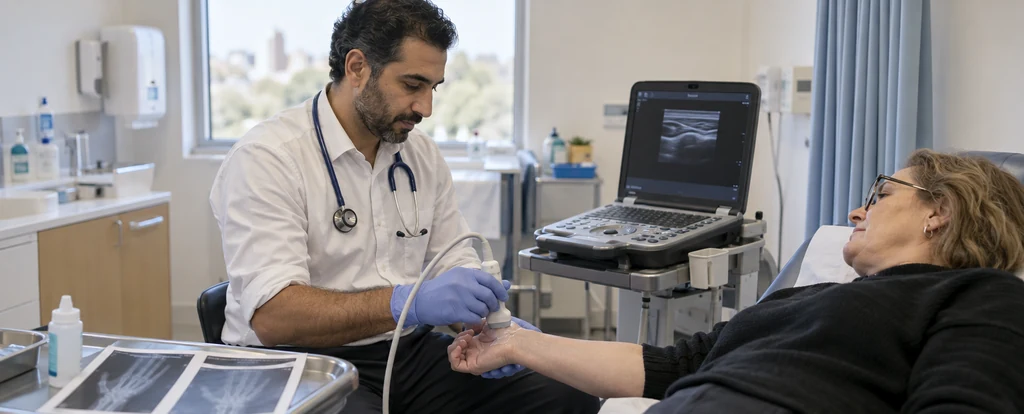
Rheumatologists are specialist physicians who see patients with inflammatory and autoimmune conditions such as rheumatoid arthritis, lupus and gout. Most divide their week between public hospital clinics, where they supervise registrars and run infusion services, and private consulting rooms, working with nurses, physiotherapists and other allied health staff. The role is often confused with orthopaedics, but rheumatologists treat the disease process with medication rather than operating on the joint.
How much do rheumatologists earn?
The median full-time salary for a rheumatologist is $197,600 per annum, before tax, up $40,900 since 2018.
How much a rheumatologist earns depends heavily on the mix of salaried public hospital work and private practice, where billings and procedure fees such as joint injections and ultrasound set the income. On-call and after-hours commitments in hospital posts usually attract additional loading. Pay also moves with seniority and the size of a practice's referral base, so two specialists at the same career stage can earn quite different amounts.
What does a rheumatologist do day to day?
The list below is what fills most weeks; the exact mix shifts with seniority and whatever stage the current work is at.
- Assessing patients with joint pain, swelling and suspected autoimmune disease, often over several visits before a diagnosis becomes clear
- Ordering and interpreting pathology, serology and imaging, including musculoskeletal ultrasound in clinic
- Prescribing and monitoring disease-modifying and biologic therapies, and adjusting treatment when disease activity changes
- Managing long-term conditions such as rheumatoid arthritis, lupus, gout and vasculitis, including flares and medication side effects
- Supervising registrars and coordinating care plans with general practitioners, nurses, physiotherapists and other specialists
What skills do rheumatologists need?
Employers look for clinical assessment and treatment, patient care and support, medication management, backed by MedicalDirector fluency and strong written communication.
Specialist skills
- Clinical assessment and treatment
- Patient care and support
- Medication management
- Care planning and coordination
Software and tools
- MedicalDirector
- Best Practice
- Epic
- PACS imaging systems
- Musculoskeletal ultrasound
General skills
- Written communication
- Problem solving
- Attention to detail
Is the job growing?
About 250 people work as rheumatologists in Australia, and employment is projected to grow 32.8% over the decade to 2035. That's very strong growth. Few roles in Australia are expanding this fast, and it points to solid demand for years to come.
How do you become a rheumatologist?
Here's the path most rheumatologists take, step by step.
- 1Complete a medical degree
An undergraduate or graduate entry medical degree takes four to six years, followed by a year of internship in an accredited hospital.
- 2Work as a prevocational doctor
Two or more years of hospital rotations through general medicine, emergency and related specialties build the experience and references needed to compete for physician training places.
- 3Complete basic physician training
Three years of basic training with the Royal Australasian College of Physicians, including the written and clinical examinations, covers general internal medicine.
- 4Undergo advanced training in rheumatology
Three years of RACP advanced training in accredited rheumatology posts, covering outpatient clinics, inpatient consultations and biologic infusion services.
- 5Attain fellowship and specialist registration
Fellowship of the Royal Australasian College of Physicians (FRACP) allows registration as a specialist with the Medical Board of Australia through AHPRA, and some specialists then take a further fellowship year in an area such as vasculitis or paediatric rheumatology.
Ready to apply as a rheumatologist?
Whether you're working toward becoming a rheumatologist or already are one and want a hand with the next step (sharpening your resume for ATS screening, tightening your cover letter, or knowing what you'll actually be asked at interview), here are examples grounded in this specific role, not generic templates.
What jobs can a rheumatologist move to?
We don't list lateral moves for rheumatologists: leaving means a full new qualification rather than a career move, and the realistic routes in are covered under how to become one.
Who works as a rheumatologist?
The typical rheumatologist is 46 years old; 54% are men, 60% work full-time, and full-timers average 50 hours a week.
- 46
- Median age
- 46%
- Female share
- 60%
- Full-time
- +10h
- vs all-jobs avg
What's it like being a rheumatologist?
The work runs on long-term relationships, because many patients are reviewed every few months for years and the reward is watching a flare settle or a biologic hold a joint in remission. The pace is slower than acute hospital medicine, but the intellectual load is heavy: autoimmune disease presents differently in every patient and the treatment evidence shifts as new therapies arrive. Rheumatologists tend to enjoy a diagnosis that unfolds over time and are comfortable working with uncertainty, since the first consultation rarely produces a complete answer.
What people like
- Getting the diagnosis right. Autoimmune disease is a puzzle of symptoms, blood tests and imaging, and putting the pieces together early can spare a patient years of joint damage.
- Long-term relationships with patients. Regular reviews over years mean you see the effect of treatment play out rather than handing care on after a single episode.
- Treatments that keep improving. Biologics and targeted drugs have changed what is possible for rheumatoid arthritis and lupus, so there is real room to improve someone's function, not just their pain.
- A week split across settings. Clinic, inpatient consults, ultrasound and teaching registrars keep the work varied and keep the week from settling into one routine.
What people find hard
- The paperwork behind biologics. Authority scripts, prior approvals and monitoring plans take real time, and much of that administration lands with the specialist rather than the practice nurse.
- Carrying the medication risk. Immunosuppressants leave patients open to serious infection, so screening, vaccinations and monitoring bloods are a constant responsibility and errors carry consequences.
- Conditions that still resist treatment. For diseases such as lupus or scleroderma, treatment can ease symptoms without stopping the underlying process, which is difficult to sit with over years of reviews.
- A long training pathway. Fellowship comes roughly a decade after medical school, with examinations, limited advanced training places and relocations along the way.
Based on our synthesis of professional-body surveys and public accounts of the role, not first-person verified reviews.
Which industries employ rheumatologists?
Health Care and Social Assistance employs the largest share of rheumatologists.
Top employing industries
- 1Health Care and Social Assistance
Ranked by employment share; the source doesn't publish an exact percentage per industry.
| Postgraduate | 52.6% | |
|---|---|---|
| Bachelor degree | 43% | |
| Diploma / Advanced Diploma | 0% | |
| Certificate III/IV | 0% |
Will AI replace rheumatologists?
This is a low-exposure specialty, because most of the job happens with a patient in the room: palpating a swollen joint, judging whether a flare is inflammatory or mechanical, and deciding when to start or stop an immunosuppressant. Musculoskeletal ultrasound, electronic records and imaging software already support the work, and they change how quickly results are available rather than who makes the call. The long-term management of immune disease, often over many years with the same patient, keeps the clinical responsibility firmly with the specialist.
Share of typical working time by exposure level
- Clinic consultations and joint examinationsAssessing swelling, tenderness and disease activity by hand remains a physical skill, and the patient's account of stiffness and fatigue rarely fits neatly into structured data.35%low
- Clinic letters, referrals and care coordinationDictation and language models already speed up clinic letters to general practitioners, authority applications and monitoring plans, which frees time for the consultation itself.25%high
- Reading pathology and imaging resultsSoftware can sort serology panels and flag possible erosions on X-ray, but working out what an abnormal result means for this particular patient is still a clinical judgement.20%moderate
- Prescribing and adjusting biologic therapyMonitoring schedules and dose steps follow protocols, while choosing among biologics depends on the patient's other conditions, infection history and previous responses.20%moderate
Common questions about becoming a rheumatologist
Straight answers to the questions people ask most.
How much does a rheumatologist earn?
Rheumatologists earn $197,600 per annum before tax at the median, based on full-time workers. Earnings rise in private practice, where billings and procedures such as joint injections and ultrasound add to hospital salary, and are lower for those who stay part time in salaried posts. Treat the median as a guide to the middle of the range rather than a starting figure.
How do you become a rheumatologist?
Start with a medical degree, then complete prevocational hospital years and basic physician training with the Royal Australasian College of Physicians. Advanced training in rheumatology takes another three years, and you can only apply once you have passed the physician examinations. Fellowship (FRACP) then allows specialist registration with AHPRA.
Is there demand for rheumatologists?
Rheumatologists are currently in shortage nationally, and employment is projected to grow 32.8% over the decade to 2035 over the decade to 2035. With about 250 people working in the specialty, openings sit within a limited number of hospital departments and private practices, and advanced training places are the main constraint on how many new specialists enter each year.
Will AI replace rheumatologists?
AI touches the edges of this job rather than the core, which is why the exposure is low. Imaging software and decision tools can flag possible erosions or abnormal serology for review, and dictation software drafts clinic letters, but examining a swollen joint and deciding to start an immunosuppressant stay with the specialist. Managing immune disease over years depends on judgement and a relationship that current tools do not replace.
What can a rheumatologist move into?
The usual routes in are from a resident medical officer post or from general physician training, since both build the hospital general medicine experience that rheumatology advanced training assumes. After fellowship, many rheumatologists move into private consulting practice, often alongside hospital sessions, and this is frequently where earnings grow.
Do rheumatologists work long hours?
Full-time rheumatologists average around 50 hours a week, and 60% work full time. Hospital posts bring on-call and inpatient consult rounds, while private practice tends to be more predictable but often runs late with correspondence and authority paperwork.
Related roles
Not sure this is you? Take the career quiz and get a ranked shortlist of roles that fit how you like to work.