Shot Firer
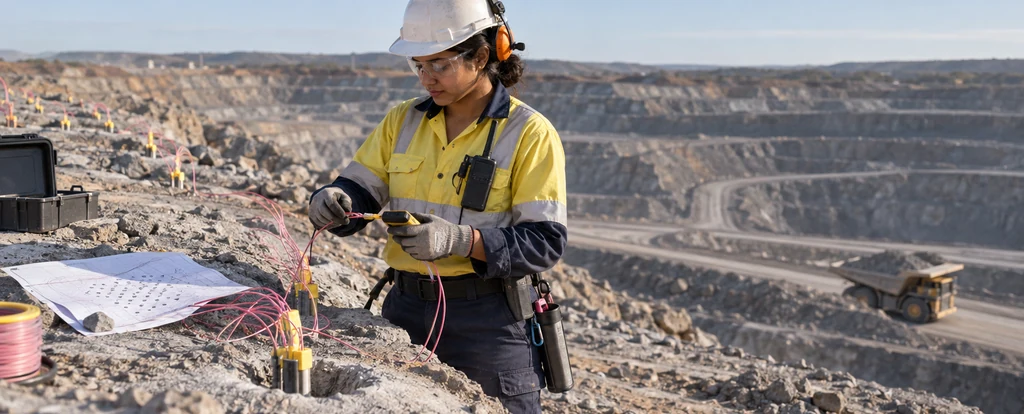
Shot firers load and fire the explosives that break rock in mines and quarries, producing the ore and aggregate the industry moves.
- Median salary*
- $119,600
4.4%vs last year, before tax
- People employed
- 2,600
0.0%vs last year
- Projected growth
- +5.8%
to 2035
- AI exposure*
- Low
- automation risk
- Average hours
- 68/wk
+28h vs all jobs
- Shortage status
- Not in shortage
national
Shot firers work on open cut benches, underground headings and quarry faces, often on fly-in fly-out rosters at remote sites. The role is distinct from a driller, who bores the holes: the shot firer decides what goes into them, connects the firing circuit and carries legal responsibility for the explosives under a state licence. Most work for mining companies or specialist blasting contractors, in small crews alongside drillers and haulage operators.
How much do shot firers earn?
The median full-time salary for a shot firer is $119,600 per annum, before tax, up $25,200 since 2018.
Rates are set by mining industry awards and enterprise agreements, so the roster shapes the pay as much as the hourly rate: remote and site allowances, long swings and overtime all build the total. Sector matters too, with coal, underground metalliferous, quarry and civil construction each covered by their own agreements, and an extra licence or a leading hand role usually means a higher classification.
What does a shot firer do day to day?
The list below is what fills most weeks; the exact mix shifts with seniority and whatever stage the current work is at.
- Reading blast plans and marking out the pattern of drill holes
- Loading holes with bulk explosive and placing primers and boosters
- Wiring detonators into the firing circuit and testing continuity
- Firing the shot from a safe distance and watching how the rock breaks
- Inspecting the muckpile for misfires and clearing the area before the next cycle
What skills do shot firers need?
Employers look for worksite safety management, plant and equipment operation, operations management, backed by Orica SHOTPlus fluency and strong attention to detail.
Specialist skills
- Worksite safety management
- Plant and equipment operation
- Operations management
- Regulatory compliance
- Hand and power tool work
Software and tools
- Orica SHOTPlus
- Maptek BlastLogic
- Electronic detonator systems
- Two-way radios
- Blast hole sampling equipment
General skills
- Attention to detail
- Problem solving
- Physical stamina and dexterity
Is the job growing?
About 2,600 people work as shot firers in Australia, and employment is projected to grow 5.8% over the decade to 2035. That's modest growth: demand is steady rather than booming.
How do you become a shot firer?
Here's the path most shot firers take, step by step.
- 1Get a start on a drill and blast crew
Most shot firers begin as a driller's offsider or a nipper, which is paid site work and teaches the drill and blast cycle before any blasting qualification. Employers usually want a police check and a medical for site access.
- 2Complete a Certificate III in mining operations
RII30120 Certificate III in Surface Extraction Operations (RII30120), or the underground metalliferous equivalent, covers drilling, charging and explosives handling and is often delivered as a traineeship on site.
- 3Apply for a shot firer's licence
Explosives are regulated by state, so the licence comes from the relevant regulator, such as Resources Safety and Health Queensland, SafeWork NSW or WorkSafe Western Australia. Expect a security clearance, referees and signed-off experience hours before the licence is issued.
- 4Add the supporting licences the job asks for
A heavy vehicle licence is common because shot firers often move explosive trucks, and a White Card is needed for civil and construction blasting. Some operators also ask for first aid and a current explosives security clearance.
- 5Build towards statutory supervisory work
A deputy certificate of competency opens up supervisory roles underground, which is where many shot firers take on more responsibility and a shift crew of their own.
Ready to apply as a shot firer?
Whether you're working toward becoming a shot firer or already are one and want a hand with the next step (sharpening your resume for ATS screening, tightening your cover letter, or knowing what you'll actually be asked at interview), here are examples grounded in this specific role, not generic templates.
What jobs can a shot firer move to?
Moving into Miner typically comes with the biggest pay rise, worth $31,600 a year more on average.
| Move to | Typical pay change | Overlap | Retraining |
|---|---|---|---|
| Miner Shot firers move into general mining work, where their blasting knowledge and underground site experience carry straight across.Known move | +$31,600 | 67% | minimal |
| Driller Drilling crews value the shot firer's understanding of rock, charge placement and site safety, and the certificate requirements line up closely.Known move | +$31,600 | 63% | minimal |
| Mine Deputy Supervisory statutory roles suit shot firers who add a deputy certificate of competency, building on their blasting and mine safety knowledge.Known move | +$31,200 | 42% | reskill |
| Truck Driver Shot firers holding a heavy vehicle licence can shift to haulage work, though the driving ticket and road rules need fresh training.Known move | −$17,700 | 7% | reskill |
Moves are chosen from Jobs and Skills Australia's Data on Occupation Mobility, which follows income tax records between 2011-12 and 2020-21, together with entry requirements and skill overlap. A known move is one people were seen making in that data. Pay change compares median full-time pay for the two roles.
Who works as a shot firer?
The typical shot firer is 37 years old; 90% are men, 94% work full-time, and full-timers average 68 hours a week.
- 37
- Median age
- 10%
- Female share
- 94%
- Full-time
- +28h
- vs all-jobs avg
What's it like being a shot firer?
Shot firing runs on fixed cycles: drill, charge, fire, clear, then start again, with the blast usually fired at a set time each day. Full-time shot firers average 68 hours a week, a figure that reflects long shifts on a roster rather than a standard five-day pattern, and much of it is spent standing, carrying hoses and working in heat, dust or cold. The job suits someone methodical who is comfortable with camp life and would rather run a high-stakes sequence carefully than quickly.
What people like
- You see the result of each shot. The plan, the loading and the wiring all end in a few seconds of rock movement, so the feedback on your work is immediate and visible.
- The rules are clear. Explosives handling is governed by procedures and checklists, which suits people who like knowing exactly what the next step is and why it exists.
- Long blocks of time off. Rosters usually bundle work into a swing of consecutive shifts and then give a week or more at home, which is hard to arrange in most other jobs.
- Small crews, defined roles. You work with the same handful of people on each crew, and everyone knows what they are responsible for once the shot is called.
What people find hard
- Long stretches away from home. Most of the work is at remote operations, so camp accommodation, flights and missed family events are part of the arrangement rather than an occasional inconvenience.
- Heat, dust and heavy gear. Charging hoses, stemming and explosive boxes are all handled by hand, and the work carries on through summer heat, rain and cold night shifts.
- The blast window is fixed. If a hole needs re-drilling, a road needs clearing or the wind is wrong, the whole crew and the haulage fleet behind them wait, and the pressure to make the window shows.
- Compliance never stops. Licences, security clearances, blast records and audits all have to be kept current, and losing a licence ends the job until it is reinstated.
Based on our synthesis of professional-body surveys and public accounts of the role, not first-person verified reviews.
Which industries employ shot firers?
Mining employs the largest share of shot firers, followed by Manufacturing.
Top employing industries
- 1Mining
- 2Manufacturing
Ranked by employment share; the source doesn't publish an exact percentage per industry.
| Year 12 or below | 44.3% | |
|---|---|---|
| Certificate III/IV | 39.6% | |
| Diploma / Advanced Diploma | 5.9% | |
| Bachelor degree | 3.1% | |
| Postgraduate | 1.1% |
Will AI replace shot firers?
Shot firing is one of the least exposed jobs to automation and AI. Blast design software such as SHOTPlus and BlastLogic already handles fragmentation modelling and blast records, but the explosives themselves are loaded, wired and fired by licensed people standing on the bench, and machines cannot take legal responsibility for a shot. The judgement that decides whether a hole is wet, blocked or safe to charge stays with the shot firer.
Share of typical working time by exposure level
- Loading and priming holesBulk explosive delivery and priming are hands-on, and the shot firer judges whether a hole is wet, blocked or needs a different charge weight.35%low
- Wiring the firing circuit and firing the shotElectronic detonator systems time the sequence precisely, but connecting, testing and pressing the button remain manual, licensed work.25%low
- Reading blast designs and setting out the patternDesign software models fragmentation and timing, but someone still has to check the plan against the actual ground and adjust the pattern where the face has changed.20%moderate
- Checking the result and clearing the areaDrone footage and cameras help review a muckpile, yet misfires, fumes and loose ground still need someone to walk the area and make the call.20%low
Common questions about becoming a shot firer
Straight answers to the questions people ask most.
How much does a shot firer earn?
Shot firers earn $119,600 per year before tax at the median for full-time work, which includes the site allowances and long rosters common in mining. Sector and roster move that figure most, so a quarry or civil blasting job on a residential pattern can sit lower than an underground or coal operation.
How do I become a shot firer?
You need a shot firer's licence from the regulator in your state, and in practice you get there through a drill and blast crew. Most people start as a driller's offsider or nipper, complete a Certificate III in mining operations, then apply for the licence once they have the required site experience.
Are shot firers in demand?
Shot firers are currently not in shortage. Employment is projected to grow 5.8% over the decade to 2035, and the work follows mine and quarry activity rather than a national average. When you apply, ask about the life of the operation and how regularly it blasts, because that is what decides whether the roster is steady.
Will AI take over shot firing?
Blast design and record keeping are the parts most exposed, with software already modelling fragmentation, timing and vibration before a shot is fired. Loading holes, connecting circuits and firing the shot stay with licensed people on the bench, and that manual, regulated work makes up most of the week.
What can a shot firer move into?
Experienced shot firers often move into general mining or drilling work, where pay is $31,600 more and $31,600 more respectively and the site knowledge carries straight across. Adding a deputy certificate of competency opens statutory supervisory roles paying $31,200 more. Haulage driving is a common alternative but pays $17,700 less and needs a heavy vehicle licence and fresh road-rule training.
Is shot firing dangerous?
Handling explosives is inherently hazardous, which is why the work is licensed, procedural and fired remotely from outside an exclusion zone. The risks that get attention are misfires, blast fumes and unstable ground, and they are managed through inspections and clearance checks before anyone returns to the face.
Related roles
Not sure this is you? Take the career quiz and get a ranked shortlist of roles that fit how you like to work.