Usher
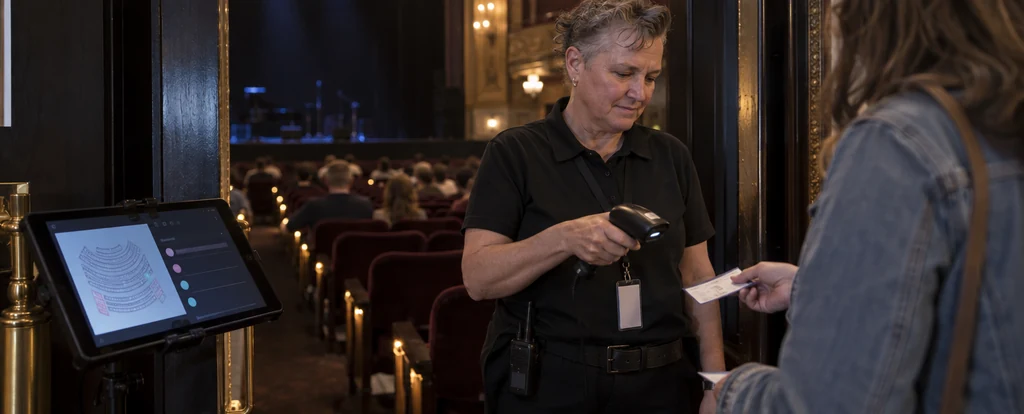
Ushers check entry codes, show patrons to their seats and keep crowds moving safely at cinemas, theatres and stadiums.
- Median salary*
- $54,600
4.4%vs last year, before tax
- People employed
- 1,700
0.0%vs last year
- Projected growth
- +4.2%
to 2035
- AI exposure*
- Moderate
- automation risk
- Average hours
- 38/wk
−2h vs all jobs
- Shortage status*
- Not in shortage
national
Ushers work the entrances, aisles and concourses of cinemas, theatres, stadiums and festival sites, and they are usually the first staff a patron meets. The job sits alongside box office work, but the emphasis is on the floor: checking entry, seating people and watching the crowd rather than processing sales. Most ushers work casually or part time, which suits students and people fitting the work around another job.
How much do ushers earn?
The median full-time salary for an usher is $54,600 per annum, before tax, up $11,600 since 2018.
Ushers are usually paid by the hour under the Miscellaneous Award or a venue's enterprise agreement, so weekly earnings depend on how many shifts are on offer. Evenings, weekends and public holidays attract penalty rates, and casual staff also receive casual loading, which is why the same work can pay quite differently from one venue to the next. Large stadiums and touring productions tend to offer more hours and longer seasons than a single-screen cinema.
What does an usher do day to day?
The list below is what fills most weeks; the exact mix shifts with seniority and whatever stage the current work is at.
- Scanning entry codes at the gate and directing patrons to their section
- Walking people to their seats and helping with accessibility requirements
- Monitoring the crowd through the event and keeping aisles and exits clear
- Enforcing venue rules, including no filming and no drinks in the auditorium
- Logging incidents and lost property for the supervisor on duty
What skills do ushers need?
Employers look for emergency response, event coordination, backed by Ticketek scanning app fluency and strong customer service.
Specialist skills
- Emergency response
- Event coordination
Software and tools
- Ticketek scanning app
- Ticketmaster Presence
- two-way radio
- handheld ticket scanner
General skills
- Customer service
- Written communication
- Attention to detail
- Safety and compliance awareness
- Physical stamina and dexterity
- Problem solving
Is the job growing?
About 1,700 people work as ushers in Australia, and employment is projected to grow 4.2% over the decade to 2035. That's modest growth: demand is steady rather than booming.
How do you become an usher?
Here's the path most ushers take, step by step.
- 1Finish school or an equivalent
There is no formal qualification for the job. 54% of ushers list Year 12 or below as their highest qualification, so leaving school early or studying part time will not hold you back.
- 2Apply directly to venues and event companies
Cinemas, theatres, stadiums, arenas and festival operators recruit ushers into casual pools, often ahead of a season or a touring show. Availability across evenings and weekends, a reference and a short interview matter more than a resume full of experience.
- 3Complete the venue's induction and in-house training
New staff are trained on evacuation procedures, crowd management, accessibility seating and the scanning system in use, whether that is the Ticketek app, Ticketmaster Presence or a handheld scanner. Many venues also put staff through a first aid certificate or a customer service refresher.
- 4Take on senior floor duties
Experienced ushers move into head usher or front-of-house supervisor roles, briefing and placing staff, managing a section during the event and writing up incident reports. That experience is what venues look for when they promote into management.
Ready to apply as an usher?
Whether you're working toward becoming an usher or already are one and want a hand with the next step (sharpening your resume for ATS screening, tightening your cover letter, or knowing what you'll actually be asked at interview), here are examples grounded in this specific role, not generic templates.
What jobs can an usher move to?
Moving into Bartender typically comes with the biggest pay rise, worth $23,400 a year more on average.
| Move to | Typical pay change | Overlap | Retraining |
|---|---|---|---|
| Bartender Ushers bring hospitality and customer service skills to bartending, moving into drink service and venue work.Known move | +$23,400 | 14% | reskill |
| Cinema and Theatre Manager Ushers bring venue knowledge and crowd management to cinema and theatre manager roles, stepping up to supervise operations.Known move | +$19,200 | 7% | reskill |
| Waiter Ushers bring hospitality and customer service skills to waiter roles, moving into food and beverage service.Known move | +$15,400 | 19% | reskill |
| Retail Assistant Ushers bring customer service and crowd management to retail assistant roles, transitioning to shop floor sales.Known move | +$9,900 | 10% | reskill |
| Ticket Seller Ushers bring customer service and venue experience to ticket seller roles, handling admissions and seating enquiries.Known move | −$5,200 | 25% | reskill |
Moves are chosen from Jobs and Skills Australia's Data on Occupation Mobility, which follows income tax records between 2011-12 and 2020-21, together with entry requirements and skill overlap. A known move is one people were seen making in that data. Pay change compares median full-time pay for the two roles.
Who works as an usher?
The typical usher is 27 years old; 51% are women, 18% work full-time, and full-timers average 38 hours a week.
- 27
- Median age
- 51%
- Female share
- 18%
- Full-time
- −2h
- vs all-jobs avg
What's it like being an usher?
The rhythm of the job follows the event calendar: a burst of activity as doors open, a quieter stretch once everyone is seated, then a quick clean-up and out. Ushers have to stay alert through the slow parts, because when something goes wrong in a crowd it happens fast. It suits people who like being around live events and do not mind standing, late finishes and repeating the same directions hundreds of times a night.
What people like
- You see the event from the inside. Ushers work the aisles during shows, concerts and matches they would otherwise pay to watch, even if they are watching the crowd as much as the stage.
- The work is active and social. You are on your feet and moving around the venue, having short exchanges with hundreds of people across a shift rather than sitting at a screen.
- Shifts are clear and finish with the event. You know what the night looks like when you clock on, and once the venue empties and the debrief is done, nothing follows you home.
- Entry is open to almost anyone. No degree or prior experience is required, training happens on the job, and the role is a common first step into the events and venue industry.
What people find hard
- Long stretches on your feet. Standing at a gate or an aisle for a full shift is physical work, and outdoor venues add heat, cold and rain to the equation.
- The hours land at night and on weekends. Most events run when everyone else is free, so evenings, weekends and public holidays are the core of the roster and social plans take second place.
- Repetition and slow periods. The same directions get repeated hundreds of times a night, and a midweek screening or a rain delay can leave long stretches with very little to do.
- Difficult patrons and limited authority. Ushers enforce the rules with people who have often been drinking, and they have little power to resolve a confrontation beyond calling a supervisor or security.
Based on our synthesis of professional-body surveys and public accounts of the role, not first-person verified reviews.
Which industries employ ushers?
Arts and Recreation Services employs the largest share of ushers, followed by Information Media and Telecommunications.
Top employing industries
- 1Arts and Recreation Services
- 2Information Media and Telecommunications
- 3Public Administration and Safety
Ranked by employment share; the source doesn't publish an exact percentage per industry.
| Year 12 or below | 54.3% | |
|---|---|---|
| Bachelor degree | 17.7% | |
| Certificate III/IV | 12.6% | |
| Diploma / Advanced Diploma | 7.8% | |
| Postgraduate | 4.6% |
Will AI replace ushers?
Entry scanning, ticketing and shift scheduling are the parts of the job most exposed to automation, since gate scanners and phone apps such as Ticketek and Ticketmaster Presence already verify most codes without anyone reading them. The rest of the work is physical and social, from walking a patron to their seat to clearing a section during an evacuation, which keeps the overall exposure moderate. Technology changes the tools an usher carries rather than the presence the job requires.
Share of typical working time by exposure level
- Guiding patrons to seats and answering questionsKnowing which aisle leads to row M, where the accessible seating is and which bar has the shortest queue at interval is local knowledge no screen supplies.30%low
- Watching the crowd and managing queuesCamera coverage and crowd analytics can flag congestion in a concourse, but someone still has to walk the aisle, open a closed section or redirect a queue.25%moderate
- Responding to incidents and evacuationsA medical episode in the stalls or a partial evacuation needs a person to assess the situation, direct patrons and stay calm while doing it.25%low
- Scanning and checking entry codes at the gateBarcode scanners and phone apps verify most passes automatically, but staff still handle failed scans, paper vouchers and people who arrive at the wrong entry.20%high
Common questions about becoming an usher
Straight answers to the questions people ask most.
How much do ushers earn?
Full-time ushers earn a median of $54,600 per year before tax. Most are paid by the hour, with penalty rates for evenings, weekends and public holidays and casual loading on top, so take-home pay depends heavily on the roster. Treat the median as a guide for full-time work rather than a fixed rate.
How do you become an usher?
Apply directly to cinemas, theatres, stadiums or event companies, which recruit ushers into casual pools with no formal qualification required. Any customer service experience helps, and availability for nights and weekends is the thing employers screen for most. Induction covers evacuation procedures, seating plans and the venue's scanning system.
Are ushers in demand?
Ushers are currently not in shortage, and employment is projected to grow 4.2% over the decade to 2035 over the decade to 2035. About 1,700 people work as ushers in Australia, so the workforce is small and openings cluster around venues in the cities and around festival seasons. Demand is driven by how much live entertainment and cinema programming runs in your area.
Will AI replace ushers?
Entry scanning, ticketing and rostering are already automated, and that trend continues, but the job is only moderately exposed because so much of it is physical and social. Guiding patrons through a venue, helping someone to an accessible seat and clearing a section during an evacuation all need a person on the floor. Expect the technology to change the tools you use rather than remove the role.
What can ushers move into?
Cinema and theatre manager is the usual step up, with ushers taking on rostering, staff supervision and venue operations, and that role pays $19,200 more. Bartending pays $23,400 more and suits ushers already working late shifts who want drink service work, and the hospitality and customer service skills carry across to both. Each move needs some retraining, particularly the step into management.
What hours do ushers work?
Ushers average 38 hours a week in full-time roles, but most work is casual and tied to the event schedule. Expect evenings, weekends and public holidays, with short shifts for a single screening and longer ones at stadiums or festivals. Split shifts are common when a venue runs matinee and evening sessions on the same day.
Related roles
Not sure this is you? Take the career quiz and get a ranked shortlist of roles that fit how you like to work.