Airport Ground Crew
Airport ground crew load and unload aircraft, drive baggage and freight between the terminal and the apron, and turn each flight around on schedule.
- Median salary*
- $65,000
4.5%vs last year, before tax
- People employed
- 4,000
0.0%vs last year
- Projected growth
- +3.7%
to 2035
- AI exposure*
- Moderate
- automation risk
- Average hours
- 41/wk
+1h vs all jobs
- Shortage status
- Not in shortage
national
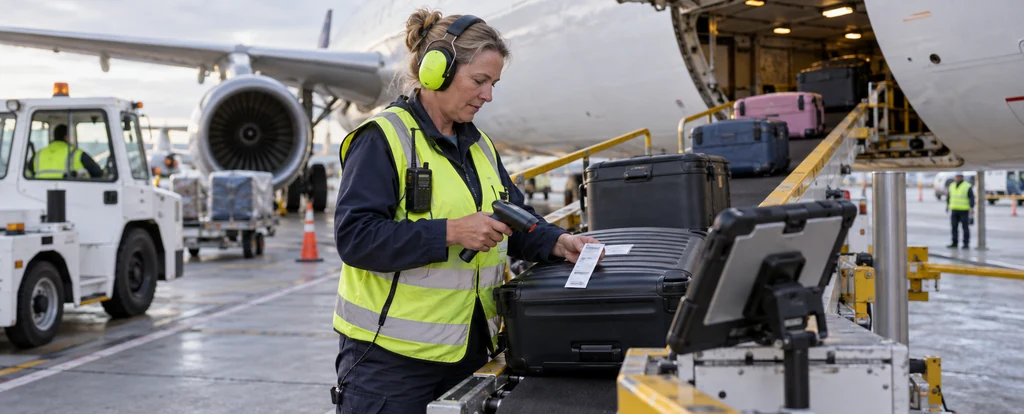
Airport ground crew work on the apron and in baggage halls, servicing arriving and departing aircraft and moving what goes in and out of them. Most are employed either by an airline or by a ground handling company that contracts to several carriers, so the same job can look quite different depending on who signs the pay. Shift work is the norm, including nights, weekends and public holidays, and everything happens inside strict aviation safety and security rules.
How much do airport ground crews earn?
The median full-time salary for an airport ground crew is $65,000 per annum, before tax, up $13,800 since 2018.
Base rates come from an award or, at the larger airlines and handlers, an enterprise agreement, and shift and weekend penalties can make up a large share of what you actually take home. Casual and part-time starts are common with some handlers, which changes both the hourly rate and how steady the income is. Moving onto a higher classification usually comes with the endorsements you hold, such as an airside driving authority or a licence to operate heavier ground support equipment.
What does an airport ground crew do day to day?
The list below is what fills most weeks; the exact mix shifts with seniority and whatever stage the current work is at.
- Loading and unloading baggage, mail and freight from aircraft holds against a fixed departure time
- Driving tugs, belt loaders, stairs and other ground support equipment between the terminal and the aircraft
- Marshalling aircraft on arrival and walking the pushback path before departure
- Scanning and reconciling bags so delayed luggage can be traced and rerouted to the right flight
- Doing the apron safety checks before each arrival, including foreign object debris sweeps and reporting damage or hazards
What skills do airport ground crews need?
Employers look for operations management, plant and equipment operation, driving and transport operations, backed by Baggage handling system scanners fluency and strong safety and compliance awareness.
Specialist skills
- Operations management
- Plant and equipment operation
- Driving and transport operations
Software and tools
- Baggage handling system scanners
- Handheld barcode and bag tag scanners
- Aircraft turnaround and apron management software
- Tugs, belt loaders and ground support equipment
- Two-way radios
General skills
- Safety and compliance awareness
- Customer service
- Attention to detail
- Physical stamina and dexterity
- Written communication
Is the job growing?
About 4,000 people work as airport ground crews in Australia, and employment is projected to grow 3.7% over the decade to 2035. That's modest growth: demand is steady rather than booming.
How do you become an airport ground crew?
Here's the path most airport ground crews take, step by step.
- 1Get a driver licence and start the security checks
Ground crew drive airside vehicles, so a full driver licence is usually the minimum, and the job requires an Aviation Security Identification Card (ASIC). That involves a background check, and employers normally sponsor the application once you have a job offer.
- 2Train in aviation ground operations, or plan to learn on the job
A Certificate II or III in aviation (ground operations) from TAFE or a registered training organisation takes a few months and strengthens an application, but plenty of employers run their own induction instead, so it helps more than it gates.
- 3Apply to airlines and ground handling companies
The larger handlers recruit in waves, often for casual or part-time starts, and the process includes a medical, drug and alcohol screening, a police check and a check that you can work nights and weekends.
- 4Pick up the endorsements that open up the roster
An airside driving authority and tug, belt loader or stairs endorsements decide what you are allowed to operate, and type-specific training covers the aircraft your employer services. These qualifications shape which shifts you can cover and what you are paid.
- 5Move into coordination or a licensed speciality
Experienced crew move into turnaround coordination or team leading, or toward licence-based work such as aircraft refuelling, which needs a short fuel handling course.
Ready to apply as an airport ground crew?
Whether you're working toward becoming an airport ground crew or already are one and want a hand with the next step (sharpening your resume for ATS screening, tightening your cover letter, or knowing what you'll actually be asked at interview), here are examples grounded in this specific role, not generic templates.
What jobs can an airport ground crew move to?
Moving into Pilot typically comes with the biggest pay rise, worth $72,900 a year more on average.
| Move to | Typical pay change | Overlap | Retraining |
|---|---|---|---|
| Pilot Ground crew with aviation knowledge can pursue pilot training, though this requires a commercial licence and substantial requalification.Known move | +$72,900 | 32% | requalify |
| Truck Driver Airport ground crew bring vehicle and freight handling experience, moving to truck driving with licensing and further training.Known move | +$36,900 | 32% | reskill |
| Shipping Clerk Airport ground crew bring freight handling and transport coordination, moving into shipping clerk work with further study in documentation and customs.Known move | +$23,800 | 7% | reskill |
| Aircraft Refueller Ground crew understand apron safety and aircraft servicing, so refuelling aircraft is a natural step with a short fuel handling course. | +$15,600 | 50% | short course |
| Flight Attendant Ground crew already know airport safety and turnaround routines, and can move into cabin crew with customer service training.Known move | +$13,200 | 21% | reskill |
Moves are chosen from Jobs and Skills Australia's Data on Occupation Mobility, which follows income tax records between 2011-12 and 2020-21, together with entry requirements and skill overlap. A known move is one people were seen making in that data. Pay change compares median full-time pay for the two roles.
Who works as an airport ground crew?
The typical airport ground crew is 35 years old; 84% are men, 41% work full-time, and full-timers average 41 hours a week.
- 35
- Median age
- 16%
- Female share
- 41%
- Full-time
- +1h
- vs all-jobs avg
What's it like being an airport ground crew?
The job runs to the flight schedule rather than to your own pace, and a turnaround is a short shared task with a departure time that does not move. Crew work in bursts as aircraft arrive and then reset for the next one, with the terminal and baggage hall filling the gaps. It suits people who like being outside, can keep moving in poor weather, and prefer a shift that ends with something visibly finished.
What people like
- You see the flight leave. Every turnaround has a moment when the last door closes and the aircraft pushes back, and you know straight away whether the job went well.
- The work moves around. A shift can take in the apron, the baggage hall, the tarmac and the terminal, so you are not stuck in one spot for eight hours.
- Small teams and short radio calls. Crew on a turnaround learn each other's signals quickly, and instructions arrive as a few words over the radio rather than a meeting.
- Rosters suit some lives better than a nine to five. Shift patterns often bring full days off midweek, and extra shifts come up regularly for people who want them.
What people find hard
- Weather is part of the job. Heat, rain, wind and cold all arrive with the aircraft, and the turnaround clock does not pause for any of them.
- A late aircraft lands on you. When the inbound flight runs late, the same work has to happen in less time, and a shift that looked quiet can stretch into overtime.
- The body carries the load. Repetitive lifting, engine noise and long hours in steel-capped boots add up, which is why crew who look after their back and knees early tend to last longer.
- Seniority drives the roster. New starters usually get the least popular shifts, including nights and weekends, until they build enough time to bid for better ones.
Based on our synthesis of professional-body surveys and public accounts of the role, not first-person verified reviews.
Which industries employ airport ground crews?
Transport, Postal and Warehousing employs the largest share of airport ground crews.
Top employing industries
- 1Transport, Postal and Warehousing
Ranked by employment share; the source doesn't publish an exact percentage per industry.
| Year 12 or below | 52.6% | |
|---|---|---|
| Certificate III/IV | 20.8% | |
| Diploma / Advanced Diploma | 10.9% | |
| Bachelor degree | 9.9% | |
| Postgraduate | 2.2% |
Will AI replace airport ground crews?
This is a moderately exposed job. Automated sortation and barcode tracking already route bags and record where they went, and turnaround software logs every stage of a service, so the record keeping and the routing are increasingly handled by systems. What keeps the role grounded is the physical work on the apron, the driving of ground support equipment and the quick decisions crews make when a delay compresses the schedule.
Share of typical working time by exposure level
- Sorting and reconciling baggageScanners read bag tags and sortation systems send most luggage to the right flight on their own, so the job is now resolving exceptions, such as a bag that missed its connection.30%high
- Running the turnaround to the clockTurnaround software flags each milestone and predicts the delay, but someone still decides which of the available crew gets moved to the fuel or catering job to recover the schedule.25%moderate
- Operating tugs, belt loaders and stairsDriving equipment around live aircraft and positioning it safely under a hold is hands-on work that automation has barely touched outside a few trials.25%low
- Marshalling, apron safety and passenger escortsWalking the pushback path, giving hand signals to the pilot and sweeping the apron for foreign object debris all rely on being physically there and looking at the aircraft.20%low
Moves least exposed to AI
These career moves from airport ground crew work are rated low for AI exposure:
- Aircraft Refueller
Solid skill overlap (50%), short course to get there, and a low automation-risk profile.
- Pilot
Some skill overlap (32%), requalify to get there, and a low automation-risk profile.
Common questions about becoming an airport ground crew
Straight answers to the questions people ask most.
How much do airport ground crew earn?
Full-time airport ground crew earn a median of $65,000 per year before tax. What you take home depends heavily on shift and weekend penalties, on whether you are covered by an airline enterprise agreement or a handler award, and on whether your start is casual or permanent.
How do you become an airport ground crew member?
You apply to an airline or a ground handling company, usually with a driver licence, a police check and the ability to work shifts. Employers provide the aircraft-specific training and sponsor your Aviation Security Identification Card, so most people learn the job after they are hired rather than before.
Are airport ground crew in demand?
Airport ground crew are currently not in shortage, and employment is projected to grow 3.7% over the decade to 2035 over the decade to 2035. Vacancies follow passenger numbers rather than a single airline, so openings cluster where an airport is expanding or a handler picks up a new contract. Roles are often advertised close to the start date, which makes applying directly to airlines and handlers worthwhile even when nothing is listed.
Will automation reduce airport ground crew jobs?
Automation already does more of the tracking than it used to, with scanners reading bag tags, sortation systems routing luggage and turnaround software logging every milestone of a service. The physical work, lifting, driving equipment, marshalling aircraft and checking the apron, stays with people, as does the judgement needed when a delay forces the crew to reorder the job. Crew who learn the systems side as well as the manual tasks keep the most options open.
Do you need a qualification to start?
No, and the workforce reflects that: 53% of people working as airport ground crew finished school at Year 12 or below. A Certificate II or III in aviation ground operations can help you stand out in a competitive intake, but the training that matters most is the type-specific instruction your employer delivers.
What can airport ground crew move into?
Aircraft refuelling uses the same apron safety and aircraft servicing knowledge and needs only a short fuel handling course, with pay of $15,600 more. Crew who want to get away from the apron can move into truck driving, where freight handling transfers directly, at $36,900 more, or into cabin crew with customer service training, at $13,200 more. Pilot training is the long version of the same interest in aircraft and requires a commercial licence.
Related roles
Not sure this is you? Take the career quiz and get a ranked shortlist of roles that fit how you like to work.