Anthropologist
Anthropologists study how people live and organise their lives, usually through long-term fieldwork within a community.
- Median salary*
- $91,000
3.9%vs last year, before tax
- People employed*
- 1,400
0.0%vs last year
- Projected growth*
- +6%
to 2035
- AI exposure*
- Moderate
- automation risk
- Average hours*
- 39/wk
−1h vs all jobs
- Shortage status*
- Not in shortage
national
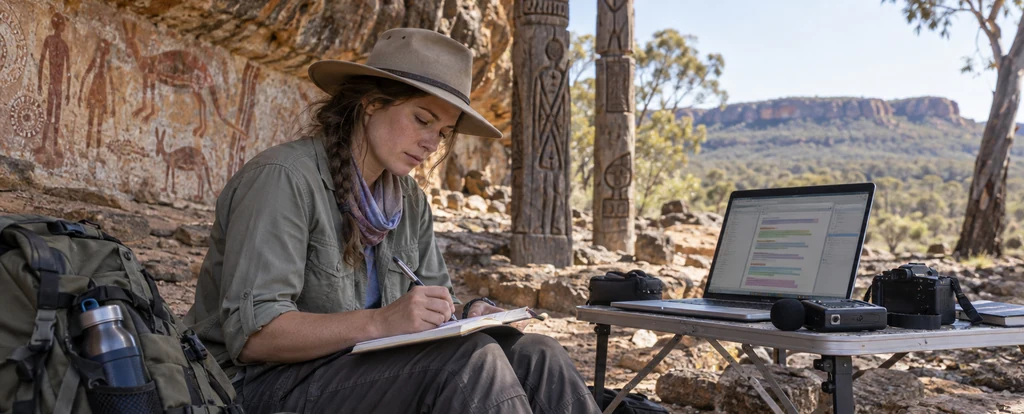
Most work in universities, government agencies, museums and consulting firms, where the research feeds cultural heritage management, social policy and the design of programs. What separates anthropology from its neighbouring social sciences is the fieldwork: months spent inside a community, taking part in daily life rather than surveying it from a distance. It is often confused with sociology, which tends to work at a larger scale with surveys and population data.
How much do anthropologists earn?
The median full-time salary for an anthropologist is $91,000 per annum, before tax, up $18,900 since 2018.
Sector moves pay more than seniority here: universities and government agencies pay on set classifications and enterprise agreements, while consulting firms set rates project by project. Casual and fixed-term contracts are common early in a career, so a year's earnings can sit below what the full-time figure suggests. Fieldwork budgets sometimes cover travel and living costs during a project, which affects what you spend rather than what you are paid.
What does an anthropologist do day to day?
The list below is what fills most weeks; the exact mix shifts with seniority and whatever stage the current work is at.
- Running fieldwork in a community, often over several months and sometimes living locally
- Recording interviews, observations and life histories as detailed field notes
- Coding and analysing notes and transcripts with software such as NVivo, ATLAS.ti or R
- Writing journal articles, heritage assessments and reports for the body funding the project
- Advising government agencies, museums or community organisations on cultural heritage and policy
What skills do anthropologists need?
Employers look for field research and sampling, data analysis, community engagement, backed by NVivo fluency and strong written communication.
Specialist skills
- Field research and sampling
- Data analysis
- Community engagement
- Policy analysis and advice
- Teaching and instruction
Software and tools
- NVivo
- ATLAS.ti
- SPSS
- R
General skills
- Written communication
- Attention to detail
- Presenting and data storytelling
Is the job growing?
About 1,400 people work as anthropologists in Australia, and employment is projected to grow 6% over the decade to 2035. That's modest growth: demand is steady rather than booming.
How do you become an anthropologist?
Here's the path most anthropologists take, step by step.
- 1Start with a bachelor degree in anthropology or a related social science
Three years full time gives you the base qualification for the field. Look for a course with a research methods or fieldwork unit, because postgraduate programs and employers both expect that grounding.
- 2Add honours, a master's or a graduate diploma
A fourth year or a postgraduate qualification is where most people get their first supervised research project and their first real fieldwork experience. It is usually the minimum for research assistant and policy roles.
- 3Build project experience outside your degree
Volunteering or working casually with heritage consultants, museums, community organisations or a university research centre gives you referees and examples to talk about. Paid work as a research assistant on someone else's study counts just as much.
- 4Consider a PhD for academic and senior research roles
It takes three to four years and is effectively the entry requirement for continuing academic positions and some senior government research jobs. It is not needed for consulting, museum or community work.
- 5Apply across universities, government, museums and consulting firms
There is no registration or licence to practise in Australia, so hiring turns on your research experience, writing samples and referees. Applications often ask for a short piece of your own analysis alongside your resume.
Ready to apply as an anthropologist?
Whether you're working toward becoming an anthropologist or already are one and want a hand with the next step (sharpening your resume for ATS screening, tightening your cover letter, or knowing what you'll actually be asked at interview), here are examples grounded in this specific role, not generic templates.
What jobs can an anthropologist move to?
Moving into Linguist typically comes with the biggest pay rise, worth $10,400 a year more on average.
| Move to | Typical pay change | Overlap | Retraining |
|---|---|---|---|
| Linguist Anthropologist brings cultural and fieldwork understanding to linguistics, though a substantial course is needed to specialise in language analysis. | +$10,400 | 44% | reskill |
| Sociologist Anthropologist brings ethnography, social theory and qualitative research to sociology, needing only a short course to bridge the disciplines. | +$7,800 | 50% | short course |
| Historian Anthropologist brings cultural analysis, fieldwork and research writing to history, with minimal retraining for the shared humanities base. | +$0 | 64% | minimal |
| Health Promotion Officer Anthropologist brings cultural insight and social research to health promotion, with reskilling needed for public health practice and policy. | +$0 | 40% | reskill |
| Community Development Officer Anthropologist brings cross-cultural understanding and community research to community development, with reskilling for local policy and program work. | −$16,000 | 43% | reskill |
Moves are chosen from Jobs and Skills Australia's Data on Occupation Mobility, which follows income tax records between 2011-12 and 2020-21, together with entry requirements and skill overlap. A known move is one people were seen making in that data. Pay change compares median full-time pay for the two roles.
Who works as an anthropologist?
The typical anthropologist is 41 years old; 60% are women, 68% work full-time, and full-timers average 39 hours a week.
- 41
- Median age
- 60%
- Female share
- 68%
- Full-time
- −1h
- vs all-jobs avg
What's it like being an anthropologist?
The work moves through long phases: preparation and ethics approval, then intense fieldwork, then a slower stretch of analysis and writing that can run longer than the fieldwork itself. Many positions are funded by a grant or a contract, so people often hold a series of fixed-term roles before, if ever, they land a continuing one. It suits someone who is patient with slow research and enjoys writing, since a large share of the job happens at a desk after the interesting part is over.
What people like
- Time inside a community. Fieldwork puts you in the middle of everyday life rather than looking at it from a desk, and the understanding that comes from being there cannot be assembled any other way.
- Room to follow an unexpected question. Within a project's brief there is usually space to chase a thread that opens up mid-fieldwork, and the most useful findings often come from those detours.
- Research that reaches a decision. Heritage assessments, policy advice and program evaluations mean your work can inform what an agency or a museum actually does, rather than only adding to the literature.
- Skills that move between sectors. The same research and writing abilities are wanted in universities, government, museums and consulting firms, so a bad year in one part of the sector is not the end of the career.
What people find hard
- Short contracts. Many research roles are tied to a grant and end when the funding does, so job hunting can come round again every couple of years, often at the same time as your colleagues'.
- Long stretches away from home. Fieldwork can mean months in a remote community, which is hard on a partner, children or a mortgage, and it is usually the junior researchers who go.
- Slow timelines. Ethics approval, community consultation and peer review can stretch a project across several years, so feedback on your thinking arrives late.
- Solitary desk stages. Coding notes and drafting for weeks on end is quiet work, and even people who love fieldwork can find the writing phase isolating.
Based on our synthesis of professional-body surveys and public accounts of the role, not first-person verified reviews.
Which industries employ anthropologists?
Tertiary education employs the largest share of anthropologists, followed by Government administration.
Top employing industries
- 1Tertiary education
- 2Government administration
- 3Scientific research services
- 4Heritage and museum operations
- 5Management consulting services
Ranked by employment share; the source doesn't publish an exact percentage per industry.
| Bachelor degree | 52% | |
|---|---|---|
| Postgraduate | 26% | |
| Diploma / Advanced Diploma | 13% | |
| Other | 9% |
Will AI replace anthropologists?
AI reaches the desk stages of anthropology more than the fieldwork, so overall exposure is moderate. Transcription, translation, literature searching and the first pass of coding are all faster with current tools, which changes how long a project's analysis takes. Being in a community, reading what people mean by what they do, and deciding how they are represented still depend on the researcher being there.
Share of typical working time by exposure level
- Writing reports, articles and heritage adviceDrafting tools help with structure and editing, but the argument, the evidence and the recommendations are yours, and a client, committee or journal holds you to them.40%moderate
- Fieldwork and participant observationLiving in a community for months and noticing how people treat each other is not something a model can do, though recording apps make it easier to capture what you see.25%low
- Transcribing and coding interviewsSpeech-to-text and qualitative coding tools handle the mechanical sorting of a transcript, but you still decide which themes matter and what counts as evidence.20%high
- Literature reviews and desk researchSearch tools and summarisation cut through a stack of papers or a long report quickly, and every source still needs checking before you cite it.15%high
Moves least exposed to AI
These career moves from anthropologist work are rated low for AI exposure:
- Community Development Officer
Solid skill overlap (43%), reskill to get there, and a low automation-risk profile.
Common questions about becoming an anthropologist
Straight answers to the questions people ask most.
How much do anthropologists earn?
$91,000 per annum, before tax, is the median for full-time anthropologists. Sector matters more than job title: universities and government pay on set classifications, while consulting rates vary with each project. Casual and fixed-term work is common early on, so annual earnings can sit below the full-time median.
How do you become an anthropologist?
The usual route is a bachelor degree in anthropology followed by honours or a master's with a supervised research project. A PhD is the standard entry point for academic and senior research positions, while consulting, museum and community roles often accept a master's plus demonstrated project experience. There is no registration or licence required in Australia.
Are anthropologists in demand?
Anthropologists are currently not in shortage, and employment is projected to grow 6% over the decade to 2035. The workforce is small, at about 1,400 people, and most roles depend on research funding, so openings sit in universities, government agencies and consulting firms rather than across the economy. Practical project experience and a strong writing sample are what separate applicants.
Will AI replace anthropologists?
The exposure is moderate rather than sweeping, and it lands mostly on the paperwork. Transcription, translation, literature searching and the first pass of coding interview data are quicker with current tools, which shortens the desk stages of a project. Fieldwork, the interpretation of what people meant, and decisions about how a community is represented still rest with the researcher.
What else can anthropologists do?
History and sociology are the closest moves, since the shared humanities base and research methods mean little retraining, and moving into history leaves pay about the same. Linguistics takes more study to specialise in language analysis, though fieldwork and cultural interpretation carry across. Community development and health promotion also take anthropologists, usually after some reskilling in policy and program work.
Do you need a PhD to work as an anthropologist?
No, but it depends on the path you want. Universities effectively require one for continuing academic roles and some senior government research positions prefer it, while consulting firms, museums and community organisations hire on project experience and writing ability.
Related roles
Not sure this is you? Take the career quiz and get a ranked shortlist of roles that fit how you like to work.