Ecologist
Ecologists study how plants, animals and their habitats interact, and use that evidence to guide conservation, land management and development decisions.
- Median salary
- $101,600
3.9%vs last year, before tax
- People employed
- 5,500
1.9%vs last year
- Projected growth
- +16.6%
to 2035
- AI exposure*
- Moderate
- automation risk
- Average hours
- 42/wk
+2h vs all jobs
- Shortage status
- Not in shortage
national
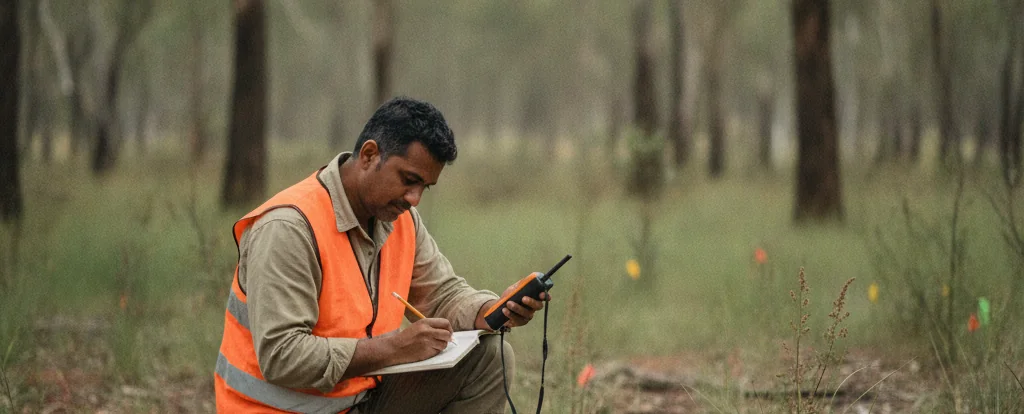
Ecologists split their week between field survey work and the desk analysis that follows, turning species and habitat records into reports for planners, land managers and regulators. Most work for environmental consultancies, government agencies or universities, often moving between projects as contracts and funding allow. The role sits close to environmental science, but an ecologist's focus stays on species, populations and ecosystems rather than pollution control or broader compliance monitoring.
How much do ecologists earn?
The median full-time salary for an ecologist is $101,600 per annum, before tax, up $21,100 since 2018.
Pay varies more by employer than by the work itself: consultancies, state agencies and universities each set their own bands, and consultancies often add allowances for remote or extended field stints. Earnings tend to grow with project leadership, so people who move into managing larger assessments or signing off on reports usually out-earn those who stay field-based. Many early roles are fixed-term contracts tied to funding, which can hold pay flat for the first few years.
What does an ecologist do day to day?
The list below is what fills most weeks; the exact mix shifts with seniority and whatever stage the current work is at.
- Walking transects and quadrats in all weather to record species and habitat condition
- Trapping, tagging or spotlighting animals during nocturnal or breeding-season survey windows
- Cross-checking field records against desktop mapping and database records back at the office
- Writing impact assessments and referral reports that translate findings for planners and regulators
- Applying for the next contract or grant, because consultancy and research work is usually project-based
What skills do ecologists need?
Employers look for field research and sampling, data analysis, statistical modelling, backed by GIS software (ArcGIS) fluency and strong problem solving.
Specialist skills
- Field research and sampling
- Data analysis
- Statistical modelling
- Environmental assessment
- Policy analysis and advice
- Project management
Software and tools
- GIS software (ArcGIS)
- R or Python (statistical analysis)
- GPS and field monitoring equipment
- SPSS or similar databases
- Environmental modelling software
General skills
- Problem solving
- Written communication
Is the job growing?
About 5,500 people work as ecologists in Australia, and employment is projected to grow 16.6% over the decade to 2035. That's healthy, above-average growth, and the role should stay in solid demand.
How do you become an ecologist?
Here's the path most ecologists take, step by step.
- 1Start with a science degree
A three-year Bachelor of Science majoring in ecology, environmental science or environmental biology is the standard entry point. Choose units with plenty of field and statistics content, because surveying and data analysis are what most employers screen for.
- 2Add honours or a postgraduate qualification
A fourth honours year or a master's builds research and modelling skills and is common in this field, where Bachelor degree is the most held qualification (54% of the workforce) and a large minority also hold a postgraduate degree. A PhD is only necessary for research and academic roles.
- 3Get field experience while you study
Volunteering with councils, Landcare groups or university research projects, and paid seasonal work as a field assistant, gives you the survey hours that graduate employers ask about. Practical experience with identification and data collection counts for more than grades in most hiring rounds.
- 4Build the practical licences and skills
A driver's licence is close to essential for site work, and first aid, four-wheel-drive training and fauna handling approvals under state wildlife rules are often required. Learn GIS and a statistical language such as R, since both appear in most job ads.
- 5Apply for graduate programs and consultancies
State environment agencies, ecological consultancies and research organisations run graduate and assistant-level intakes, usually advertised in the second half of the year. Membership of the Ecological Society of Australia gives access to job notices and mentoring.
Ready to apply as an ecologist?
Whether you're working toward becoming an ecologist or already are one and want a hand with the next step (sharpening your resume for ATS screening, tightening your cover letter, or knowing what you'll actually be asked at interview), here are examples grounded in this specific role, not generic templates.
What jobs can an ecologist move to?
Moving into Environmental Manager typically comes with the biggest pay rise, worth $20,600 a year more on average.
| Move to | Typical pay change | Overlap | Retraining |
|---|---|---|---|
| Environmental Manager Ecologists bring ecosystem and land management knowledge to environmental management roles, with further study in management.Known move | +$20,600 | 36% | reskill |
| Zoologist Ecologists' animal survey and habitat assessment experience transfers directly to zoologist work, needing little retraining.Known move | −$2,800 | 67% | minimal |
| Botanist Ecologists with plant identification and survey skills can specialise as botanists, adding formal plant science study.Known move | −$5,400 | 37% | reskill |
| Biologist Ecologists' broad biological training supports a move into general biology roles, with a short course in specialist areas.Known move | −$5,400 | 58% | short course |
| Marine Biologist Ecologists can move into marine biology by applying ecological survey methods to marine habitats.Known move | −$21,300 | 61% | minimal |
Moves are chosen from Jobs and Skills Australia's Data on Occupation Mobility, which follows income tax records between 2011-12 and 2020-21, together with entry requirements and skill overlap. A known move is one people were seen making in that data. Pay change compares median full-time pay for the two roles.
Who works as an ecologist?
The typical ecologist is 39 years old; 53% are men, 76% work full-time, and full-timers average 42 hours a week.
- 39
- Median age
- 47%
- Female share
- 76%
- Full-time
- +2h
- vs all-jobs avg
What's it like being an ecologist?
The work runs on two rhythms: blocks of fieldwork, often away from home and timed to breeding seasons or survey windows, then long desk stretches turning that data into reports. Development approvals set hard deadlines, so a busy summer survey season is usually followed by an intense reporting period. It suits people who like being outdoors but are equally willing to work through spreadsheets and write.
What people like
- Sites you would never otherwise see. Survey work takes you onto farmland, mine sites, rail corridors and remnant bushland that most people never get access to.
- Evidence that changes a decision. A well-run survey can shift a development footprint, add a condition to an approval or protect a patch of habitat, which makes the reporting feel consequential.
- A specialism to build on. Many ecologists end up known for a group or method, whether that is orchids, bats, acoustic monitoring or offset design, and that depth opens up niche work.
- Variety between field and desk. The job alternates between physical days outdoors and quieter analytical work, which suits people who would find either alone too repetitive.
What people find hard
- Project-based contracts. Consultancy and research roles are often tied to a single project or funding round, so job security can be thin in the first few years and you may change employers to stay employed.
- Fieldwork in whatever the weather does. Surveys go ahead in heat, rain and cold, sometimes at night or before dawn, and remote sites mean long drives and nights in basic accommodation.
- Deadlines set by developers. Impact assessments are timed around planning and approval processes, so reporting pressure clusters when a client's submission date cannot move.
Based on our synthesis of professional-body surveys and public accounts of the role, not first-person verified reviews.
Which industries employ ecologists?
Professional, Scientific and Technical Services employs the largest share of ecologists, followed by Public Administration and Safety.
Top employing industries
- 1Professional, Scientific and Technical Services
- 2Public Administration and Safety
- 3Electricity, Gas, Water and Waste Services
Ranked by employment share; the source doesn't publish an exact percentage per industry.
| Bachelor degree | 54.4% | |
|---|---|---|
| Postgraduate | 39% | |
| Diploma / Advanced Diploma | 1.9% | |
| Year 12 or below | 1.8% | |
| Certificate III/IV | 1.7% |
Will AI replace ecologists?
AI reaches some of this job but not most of it. Species identification from camera trap images, acoustic recordings and remote sensing is increasingly automated, and AI tools can draft literature summaries, statistical code and first-pass report text, which speeds up the desk side of the role. Field survey, habitat assessment, negotiating offsets and signing off on approval conditions stay with the ecologist because they depend on being on site and being accountable for the finding.
Share of typical working time by exposure level
- Field survey and species identificationWalking transects, setting traps and identifying plants and animals in the field or from specimens still needs a person on site, often in difficult conditions.35%low
- Advising clients and negotiating offsetsAgreeing offsets and management conditions with planners, landholders and regulators is a conversation that rests on professional judgement and a named signatory.25%low
- Desktop data analysis and species distribution modellingScripts in R and Python and GIS models can now be drafted and rerun quickly, though you still decide whether the output is ecologically sound.20%high
- Literature reviews and impact assessment draftingAI produces a usable first draft of a referral report or a summary of published research, which you then check against your own survey data and the relevant regulation.20%high
Moves least exposed to AI
These career moves from ecologist work are rated low for AI exposure:
- Zoologist
High skill overlap (67%), little retraining to get there, and a low automation-risk profile.
- Marine Biologist
High skill overlap (61%), little retraining to get there, and a low automation-risk profile.
Common questions about becoming an ecologist
Straight answers to the questions people ask most.
How much does an ecologist earn in Australia?
Full-time ecologists earn a median of $101,600 per year before tax, though pay ranges widely by employer and seniority. Consultancies, state agencies and universities each set their own bands, and roles that involve running projects or signing off on assessments generally pay more than field-based positions. This is a guide to typical earnings rather than a figure for any particular job.
How do you become an ecologist?
Most ecologists start with a science degree majoring in ecology or environmental science, then add honours or a master's and as much field experience as they can get. Practical skills in species identification, GIS and statistics matter as much as the qualification when you apply for graduate roles. A PhD is only needed for research and academic careers.
Are ecologists in demand in Australia?
Ecologists are currently not in shortage, and employment is projected to grow 16.6% over the decade to 2035. The work follows environmental regulation and development approvals, so openings cluster in private consultancies, state agencies and environmental water and utilities bodies. Graduate intakes can still be competitive, and willingness to relocate or travel for field work widens your options.
Will AI replace ecologists?
No, but it is changing parts of the job. AI tools now speed up species identification from camera trap images and audio recordings, and can draft literature reviews and statistical code, which trims the time spent on those tasks. Field survey, habitat assessment, stakeholder negotiation and the professional judgement behind an approval condition still need a person on site and accountable for the result.
What jobs can an ecologist move into?
Experienced ecologists often move into environmental management, where ecological knowledge supports broader land and compliance decisions and pay is $20,600 more. Moves into zoologist roles are common because animal survey and habitat assessment skills carry over almost unchanged, though pay is $2,800 less. Others specialise as botanists after further plant science study, or set up their own ecological consultancy, which is a common progression and often where earnings grow most.
What does an ecologist do in a typical week?
Weeks rarely look alike: a survey block might mean four days on site recording vegetation and fauna, followed by days at a desk entering data, running analysis and drafting a report. Senior ecologists spend more of the week on project management, client meetings and reviewing other people's work.
Related roles
Not sure this is you? Take the career quiz and get a ranked shortlist of roles that fit how you like to work.