Marine Biologist
Marine biologists study the animals and plants of the ocean, from reef fish to whale populations, and the habitats they depend on.
- Median salary
- $80,300
4.3%vs last year, before tax
- People employed
- 760
8.6%vs last year
- Projected growth
- +19.8%
to 2035
- AI exposure*
- Low
- automation risk
- Average hours
- 41/wk
+1h vs all jobs
- Shortage status
- Not in shortage
national
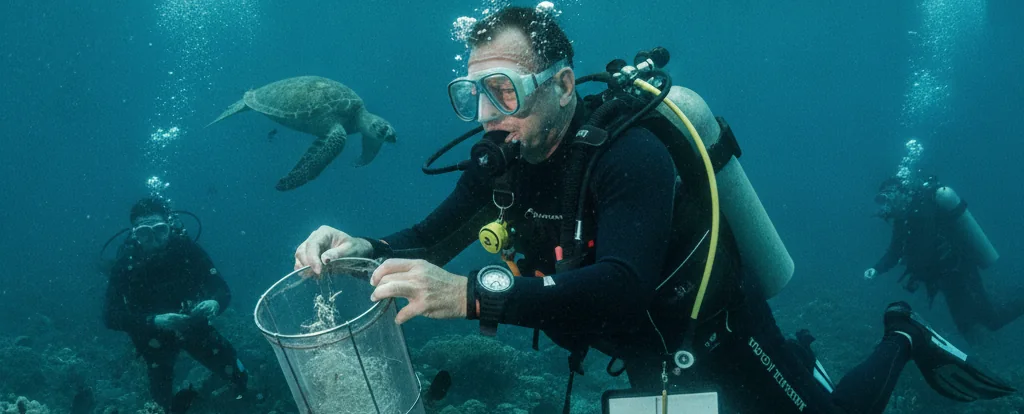
Marine biologists study marine organisms and the ecosystems they live in, splitting the week between fieldwork such as diving, boating and sampling, and laboratory and statistical analysis back on shore. Most work for universities, government agencies such as fisheries departments, or environmental consultancies, and 63% of the people in the role hold a postgraduate qualification on top of a science degree. Unlike an oceanographer, who studies the physical and chemical properties of the ocean itself, a marine biologist focuses on the animals and plants living in it.
How much do marine biologists earn?
The median full-time salary for a marine biologist is $80,300 per annum, before tax, up $16,900 since 2018.
Pay depends on the sector: universities and government agencies pay against enterprise agreements with set bands, while consultancies and not-for-profits vary more with the size of the organisation and the work on offer. Early careers are often built on short-term contracts tied to research grants, so annual earnings can move around between projects. Marine biology is a small field with few senior positions, and a doctorate plus a published research record is usually what separates applicants when those roles come up.
What does a marine biologist do day to day?
The list below is what fills most weeks; the exact mix shifts with seniority and whatever stage the current work is at.
- Diving, wading or working from a boat to collect water, sediment and animal samples
- Running laboratory work on specimens brought back weeks or months earlier
- Tagging, measuring or counting animals to track a population across seasons and years
- Analysing survey and monitoring data in R or Python to test whether a pattern is real
- Writing grant applications and reports so the next season of fieldwork is funded and the results reach the people who act on them
What skills do marine biologists need?
Employers look for field research and sampling, laboratory analysis, data analysis, backed by SCUBA diving equipment fluency and strong problem solving.
Specialist skills
- Field research and sampling
- Laboratory analysis
- Data analysis
- Environmental assessment
- Statistical modelling
Software and tools
- SCUBA diving equipment
- plankton nets and sampling gear
- spectrophotometer
- GIS software
- R or Python (statistical analysis)
General skills
- Problem solving
- Written communication
Is the job growing?
About 760 people work as marine biologists in Australia, and employment is projected to grow 19.8% over the decade to 2035. That's healthy, above-average growth, and the role should stay in solid demand.
How do you become a marine biologist?
Here's the path most marine biologists take, step by step.
- 1Complete a science degree
A three-year Bachelor of Science with a marine biology, biology or ecology major is the standard starting point, and it covers the fieldwork and statistics units you will use later.
- 2Get field experience while you study
Volunteering with a university research group, a monitoring program or a conservation project builds the hours on boats and in the water that employers ask about, and it shows you early whether the fieldwork suits you.
- 3Add an honours year or postgraduate study
Honours is the usual entry to research work, and most marine biologists go on to a master's or a PhD, which is what opens research, policy and academic roles.
- 4Pick up the practical qualifications
A scientific diving qualification, through a university diving program or the Australian Diver Accreditation Scheme, plus a boat licence and first aid training, are common requirements and are usually gained alongside study.
- 5Apply across the sector
Graduate and research assistant roles appear in universities, state fisheries and environment departments, museums, marine park authorities and environmental consultancies, and fixed-term contracts are common for the first few years.
Ready to apply as a marine biologist?
Whether you're working toward becoming a marine biologist or already are one and want a hand with the next step (sharpening your resume for ATS screening, tightening your cover letter, or knowing what you'll actually be asked at interview), here are examples grounded in this specific role, not generic templates.
What jobs can a marine biologist move to?
Moving into Environmental Scientist typically comes with the biggest pay rise, worth $21,300 a year more on average.
| Move to | Typical pay change | Overlap | Retraining |
|---|---|---|---|
| Environmental Scientist Marine biologists bring field sampling and ecosystem knowledge to environmental science, assessing impacts and informing policy on coastal and marine issues.Known move | +$21,300 | 67% | minimal |
| Ecologist Marine biologists move into ecology, using their understanding of species interactions and habitats to study terrestrial and aquatic ecosystems.Known move | +$21,300 | 61% | minimal |
| Fisheries Scientist Marine biologists specialise in fisheries science, applying population and habitat knowledge to manage fish stocks and sustainable harvesting. | +$21,100 | 85% | minimal |
| Biologist Marine biologists move into general biology roles, applying shared training in ecology, evolution and laboratory methods to broader research and conservation work.Known move | +$15,900 | 94% | minimal |
Moves are chosen from Jobs and Skills Australia's Data on Occupation Mobility, which follows income tax records between 2011-12 and 2020-21, together with entry requirements and skill overlap. A known move is one people were seen making in that data. Pay change compares median full-time pay for the two roles.
Who works as a marine biologist?
The typical marine biologist is 41 years old; 56% are men, 74% work full-time, and full-timers average 41 hours a week.
- 41
- Median age
- 44%
- Female share
- 74%
- Full-time
- +1h
- vs all-jobs avg
What's it like being a marine biologist?
The work has two very different halves. Weeks of sampling at sea or on the shore are followed by months at a desk and bench, identifying specimens, running statistics and writing up results, and the funding that pays for the next trip depends on what gets published. It suits someone who wants the ocean to be the subject of the work rather than the backdrop, and who is content to spend more of the week on data and writing than on diving.
What people like
- Time in the water is part of the job. Diving, snorkelling and boat work on reefs, estuaries and coastal waters are ordinary fieldwork, not a weekend hobby fitted around the job.
- The questions are genuinely open. Nobody knows what the survey will show until the data comes in, and a single season's results can shift how a fishery or marine park is managed.
- Small teams that rely on each other. Research groups and agency teams are close-knit because fieldwork needs people you can trust alongside you on a boat and under the water.
What people find hard
- Weather sets the schedule. Trips are cancelled or moved when the swell or wind turns, and breeding seasons will not wait for a grant deadline.
- Funding shapes the career. Many positions are fixed-term contracts tied to grants, so you may be applying for the next project before the current one finishes.
- More desk time than the documentaries suggest. Laboratory work, statistics, grant applications and reporting take up most of the week, and the writing never really stops.
Based on our synthesis of professional-body surveys and public accounts of the role, not first-person verified reviews.
Which industries employ marine biologists?
Professional, Scientific and Technical Services employs the largest share of marine biologists, followed by Public Administration and Safety.
Top employing industries
- 1Professional, Scientific and Technical Services
- 2Public Administration and Safety
- 3Education and Training
Ranked by employment share; the source doesn't publish an exact percentage per industry.
| Postgraduate | 63.4% | |
|---|---|---|
| Bachelor degree | 32.8% | |
| Year 12 or below | 1.9% | |
| Diploma / Advanced Diploma | 0.9% | |
| Certificate III/IV | 0% |
Will AI replace marine biologists?
AI exposure is low, because the job is anchored in fieldwork: getting to a site, choosing where to sample, handling animals and reading conditions are physical, variable tasks that software cannot do. Where the technology does bite is in image recognition for species counts, statistical modelling in R or Python and the first draft of reports, all of which still need a researcher to check and interpret the output.
Share of typical working time by exposure level
- Field sampling and animal surveysChoosing transects, handling specimens and reading the sea state on the day are decisions made on site, often with no phone signal and a weather window closing.35%low
- Statistical analysis and modellingAI writes much of the R or Python code for routine models, so the value shifts to choosing the right test and judging whether the result makes biological sense.25%high
- Laboratory analysis and species identificationImage recognition now pre-sorts plankton and fish counts, but preparing specimens and confirming a tricky identification still comes down to a person at the bench.20%moderate
- Writing grants, papers and reportsDrafting goes faster with AI assistance, but the argument, the figures and the funding case remain the researcher's to make.20%moderate
Common questions about becoming a marine biologist
Straight answers to the questions people ask most.
How much does a marine biologist earn?
Marine biologists earn a median of $80,300 per annum before tax. That is a guide, because pay varies with sector and contract type: government and university roles sit on enterprise agreement bands, while consultancy pay depends on the firm and the projects it wins.
How do you become a marine biologist?
The usual route is a science degree with a marine biology or biology major, followed by an honours year and often a master's or PhD. Field experience counts as much as the transcript, so volunteer with a research group or monitoring program during your degree and pick up a scientific diving qualification, a boat licence and first aid along the way.
Are marine biologists in demand in Australia?
Marine biologists are currently not in shortage, and employment in the role is projected to grow 19.8% over the decade to 2035. The occupation is small, so a decade of growth amounts to a limited number of new positions, and most of those sit in universities, government agencies and environmental consultancies.
Will AI replace marine biologists?
Exposure is low, because most of the work happens in the field and the laboratory rather than on a screen. Software now speeds up species counts from images, statistical modelling and the first draft of reports, but someone still has to design the survey, confirm identifications and decide what the numbers mean.
What other jobs can a marine biologist do?
General biologist roles use the same training and research methods, at $15,900 more. Environmental scientist work draws on the same sampling and impact assessment skills, at $21,300 more, and fisheries science suits anyone who has worked on stock assessments and population data, at $21,100 more.
Do you need a PhD to work as a marine biologist?
Not for every role, but it is the standard qualification for research and academic positions. Technical, monitoring and consultancy roles often accept an honours degree with practical experience, though a master's or doctorate helps when research funding is tight.
Related roles
Not sure this is you? Take the career quiz and get a ranked shortlist of roles that fit how you like to work.