Forester
Foresters plan how forests are harvested, replanted and protected, balancing timber production with conservation and fire risk.
- Median salary*
- $104,000
4.1%vs last year, before tax
- People employed
- 1,100
0.0%vs last year
- Projected growth
- +17.5%
to 2035
- AI exposure*
- Moderate
- automation risk
- Average hours
- 41/wk
+1h vs all jobs
- Shortage status
- In shortage
national
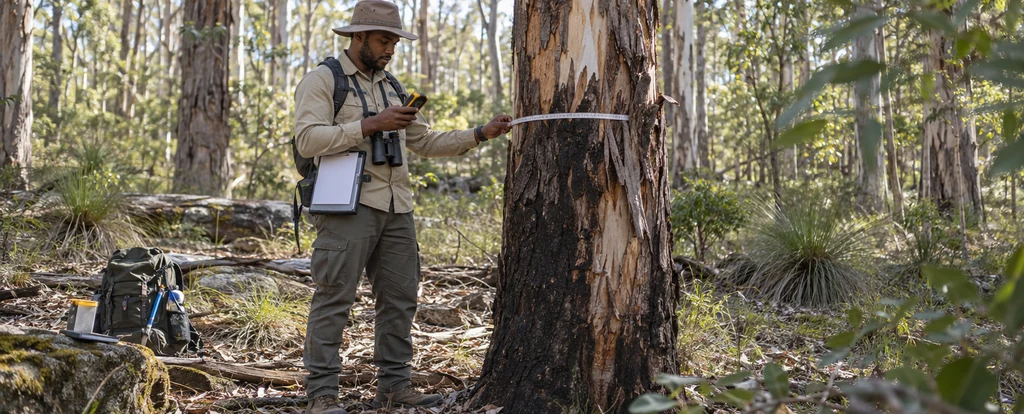
Foresters work across plantation estates, native forest and private land, splitting their time between the office and the field. Most are employed by state forest agencies, plantation companies and forestry consultancies, and the work sits in regional areas rather than the cities. It differs from environmental science in treating the forest as a working resource to be managed over decades, and from forestry work on the ground in the planning, approvals and long-range decisions it carries.
How much do foresters earn?
The median full-time salary for a forester is $104,000 per annum, before tax, up $21,700 since 2018.
Pay depends heavily on who employs you: state forest agencies and large plantation companies set rates through enterprise agreements, while consultancies and smaller operators negotiate individually. Remote and regional postings, and senior planning or fire management roles, pay more, and contract work can pay well but comes without paid leave or the security of a permanent position.
What does a forester do day to day?
The list below is what fills most weeks; the exact mix shifts with seniority and whatever stage the current work is at.
- Assessing forest health, growth rates and timber volume from field plots and aerial imagery
- Planning harvesting, thinning and regeneration so the next rotation is set up decades ahead
- Monitoring pests, weeds and disease and coordinating control programs
- Preparing fire risk assessments and fuel reduction plans with local brigades and land managers
- Advising landholders, state agencies and communities on sustainable forest management
What skills do foresters need?
Employers look for environmental assessment, field research and sampling, surveying and geospatial work, backed by ArcGIS fluency and strong stakeholder management.
Specialist skills
- Environmental assessment
- Field research and sampling
- Surveying and geospatial work
- Data analysis
- Regulatory compliance
- Project management
Software and tools
- ArcGIS
- QGIS
- Trimble GPS
- Microsoft Excel
- Google Earth Engine
General skills
- Stakeholder management
Is the job growing?
About 1,100 people work as foresters in Australia, and employment is projected to grow 17.5% over the decade to 2035. That's healthy, above-average growth, and the role should stay in solid demand.
How do you become a forester?
Here's the path most foresters take, step by step.
- 1Take a degree in forest science or a related field
A bachelor degree is the standard entry point, and about 33% of foresters already working hold one. Degrees take three or four years and include field practicals, so you are in a stand well before you graduate.
- 2Work a season on a field crew
Inventory, planting and fire crews hire seasonally and pay an hourly rate. A summer on one shows you what the plans look like on the ground and gets your name known to the people who hire graduates.
- 3Build your GIS and remote sensing skills
ArcGIS, QGIS, GPS and satellite imagery come up in most forestry job ads. The more fluently you work with spatial data, the less of your week goes on the measurement tasks that software now handles.
- 4Add a postgraduate qualification if you are changing fields
People who already hold a degree in environmental science, agriculture or biology can enter through a postgraduate program in forest science, which is shorter than starting a second bachelor degree.
- 5Join the professional body as you progress
Forestry Australia runs mentoring and professional recognition, which carries weight in a small field where most people know each other.
Ready to apply as a forester?
Whether you're working toward becoming a forester or already are one and want a hand with the next step (sharpening your resume for ATS screening, tightening your cover letter, or knowing what you'll actually be asked at interview), here are examples grounded in this specific role, not generic templates.
What jobs can a forester move to?
Moving into Production Manager typically comes with the biggest pay rise, worth $15,500 a year more on average.
| Move to | Typical pay change | Overlap | Retraining |
|---|---|---|---|
| Production Manager Forester brings resource planning and operational management to production management, with further study in manufacturing systems.Known move | +$15,500 | 10% | reskill |
| Environmental Scientist Forester brings land management and ecological knowledge to environmental science, requiring further study to meet the scientific role's requirements.Known move | −$2,400 | 54% | requalify |
| Park Ranger Forester brings forest planning and regulatory expertise to park ranger roles, with additional training in conservation and visitor management.Known move | −$2,400 | 18% | reskill |
| Fisheries Officer Forester brings environmental compliance and field assessment skills to fisheries officer roles, requiring a short course in fisheries regulations. | −$34,800 | 59% | short course |
Moves are chosen from Jobs and Skills Australia's Data on Occupation Mobility, which follows income tax records between 2011-12 and 2020-21, together with entry requirements and skill overlap. A known move is one people were seen making in that data. Pay change compares median full-time pay for the two roles.
Who works as a forester?
The typical forester is 46 years old; 82% are men, 82% work full-time, and full-timers average 41 hours a week.
- 46
- Median age
- 18%
- Female share
- 82%
- Full-time
- +1h
- vs all-jobs avg
What's it like being a forester?
The job moves between the office and the bush, and its rhythm follows the forest rather than the week: planting and inventory in the cooler months, harvest planning through the year, and fire season on call over summer. Foresters carry responsibility for decisions that play out over decades but are made under budget and political pressure. The people who stick with it tend to like fieldwork, long-range thinking and explaining their reasoning to people who do not share it.
What people like
- Your plans run for decades. A regeneration plan you write may not be harvested for 30 years, so foresters see the long arc of a decision in a way few other jobs allow.
- Field days in country most people never see. The work takes you into stands, catchments and plantations well away from the office, and the fieldwork is central to the job rather than a token site visit.
- Science and regulation in the same role. You work with ecological data and growth models, then take the result through approvals, codes of practice and consultation, which suits people who like both halves.
- A small, connected profession. The field is small enough that foresters know each other across agencies, companies and consultancies, which helps when you are looking for the next role.
What people find hard
- Fire season rewrites your year. Summer puts planning on hold while foresters staff incident control, assess burnt stands and rework harvest schedules around closed coupes.
- Long timelines, short political cycles. Forest policy shifts with governments, and a plan built on a 40-year rotation can be redirected by a decision made in a single budget.
- The work is where the trees are. Plantation and native forest estates sit in regional and remote areas, so many roles mean relocating away from family, friends and city services.
- Public argument over logging. Harvesting on public land attracts protests and heated community meetings, and foresters are often the ones explaining decisions to people who disagree.
Based on our synthesis of professional-body surveys and public accounts of the role, not first-person verified reviews.
Which industries employ foresters?
Agriculture, Forestry and Fishing employs the largest share of foresters, followed by Public Administration and Safety.
Top employing industries
- 1Agriculture, Forestry and Fishing
- 2Public Administration and Safety
- 3Professional, Scientific and Technical Services
Ranked by employment share; the source doesn't publish an exact percentage per industry.
| Bachelor degree | 32.7% | |
|---|---|---|
| Diploma / Advanced Diploma | 18.1% | |
| Postgraduate | 16.4% | |
| Year 12 or below | 16% | |
| Certificate III/IV | 14% |
Will AI replace foresters?
Forestry sits in the middle. Remote sensing, LiDAR and satellite imagery have taken over much of the mapping and inventory work that once meant weeks of field measurement, and modelling software does most of the growth and yield calculation. What the technology does not do is decide where to harvest, how to reduce fuel loads near a town, or how to bring a landholder and a contractor to an agreement, which is why the exposure is moderate rather than high.
Share of typical working time by exposure level
- Field checks on tree health, pests and fire riskPicking up dieback, a new pest or dangerous fuel loads still means getting into the stand and reading what is actually there.30%low
- Forest inventory and mappingSatellite imagery, LiDAR and GIS now carry most of the measurement, so a forester spends more time checking and interpreting the output than walking every boundary.25%high
- Working with landholders, agencies and harvest contractorsConsultation, approvals and contractor negotiations turn on trust and local relationships built over years.25%low
- Growth modelling and harvest schedulingSoftware handles the yield calculations, but choosing rotation lengths and what to cut this year means weighing markets, contracts and ecological constraints it cannot rank.20%moderate
Moves least exposed to AI
These career moves from forester work are rated low for AI exposure:
- Park Ranger
Some skill overlap (18%), reskill to get there, and a low automation-risk profile.
- Fisheries Officer
Solid skill overlap (59%), short course to get there, and a low automation-risk profile.
Common questions about becoming a forester
Straight answers to the questions people ask most.
How much does a forester earn?
Foresters earn a median of $104,000 per year before tax. Pay varies with the employer, since state agencies and plantation companies work under enterprise agreements while consultancies set their own rates, and remote postings and senior planning or fire roles sit above the middle.
How do you become a forester?
Most foresters start with a bachelor degree in forest science or environmental science, then pick up field experience on inventory, planting or fire crews. People who already hold a related degree usually enter through a postgraduate qualification in forest science instead of a second bachelor degree.
Are foresters in demand in Australia?
Foresters are currently in shortage nationally, and employment is projected to grow 17.5% over the decade to 2035 over the decade to 2035. The occupation is small, with about 1,100 people working as foresters nationally, so it pays to follow the larger employers: state forest agencies, plantation companies and specialist consultancies.
Will AI replace foresters?
AI and remote sensing have already changed parts of the job, especially mapping and inventory, but that is a moderate level of exposure rather than replacement. Satellite imagery and LiDAR let one person assess country that once took a crew weeks to measure, yet harvest plans, fire strategy and negotiations with landholders still rest on local knowledge and professional judgement the software does not hold.
What can foresters move into?
Foresters commonly move into environmental science, park management or production management, and the shared ground differs for each. Environmental science uses the same ecological assessment and compliance skills and pays $2,400 less, while park ranger roles trade planning responsibility for conservation and visitor work and pay $2,400 less. Production management pays $15,500 more but needs further study in manufacturing systems, and some experienced foresters instead set up their own forestry consulting or contracting businesses, which is often where earnings grow.
Do foresters work outdoors?
Field work is a regular part of the job, but it comes in blocks: a week of plot measurements or burn preparation, then stretches in the office on plans, approvals and mapping. Full-time foresters average around 41 hours a week, and fire season adds standby and call-outs on top.
Related roles
Not sure this is you? Take the career quiz and get a ranked shortlist of roles that fit how you like to work.