Fisheries Officer
Fisheries officers patrol waterways and inspect catches to enforce fishing rules and track the health of fish stocks.
- Median salary
- $69,200
3.9%vs last year, before tax
- People employed
- 410
2.5%vs last year
- Projected growth
- +5.4%
to 2035
- AI exposure*
- Low
- automation risk
- Average hours
- 38/wk
−2h vs all jobs
- Shortage status
- Not in shortage
national
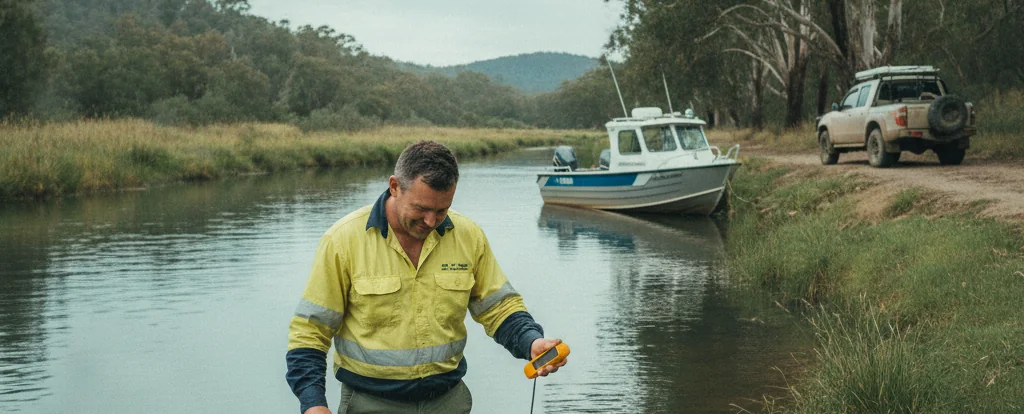
Fisheries officers work for state government agencies, patrolling rivers, lakes and coastal waters to make sure commercial and recreational fishers are sticking to licence conditions, gear rules and catch limits. Unlike a park ranger, whose patrols cover a broader mix of land, wildlife and visitor issues, a fisheries officer's authority is specific to fish stocks and the waterways they live in, including the power to board vessels and issue infringements on the spot. Most officers are based regionally and split their time between water and boat ramp patrols, compliance paperwork and talking to fishers and traders about the rules.
How much do fisheries officers earn?
The median full-time salary for a fisheries officer is $69,200 per annum, before tax, up $14,400 since 2018.
Pay follows the public sector classification of the state agency you join, so your level and years of service set the range more than the job title does. Penalty rates apply to the weekend, public holiday and night patrols that the work requires, and regional or remote postings sometimes attract an allowance. Progression into senior compliance or district supervisory roles is where the band widens.
What does a fisheries officer do day to day?
The list below is what fills most weeks; the exact mix shifts with seniority and whatever stage the current work is at.
- Patrolling waterways and boat ramps to check licences, gear and catch limits
- Boarding and inspecting commercial fishing vessels against licence conditions
- Recording fish stock and habitat data that feeds into fishery management plans
- Issuing warnings, infringements or referring serious breaches for prosecution
- Explaining to fishers and seafood traders why a catch or piece of gear does not comply
What skills do fisheries officers need?
Employers look for field research and sampling, data analysis, environmental assessment, backed by Fish sampling nets and traps fluency and strong problem solving.
Specialist skills
- Field research and sampling
- Data analysis
- Environmental assessment
- Regulatory compliance
Software and tools
- Fish sampling nets and traps
- Water quality testing equipment (pH meters, dissolved oxygen probes)
- GIS mapping software
- Fisheries management databases
- Patrol vessels and field vehicles
General skills
- Problem solving
- Written communication
- Safety and compliance awareness
- Stakeholder management
Is the job growing?
About 410 people work as fisheries officers in Australia, and employment is projected to grow 5.4% over the decade to 2035. That's modest growth: demand is steady rather than booming.
How do you become a fisheries officer?
Here's the path most fisheries officers take, step by step.
- 1Finish Year 12 with science subjects
Biology, environmental science and maths keep the degree options open, and state agencies generally expect a Year 12 qualification or equivalent before you apply for a trainee or field position.
- 2Complete a relevant degree or diploma
About 43% of people in the role hold a bachelor degree in marine science, environmental management or natural resource management. A TAFE diploma in conservation or land management, held by about 25%, is accepted for some field and compliance positions.
- 3Pass the agency recruitment process
State fisheries agencies recruit in rounds, and candidates usually face fitness and swimming assessments, a medical, a police check and interviews before a probationary offer is made.
- 4Complete on-the-job training
New officers learn the state's fisheries legislation, evidence gathering, vessel handling and powers of entry, and they patrol alongside experienced officers before going out alone.
- 5Specialise or move into supervision
After a few years, officers often focus on stock assessment, investigations or education, or lead a district team, which is where the pay range widens.
Ready to apply as a fisheries officer?
Whether you're working toward becoming a fisheries officer or already are one and want a hand with the next step (sharpening your resume for ATS screening, tightening your cover letter, or knowing what you'll actually be asked at interview), here are examples grounded in this specific role, not generic templates.
What jobs can a fisheries officer move to?
Moving into Park Ranger typically comes with the biggest pay rise, worth $32,400 a year more on average.
| Move to | Typical pay change | Overlap | Retraining |
|---|---|---|---|
| Park Ranger Fisheries officers use their patrol and compliance experience in park ranger roles, with a short course covering land management and visitor safety. | +$32,400 | 32% | short course |
| Biosecurity Officer Fisheries officers move into biosecurity work, applying inspection and enforcement skills, though a reskilling course is needed for quarantine and pest management. | +$21,800 | 45% | reskill |
| Weeds Officer Fisheries officers bring compliance and field inspection skills to weeds officer roles, requiring reskilling in plant identification and control methods. | +$6,200 | 29% | reskill |
Moves are chosen from Jobs and Skills Australia's Data on Occupation Mobility, which follows income tax records between 2011-12 and 2020-21, together with entry requirements and skill overlap. A known move is one people were seen making in that data. Pay change compares median full-time pay for the two roles.
Who works as a fisheries officer?
The typical fisheries officer is 41 years old; 74% are men, 90% work full-time, and full-timers average 38 hours a week.
- 41
- Median age
- 26%
- Female share
- 90%
- Full-time
- −2h
- vs all-jobs avg
What's it like being a fisheries officer?
A fisheries officer's week mixes field presence with process. It might include boat and ramp patrols, a day of sampling or stock survey work, and time writing up statements or infringement notices, with the schedule shifting to weekends and public holidays when fishing pressure is highest. The role suits people who are comfortable working alone outdoors, applying written rules consistently and holding difficult conversations on a boat ramp.
What people like
- Time on the water. Patrols run from boats, four wheel drives and riverbanks, so much of the week happens outdoors rather than at a desk.
- Cases that protect fish stocks. Investigating illegal netting, undersized catches or interference with protected species is the part of the job with the clearest purpose.
- Rules that are written down. Licences, gear limits and catch sizes are set in legislation, so the standard you apply is clear and the same for everyone you deal with.
- Talking fishers through the rules. Most boat ramp conversations are routine checks and a chance to explain a size limit or closed season, and they do as much for compliance as an infringement does.
What people find hard
- Confrontation at the ramp. Some checks involve people who dispute the rules or the measurement of a catch, and officers often handle that alone at a remote boat ramp.
- Dawn, night and holiday patrols. Fishing pressure peaks at weekends, public holidays and early mornings, which is when patrols are scheduled, so the roster is not a Monday to Friday one.
- Evidence and court paperwork. Infringements and prosecutions need statements, photographs and exhibit records that will stand up in court, and that work usually happens after the patrol finishes.
- A small, spread out workforce. The occupation is small, so postings are often regional and promotion usually means moving to another district or into a head office role.
Based on our synthesis of professional-body surveys and public accounts of the role, not first-person verified reviews.
Which industries employ fisheries officers?
Public Administration and Safety employs the largest share of fisheries officers.
Top employing industries
- 1Public Administration and Safety
Ranked by employment share; the source doesn't publish an exact percentage per industry.
| Bachelor degree | 43.3% | |
|---|---|---|
| Diploma / Advanced Diploma | 24.5% | |
| Certificate III/IV | 14.8% | |
| Year 12 or below | 8.5% | |
| Postgraduate | 6.5% |
Will AI replace fisheries officers?
This is a low-exposure job, because the core of it is physical presence on the water and the legal authority that comes with the uniform. Software has changed how catch records, stock models and mapping are handled, and that side of the role will keep getting faster, but it does not board a vessel, measure a fish or give evidence in court.
Share of typical working time by exposure level
- Patrolling waterways and checking licences and catchesAn officer still has to be at the ramp or on the water to count rods, check an esky or measure a catch against the size limit.40%low
- Advising fishers and traders on the rulesExplaining a closed season or a gear restriction at the ramp depends on reading the person in front of you and knowing how the rule applies to their boat.25%low
- Writing statements, notices and court briefsTemplates and dictation tools speed up drafting, but the officer signs the infringement and can be cross-examined on every line.20%moderate
- Stock assessment and catch data analysisPopulation models and GIS mapping increasingly run in software, which shifts the officer's time toward interpreting the output and checking the field data that feeds it.15%moderate
Common questions about becoming a fisheries officer
Straight answers to the questions people ask most.
How much does a fisheries officer earn?
$69,200 per annum, before tax, is the median for full-time fisheries officers. Pay is set by the state public sector classification you are appointed to, so your level, years of service and penalty rates for weekend or night patrols move the figure. Treat it as a guide, because the roster and classification decide the actual amount.
How do you become a fisheries officer?
Most fisheries officers start with a bachelor degree or diploma in marine science, environmental management or a related field, then apply through a state agency recruitment round that includes fitness, swimming and medical checks. The agency then trains you in its fisheries legislation and patrol procedures before you work unsupervised.
Are fisheries officers in demand?
Fisheries officers are currently not in shortage, and employment is projected to grow 5.4% over the decade to 2035 over the decade to 2035. With about 410 people in the occupation nationally, vacancies tend to appear in agency recruitment rounds rather than continuously, so it pays to watch state agency careers pages and apply when a round opens.
Will AI replace fisheries officers?
Automation reaches the data and paperwork side of the job rather than the patrol itself. Stock models, mapping and catch records increasingly run through software that does the number crunching, but an officer still has to be on the water, board the vessel, measure the catch and give evidence in court. That combination keeps the overall exposure low.
What careers can a fisheries officer move into?
Fisheries officers commonly move into park ranger roles, using their patrol and compliance experience with a short course in land management, and park rangers earn $32,400 more. Biosecurity officer work draws on the same inspection and enforcement skills and pays $21,800 more, while a move into weeds officer, at $6,200 more, suits those who prefer plant and land work.
Do you need a degree to become a fisheries officer?
Not always, but it is the usual route. Among people already in the role, the most common qualification is Bachelor degree, held by about 43% of them, and a TAFE diploma in conservation or land management is accepted for some field and compliance positions.
Related roles
Not sure this is you? Take the career quiz and get a ranked shortlist of roles that fit how you like to work.