Weeds Officer
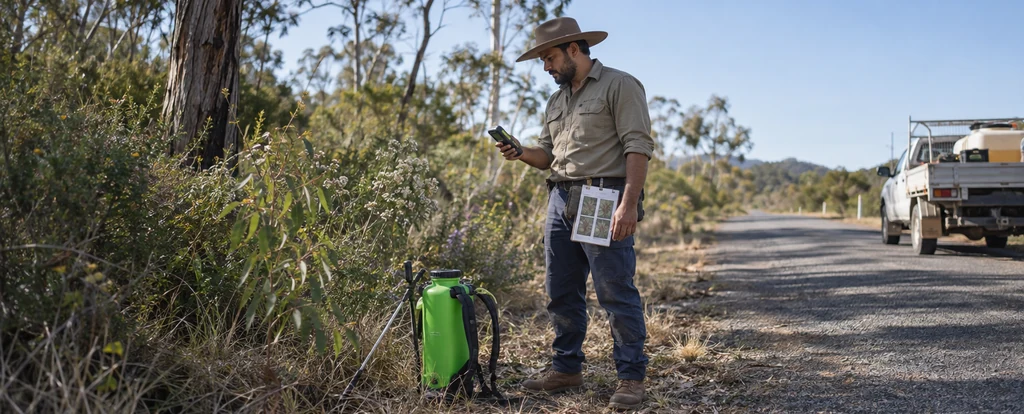
Weeds officers survey land for invasive plants, run the control programs that follow, and work with landholders to stop declared weeds spreading.
- Median salary*
- $75,400
4.4%vs last year, before tax
- People employed
- 1,400
0.0%vs last year
- Projected growth
- +7%
to 2035
- AI exposure*
- Low
- automation risk
- Average hours
- 40/wk
matches all-jobs average
- Shortage status
- Not in shortage
national
Weeds officers work across roadsides, reserves, waterways, farms and construction sites, checking for declared and environmental weeds and organising the treatment that follows. Where a pest controller deals with animals and insects around buildings, a weeds officer works on plants in the landscape, often across a wide area and to a seasonal timetable. Most are employed by local councils, state biosecurity agencies or natural resource management bodies, and they split the week between the field and the office.
How much do weeds officers earn?
The median full-time salary for a weeds officer is $75,400 per annum, before tax, up $16,000 since 2018.
Pay is set by the employer's award or enterprise agreement, so a local council band, a state biosecurity agency and a private contracting firm can pay differently for similar work. Chemical allowances, regional or remote placements and penalty rates for after-hours spraying add to the base rate. The larger steps come with moving into regulatory, supervisory or planning roles.
What does a weeds officer do day to day?
The list below is what fills most weeks; the exact mix shifts with seniority and whatever stage the current work is at.
- Surveying roadsides, reserves, waterways and private land for declared and environmental weeds
- Applying herbicide or supervising contractors, following safety and environmental requirements
- Recording infestations, treatments and follow-up dates in spatial systems such as ArcGIS and Field Maps
- Talking landholders and community groups through weed identification, priorities and control options
- Investigating reports of new infestations and preparing compliance notices under biosecurity legislation
What skills do weeds officers need?
Employers look for environmental assessment, field inspection and testing, regulatory compliance, backed by Esri ArcGIS fluency and strong safety and compliance awareness.
Specialist skills
- Environmental assessment
- Field inspection and testing
- Regulatory compliance
- Surveying and geospatial work
- Community engagement
- Plant and equipment operation
Software and tools
- Esri ArcGIS
- QGIS
- Esri Field Maps
- Trimble GPS units
- Backpack spray units
General skills
- Safety and compliance awareness
- Written communication
Is the job growing?
About 1,400 people work as weeds officers in Australia, and employment is projected to grow 7% over the decade to 2035. That's modest growth: demand is steady rather than booming.
How do you become a weeds officer?
Here's the path most weeds officers take, step by step.
- 1Start with a certificate III or a degree
A certificate III or IV in conservation and land management, horticulture or weed management is the usual entry point, and TAFE delivers it in most states. The workforce is mixed, with 28% of weeds officers holding a bachelor degree and 21% holding a certificate III or IV, so environmental science or agriculture is the other common route, particularly for compliance and planning work.
- 2Get chemical accreditation and a driver licence
You need accreditation to apply agricultural chemicals, usually through a short course with a registered training provider, and some states also require a licence or notification. A full driver licence matters from the first week, because most of the day is spent moving between sites.
- 3Learn the weed legislation for your state
Declared weed lists, reporting duties and enforcement powers sit with state and territory legislation, so what you can ask of a landholder depends on where you work. Employers expect you to know the local rules rather than a national summary.
- 4Build field experience
Entry-level jobs on council or agency field crews, or volunteer work with a Landcare or bushcare group, give you the plant identification that employers look for. Recognising seedlings and look-alike species takes a season or two to learn properly.
Ready to apply as a weeds officer?
Whether you're working toward becoming a weeds officer or already are one and want a hand with the next step (sharpening your resume for ATS screening, tightening your cover letter, or knowing what you'll actually be asked at interview), here are examples grounded in this specific role, not generic templates.
What jobs can a weeds officer move to?
Moving into Park Ranger typically comes with the biggest pay rise, worth $26,200 a year more on average.
| Move to | Typical pay change | Overlap | Retraining |
|---|---|---|---|
| Park Ranger Weeds officers bring weed and land management experience to park ranger roles, with further study in conservation and visitor services. | +$26,200 | 24% | reskill |
| Biosecurity Officer Weeds officers bring plant surveillance and compliance skills to broader biosecurity work, with extra training in quarantine and pest response. | +$15,600 | 27% | reskill |
| Water Inspector Weeds officers bring inspection and compliance skills to water quality monitoring, with additional training in water regulation. | +$15,600 | 37% | reskill |
| Drone Pilot Weeds officers bring survey and spraying experience to drone operations, needing a remote pilot licence and flight training. | +$5,200 | 48% | short course |
| Pest Controller Weeds officers bring chemical handling and inspection experience to pest control, though a pest management qualification is needed.Known move | −$5,200 | 21% | reskill |
Moves are chosen from Jobs and Skills Australia's Data on Occupation Mobility, which follows income tax records between 2011-12 and 2020-21, together with entry requirements and skill overlap. A known move is one people were seen making in that data. Pay change compares median full-time pay for the two roles.
Who works as a weeds officer?
The typical weeds officer is 45 years old; 66% are men, 78% work full-time, and full-timers average 40 hours a week.
- 45
- Median age
- 34%
- Female share
- 78%
- Full-time
- +0h
- vs all-jobs avg
What's it like being a weeds officer?
The job runs on the growing season, so the shape of a week depends on the weather and what is coming into flower. Spring and summer are the busy months, with long days driving between sites, inspecting and spraying, while winter shifts toward planning, mapping and reporting. It suits someone who likes working outdoors with a clear task, is careful with chemicals, and can hold a firm conversation with a landholder who would rather not hear about their weeds.
What people like
- You can see what the work changes. A roadside that was choked in spring comes back to grass after a couple of seasons of treatment and follow-up, and the before-and-after sits in your own records.
- No two days look the same. One day is a riverbank survey on foot, the next is mapping in the office or a talk to a community group, which keeps the week from settling into a routine.
- Plant knowledge builds quickly. Learning to pick a weed at seedling stage, before it flowers and sets seed, is a skill that compounds and stays useful wherever you go next.
- You manage your own day. Once you know the rules and the area, much of the work is yours to organise, with a list of sites, a map and a vehicle.
What people find hard
- Weather and the spraying window. Wind, rain and temperature decide whether you can spray, so plans are rearranged at short notice and the busy months are genuinely busy.
- Difficult conversations. Telling a landholder they have a legal responsibility to control a weed on their land is not always welcome, and some of those visits turn awkward.
- The work is never finished. Weeds come back. A site you treated three seasons ago needs checking again, and the seedbank in the soil outlasts most control programs.
- Records and chemical safety. Spray diaries, notifications, safety procedures and reporting take a real share of the week, and none of the field work happens without them.
Based on our synthesis of professional-body surveys and public accounts of the role, not first-person verified reviews.
Which industries employ weeds officers?
Public Administration and Safety employs the largest share of weeds officers, followed by Administrative and Support Services.
Top employing industries
- 1Public Administration and Safety
- 2Administrative and Support Services
- 3Agriculture, Forestry and Fishing
Ranked by employment share; the source doesn't publish an exact percentage per industry.
| Bachelor degree | 27.9% | |
|---|---|---|
| Certificate III/IV | 20.5% | |
| Year 12 or below | 20.2% | |
| Diploma / Advanced Diploma | 14.7% | |
| Postgraduate | 10.1% |
Will AI replace weeds officers?
Weed control work has low exposure to AI. Mapping software, field apps and drone imagery have made it quicker to record infestations and spot likely patches, but someone still has to identify a plant on the ground, choose a treatment and apply it safely. Compliance work is also built on a named person being accountable for the decision, which technology does not replace.
Share of typical working time by exposure level
- Applying herbicide and running control programsCalibration, weather conditions, buffer zones and safe handling all depend on the operator, and the equipment needs someone on the ground to run it.35%low
- Identifying weeds and inspecting sitesTelling a declared weed from a look-alike native at seedling stage still needs a trained eye standing in the paddock.30%low
- Mapping and recording infestationsArcGIS, Field Maps and QGIS speed up the record keeping and drone imagery can flag a likely patch, but the boundary and species get checked on foot before anything is treated.20%moderate
- Advising landholders and following up complianceExplaining a legal responsibility and agreeing what happens next is a conversation, and any enforcement notice carries an officer's name.15%low
Common questions about becoming a weeds officer
Straight answers to the questions people ask most.
How much do weeds officers earn?
Weeds officers earn $75,400 per annum, before tax, for full-time work. Council, state agency and private contractor roles are paid under different awards and enterprise agreements, so the figure varies with the employer. Chemical allowances, regional placements and supervisory duties are what lift it above the base rate.
How do you become a weeds officer?
Most people enter through a certificate III or IV in conservation and land management, horticulture or weed management, then pick up chemical accreditation and a driver licence. Field experience with a council, agency or Landcare group is what gets you shortlisted, since identification skills are learned on the ground. A diploma or degree in environmental science or agriculture opens the compliance and planning roles.
Are weeds officers in demand?
Weeds officers are currently not in shortage, and employment is projected to grow 7% over the decade to 2035. The occupation is small at about 1,400 people, so most openings come from retirements and people moving into related biosecurity or land management work rather than from new positions. Local council and state agency budgets have more influence on hiring than the national outlook does.
Will AI or automation replace weeds officers?
Little of this job is exposed to AI, mainly because it depends on identifying plants in the field and applying chemicals safely. Mapping software, field apps and drone imagery have sped up survey and record keeping, and drone detection can flag where to look, but the inspection, treatment decision and follow-up still happen on foot. Enforcement and landholder negotiation stay with a person who is accountable for the decision.
What can weeds officers move into?
Biosecurity officer roles widen the brief from weeds to animal and plant pests across quarantine and outbreak response, and typically pay $15,600 more. Park ranger work builds on the same land management skills with more focus on conservation and visitors, paying $26,200 more. Both need further study, but the inspection and compliance experience carries across.
Do you need a licence to spray herbicides?
You need accreditation to apply agricultural chemicals at work, usually completed as a short course, and some states require a licence or notification on top of it. The requirements differ by state and territory, so check the rule where you intend to work. Employers generally cover the cost of the course once you are on staff.
Related roles
Not sure this is you? Take the career quiz and get a ranked shortlist of roles that fit how you like to work.