Water Inspector
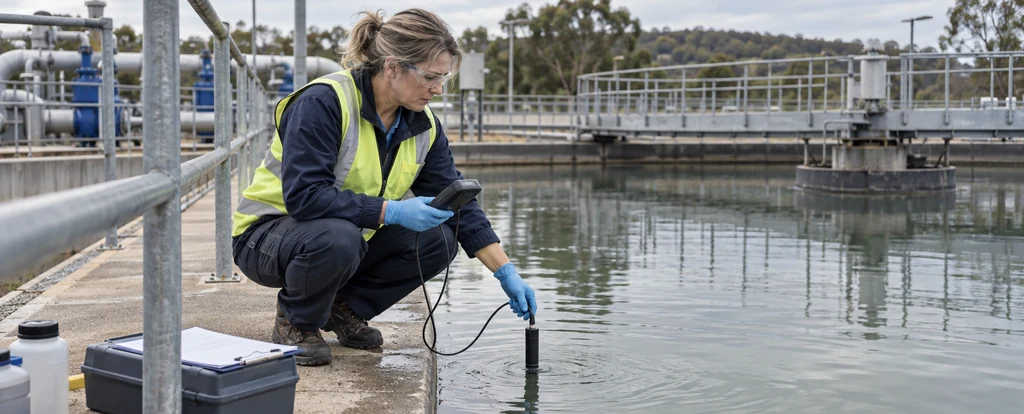
Water inspectors test and check drinking water, wastewater and the waterways they come from, and follow up when a result falls outside the standard.
- Median salary*
- $91,000
4.4%vs last year, before tax
- People employed
- 290
3.3%vs last year
- Projected growth
- +7%
to 2035
- AI exposure*
- Moderate
- automation risk
- Average hours
- 37/wk
−3h vs all jobs
- Shortage status
- Not in shortage
national
Water inspectors work for water utilities, local councils and state regulators, collecting samples from treatment plants, reservoirs, rivers, bores and customer taps, and inspecting the pipes, tanks and pumps that supply drinking water and carry sewage. They compare test results against public health and environmental standards, and investigate complaints, spills and pollution incidents. The workforce is small and spread across metropolitan and regional areas, so the job usually combines regular sampling rounds with the follow-up work a bad result or a complaint triggers.
How much do water inspectors earn?
The median full-time salary for a water inspector is $91,000 per annum, before tax, up $19,300 since 2018.
Who employs you matters more than the job title: state regulators and larger utilities set their own enterprise agreements, while smaller councils tend to sit lower on the scale. Field, on-call and overtime allowances add to the base in utilities that run an after-hours response, and a qualification in water operations or a related science is what opens the higher classification bands.
What does a water inspector do day to day?
The list below is what fills most weeks; the exact mix shifts with seniority and whatever stage the current work is at.
- Collecting water samples from treatment plants, reservoirs, rivers, bores and customer taps
- Testing samples for chemical, physical and microbiological parameters, in the laboratory or with portable kits on site
- Inspecting water supply, sewerage and drainage infrastructure, including tanks, pumps and pipes, for faults and contamination risks
- Investigating complaints, algal blooms, spills and pollution incidents, and gathering evidence where enforcement follows
- Preparing compliance reports and keeping the monitoring records that utilities and regulators rely on
What skills do water inspectors need?
Employers look for field inspection and testing, laboratory analysis, environmental assessment, backed by Laboratory Information Management Systems (LIMS) fluency and strong attention to detail.
Specialist skills
- Field inspection and testing
- Laboratory analysis
- Environmental assessment
- Regulatory compliance
- Data analysis
Software and tools
- Laboratory Information Management Systems (LIMS)
- SCADA
- GIS mapping software
- water quality sondes
- portable water test kits
General skills
- Attention to detail
- Safety and compliance awareness
Is the job growing?
About 290 people work as water inspectors in Australia, and employment is projected to grow 7% over the decade to 2035. That's modest growth: demand is steady rather than booming.
How do you become a water inspector?
Here's the path most water inspectors take, step by step.
- 1Choose a qualification in water operations or a related science
A certificate IV or diploma in water industry operations through TAFE covers sampling, treatment processes and water quality standards, and is the most direct route. A bachelor degree in environmental science, chemistry, environmental health or public health works equally well and opens technical and regulatory roles later.
- 2Get hands-on experience with water or sampling
Many inspectors start as water treatment operators, laboratory technicians or field sampling officers, where they learn how a plant runs, how a sample is drawn properly and what a result looks like when something is wrong. Employers look for that practical grounding as much as the qualification.
- 3Pick up the licences and certificates field work requires
A driver's licence is essential for sampling rounds, and employers commonly ask for first aid, confined space entry and chemical handling training before you go on site. Requirements vary by state and by employer, so check what the roles you want actually list.
- 4Apply to utilities, councils and state regulators
Vacancies are advertised directly by water utilities, local councils and state health or environment regulators, and some organisations run graduate or entry programs. A few inspection roles sit alongside environmental health work, which is registered in some states, so confirm the registration rules where you intend to work.
Ready to apply as a water inspector?
Whether you're working toward becoming a water inspector or already are one and want a hand with the next step (sharpening your resume for ATS screening, tightening your cover letter, or knowing what you'll actually be asked at interview), here are examples grounded in this specific role, not generic templates.
What jobs can a water inspector move to?
Moving into Water Treatment Operator typically comes with the biggest pay rise, worth $5,200 a year more on average.
| Move to | Typical pay change | Overlap | Retraining |
|---|---|---|---|
| Water Treatment Operator Water inspectors know water quality standards and sampling, so with treatment operations training they can run and monitor treatment plants.Known move | +$5,200 | 30% | reskill |
| Laboratory Technician Water inspectors bring field sampling and water testing experience; a laboratory qualification lets them handle broader scientific analysis. | +$2,300 | 52% | reskill |
| Biosecurity Officer Inspection and compliance skills transfer directly to biosecurity monitoring, with a short course covering pest and disease procedures. | +$0 | 50% | short course |
Moves are chosen from Jobs and Skills Australia's Data on Occupation Mobility, which follows income tax records between 2011-12 and 2020-21, together with entry requirements and skill overlap. A known move is one people were seen making in that data. Pay change compares median full-time pay for the two roles.
Who works as a water inspector?
The typical water inspector is 45 years old; 66% are men, 88% work full-time, and full-timers average 37 hours a week.
- 45
- Median age
- 34%
- Female share
- 88%
- Full-time
- −3h
- vs all-jobs avg
What's it like being a water inspector?
The job runs on a monitoring calendar: routine sampling rounds at set sites, with laboratory work and reporting in between, and an investigation whenever a result or a complaint flags a problem. Summer algal blooms, heavy rain and spills can rearrange a planned week quickly, and many utilities roster inspectors on call for incidents outside normal hours. It suits someone who is happy moving between a riverbank, a treatment plant and a desk, and who likes having a published standard to measure a result against.
What people like
- Field days and desk days in the same week. Sampling runs, plant inspections, laboratory testing and report writing all sit in the one role, so the week rarely looks the same from Monday to Friday.
- Results with an obvious next step. When a sample comes back above the limit, the task is clear: trace the source, confirm it and get it fixed, often the same day.
- Published standards settle the argument. Guidelines such as the Australian Drinking Water Guidelines give a defined threshold, so decisions rest on evidence and sampling records rather than opinion.
- Rivers, catchments and open sites. A lot of the work happens outdoors, and inspectors who cover regional areas get to know a stretch of country and the people managing it.
What people find hard
- Weather and long drives. Sampling runs happen on schedule whatever the conditions, and remote sites can mean hours of driving for one set of samples.
- Enforcement conversations. Telling an operator or landholder that their practice fails the standard is uncomfortable, particularly when it leads to a notice or a prosecution.
- The record keeping. Chain of custody, calibration logs and compliance reports take up a large share of the week, and the paperwork matters as much as the sample.
- Investigations that run for months. A pollution incident can take repeated sampling and long correspondence before it is resolved, so results arrive in batches rather than at once.
Based on our synthesis of professional-body surveys and public accounts of the role, not first-person verified reviews.
Which industries employ water inspectors?
Electricity, Gas, Water and Waste Services employs the largest share of water inspectors, followed by Public Administration and Safety.
Top employing industries
- 1Electricity, Gas, Water and Waste Services
- 2Public Administration and Safety
Ranked by employment share; the source doesn't publish an exact percentage per industry.
| Bachelor degree | 28.4% | |
|---|---|---|
| Certificate III/IV | 23.5% | |
| Year 12 or below | 21.4% | |
| Diploma / Advanced Diploma | 12.3% | |
| Postgraduate | 11.2% |
Will AI replace water inspectors?
This is a moderately exposed job: continuous monitoring sensors, SCADA telemetry and laboratory information systems now do much of the routine measurement, logging and reporting that once took up an inspector's time. What they do not replace is being at the site, drawing a sample correctly from the right point, deciding whether a reading signals a real problem and building the evidence behind an enforcement case. The work is more likely to shift towards interpreting data and running monitoring networks than to disappear.
Share of typical working time by exposure level
- Collecting samples in the fieldAutomatic samplers cover some fixed sites, but grab samples at customer taps, rivers and bores still need a person who can choose the right point and handle the sample without contaminating it.30%moderate
- Testing and analysing samplesAutomated analysers and laboratory information systems now run much of the routine chemistry and microbiology and log the results straight into the record.25%high
- Inspecting plants, pipes and storagesFinding a cracked tank seal, a failing pump or an illegal cross-connection depends on being there and knowing what a healthy system looks like.25%low
- Writing compliance reports and monitoring recordsDraft reports, trend summaries and exception alerts can be generated from monitoring data, leaving the inspector to check the interpretation and sign it off.20%high
Common questions about becoming a water inspector
Straight answers to the questions people ask most.
How much do water inspectors earn?
Full-time water inspectors earn a median of $91,000 per year before tax, which means half earn more and half earn less. The employer drives the difference: state regulators and larger utilities negotiate their own enterprise agreements, and field, on-call and overtime allowances lift the base in organisations with an after-hours response.
How do you become a water inspector?
Most people arrive through a certificate IV or diploma in water industry operations, or a degree in environmental science, chemistry or environmental health, then build field experience as a treatment operator, laboratory technician or sampling officer. From there you apply directly to water utilities, local councils and state regulators, which advertise their own vacancies.
Are water inspectors in demand?
Water inspectors are currently not in shortage, and employment is projected to grow 7% over the decade to 2035. The occupation is small, with about 290 people nationally, so openings are limited in any given year and it helps to watch the careers pages of utilities, councils and state regulators rather than waiting for a broad job listing.
Could AI take over water inspection work?
Partly. Continuous monitoring sensors, SCADA telemetry and laboratory information systems already handle much of the routine measurement, logging and report generation that once filled an inspector's week. Drawing a representative sample, inspecting a site, judging whether a reading is a real problem and assembling evidence for enforcement still need a person, so the role is likely to shift towards interpreting data and managing monitoring networks.
What roles can water inspectors move into?
Water treatment operator pays $5,200 more, and inspectors already know the water quality standards, so the additional training covers plant processes and operations. Biosecurity officer work pays about the same and draws on the same inspection and compliance skills, while laboratory technician roles pay $2,300 more and build on field sampling and testing experience.
Do you need a degree to become a water inspector?
No. About 28% of people working as water inspectors hold a Bachelor degree, but certificate III and IV qualifications in water operations are common too, and practical experience with sampling or treatment plants counts heavily in hiring.
Related roles
- Water Treatment Operator
- Biosecurity Officer
- Laboratory Technician
- Water Treatment Operator
- Grain Inspector
- Biosecurity Officer
Not sure this is you? Take the career quiz and get a ranked shortlist of roles that fit how you like to work.