Grain Inspector
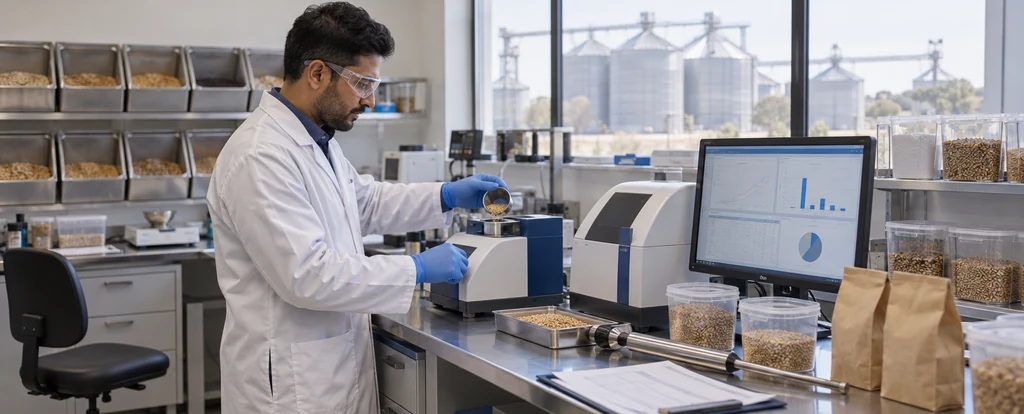
Grain inspectors test and grade grain as it moves from farm to storage and port, deciding whether a load meets the standard and what it is worth.
- Median salary*
- $70,200
4.2%vs last year, before tax
- People employed*
- 2,000
0.0%vs last year
- Projected growth*
- +1%
to 2035
- AI exposure*
- Moderate
- automation risk
- Average hours*
- 40/wk
matches all-jobs average
- Shortage status*
- In shortage (regional)
national
Grain inspectors work at receival sites, storage facilities and export terminals, drawing samples from trucks, rail wagons and silos and testing them for moisture, protein, oil and contaminants. The grade they assign decides whether a load is accepted, how it is stored and what it sells for, which puts them between the grower and the buyer. Most work for grain storage and handling businesses or agricultural support services, with smaller numbers in export trade and food manufacturing.
How much do grain inspectors earn?
The median full-time salary for a grain inspector is $70,200 per annum, before tax, up $14,700 since 2018.
Pay depends heavily on the employer and the site: grain handlers, export terminals and testing laboratories each work under their own enterprise agreement, and casual receival crews are usually paid by the hour with loadings for shifts and weekends. Inspectors who move into laboratory, quality assurance or supervisory roles generally earn more than those on a seasonal sampling crew, so the progression that matters most to pay happens after the first few harvests.
What does a grain inspector do day to day?
The list below is what fills most weeks; the exact mix shifts with seniority and whatever stage the current work is at.
- Sampling grain from trucks, rail wagons and silos with a probe or by hand, then labelling and logging each sample so results can be traced back to the load.
- Running moisture, protein, oil, screening and contaminant tests on benchtop instruments and near-infrared analysers.
- Grading each load against the commodity standards and recording the result that decides whether it is accepted, downgraded or rejected.
- Issuing certificates and reports, and explaining a result to a grower, carrier or buyer who disagrees with it.
- Calibrating and cleaning testing equipment and keeping laboratory records in order so the results hold up to audit.
What skills do grain inspectors need?
Employers look for laboratory analysis, regulatory compliance, field inspection and testing, backed by Moisture meter fluency and strong attention to detail.
Specialist skills
- Laboratory analysis
- Regulatory compliance
- Field inspection and testing
- Data analysis
Software and tools
- Moisture meter
- Protein analyser
- Grain sampling probe
- Laboratory Information Management System (LIMS)
- Microsoft Excel
General skills
- Attention to detail
- Written communication
- Time and deadline management
Is the job growing?
About 2,000 people work as grain inspectors in Australia, and employment is projected to grow 1% over the decade to 2035. That's modest growth: demand is steady rather than booming.
How do you become a grain inspector?
Here's the path most grain inspectors take, step by step.
- 1Finish Year 12 or an equivalent
It is not the only way in, since about a fifth of grain inspectors hold Year 12 or below, but the maths and science in senior secondary subjects make the sampling and testing side of the job easier to pick up.
- 2Get a certificate in agriculture, grain production or laboratory techniques
The most common qualification in the workforce is Certificate III/IV, held by 34% of inspectors, and TAFE and agricultural colleges offer it in a year or less, often with a placement at a receival site.
- 3Take a seasonal receival job
Harvest crews are the usual entry point, with employers hiring casual samplers and testers at country sites and training them on the job. That season is where most people learn to use a probe, run a moisture meter and work to a grading standard under time pressure.
- 4Learn the standards and the testing methods
Grading follows the published commodity standards the trade contracts against, which in Australia are maintained by Grain Trade Australia, and employers usually put new inspectors through internal training and assessment before they sign off results. Understanding why a variety, a season or a storage problem changes a reading is what separates an experienced inspector from a sampler.
- 5Specialise or move into a permanent role
Permanent positions sit at ports, laboratories, larger storage businesses and quality assurance teams, and they often ask for a couple of harvests of experience plus a diploma or degree. Some inspectors add accreditation in particular testing methods or move into export documentation and contract work.
Ready to apply as a grain inspector?
Whether you're working toward becoming a grain inspector or already are one and want a hand with the next step (sharpening your resume for ATS screening, tightening your cover letter, or knowing what you'll actually be asked at interview), here are examples grounded in this specific role, not generic templates.
What jobs can a grain inspector move to?
Moving into Non-destructive Testing Technician typically comes with the biggest pay rise, worth $31,200 a year more on average.
| Move to | Typical pay change | Overlap | Retraining |
|---|---|---|---|
| Non-destructive Testing Technician Testing and quality assurance experience supports non-destructive testing, with a short course in inspection methods and safety. | +$31,200 | 55% | short course |
| Laboratory Technician Grain testing skills carry into laboratory work, with reskilling in broader scientific methods and laboratory procedures. | +$23,100 | 50% | reskill |
| Water Inspector Sampling and compliance skills carry into water quality monitoring, with a short course adding water testing and regulations. | +$20,800 | 68% | short course |
| Biosecurity Officer Inspection and quarantine knowledge transfers to biosecurity checking, with a short course covering pest and disease rules. | +$20,800 | 65% | short course |
| Animal Health Officer Inspection and animal health compliance skills carry across, with reskilling in livestock health and welfare requirements. | +$7,800 | 52% | reskill |
Moves are chosen from Jobs and Skills Australia's Data on Occupation Mobility, which follows income tax records between 2011-12 and 2020-21, together with entry requirements and skill overlap. A known move is one people were seen making in that data. Pay change compares median full-time pay for the two roles.
Who works as a grain inspector?
The typical grain inspector is 44 years old; 75% are men, 80% work full-time, and full-timers average 40 hours a week.
- 44
- Median age
- 25%
- Female share
- 80%
- Full-time
- +0h
- vs all-jobs avg
What's it like being a grain inspector?
Grain inspection is part outdoor work and part laboratory work, and its rhythm follows the harvest: quieter months of calibration, maintenance and training, then long days as trucks and trains arrive. The pressure comes from volume and from the decisions themselves, because a grade can cost the person standing in front of you money. It suits people who like working to a clear standard, do not mind dust and heat, and can hold a firm answer with a grower who wants a different one.
What people like
- The grade you give decides the money. A grower's payment and a buyer's contract both turn on the sample you take and the result you record, so the job has a visible purpose.
- Harvest gives the year a shape. Work builds towards the receival season and the busiest weeks are shared with the same crew, which suits people who prefer a defined busy period to a flat schedule.
- Time split between the yard and the bench. Part of the day is outside taking samples and part of it is at instruments and records, so the work does not sit in one place.
- The standards are written down. Grading follows published commodity standards and testing methods, so decisions can be defended with evidence rather than opinion.
What people find hard
- Harvest hours. Receival sites run long shifts and weekend rosters while the crop is coming in, and a wet or late season squeezes the same volume into a shorter window.
- Dust, heat and height. Sampling means working around grain dust, machinery noise and whatever the weather is doing, sometimes up on a silo or beside a moving stream of grain.
- Delivering bad news. Downgrading a load is an immediate financial hit for the grower or carrier in front of you, and those conversations can get tense.
- Seasonal work in some regions. Many sampling and receival jobs are casual and tied to harvest, so holding a permanent role can mean moving to a port, laboratory or larger storage site.
Based on our synthesis of professional-body surveys and public accounts of the role, not first-person verified reviews.
Which industries employ grain inspectors?
Grain storage and handling employs the largest share of grain inspectors, followed by Agriculture support services.
Top employing industries
- 1Grain storage and handling
- 2Agriculture support services
- 3Export trade
- 4Food product manufacturing
Ranked by employment share; the source doesn't publish an exact percentage per industry.
| Certificate III/IV | 34% | |
|---|---|---|
| Diploma / Advanced Diploma | 26% | |
| Bachelor degree | 20% | |
| Year 12 or below | 20% |
Will AI replace grain inspectors?
Grain inspection sits in the middle: the measuring has largely gone electronic, with near-infrared analysers and moisture meters returning protein, moisture and oil readings in seconds, and laboratory systems drafting the certificates. What stays with the inspector is the sampling and the call on a borderline load, where a grower's payment and a buyer's contract both depend on the grade. The job is not disappearing, but the paperwork and the routine testing around it keep shrinking.
Share of typical working time by exposure level
- Sampling grain from trucks, wagons and silosGetting a representative sample from a moving stream or the middle of a load still takes a person with a probe, and every result downstream depends on it.30%low
- Moisture, protein and oil testingNear-infrared analysers and moisture meters return most readings in seconds, leaving the inspector to check calibration and question results that do not match the load in front of them.30%moderate
- Grading and resolving borderline loadsSoftware can predict a grade from test data, but a load sitting between two grades goes to someone who knows the standard and what the contract says.25%moderate
- Recording results and issuing certificatesLaboratory information systems pull readings straight into certificates and reports, so the manual typing behind each load keeps getting smaller.15%high
Moves least exposed to AI
These career moves from grain inspector work are rated low for AI exposure:
- Animal Health Officer
Solid skill overlap (52%), reskill to get there, and a low automation-risk profile.
Common questions about becoming a grain inspector
Straight answers to the questions people ask most.
How much do grain inspectors earn?
Grain inspectors earn a median of $70,200 per year before tax. Pay varies with the employer, the site and whether the work is permanent or seasonal, so treat the figure as a guide rather than a starting rate.
How do you become a grain inspector?
Most inspectors start with a certificate in agriculture or laboratory techniques and a season on a receival crew, where employers train new starters in sampling and grading on site. Experience with the equipment and the standards matters more than the qualification itself once you are working.
Are grain inspectors in demand?
Grain inspectors are currently in shortage in regional areas, so vacancies cluster in the grain growing regions rather than the cities. About 2,000 people work in the role and employment is projected to grow 1% over the decade to 2035 over the decade to 2035. That is a small change in the total number of positions, so most openings come from inspectors retiring or moving on and from the seasonal crews taken on for harvest.
How is AI affecting grain inspection?
The change is moderate rather than dramatic. Moisture, protein and oil testing is largely automated now and reporting runs through laboratory systems, but getting a representative sample and deciding how a borderline load should be graded still take a person who knows the standard. The work shifts towards calibration, interpreting results that do not fit and settling disputes about grades.
What can grain inspectors move into?
Biosecurity and water inspection are realistic moves, since inspection and compliance skills carry across after a short course, and biosecurity officers earn $20,800 more. Laboratory technician work is another option with reskilling in broader scientific methods and pay of $23,100 more.
Is grain inspection seasonal work?
A lot of it is, because grain arrives at receival sites in a concentrated harvest window and crews are hired to handle it. Some inspectors hold permanent roles at ports, laboratories or storage sites and pick up extra shifts over harvest, while others work the season and take other agricultural or testing work for the rest of the year.
Related roles
- Water Inspector
- Biosecurity Officer
- Animal Health Officer
- Non-destructive Testing Technician
- Laboratory Technician
- Product Grader
Not sure this is you? Take the career quiz and get a ranked shortlist of roles that fit how you like to work.