Animal Health Officer
Animal health officers check livestock and other animals for disease, collect samples and enforce the biosecurity rules that protect Australian farms and export trade.
- Median salary*
- $78,000
4.6%vs last year, before tax
- People employed*
- 4,200
0.0%vs last year
- Projected growth*
- +5%
to 2035
- AI exposure*
- Low
- automation risk
- Average hours*
- 38/wk
−2h vs all jobs
- Shortage status*
- In shortage (regional)
national
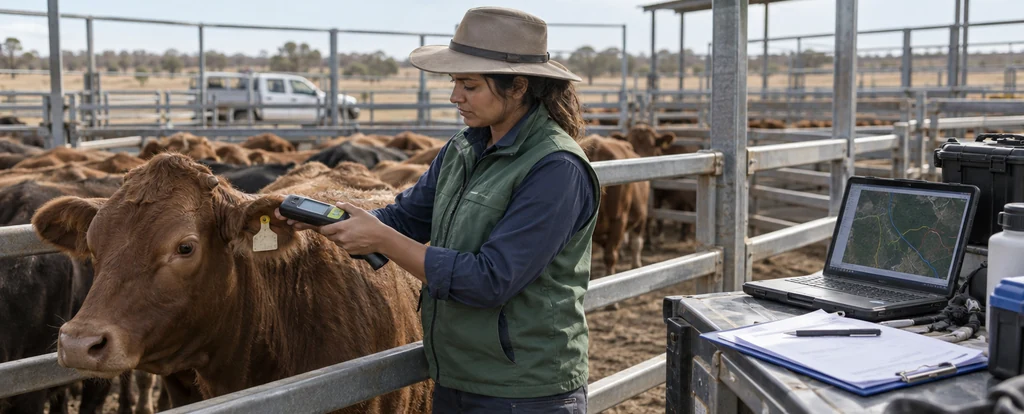
Most work for state and territory agriculture departments, and the week is split between farms, saleyards, feedlots and ports on one side and an office or laboratory on the other. The role sits close to a biosecurity officer's job, but the focus is the health of the animals themselves rather than pests, weeds and imports. Districts cover a lot of ground, so a fair part of the job is spent on the road planning your own visits.
How much do animal health officers earn?
The median full-time salary for an animal health officer is $78,000 per annum, before tax, up $16,600 since 2018.
Pay follows public sector classification, so the state or territory you work for and the qualifications you are hired into affect it more than performance does. Regional and remote postings often attract additional allowances, and outbreak responses with on-call or after-hours work add to the total. Specialist disease surveillance or veterinary roles sit at a higher classification again.
What does an animal health officer do day to day?
The list below is what fills most weeks; the exact mix shifts with seniority and whatever stage the current work is at.
- Inspecting livestock at saleyards, feedlots and properties for signs of disease
- Collecting blood, tissue and swab samples and sending them to a laboratory for testing
- Investigating disease reports, tracing animal movements through the NLIS database and working out where an outbreak began
- Talking producers through control measures, quarantine rules and welfare standards
- Writing up inspection reports and keeping the records that support a biosecurity response
What skills do animal health officers need?
Employers look for animal care and handling, field inspection and testing, regulatory compliance, backed by NLIS database fluency and strong written communication.
Specialist skills
- Animal care and handling
- Field inspection and testing
- Regulatory compliance
- Laboratory analysis
- Health education and advice
Software and tools
- NLIS database
- LIMS
- GIS mapping software
- biosecurity reporting systems
- electronic identification scanners
General skills
- Written communication
- Attention to detail
Is the job growing?
About 4,200 people work as animal health officers in Australia, and employment is projected to grow 5% over the decade to 2035. That's modest growth: demand is steady rather than booming.
How do you become an animal health officer?
Here's the path most animal health officers take, step by step.
- 1Finish school with a science or agriculture base
Year 12 biology and chemistry are useful preparation, though they are not a formal entry requirement. A driver's licence matters early, because the work involves travelling between properties.
- 2Complete a qualification in animal science or agriculture
A Certificate IV or diploma at TAFE takes one to two years and covers the animal handling and biosecurity content the job relies on. A bachelor degree in animal science, agriculture or veterinary science is needed for some specialist and higher classification roles.
- 3Get hands-on experience with livestock
Work at a saleyard, feedlot, veterinary clinic or on a property builds the animal handling that inspections depend on, and gives you something concrete to talk about at interview.
- 4Apply through a state or territory agriculture department
Recruitment runs through the public service, so applications are structured and often ask you to address selection criteria. Graduate and entry programs are the usual way in, and short-term seasonal roles can lead to ongoing work.
- 5Complete departmental training in biosecurity and disease surveillance
New officers are trained in sample collection, the NLIS database and outbreak procedures, so you are not expected to arrive knowing the regulations. Further study in epidemiology or a related field supports promotion later.
Ready to apply as an animal health officer?
Whether you're working toward becoming an animal health officer or already are one and want a hand with the next step (sharpening your resume for ATS screening, tightening your cover letter, or knowing what you'll actually be asked at interview), here are examples grounded in this specific role, not generic templates.
What jobs can an animal health officer move to?
Moving into Biosecurity Officer typically comes with the biggest pay rise, worth $13,000 a year more on average.
| Move to | Typical pay change | Overlap | Retraining |
|---|---|---|---|
| Biosecurity Officer Animal health officers bring disease surveillance and biosecurity compliance experience to biosecurity officer roles, with further training in pest and disease control. | +$13,000 | 36% | reskill |
| Water Inspector Animal health officers bring regulatory inspection and compliance skills to water inspector roles, with further training in water quality monitoring. | +$13,000 | 42% | reskill |
| Council Ranger Animal health officers bring animal handling and enforcement experience to council ranger roles, with further training in local government law. | −$2,600 | 40% | reskill |
Moves are chosen from Jobs and Skills Australia's Data on Occupation Mobility, which follows income tax records between 2011-12 and 2020-21, together with entry requirements and skill overlap. A known move is one people were seen making in that data. Pay change compares median full-time pay for the two roles.
Who works as an animal health officer?
The typical animal health officer is 42 years old; 55% are women, 85% work full-time, and full-timers average 38 hours a week.
- 42
- Median age
- 55%
- Female share
- 85%
- Full-time
- −2h
- vs all-jobs avg
What's it like being an animal health officer?
The job moves between the ute, the saleyard and the desk. Days are largely self-directed, with inspections booked ahead and a steady run of reports to write, but a suspected outbreak overrides all of it and the pace changes quickly. People who enjoy it tend to like being outdoors, working with producers and having a clear rulebook to apply.
What people like
- Time outdoors and on the road. Much of the week is spent on properties, at saleyards or in the field rather than at a desk, which suits people who do not want to be indoors all day.
- Clear rules to apply. Biosecurity legislation and welfare standards give you a framework, so most decisions have a defensible answer rather than being a matter of personal judgement.
- Work that protects the industry. A disease found early can save a district's herds and its export markets, and you are the one who picks it up.
- Variety of species and settings. One week might be cattle at a saleyard and poultry on a farm, the next an investigation into a cluster of illness in a single herd.
What people find hard
- Difficult conversations. Telling a producer their property may be quarantined, or that stock must be destroyed, is part of the job and rarely welcome.
- Travel and time away. Districts can be large, so long drives, early starts and nights away from home are normal rather than occasional.
- Paperwork after every visit. Each inspection generates records and reports, and the admin can pile up during a busy period or an outbreak.
- Weather and physical risk. The work happens in heat, dust and mud, and handling large animals carries a genuine risk of injury.
Based on our synthesis of professional-body surveys and public accounts of the role, not first-person verified reviews.
Which industries employ animal health officers?
Agriculture, Forestry and Fishing employs the largest share of animal health officers, followed by Public Administration and Safety.
Top employing industries
- 1Agriculture, Forestry and Fishing
- 2Public Administration and Safety
- 3Professional, Scientific and Technical Services
- 4Transport, Postal and Warehousing
Ranked by employment share; the source doesn't publish an exact percentage per industry.
| Certificate III/IV | 34% | |
|---|---|---|
| Diploma / Advanced Diploma | 26% | |
| Bachelor degree | 20% | |
| Year 12 or below | 20% |
Will AI replace animal health officers?
Animal health officers have low exposure to AI overall, because the job turns on being physically present with animals and judging what you find. Software is already part of the work, from the NLIS database to laboratory information systems and GIS mapping, but it extends an officer's reach rather than replacing the inspection itself. Deciding whether to quarantine a property or escalate a sample still comes down to an officer's read of the situation.
Share of typical working time by exposure level
- Inspecting animals for signs of diseaseSpotting the early signs of lumpy skin disease or an unusual cluster of illness depends on handling the animal and knowing what is normal for the district.35%low
- Collecting and submitting samplesBleeding a cow or swabbing poultry is a hands-on skill, and the sample still has to be taken properly before any laboratory automation matters.25%low
- Tracing movements and laboratory resultsNLIS searches, laboratory information systems and mapping tools do much of this work already, so the officer's job is increasingly to interpret what the systems return.25%high
- Advising producers and writing reportsDrafting software can speed up the write-up, but explaining a quarantine decision to a producer in a way they will act on is done face to face.15%moderate
Common questions about becoming an animal health officer
Straight answers to the questions people ask most.
How much do animal health officers earn?
Animal health officers earn $78,000 per year before tax, based on the median for full-time workers. It is a median, so entry-level and senior roles sit either side of it, and the state or territory you work in moves the figure more than anything else.
How do you become an animal health officer?
Most people complete a certificate IV, diploma or degree in animal science or agriculture, then apply to a state or territory agriculture department. Departments train new officers in biosecurity procedures and sample collection, so you do not need to know the regulations before you start. Field experience with livestock helps at interview.
Are animal health officers in demand?
Animal health officers are currently in shortage in regional areas, and employment is projected to grow 5% over the decade to 2035. For someone looking for work, the openings are concentrated outside the capital cities, where districts cover large areas and field positions come up regularly.
How much will AI change animal health officer work?
Exposure is low, because the core of the job is physically inspecting animals and making a call on what you see. Software already helps with the parts around it, from NLIS movement traces and laboratory information systems to mapping where a disease is spreading. The decisions that matter, such as whether to quarantine a property or escalate a sample, still rest on an officer's assessment.
Where can animal health officers move to?
Experienced officers often move into biosecurity officer roles, which pay $13,000 more and use the same surveillance and compliance skills, or into water inspector work, which pays $13,000 more once you add water quality monitoring. A council ranger role pays $2,600 less but shifts into local government enforcement rather than animal health. A common move in is from animal attendant work, where pay is $11,600 more, usually with further study in biosecurity and regulation.
Do animal health officers work outdoors?
Yes, though not only outdoors. Inspections happen on properties, at saleyards and at ports, while report writing, laboratory follow-up and phone calls with producers are done at a desk. Outbreak responses can mean long days and weekend work.
Related roles
- Biosecurity Officer
- Water Inspector
- Council Ranger
- Animal Attendant
- Animal Husbandry Technician
- Stock and Station Agent
Not sure this is you? Take the career quiz and get a ranked shortlist of roles that fit how you like to work.