Stock and Station Agent
Stock and station agents sell livestock, wool, grain and rural property on behalf of farming clients, and keep a district's rural trade moving.
- Median salary*
- $75,400
4.1%vs last year, before tax
- People employed
- 2,200
0.0%vs last year
- Projected growth
- +4.8%
to 2035
- AI exposure*
- Moderate
- automation risk
- Average hours
- 49/wk
+9h vs all jobs
- Shortage status
- Not in shortage
national
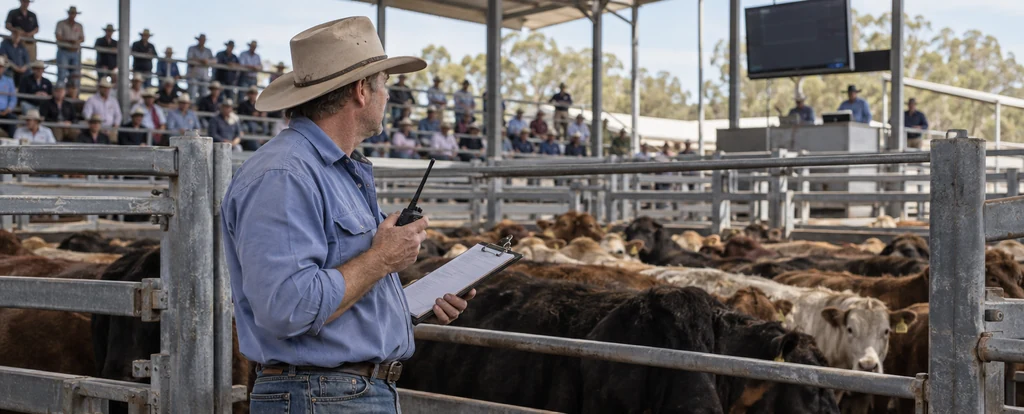
Stock and station agents work out of country towns, splitting the week between saleyards, farms, wool stores and an office. They act for the vendor: assessing what stock or produce is worth, finding buyers, and seeing the sale through to settlement and payment. The job is often confused with livestock buying, which is done for a processor or feedlot rather than for the farmer.
How much do stock and station agents earn?
The median full-time salary for a stock and station agent is $75,400 per annum, before tax, up $15,800 since 2018.
Pay is usually a base salary plus commission on livestock, wool and property sales, so earnings swing with both your own sales and the season. Agents in mixed farming districts with active cattle and wool markets earn more in a good year than in a drought, when clients simply have less to sell. Some larger agencies pay a straight salary instead, which trades the upside for steadier income.
What does a stock and station agent do day to day?
The list below is what fills most weeks; the exact mix shifts with seniority and whatever stage the current work is at.
- Assessing livestock and wool quality and estimating what a pen will make
- Negotiating sales of cattle, sheep, wool and grain on behalf of vendor clients
- Preparing and running saleyard auctions, including online sales through platforms such as AuctionsPlus
- Advising farming clients on property listings, seasonal finance and when to sell
- Keeping records of bids, sales and vendor payments and settling the proceeds
What skills do stock and station agents need?
Employers look for selling and negotiation, operations management, animal care and handling, backed by AuctionsPlus fluency and strong client relationships and advisory.
Specialist skills
- Selling and negotiation
- Operations management
- Animal care and handling
- Field inspection and testing
Software and tools
- AuctionsPlus
- AgriWebb
- Xero
- Microsoft Excel
General skills
- Client relationships and advisory
- Written communication
- Attention to detail
Is the job growing?
About 2,200 people work as stock and station agents in Australia, and employment is projected to grow 4.8% over the decade to 2035. That's modest growth: demand is steady rather than booming.
How do you become a stock and station agent?
Here's the path most stock and station agents take, step by step.
- 1Get hands-on livestock experience
Working on a farm or station, or starting in a saleyard or stockfeed business, teaches you to handle and judge cattle and sheep. Most people enter the occupation this way, and that eye for stock is what clients later pay for.
- 2Study agriculture or agribusiness
A Certificate III in Agriculture (AHC30122) or Certificate IV in Agribusiness (AHC41024) covers livestock assessment, rural finance and marketing, and larger agencies often prefer a diploma or degree in agribusiness or rural science. Either can be done part time while you keep working.
- 3Get the licences for what you sell
Selling rural property requires a real estate licence or registration, and the requirements differ between states, so check with your state regulator. Auctioneering and wool classing have their own training and accreditation, also arranged through state bodies.
- 4Learn the selling platforms
AuctionsPlus, AgriWebb and accounting software such as Xero are the everyday tools of an agency. Being fluent in them is expected in most offices, and it helps if your background is on the farm rather than at a desk.
- 5Build a reputation in one district
Agents earn repeat business from the same families for decades, so honest appraisals and reliable settlements matter more than a single big sale. Time spent in one region is what turns a client list into an income.
Ready to apply as a stock and station agent?
Whether you're working toward becoming a stock and station agent or already are one and want a hand with the next step (sharpening your resume for ATS screening, tightening your cover letter, or knowing what you'll actually be asked at interview), here are examples grounded in this specific role, not generic templates.
What jobs can a stock and station agent move to?
Moving into Wool Buyer typically comes with the biggest pay rise, worth $10,400 a year more on average.
| Move to | Typical pay change | Overlap | Retraining |
|---|---|---|---|
| Wool Buyer Stock and station agents bring commodity market knowledge and rural networks to wool buying, though formal wool trading study is needed. | +$10,400 | 43% | reskill |
| Real Estate Agent Their rural property sales experience and client contacts transfer to residential or commercial real estate, with licensing study required. | +$2,800 | 22% | reskill |
| Property Manager Stock and station agents can move into property management, using their property and client skills, but need licensing and tenancy training. | +$2,800 | 3% | reskill |
Moves are chosen from Jobs and Skills Australia's Data on Occupation Mobility, which follows income tax records between 2011-12 and 2020-21, together with entry requirements and skill overlap. A known move is one people were seen making in that data. Pay change compares median full-time pay for the two roles.
Who works as a stock and station agent?
The typical stock and station agent is 47 years old; 89% are men, 90% work full-time, and full-timers average 49 hours a week.
- 47
- Median age
- 11%
- Female share
- 90%
- Full-time
- +9h
- vs all-jobs avg
What's it like being a stock and station agent?
The week runs to the saleyard calendar, with early starts on sale days and quieter office days around them. It suits people who like being outdoors, know their way around livestock and enjoy the back-and-forth of a deal, and it rewards those who stay put in one district long enough to be trusted with the family's stock.
What people like
- Time in the yards and on farms. A lot of the week is spent among cattle and sheep or walking a paddock, not at a desk. Judging a pen on the spot, and being right about it, is a large part of the satisfaction.
- Deep local knowledge. Clients stay with an agent for years, so you learn their country, their breeding and their plans. That history makes the advice sharper and the conversations easier.
- Getting a sale away. Reading a ring of buyers, knowing when to push and landing a vendor a better price than they expected is the moment the job is built around.
- Variety across the year. Saleyard days, on-farm inspections, wool sales, property listings and store work give the year a shape that keeps changing with the season.
What people find hard
- Long weeks and early starts. Sale days begin well before daylight and full-time agents average 49 hours a week, with travel between farms, saleyards and the office on top of that.
- Income tied to the season. Commission-based pay falls away in dry years, when clients sell less stock and hold off on property decisions. A good season and a bad one can look very different on the same client list.
- Delivering disappointing prices. Telling a farmer their cattle or wool did not make what they hoped, often after a hard season, is a regular and unwelcome part of the work.
- Country kilometres. The district is your territory, and covering it means long drives on rural roads, sometimes with stock crates or paperwork in the back.
Based on our synthesis of professional-body surveys and public accounts of the role, not first-person verified reviews.
Which industries employ stock and station agents?
Wholesale Trade employs the largest share of stock and station agents, followed by Agriculture, Forestry and Fishing.
Top employing industries
- 1Wholesale Trade
- 2Agriculture, Forestry and Fishing
- 3Retail Trade
Ranked by employment share; the source doesn't publish an exact percentage per industry.
| Year 12 or below | 47.4% | |
|---|---|---|
| Certificate III/IV | 20% | |
| Diploma / Advanced Diploma | 12.7% | |
| Bachelor degree | 8.6% | |
| Postgraduate | 1% |
Will AI replace stock and station agents?
Moderate. Online selling platforms, market reporting and agency software have taken over most of the price information, listing and record keeping that once filled an agent's week. What is left is judging stock in the yard, working a ring of buyers and holding a client relationship across seasons, which software supports rather than replaces.
Share of typical working time by exposure level
- Assessing livestock and estimating valueCondition scoring and fat scores come from handling the animal and knowing the district's market, so this stays with the agent in the yard.25%low
- Auctioneering and negotiating salesReading buyers in the ring, knowing when to pause and getting a vendor a better price depends on the room on the day.25%low
- Advising clients on when to sell and what to listMarket data and seasonal outlook tools sharpen the advice, but the recommendation still comes from knowing the client's stocking rate, debts and plans.25%moderate
- Sales records, vendor payments and compliance paperworkAgency software, AuctionsPlus reporting and accounting platforms such as Xero now generate sale summaries, vendor statements and settlement records that were once written by hand.25%high
Common questions about becoming a stock and station agent
Straight answers to the questions people ask most.
What do stock and station agents get paid?
Full-time stock and station agents earn a median of $75,400 per year before tax, though individual earnings vary widely. Commission on livestock, wool and property sales makes up a big share of pay, so a strong market year lifts income and a drought year pulls it down.
How do you become a stock and station agent?
Most people start with practical livestock experience, then add a Certificate III in Agriculture (AHC30122) or a Certificate IV in Agribusiness (AHC41024). If you intend to sell rural property, you will also need a real estate licence or registration in your state, which usually means a course plus a registration period.
Are stock and station agents in demand?
Stock and station agents are currently not in shortage, and employment is projected to grow 4.8% over the decade to 2035. The occupation is small, with around 2,200 people working in it, so there is no large graduate intake and most hiring happens locally when an agency needs someone who already knows stock.
Will AI replace stock and station agents?
The selling stays human, but much of the information around it has already been automated. Online auction platforms and market reporting have changed how stock is offered and priced, and software now handles listings, contracts and vendor statements, while judging an animal's condition, working a ring of buyers and keeping a client's confidence are still done in person.
What can stock and station agents move into?
Wool buying is a close move, using the same commodity market knowledge and rural networks, and median pay for wool buyers is $10,400 more, though formal wool trading study is needed. Rural property sales experience also transfers to residential or commercial real estate, with licensing study required. Many experienced agents go on to run their own agency or take a share in one, which is often where earnings grow.
What are the hours like?
Full-time agents average 49 hours a week, and sale days start well before dawn. The workload follows the saleyard calendar and the season, so some weeks are heavy and others are spent catching up on paperwork and client visits.
Related roles
Not sure this is you? Take the career quiz and get a ranked shortlist of roles that fit how you like to work.