Station Hand
Station hands do the daily physical work of running a livestock property, from mustering and feeding stock to fixing fences and machinery.
- Median salary*
- $49,300
4.0%vs last year, before tax
- People employed
- 4,300
0.0%vs last year
- Projected growth*
- +1.2%
to 2035
- AI exposure*
- Low
- automation risk
- Average hours*
- 45/wk
+5h vs all jobs
- Shortage status*
- In shortage (regional)
national
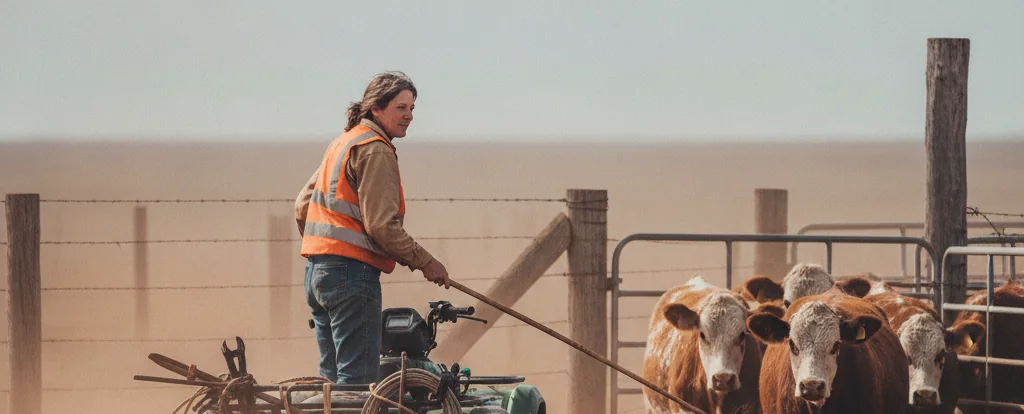
Station hands work on grazing properties, most often cattle or sheep stations in regional and remote Australia, and their work centres on livestock rather than crops. Many live on the property as part of a small team under a station manager or head stockman, and the job runs to a seasonal rhythm built around mustering, marking and branding. The role overlaps closely with general farm work, but stations tend to be larger, more remote and more focused on running livestock at scale.
How much do station hands earn?
The median full-time salary for a station hand is $49,300 per annum, before tax, up $10,300 since 2018.
Pay for station hands usually follows the Pastoral Award, and what a property offers on top of it varies. Larger and more remote stations often pay more or include accommodation and meals, while casual and seasonal mustering work can mean quieter months with fewer shifts. Experience with horses, machinery or stock handling is what moves you up the scale fastest.
What does a station hand do day to day?
The list below is what fills most weeks; the exact mix shifts with seniority and whatever stage the current work is at.
- Mustering cattle or sheep on foot, horseback, motorbike or with a chopper across paddocks that can take hours to cross
- Patching fences, troughs and yards that stock or weather have knocked around since the last check
- Feeding out, drenching and checking stock condition paddock by paddock
- Keeping station vehicles, generators and pumps running with basic repairs and servicing
- Pitching in on marking, branding, shearing and other jobs that bunch up around mustering season
What skills do station hands need?
Employers look for animal care and handling, plant and equipment operation, hand and power tool work, backed by Quad bike / ATV fluency and strong problem solving.
Specialist skills
- Animal care and handling
- Plant and equipment operation
- Hand and power tool work
- Worksite safety management
Software and tools
- Quad bike / ATV
- Fencing tools and wire
- Mustering equipment
- Vehicle and tractor
- Basic hand tools
General skills
- Problem solving
- Physical stamina and dexterity
- Attention to detail
Is the job growing?
About 4,300 people work as station hands in Australia, and employment is projected to grow 1.2% over the decade to 2035. That's modest growth: demand is steady rather than booming.
How do you become a station hand?
Here's the path most station hands take, step by step.
- 1Start by applying to properties, labour hire firms or mustering contractors
Most station hands begin with no formal qualification, and employers look for a driver's licence, basic fitness and a willingness to work outdoors. Labour hire and seasonal mustering crews are common ways to get a first start without contacts in the industry.
- 2Work through an agricultural traineeship
A traineeship combines paid work on a property with study toward a Certificate III in Agriculture (AHC30122), and is the usual route for someone with no farming background. It is paid, takes around two to three years part time, and gives you a qualification that travels between properties.
- 3Pick up the licences and qualifications that make you useful
A manual driver's licence is close to essential, and quad bike or ATV training, chemical handling certification and first aid are commonly asked for. A heavy vehicle or forklift licence opens up more of the machinery work.
- 4Build specialist stock and machinery skills
Horsemanship, low-stress stock handling, welding and fencing decide which jobs you get offered and how much you are trusted with. These are learned on the job, usually from a head stockman or manager willing to teach.
- 5Take on responsibility on the property
Hands who show they can work unsupervised move into leading hand, head stockman or station manager roles, sometimes with further study in agriculture or farm business. Others go on to run or share-farm their own place.
Ready to apply as a station hand?
Whether you're working toward becoming a station hand or already are one and want a hand with the next step (sharpening your resume for ATS screening, tightening your cover letter, or knowing what you'll actually be asked at interview), here are examples grounded in this specific role, not generic templates.
What jobs can a station hand move to?
Moving into Agricultural Machinery Operator typically comes with the biggest pay rise, worth $26,100 a year more on average.
| Move to | Typical pay change | Overlap | Retraining |
|---|---|---|---|
| Agricultural Machinery Operator Mustering, fencing and feeding build familiarity with tractors and farm machinery, and a ticket lets station hands operate them professionally.Known move | +$26,100 | 46% | short course |
| Stock and Station Agent Knowledge of livestock, seasonal conditions and property work suits agency roles selling stock, though a certificate and reskilling are required.Known move | +$26,100 | 15% | reskill |
| Shearer Station hands already handle sheep and know flock behaviour, and a short course in shearing technique turns that stock sense into shed work.Known move | +$15,200 | 47% | short course |
| Beef Cattle Farmer Running stock, pasture and property maintenance gives the practical base for a beef cattle farm, with a substantial reskill in farm business.Known move | +$12,100 | 42% | reskill |
| Wool Handler Sheep handling and shed experience carry straight into wool handling, with a short course covering fleece preparation and shed routines.Known move | +$5,300 | 47% | short course |
Moves are chosen from Jobs and Skills Australia's Data on Occupation Mobility, which follows income tax records between 2011-12 and 2020-21, together with entry requirements and skill overlap. A known move is one people were seen making in that data. Pay change compares median full-time pay for the two roles.
Who works as a station hand?
The typical station hand is 35 years old; 68% are men, 66% work full-time, and full-timers average 45 hours a week.
- 35
- Median age
- 32%
- Female share
- 66%
- Full-time
- +5h
- vs all-jobs avg
What's it like being a station hand?
The job runs on the season and the weather rather than a clock, so days are long and physical, with punishing mustering peaks and quieter weeks in between. Station hands usually live on the property as part of a small team, which means the people you work with are also the people you eat and relax with. It suits someone who wants to be outdoors and around livestock, is comfortable with distance from town, and is happy to learn practical skills as they go.
What people like
- Working with livestock rather than screens. Most of the day is spent on a horse, a bike or on foot with cattle or sheep, and you can see what the work has achieved by the end of it.
- A small team that becomes a social life. On a remote property you live alongside the same handful of people, share meals and often make friendships that outlast the season.
- A wide range of practical skills. Fencing, welding, machinery repairs and stock handling all get picked up on the job, and they stay useful wherever you work next.
- The country itself. Stations cover some of the most remote land in Australia, and the work takes you across paddocks and country most people never see.
What people find hard
- Long days and physical fatigue. Days start early and finish when the job is done, and the lifting, riding and fencing add up over a season.
- Isolation and distance from town. Many properties sit hours from the nearest shop or hospital, phone and internet coverage is patchy, and keeping up with family and friends takes planning.
- Heat, dust and weather. Work continues through heat, flies, dust and, in the north, the wet season, often with little shelter until the job is finished.
- Income that moves with the season. Entry-level wages are modest and a lot of work is seasonal, so what you earn across a year depends on how many months you pick up.
Based on our synthesis of professional-body surveys and public accounts of the role, not first-person verified reviews.
Which industries employ station hands?
Agriculture, Forestry and Fishing employs the largest share of station hands, followed by Manufacturing.
Top employing industries
- 1Agriculture, Forestry and Fishing
- 2Manufacturing
- 3Wholesale Trade
Ranked by employment share; the source doesn't publish an exact percentage per industry.
| Certificate III/IV | 34% | |
|---|---|---|
| Diploma / Advanced Diploma | 26% | |
| Bachelor degree | 20% | |
| Year 12 or below | 20% |
Will AI replace station hands?
Station work is rated low for AI exposure because almost all of it happens with animals, terrain and weather that machines handle poorly. Electronic ear tags, walk-over weighing and satellite pasture mapping have taken over much of the counting and record-keeping, and some properties use drones to check water and fences. The physical work, from mustering to fencing to catching a sick animal, still needs a person on the ground.
Share of typical working time by exposure level
- Mustering and moving stockReading how a mob moves, holding it together across a paddock and working a gate with stock pressing behind you is hands-on work that drones and sensors only partly assist.35%low
- Fencing, water points and yard repairsTensioning wire, fixing a trough float and replacing a broken yard rail depend on the site, the soil and the season, which is why this stays manual.25%low
- Animal health, feeding and condition checksSoftware can flag a weight drop from walk-over scales or an ear tag reading, but spotting a lame beast or a bad eye still means getting in the mob and looking.20%moderate
- Stock records and basic machinery upkeepHerd management apps and electronic tag scanners have replaced most paper recording of movements and treatments, while servicing a bike or tractor remains a hands-on job.20%moderate
Common questions about becoming a station hand
Straight answers to the questions people ask most.
How much does a station hand earn?
Station hands earn a median of $49,300 per year before tax, based on full-time workers. Many properties pay under the Pastoral Award, and remote stations often add accommodation, meals or a location allowance on top. Casual and seasonal mustering work pays differently again, so what you take home over a year depends on how much of it you work.
How do you become a station hand?
Most station hands start with no formal qualification, so the quickest route in is applying directly to properties, labour hire firms or mustering contractors. A driver's licence and a willingness to work outdoors matter more at the start than a certificate. A paid traineeship toward a Certificate III in Agriculture (AHC30122) is the usual way to turn a first job into a career.
Are station hands in demand?
Station hands are currently in shortage in regional areas, and employment is projected to grow 1.2% over the decade to 2035. The work sits in regional and remote areas, so whether you find a job depends more on where you are willing to live than on competition in the cities. Properties hire heaviest around mustering, marking and shearing seasons.
Will AI or automation replace station hands?
Automation reaches the record-keeping side of station work well before the physical side, so overall exposure is low. Electronic ear tags, walk-over weighing and satellite pasture mapping now handle much of the counting and monitoring that was once done by hand, and drones check water and fences on some properties. Mustering, fencing and animal health still need someone reading the country and the stock in person.
What hours do station hands work?
Full-time station hands average 45 hours a week, and days typically start early to make the most of the cooler hours. Mustering, marking and branding push those hours higher, while quieter months are shorter. Weekend work is common because livestock do not follow a five-day week.
What can a station hand move into?
Shearing and wool handling build straight on sheep handling, and both take only a short course to formalise. Agricultural machinery operation is a common step across, paying $26,100 more once you have experience on tractors and implements. Further out, hands with stock and pasture knowledge go on to run their own beef cattle property, and that is often where earnings grow.
Related roles
- Shearer
- Agricultural Machinery Operator
- Wool Handler
- Stock and Station Agent
- Beef Cattle Farmer
- Farm Worker
Not sure this is you? Take the career quiz and get a ranked shortlist of roles that fit how you like to work.