Wool Handler
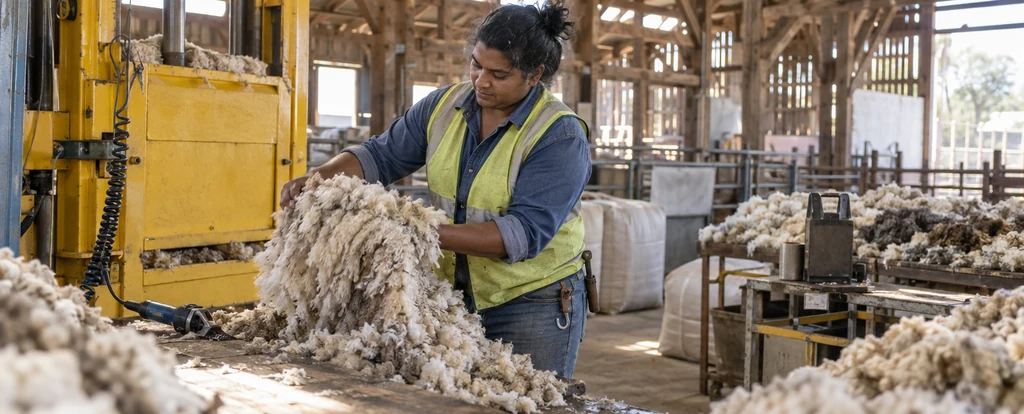
Wool handlers work in the wool room of a shearing shed, skirting, sorting and pressing each fleece so the clip leaves the farm clean and correctly baled.
- Median salary*
- $54,600
3.8%vs last year, before tax
- People employed
- 820
2.5%vs last year
- Projected growth
- +1.8%
to 2035
- AI exposure*
- Low
- automation risk
- Average hours
- 38/wk
−2h vs all jobs
- Shortage status*
- In shortage (regional)
national
The work happens on the shearing board and at the wool table, on sheep properties that are often a long way from town. It sits beside two roles it is easily confused with: the shearer takes the fleece off the sheep and the wool classer decides how the clip is classed, while the wool handler does the handling, skirting and pressing in between. Most wool handlers are employed by contract shearing teams that move from property to property through the season.
How much do wool handlers earn?
The median full-time salary for a wool handler is $54,600 per annum, before tax, up $11,300 since 2018.
Pay for wool handlers usually follows the Pastoral Award, and properties or contractors with an enterprise agreement can pay above it. Casual and seasonal work often carries a loading, and shed crews are commonly paid by the day or by the run rather than a set annual figure. How many days of the season you work matters as much to your yearly earnings as the rate itself.
What does a wool handler do day to day?
The list below is what fills most weeks; the exact mix shifts with seniority and whatever stage the current work is at.
- Picking fleeces off the shearing board and carrying them to the wool table
- Skirting stained, seedy or burry edges away from the fleece before it is classed
- Sorting fleeces into lines by colour, length and quality as the wool classer directs
- Loading the wool press, then weighing, branding and stacking the bales
- Keeping the board, wool room and yards clear of anything that could contaminate the clip
What skills do wool handlers need?
Employers look for plant and equipment operation, hand and power tool work, backed by Hydraulic wool press fluency and strong physical stamina and dexterity.
Specialist skills
- Plant and equipment operation
- Hand and power tool work
Software and tools
- Hydraulic wool press
- Wool classing table
- Shearing handpiece
- Bale branding equipment
- Shed brooms and fleece hooks
General skills
- Physical stamina and dexterity
- Attention to detail
- Safety and compliance awareness
- Written communication
Is the job growing?
About 820 people work as wool handlers in Australia, and employment is projected to grow 1.8% over the decade to 2035. That's modest growth: demand is steady rather than booming.
How do you become a wool handler?
Here's the path most wool handlers take, step by step.
- 1Take a short wool handling course
Sheep industry bodies and some TAFE colleges run wool handling courses over a few days, covering skirting, fleece preparation and safe work around the board. They are the quickest way in and many contractors look for them.
- 2Learn the pace on the job
Most handlers build speed and judgement over a season alongside experienced classers and shearers. Pay at this stage is usually casual or daily rates, so ask what a run is worth before you commit to a property.
- 3Get comfortable with the press and the shed machinery
Running a hydraulic wool press, weighing bales and branding them safely takes supervised practice. If the job includes loading trucks, some employers ask for a forklift licence.
- 4Consider a certificate if you want to move up
A Certificate III in Wool Clip Preparation (AHC33025) leads towards wool classing, and agriculture certificates open up machinery and station work. They take longer than a short course but change what you can earn.
Ready to apply as a wool handler?
Whether you're working toward becoming a wool handler or already are one and want a hand with the next step (sharpening your resume for ATS screening, tightening your cover letter, or knowing what you'll actually be asked at interview), here are examples grounded in this specific role, not generic templates.
What jobs can a wool handler move to?
Moving into Agricultural Machinery Operator typically comes with the biggest pay rise, worth $20,800 a year more on average.
| Move to | Typical pay change | Overlap | Retraining |
|---|---|---|---|
| Agricultural Machinery Operator Farm machinery work suits the same outdoor setting, with a certificate needed to run tractors, loaders and wool presses safely.Known move | +$20,800 | 30% | reskill |
| Wool Classer Skirting and sorting fleeces gives the groundwork for classing, with study in wool types and clip valuation leading to better paid work.Known move | +$18,200 | 15% | reskill |
| Shearer Shed work and fleece handling carry into shearing, with further training needed to build the speed and technique for the stand.Known move | +$9,900 | 35% | reskill |
| Station Hand General stock and property work builds on the same rural routine, needing only a short course in safe animal handling and mustering.Known move | −$5,300 | 47% | short course |
Moves are chosen from Jobs and Skills Australia's Data on Occupation Mobility, which follows income tax records between 2011-12 and 2020-21, together with entry requirements and skill overlap. A known move is one people were seen making in that data. Pay change compares median full-time pay for the two roles.
Who works as a wool handler?
The typical wool handler is 30 years old; 51% are men, 53% work full-time, and full-timers average 38 hours a week.
- 30
- Median age
- 49%
- Female share
- 53%
- Full-time
- −2h
- vs all-jobs avg
What's it like being a wool handler?
The day is long and physical and it runs to the shearers' pace, because fleeces come off the board faster than most newcomers expect and the wool room has to keep up. Sheds are often remote, so the season comes with travel and shared accommodation. People who enjoy it tend to like working flat out with a crew, and seeing a clean, branded clip stacked at the end of it.
What people like
- Working as a crew with a visible result. A shed runs as a team, and the day's clip sitting pressed and branded is something you can point to.
- Hands-on, outdoor work. You are on your feet handling fleeces rather than sitting at a desk, which suits people who prefer a physical routine.
- A short path into paid work. You can be earning within days of a basic course, and sheds take on inexperienced handlers during the season.
- A seasonal rhythm. The busy months run from spring into early winter, so there are quieter stretches in between for travel or other farm work.
What people find hard
- The load it puts on your body. Throwing fleeces all day works the back, shoulders and wrists, and injuries are common when technique slips or you rush.
- Long days and distance from town. Sheds start early and run long hours, and many are hours from the nearest town, so you live where you work for the run.
- Heat, dust and shed conditions. Summer shearing means flies, wool dust and high temperatures, and the board keeps moving regardless.
- Income that comes in bursts. Work arrives as runs through the season rather than as a steady year, so you need to plan around the gaps or line up other farm work.
Based on our synthesis of professional-body surveys and public accounts of the role, not first-person verified reviews.
Which industries employ wool handlers?
Agriculture, Forestry and Fishing employs the largest share of wool handlers.
Top employing industries
- 1Agriculture, Forestry and Fishing
Ranked by employment share; the source doesn't publish an exact percentage per industry.
| Year 12 or below | 69.8% | |
|---|---|---|
| Certificate III/IV | 18.2% | |
| Diploma / Advanced Diploma | 3.2% | |
| Bachelor degree | 2.7% | |
| Postgraduate | 0% |
Will AI replace wool handlers?
AI and automation reach very little of this job, because handling a fleece is physical work in a shed that never runs the same way twice. Electronic weighing, bale tagging and clip record software have changed the paperwork side of the wool room, and powered presses have made baling faster, but nothing skirts, sorts or throws a fleece. The low rating reflects the work itself rather than how the industry is managed.
Share of typical working time by exposure level
- Picking fleeces off the board and throwing them onto the wool tableShearers work at their own pace, so the handler times each throw to the next fleece coming off the stand.30%low
- Skirting fleeces at the wool tableJudging how much stained or burry edge to cut away is made by eye and hand, and the wool classer checks the result.25%low
- Pressing, weighing and branding balesThe press does the compressing and electronic scales give the weight, but loading the bale and branding it stay manual.25%moderate
- Recording the clip and bale detailsBale numbers, weights and declarations such as the National Wool Declaration are increasingly entered into clip software rather than a paper book.20%high
Common questions about becoming a wool handler
Straight answers to the questions people ask most.
How much do wool handlers earn?
$54,600 per annum, before tax, is the median for full-time wool handlers. Casual and seasonal handlers are often paid by the day or by the run, so the yearly total depends heavily on how many days of the season you work.
How do you become a wool handler?
Most people start with a short wool handling course run by a sheep industry body or a TAFE college, then learn the pace of the shed on the job. No licence or formal qualification is required to begin, though a forklift licence helps if the role includes loading bales.
Are wool handlers in demand?
Wool handlers are currently in shortage in regional areas, and employment is projected to grow 1.8% over the decade to 2035 over the decade to 2035. For someone looking for work, that means openings cluster in sheep producing regions during the shearing season, and crews are usually hired ahead of each run.
Do wool handlers work full time?
Full-time wool handlers average 38 hours a week, and 53% of the workforce works full time, but plenty of shed work is casual or seasonal. If you want a steady year you may need to combine shed work with other farm jobs or plan travel in the off-season.
Will AI or automation replace wool handlers?
The physical work of handling and skirting fleeces is very hard to automate, so exposure to AI is low. Clip records, bale documentation and wool testing data are the parts most likely to move to software, alongside the electronic weighing and bale tagging already used in many wool rooms.
What can wool handlers move on to?
Experienced handlers often move into shearing, which pays $9,900 more and uses the same shed routine, or train towards wool classing, which pays $18,200 more and needs further study in wool types and clip valuation. Work as an agricultural machinery operator pays $20,800 more and suits handlers who want to run tractors, loaders and presses. Many handlers work for contract shearing teams rather than a single farm, and running a crew of your own is one route where earnings grow.
Related roles
Not sure this is you? Take the career quiz and get a ranked shortlist of roles that fit how you like to work.