Fruit Picker
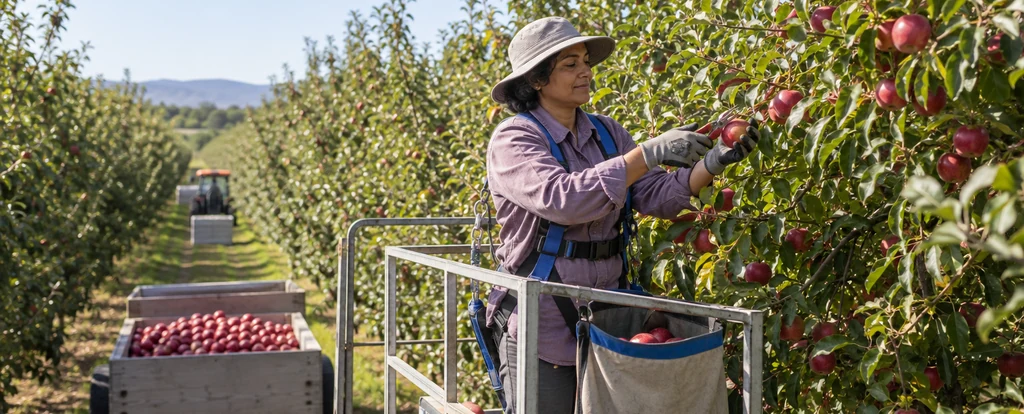
Fruit pickers harvest ripe fruit by hand and get it packed and off to markets, supermarkets and processors before it spoils.
- Median salary*
- $49,900
3.5%vs last year, before tax
- People employed
- 6,100
0.0%vs last year
- Projected growth*
- −3%
to 2035
- AI exposure*
- Low
- automation risk
- Average hours*
- 40/wk
matches all-jobs average
- Shortage status*
- In shortage (regional)
national
Fruit pickers work in orchards, vineyards and berry farms, mostly outdoors and mostly during harvest, which in Australia moves through different crops and regions at different times of year. The work comes down to speed and care at once, because fruit has to be picked at the right stage of ripeness and handled so it arrives undamaged. Many pickers are hired casually, either directly by a grower or through a labour hire company, and move between farms as one crop finishes and the next begins.
How much do fruit pickers earn?
The median full-time salary for a fruit picker is $49,900 per annum, before tax, up $10,700 since 2018.
The award that covers most picking work sets minimum hourly rates and allows piece rates, where you are paid by the bin or kilogram rather than by the hour, provided the piece rate matches what an hourly worker would earn. Casual loadings, how long the season runs and how much fruit is ready on a given day all affect what lands in your bank account, so weekly earnings can swing a lot. Across a year, income depends as much on how many weeks of harvest work you string together as on the rate itself.
What does a fruit picker do day to day?
The list below is what fills most weeks; the exact mix shifts with seniority and whatever stage the current work is at.
- Selecting fruit at the right stage of ripeness, checking colour, size and firmness
- Picking by hand or with secateurs, leaving the tree or vine undamaged
- Emptying picking bags and buckets into bins and keeping the fruit clean
- Sorting and packing fruit into trays, cartons or bins for dispatch
- Following orchard hygiene and safety rules, including the withholding period after spraying
What skills do fruit pickers need?
Employers look for hand and power tool work, plant and equipment operation, backed by Picking bag fluency and strong physical stamina and dexterity.
Specialist skills
- Hand and power tool work
- Plant and equipment operation
Software and tools
- Picking bag
- Secateurs
- Orchard ladder
- Harvest bins
- Hydraulic picking platform
General skills
- Physical stamina and dexterity
- Safety and compliance awareness
- Attention to detail
- Time and deadline management
Is the job growing?
About 6,100 people work as fruit pickers in Australia, and employment is projected to decline 3% over the decade to 2035. That's a real decline, worth weighing carefully before training into the role.
How do you become a fruit picker?
Here's the path most fruit pickers take, step by step.
- 1Get a start with a grower or a harvest labour company
There is no formal entry requirement, and most workers are hired at the start of a season either by the orchard or through a labour hire contractor. A driver's licence and your own transport help, because many orchards sit well outside town.
- 2Complete the on-site induction and safety briefing
Employers cover orchard hygiene, food safety, ladder use and chemical withholding periods before you start picking, and this is usually paid time. The withholding period after spraying protects you as well as the fruit, so it is worth knowing where the spray records are kept.
- 3Build picking speed and fruit handling skill
On piece rates your earnings follow how quickly and cleanly you pick, so the first weeks are about learning the fruit, the tree and the technique that suits it. Most growers value experienced pickers for exactly that reason, and many return to the same orchard each season.
- 4Add a qualification if you want to stay in horticulture
A Certificate II or III in Horticulture, through TAFE or a registered training organisation, supports leading hand, quality checking and machinery roles. It is not needed to pick fruit, but it helps when the season ends and you want work that lasts longer.
- 5Get the licences for machinery and shed work
A forklift licence or tractor experience opens up machinery operation and packing shed roles, which run for longer than a single harvest. Both are usually arranged through the employer or a short course.
Ready to apply as a fruit picker?
Whether you're working toward becoming a fruit picker or already are one and want a hand with the next step (sharpening your resume for ATS screening, tightening your cover letter, or knowing what you'll actually be asked at interview), here are examples grounded in this specific role, not generic templates.
What jobs can a fruit picker move to?
Moving into Agricultural Machinery Operator typically comes with the biggest pay rise, worth $25,500 a year more on average.
| Move to | Typical pay change | Overlap | Retraining |
|---|---|---|---|
| Agricultural Machinery Operator Fruit pickers understand orchard harvest work, so operating farm machinery is a natural progression with further training. | +$25,500 | 30% | reskill |
| Vineyard Worker Fruit pickers already handle and sort harvested crops, so vineyard work builds directly on those picking skills with a short course. | +$9,900 | 57% | short course |
| Product Grader Fruit pickers know ripe produce and defects, so product grading builds on that knowledge with further study. | +$9,900 | 25% | reskill |
| Farm Worker Fruit pickers bring crop handling and harvest experience to general farm work, with a short course covering other farm duties. | −$600 | 47% | short course |
| Station Hand Fruit pickers used to outdoor physical work can move into station hand roles, with a short course covering livestock tasks. | −$600 | 47% | short course |
Moves are chosen from Jobs and Skills Australia's Data on Occupation Mobility, which follows income tax records between 2011-12 and 2020-21, together with entry requirements and skill overlap. A known move is one people were seen making in that data. Pay change compares median full-time pay for the two roles.
Who works as a fruit picker?
The typical fruit picker is 32 years old; 64% are men, 51% work full-time, and full-timers average 40 hours a week.
- 32
- Median age
- 36%
- Female share
- 51%
- Full-time
- +0h
- vs all-jobs avg
What's it like being a fruit picker?
The rhythm of the job is set by the crop: early starts, long days while the fruit is ready, and a sudden stop when the block is picked out. Pay and pace are tied to how much you pick, so the work rewards people who like outdoor physical effort and can see the result of a day in the bins behind them. It suits someone who is happy to move between farms and regions and less well someone who needs steady year-round income in one place.
What people like
- Progress you can measure. A full bin is a clear result, and a tally at the end of the day tells you exactly what you did.
- Working outdoors and moving all day. The job is physical and outside, with the season and the weather setting the look of each day rather than a desk.
- A low barrier to entry. You can start without qualifications or prior experience, which makes it one of the quicker ways into agricultural work.
- Working in a crew. Harvest teams are usually large and mixed, with pickers from the local area and from overseas working the same block.
What people find hard
- Weather decides the day. Heat, rain and wet fruit can stop picking at short notice, and cold early mornings on a ladder are part of the job.
- Repetition and strain. Hands, shoulders and back carry the load across a full shift, and the same movement repeats thousands of times.
- Seasonal income. Work ends when the crop is finished, so you may need to follow the harvest to another region or find something else until next year.
- Pay tied to how much you pick. Piece rates reward speed, which is hard when you are new or when fruit is thin on the trees after bad weather.
Based on our synthesis of professional-body surveys and public accounts of the role, not first-person verified reviews.
Which industries employ fruit pickers?
Agriculture, Forestry and Fishing employs the largest share of fruit pickers, followed by Administrative and Support Services.
Top employing industries
- 1Agriculture, Forestry and Fishing
- 2Administrative and Support Services
- 3Retail Trade
- 4Manufacturing
- 5Wholesale Trade
Ranked by employment share; the source doesn't publish an exact percentage per industry.
| Certificate III/IV | 34% | |
|---|---|---|
| Diploma / Advanced Diploma | 26% | |
| Bachelor degree | 20% | |
| Year 12 or below | 20% |
Will AI replace fruit pickers?
Fruit picking is one of the least exposed jobs to AI and automation, because the work runs on hands, judgement about ripeness and careful handling of soft produce in an orchard that varies tree by tree. Machine harvesters are established for wine grapes and some processing fruit, and packing sheds use camera-based grading, but fresh-market fruit still needs people to pick it. The technology that does exist changes the equipment around the job, such as hydraulic picking platforms and harvest tracking apps, rather than replacing the picking itself.
Share of typical working time by exposure level
- Picking fruit by handSoft fruit such as berries, cherries and stone fruit bruises easily and ripens unevenly, which is why robotic harvesters remain limited to trials in most of these crops.45%low
- Moving bags, bins and ladders through the orchardTractors and hydraulic platforms carry bins and lift pickers to the canopy, but someone still has to move through the rows and empty each bag as it fills.30%low
- Judging ripeness and spotting damageSensors and camera grading can assess colour and firmness in a packing shed, but on the tree the decision still rests with the picker walking the row.15%moderate
- Sorting and packing picked fruitPacking sheds increasingly use camera-based graders to sort by size and defect, which reduces some of the sorting done by hand at the bin.10%moderate
Common questions about becoming a fruit picker
Straight answers to the questions people ask most.
How much do fruit pickers earn?
Fruit pickers earn a median of $49,900 per annum before tax, as a guide, and that figure describes full-time workers while most picking is casual and seasonal. What you take home depends on whether you are on an award hourly rate or a piece rate, whether casual loadings apply, and how many weeks of harvest work you get.
How do I become a fruit picker?
You apply directly to a grower or through a harvest labour company at the start of a season, and no qualification or experience is required. Being fit enough for a full day on your feet, having transport to reach the farm and turning up reliably on time are what get you asked back.
Are fruit pickers in demand?
Fruit pickers are currently in shortage in regional areas, and employment is projected to decline 3% over the decade to 2035. Harvest work is concentrated in a few months and in specific growing regions, so the practical question is whether you can be in the right place when a crop comes on.
Will AI or robots replace fruit pickers?
Picking is one of the least exposed jobs to automation, because it needs hands, judgement about ripeness and careful handling of soft fruit in an orchard that changes from tree to tree. Machine harvesters are already used for wine grapes and some processing fruit, and packing sheds use camera-based grading, but fresh-market fruit is still largely picked by people. Technology tends to change the equipment around the job, such as picking platforms and tracking apps, more than the picking itself.
What can fruit pickers move into?
Vineyard work is a close fit, since you already handle and sort harvested crops, and a vineyard worker earns $9,900 more. Fruit grading suits pickers who know ripe produce and defects, and the move to product grader comes with further study and $9,900 more. Operating farm machinery takes more retraining again, and an agricultural machinery operator earns $25,500 more.
Do fruit pickers work full time?
51% of fruit pickers work full time, averaging 40 hours a week, with the rest on casual or part-time arrangements. During harvest, full-time hours are common and overtime is often available, but the work thins out once the season ends.
Related roles
Not sure this is you? Take the career quiz and get a ranked shortlist of roles that fit how you like to work.