Marine Surveyor
Marine surveyors inspect vessels and marine structures to check they meet safety, environmental and regulatory standards.
- Median salary*
- $114,400
3.9%vs last year, before tax
- People employed
- 490
2.0%vs last year
- Projected growth
- +12%
to 2035
- AI exposure*
- Moderate
- automation risk
- Average hours
- 43/wk
+3h vs all jobs
- Shortage status
- In shortage
national
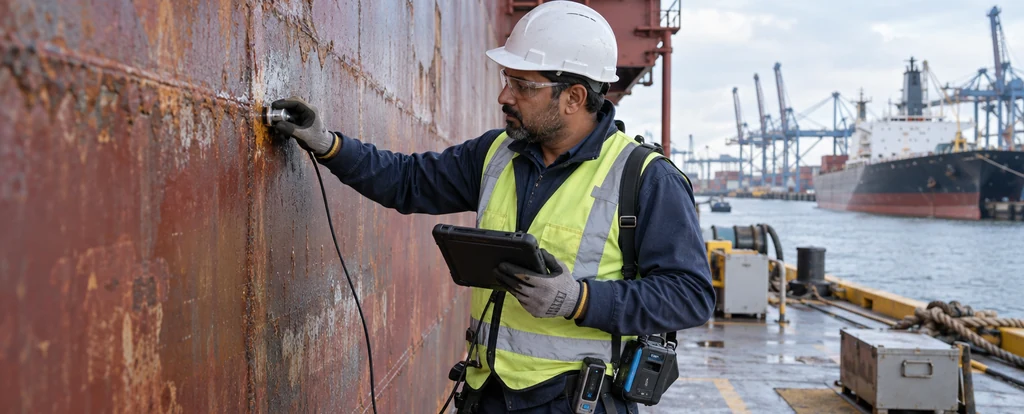
Marine surveyors work wherever a vessel happens to be: at a port berth, in a shipyard, on a slipway or offshore, so the job often means travelling to the ship rather than the ship coming to them. They differ from marine engineers, who design, run and repair machinery, because a surveyor assesses condition and compliance and then certifies it. Their findings support vessel registration, insurance cover and permission to enter port, and are relied on by owners, underwriters and regulators.
How much do marine surveyors earn?
The median full-time salary for a marine surveyor is $114,400 per annum, before tax, up $23,800 since 2018.
Pay depends heavily on who you survey for: a classification society, a government regulator, an insurer and an independent practice each set rates on a different basis. Surveyors accredited for larger vessels or specialist cargoes can quote for work that pays more, and rates typically reflect travel and offshore assignments. Independent surveyors charge by the day or by the job, so what they earn across a year follows how much work they take on.
What does a marine surveyor do day to day?
The list below is what fills most weeks; the exact mix shifts with seniority and whatever stage the current work is at.
- Inspecting hulls, decks and superstructures for corrosion, cracking and structural defects
- Testing machinery, electrical systems and navigation equipment, often with ultrasonic thickness gauges, thermal cameras and borescopes
- Checking life-saving appliances, fire systems and pollution prevention equipment against the applicable regulations
- Writing survey reports and issuing or refusing certificates of compliance, which owners need for registration, insurance and port access
- Investigating marine incidents and near misses and recommending corrective action
What skills do marine surveyors need?
Employers look for regulatory compliance, risk and internal controls, field inspection and testing, backed by Ultrasonic thickness gauge fluency and strong safety and compliance awareness.
Specialist skills
- Regulatory compliance
- Risk and internal controls
- Field inspection and testing
Software and tools
- Ultrasonic thickness gauge
- Borescope
- Thermal imaging camera
- Vibration meter
- Survey management software
General skills
- Safety and compliance awareness
- Attention to detail
- Problem solving
- Written communication
Is the job growing?
About 490 people work as marine surveyors in Australia, and employment is projected to grow 12% over the decade to 2035. That's healthy, above-average growth, and the role should stay in solid demand.
How do you become a marine surveyor?
Here's the path most marine surveyors take, step by step.
- 1Choose a maritime qualification
A bachelor degree in marine engineering, naval architecture or marine surveying takes three to four years, while a diploma in maritime operations or a related field takes one to two. The most common qualification in the current workforce is Bachelor degree, held by 36% of surveyors, but a diploma is a workable way in.
- 2Spend time at sea or in a shipyard
Most surveyors come from the deck, the engine room or a shipbuilding trade, because the job is judged on whether you can read a vessel. Sea time also counts towards the certificates of competency issued by the Australian Maritime Safety Authority.
- 3Add a certificate of competency
AMSA issues certificates of competency for deck, engineering and other seagoing roles under the international STCW framework. Holding one gives you standing when you inspect vessels against the same rules, even if you stop sailing full time.
- 4Train inside a class society, regulator or insurer
Surveyor training happens mostly on the job rather than in a course. Classification societies, port authorities, insurers and AMSA all bring people in and teach them to apply the rules to real vessels, which is the quickest way to build a survey record.
- 5Build accreditation for the vessels you want to survey
Survey work splits by vessel type, cargo and system, and each area carries its own rule set and endorsements. Experience in one area is what lets you quote for that work, whether you stay employed or go independent.
Ready to apply as a marine surveyor?
Whether you're working toward becoming a marine surveyor or already are one and want a hand with the next step (sharpening your resume for ATS screening, tightening your cover letter, or knowing what you'll actually be asked at interview), here are examples grounded in this specific role, not generic templates.
What jobs can a marine surveyor move to?
None of the roles marine surveyors typically move into pay more than the role itself. Marine Engineer is the closest match. If a bigger salary is the goal, moving up into a senior or principal position within the role is usually the faster route than moving sideways.
| Move to | Typical pay change | Overlap | Retraining |
|---|---|---|---|
| Marine Engineer A marine surveyor brings regulatory compliance and vessel inspection expertise to marine engineering, though hands-on engineering skills need development.Known move | −$2,600 | 25% | reskill |
Moves are chosen from Jobs and Skills Australia's Data on Occupation Mobility, which follows income tax records between 2011-12 and 2020-21, together with entry requirements and skill overlap. A known move is one people were seen making in that data. Pay change compares median full-time pay for the two roles.
Who works as a marine surveyor?
The typical marine surveyor is 51 years old; 98% are men, 78% work full-time, and full-timers average 43 hours a week.
- 51
- Median age
- 2%
- Female share
- 78%
- Full-time
- +3h
- vs all-jobs avg
What's it like being a marine surveyor?
Marine surveying runs on the movement of ships, so a week can swing between quiet paperwork and a survey that has to be finished before a vessel sails. Much of the job happens in shipyards, at anchorages and on decks in whatever weather is on the day, and the report at the end has to stand up if something goes wrong later. It suits people who like working from rules and evidence, and who are comfortable making a call and putting their name to it.
What people like
- Findings that change what happens next. A survey result can decide whether a vessel carries passengers, loads cargo or stays alongside, so the work has a visible consequence rather than sitting in a drawer.
- Time on vessels, not at a desk. The week moves between ships, workshops, slipways and ports, and you see the physical result of what you checked.
- Specialist knowledge that takes years to build. Accreditation for a particular vessel type or cargo is earned through experience, and it gives you standing with owners and class societies.
- Every job is a different vessel. One week might be a fishing boat, the next a bulk carrier or a tug, and each comes with its own rule set to work through.
What people find hard
- Delivering bad news under pressure. A surveyor who finds a defect is often telling someone whose schedule, cargo or charter depends on the answer, and those conversations can be tense.
- Surveys happen when the vessel is available. That can mean early starts, weekend work or a trip at short notice, and full-time surveyors average 43 hours a week.
- A large share of the week goes into paperwork. Evidence has to be recorded and reports written for insurers, regulators and sometimes courts, and the wording matters as much as the finding.
- Your call stays on the record. If a defect is missed and a vessel later has a problem, the survey report is one of the first things examined.
Based on our synthesis of professional-body surveys and public accounts of the role, not first-person verified reviews.
Which industries employ marine surveyors?
Professional, Scientific and Technical Services employs the largest share of marine surveyors, followed by Transport, Postal and Warehousing.
Top employing industries
- 1Professional, Scientific and Technical Services
- 2Transport, Postal and Warehousing
- 3Public Administration and Safety
Ranked by employment share; the source doesn't publish an exact percentage per industry.
| Bachelor degree | 35.8% | |
|---|---|---|
| Diploma / Advanced Diploma | 33.6% | |
| Certificate III/IV | 12% | |
| Postgraduate | 7.7% | |
| Year 12 or below | 4.1% |
Will AI replace marine surveyors?
Marine surveying sits in the middle of the range: the measuring and reporting side has gone digital, but the inspection and the compliance decision are still physical and personal. Thickness gauges, thermal cameras and survey management software record and compare readings far faster than a notebook, and class societies use the same tools to track a vessel's condition over years. What the technology does not do is crawl through a ballast tank or decide that a vessel stays in port.
Share of typical working time by exposure level
- Hull and machinery inspectionGetting into a tank, a void space or an engine room to look at steel, welds and pipework is hands-on work that sensors do not replace.30%low
- Survey reports and certification paperworkThickness readings, photographs and test results feed into templates that draft much of the report, though the surveyor still works out what the findings mean and signs it off.25%high
- Deciding whether defects are within limitsJudging whether a cracked frame or a thin plate is acceptable rests on the survey standard, the vessel's trading pattern and what the owner can realistically repair before sailing.25%low
- Condition readings and measurementsUltrasonic thickness gauges, thermal cameras and vibration meters log data digitally and flag readings outside limits, which speeds up spotting wasted steel or a failing bearing.20%moderate
Common questions about becoming a marine surveyor
Straight answers to the questions people ask most.
How much do marine surveyors earn?
The median is $114,400 per year before tax for full-time marine surveyors. Pay moves with the employer, since government regulators and classification societies work to set scales while independent surveyors charge by the day or job. Accreditation for larger vessels or specialist cargoes is what opens the better-paid work.
How do you become a marine surveyor?
Most marine surveyors start at sea or in a shipyard as a deck officer, marine engineer or shipwright, then move into surveying through a class society, a regulator or an insurer. A degree or diploma in a maritime field helps, and a certificate of competency from AMSA is widely respected. Structured training is almost always on the job rather than in a course.
Are marine surveyors in demand?
Marine surveyors are currently in shortage nationally, and employment is projected to grow 12% over the decade to 2035. With only about 490 people in the role, the number of openings each year is small, so new surveyors generally come from the sea-going and shipyard ranks rather than from a dedicated graduate intake.
Will AI replace marine surveyors?
Parts of the job are already automated: digital thickness gauges, thermal cameras and survey management software record readings and compare them against limits, and templates pull much of a report together. What the software cannot do is go into a ballast tank, see the condition of the steel and decide whether the vessel sails. The effect is faster evidence gathering and reporting rather than fewer surveys.
What can marine surveyors move into?
Marine engineers and marine surveyors move between the two roles, sharing vessel systems knowledge; skills overlap is around 25%, and each side has technical ground to pick up. Land-based surveyors also cross into marine work, bringing measurement and compliance skills and learning the maritime rules as they go. Independent practice is a common long-term step for experienced surveyors, and running your own business is often where earnings grow.
Do marine surveyors travel a lot?
Yes, the work follows the vessel, so surveys happen at ports, shipyards and anchorages rather than at a fixed site. Full-time marine surveyors average 43 hours a week, and covering a wide region means a fair share of that goes into travel. Insurance and incident surveys in particular can come up at short notice.
Related roles
- Marine Engineer
- Surveyor
- Marine Engineer
- Aerodrome Reporting Officer
- Transport Operations Inspector
- Train Controller
Not sure this is you? Take the career quiz and get a ranked shortlist of roles that fit how you like to work.