Environmental Scientist
Environmental scientists investigate how human activity affects land, water and air, and use that evidence to guide how a site is managed or developed.
- Median salary
- $101,600
3.6%vs last year, before tax
- People employed
- 32,000
1.3%vs last year
- Projected growth
- +16.6%
to 2035
- AI exposure*
- Moderate
- automation risk
- Average hours
- 42/wk
+2h vs all jobs
- Shortage status
- Not in shortage
national
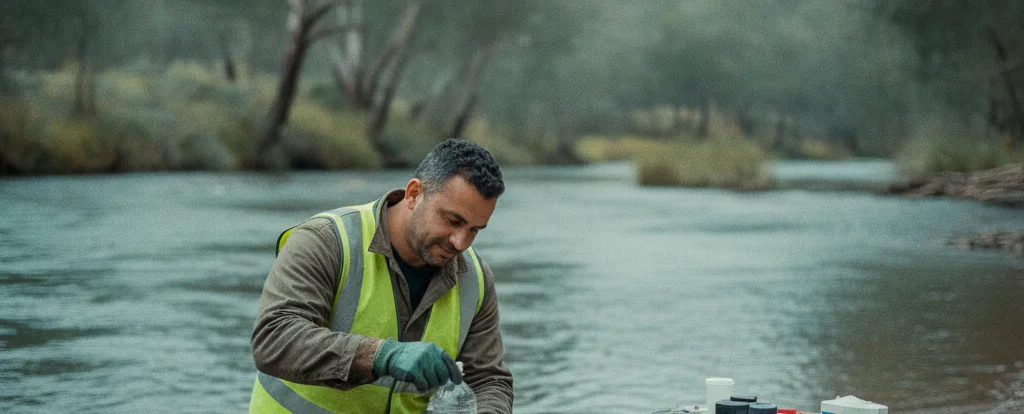
Environmental scientists split their week between field sites and the office, sampling soil, water or air and then testing what they find against environmental standards and planning rules. Most work for private consultancies, government agencies or resource companies, on projects that move from data collection through assessment to a report a client or regulator will rely on. The job is often confused with environmental engineering: engineers design the fix, while environmental scientists gather and interpret the evidence that shows one is needed.
How much do environmental scientists earn?
The median full-time salary for an environmental scientist is $101,600 per annum, before tax, up $21,700 since 2018.
Pay moves most with the sector: consultancies, government agencies and resource companies each set their own bands, and resources work often pays more for remote or site-based rosters. Government roles follow enterprise agreements with defined increments, while consultancy pay tends to track experience and how much of a project you can run yourself. Specialist skills such as contaminated land assessment or ecological approvals can lift earnings, because clients need them before a project can proceed.
What does an environmental scientist do day to day?
The list below is what fills most weeks; the exact mix shifts with seniority and whatever stage the current work is at.
- Collecting water, soil and vegetation samples on site, and recording the weather, land use and other conditions they were taken in
- Running laboratory tests or GIS analysis to turn field samples into data a project team can use
- Drafting impact assessments, monitoring reports and management plans for developers or government clients
- Explaining monitoring results to landholders, community groups and other stakeholders
- Chasing revisions and sign-off through a project's regulatory approval cycle
What skills do environmental scientists need?
Employers look for field research and sampling, laboratory analysis, environmental assessment, backed by ArcGIS / QGIS fluency and strong problem solving.
Specialist skills
- Field research and sampling
- Laboratory analysis
- Environmental assessment
- Data analysis
- Regulatory compliance
Software and tools
- ArcGIS / QGIS
- R / Python
- AutoCAD
- Environmental Monitoring Equipment
- Microsoft Excel
General skills
- Problem solving
- Written communication
- Stakeholder management
Is the job growing?
About 32,000 people work as environmental scientists in Australia, and employment is projected to grow 16.6% over the decade to 2035. That's healthy, above-average growth, and the role should stay in solid demand.
How do you become an environmental scientist?
Here's the path most environmental scientists take, step by step.
- 1Complete a bachelor degree
A three-year degree in environmental science, ecology, environmental management or a related science is the usual entry point, and about 49% of environmental scientists hold a bachelor degree as their highest qualification. Look for a course that includes field and laboratory units, since that is what graduate employers ask about.
- 2Build field experience while you study
Volunteering, cadetships and summer placements with councils, consultancies or state agencies give you the sampling and survey experience that separates graduates at interview. A manual driver licence matters too, because many sites are outside public transport.
- 3Choose a specialisation
About 30% of people in the role hold a postgraduate qualification, which is common for technical specialisms such as hydrogeology, contaminated land or ecological assessment. An honours year or a master's is the usual route, and it can be done after a few years of work once you know which area suits you.
- 4Apply for graduate and entry-level roles
Graduate programs in state and local government, environmental consultancies and resource companies recruit on a yearly cycle, so applications usually close well before the start date. Consultancy roles hire year-round and are the most common first job.
- 5Add certification as your career develops
Professional bodies such as the Environment Institute of Australia and New Zealand offer certification for experienced practitioners, which can help when you move into project lead or advisory work.
Ready to apply as an environmental scientist?
Whether you're working toward becoming an environmental scientist or already are one and want a hand with the next step (sharpening your resume for ATS screening, tightening your cover letter, or knowing what you'll actually be asked at interview), here are examples grounded in this specific role, not generic templates.
What jobs can an environmental scientist move to?
Moving into Environmental Engineer typically comes with the biggest pay rise, worth $36,100 a year more on average.
| Move to | Typical pay change | Overlap | Retraining |
|---|---|---|---|
| Environmental Engineer Environmental scientists move into engineering roles to design solutions for land, water and air, but an engineering degree is needed.Known move | +$36,100 | 33% | requalify |
| Environmental Manager Environmental scientists bring project and field experience to managing environmental programs and teams, though a management qualification is required.Known move | +$20,600 | 29% | requalify |
| Agronomist Environmental scientists bring soil and ecosystem knowledge to agronomy, though further study in agricultural science is required. | +$6,200 | 74% | requalify |
| Forester Environmental scientists bring ecological and land management knowledge to forestry work, with a short course adding forestry-specific skills.Known move | +$2,400 | 54% | short course |
| Botanist Environmental scientists with plant identification and survey skills move into botany, picking up specialist botanical training along the way. | −$5,400 | 59% | short course |
Moves are chosen from Jobs and Skills Australia's Data on Occupation Mobility, which follows income tax records between 2011-12 and 2020-21, together with entry requirements and skill overlap. A known move is one people were seen making in that data. Pay change compares median full-time pay for the two roles.
Who works as an environmental scientist?
The typical environmental scientist is 39 years old; 55% are men, 85% work full-time, and full-timers average 42 hours a week.
- 39
- Median age
- 45%
- Female share
- 85%
- Full-time
- +2h
- vs all-jobs avg
What's it like being an environmental scientist?
The work runs in cycles: a block of long days in the field, then weeks at a desk turning samples, logs and photographs into a report. Fieldwork sets the rhythm of the year, and it can mean remote travel, early starts and plans rewritten when weather or access changes. People who stay with the job tend to like both halves of it, the evidence gathering and the argument built from it, and are comfortable that one report may be read closely by a regulator, a client and a community group at the same time.
What people like
- Days on real sites. Surveying a creek, a wetland or a rehabilitation area is hands-on work in places most people never see, and the evidence you collect there decides what happens next.
- Results that settle an argument. A sampling round or a model can show whether a development is affecting water quality, which moves a project from disagreement to a decision.
- A different project each year. Mine rehabilitation, coastal development, contaminated land and biodiversity offsets all use the same core skills but bring different clients, rules and field conditions.
- Work that is publicly visible. Much of the job feeds into planning approvals and public reporting, so the findings often end up where communities and regulators can see them.
What people find hard
- Weather and access decide the week. Sampling trips get postponed when it floods, when a site permit is delayed or when a landholder is unavailable, and the reporting deadline does not move with them.
- The desk load at the end of a project. Assessment and monitoring reports pile up as a project nears its approval date, and the last weeks are mostly writing, checking and revising.
- Delivering unwelcome findings. A client or project team can push back hard when the data shows a problem, and holding the line on what the evidence says is part of the job.
- Slow approval cycles. Months can pass between submitting an assessment and hearing back from a regulator, which leaves projects sitting with your name on the file.
Based on our synthesis of professional-body surveys and public accounts of the role, not first-person verified reviews.
Which industries employ environmental scientists?
Professional, Scientific and Technical Services employs the largest share of environmental scientists, followed by Public Administration and Safety.
Top employing industries
- 1Professional, Scientific and Technical Services
- 2Public Administration and Safety
- 3Arts and Recreation Services
Ranked by employment share; the source doesn't publish an exact percentage per industry.
| Bachelor degree | 48.7% | |
|---|---|---|
| Postgraduate | 29.5% | |
| Year 12 or below | 7% | |
| Certificate III/IV | 6.9% | |
| Diploma / Advanced Diploma | 6% |
Will AI replace environmental scientists?
Environmental science sits in the middle: the analytical and report-writing side of the job is already being reshaped by software, while fieldwork and the conversations around a project are not. GIS, remote sensing and automated laboratory processing now handle much of the routine measurement and number crunching, and the time saved tends to go into interpretation and stakeholder work. The judgement about what a result means for a site, and whose approval a project needs, stays with the scientist.
Share of typical working time by exposure level
- Field sampling and site monitoringDeciding where to take a sample, taking it properly and reading a site still need someone on the ground, though sensors and drones are taking over some routine readings.30%low
- Data analysis and modellingR and Python scripts, GIS mapping and satellite imagery now process in minutes what used to take days of spreadsheets.25%high
- Stakeholder consultation and regulator negotiationCommunity meetings, landholder conversations and back-and-forth with a regulator turn on trust and local knowledge, which no tool supplies.25%low
- Impact assessment and report writingDrafting standard sections against a template is where language models save the most time, though the interpretation and the conclusions still have to be yours.20%high
Common questions about becoming an environmental scientist
Straight answers to the questions people ask most.
How much do environmental scientists earn?
$101,600 per annum, before tax, is the median for full-time environmental scientists in Australia, which means half earn more than that and half earn less. The sector you work in, how much project responsibility you take on and specialist skills such as contaminated land assessment move the figure most.
How do I become an environmental scientist?
Start with a bachelor degree in environmental science, ecology or a related science, which takes about three years full time. Graduate employers also look for field experience, so volunteering, a cadetship or a summer placement with a council, consultancy or state agency is worth arranging before you finish.
Are environmental scientists in demand?
Environmental scientists are currently not in shortage, and employment is projected to grow 16.6% over the decade to 2035. Much of the work follows planning and approval requirements, so it rises and falls with the volume of development, mining and infrastructure projects being assessed.
Will AI replace environmental scientists?
Not the parts that involve standing in a creek or negotiating with a landholder, but AI already handles more analysis and drafting than it did a decade ago. Remote sensing, automated lab processing and language models that produce a first draft reduce the hours spent on those tasks, which shifts the value toward interpretation, field skill and the client relationship.
What can environmental scientists move into?
Experienced scientists often step into environmental management, where pay is $20,600 more and the work shifts to running programs and teams, usually with a management qualification added along the way. Environmental engineering pays $36,100 more but requires an engineering degree, while agronomy is a closer move because 74% of the skills overlap and further study in agricultural science covers the rest. Some go on to run their own consulting practices, which is often where earnings grow.
Do you need a master's degree to work as an environmental scientist?
No, but postgraduate study is common, and about 30% of people in the role hold a postgraduate qualification as their highest. It helps most if you want to specialise in a technical area such as hydrogeology, contaminated land or ecological assessment, where employers look for depth beyond a general degree.
Related roles
Not sure this is you? Take the career quiz and get a ranked shortlist of roles that fit how you like to work.