Botanist
Botanists identify and classify plants, study how plant communities respond to change, and turn that knowledge into advice on conservation, land management and biosecurity.
- Median salary*
- $96,200
4.3%vs last year, before tax
- People employed
- 710
1.4%vs last year
- Projected growth
- +19.8%
to 2035
- AI exposure*
- Moderate
- automation risk
- Average hours
- 41/wk
+1h vs all jobs
- Shortage status
- Not in shortage
national
Botanists work across field sites, herbaria, laboratories and offices, and the mix shifts with the project: survey seasons mean weeks of remote fieldwork, while identification and reporting are largely desk based. The plant focus is what separates the role from general biology and ecology, and the taxonomic identification behind it is what agencies, herbaria and consultancies need most. The workforce is small, at about 710 people, so roles cluster in state herbaria, universities, botanic gardens and environmental consultancies.
How much do botanists earn?
The median full-time salary for a botanist is $96,200 per annum, before tax, up $20,300 since 2018.
Pay follows the sector more than the job title. Government agencies and universities pay on fixed classification scales, so your level depends on qualifications and years of service, while environmental consultancies set their own ranges and often pay a premium for botanists accredited to carry out statutory vegetation assessments. Short-term research contracts can leave gaps between roles that a permanent agency or consultancy position avoids.
What does a botanist do day to day?
The list below is what fills most weeks; the exact mix shifts with seniority and whatever stage the current work is at.
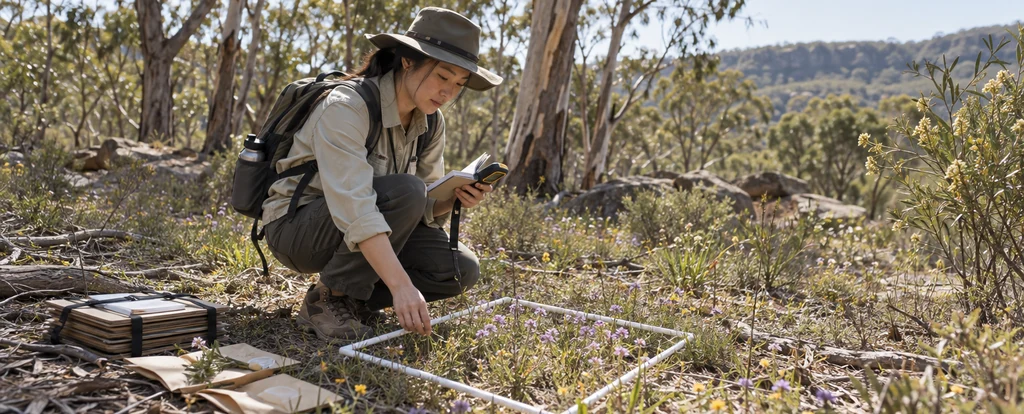
- Surveying plant populations with transects and quadrats, often on remote sites and within a short flowering season
- Collecting, pressing and identifying specimens, then lodging the vouchers with a herbarium
- Analysing ecological and genetic data in R and mapping it in QGIS or ArcGIS
- Assessing how development, grazing or fire regimes affect threatened plant species
- Writing survey reports, management plans and advice for landholders and regulators
What skills do botanists need?
Employers look for field research and sampling, laboratory analysis, environmental assessment, backed by R fluency and strong written communication.
Specialist skills
- Field research and sampling
- Laboratory analysis
- Environmental assessment
- Data analysis
- Surveying and geospatial work
Software and tools
- R
- QGIS
- ArcGIS
- Australasian Virtual Herbarium (AVH)
- Microsoft Excel
General skills
- Written communication
- Attention to detail
Is the job growing?
About 710 people work as botanists in Australia, and employment is projected to grow 19.8% over the decade to 2035. That's healthy, above-average growth, and the role should stay in solid demand.
How do you become a botanist?
Here's the path most botanists take, step by step.
- 1Complete a science degree
A bachelor degree majoring in botany, plant science or biological science is the standard entry point, covering taxonomy, ecology and statistics. Take field survey and plant identification subjects where they are offered, because employers ask about survey experience more often than they ask about grades.
- 2Get survey and herbarium experience
Volunteering with a herbarium, botanic garden, council bushcare group or university lab builds specimen handling and survey hours, and honours or summer projects often turn into the first paid work. This is the experience that gets you shortlisted.
- 3Add honours or a postgraduate qualification
52% of working botanists hold a postgraduate qualification, and an honours year or masters is often what opens research, herbarium and specialist assessment roles.
- 4Learn your state's assessment framework
Vegetation assessment for development approvals follows state legislation, so methods and accreditations differ between states; New South Wales, for example, works under the Biodiversity Assessment Method. Consultants value botanists who can already work to the framework that applies where they operate.
Ready to apply as a botanist?
Whether you're working toward becoming a botanist or already are one and want a hand with the next step (sharpening your resume for ATS screening, tightening your cover letter, or knowing what you'll actually be asked at interview), here are examples grounded in this specific role, not generic templates.
What jobs can a botanist move to?
Moving into Environmental Scientist typically comes with the biggest pay rise, worth $5,400 a year more on average.
| Move to | Typical pay change | Overlap | Retraining |
|---|---|---|---|
| Environmental Scientist Botanists bring plant identification and field survey skills to environmental impact work, with a short course filling regulatory gaps.Known move | +$5,400 | 59% | short course |
| Ecologist Botanists bring plant taxonomy and survey experience to ecosystem research, though a substantial course in ecology is needed.Known move | +$5,400 | 37% | reskill |
| Entomologist Botanists bring field survey and organism taxonomy skills to insect research, with minimal retraining in entomology. | +$2,600 | 70% | minimal |
| Biologist Botanists already share core biological science and research methods, so moving into general biology needs minimal retraining.Known move | +$0 | 67% | minimal |
Moves are chosen from Jobs and Skills Australia's Data on Occupation Mobility, which follows income tax records between 2011-12 and 2020-21, together with entry requirements and skill overlap. A known move is one people were seen making in that data. Pay change compares median full-time pay for the two roles.
Who works as a botanist?
The typical botanist is 46 years old; 53% are men, 73% work full-time, and full-timers average 41 hours a week.
- 46
- Median age
- 47%
- Female share
- 73%
- Full-time
- +1h
- vs all-jobs avg
What's it like being a botanist?
Botany runs on a seasonal clock: surveys happen when plants are flowering or fruiting, and identification, analysis and writing follow in the quieter months. The work is precise and often solitary, so it suits people who enjoy slow, careful detail as much as being outdoors, and who can live with a project finishing when the funding does. Fieldwork is the part people picture, but the microscope, the database and the desk take up more of the year.
What people like
- Knowing the plants, not just the theory. Being able to identify a species in the field takes years to build, and colleagues still bring specimens to whoever is known for a difficult genus.
- Fieldwork in remote country. Surveys take you to reserves, rangelands and mine sites that few people see, often for weeks at a time, and the season's data is yours to record.
- The findings go somewhere. Survey records feed into approvals, recovery plans and land management, so the vouchers you lodge and the reports you write outlast the project that paid for them.
- A close specialist community. The field is small enough that herbarium staff and university researchers know each other's work, and most will help with a difficult identification.
What people find hard
- The fieldwork window is narrow. Surveys have to happen when plants are flowering, so spring and early summer are long days and the rest of the year is catch-up.
- Identification is painstaking. Keying out a specimen under a microscope can take hours, and the answer often rests on a tiny structure you have to dissect.
- Writing takes as long as the survey. Data entry, herbarium records, impact statements and reports take up more of the job than people expect when they picture the outdoors.
- Funding decides what gets studied. Much of the work depends on government programs, consultancies and research grants, so priorities can shift between years.
Based on our synthesis of professional-body surveys and public accounts of the role, not first-person verified reviews.
Which industries employ botanists?
Professional, Scientific and Technical Services employs the largest share of botanists, followed by Public Administration and Safety.
Top employing industries
- 1Professional, Scientific and Technical Services
- 2Public Administration and Safety
- 3Education and Training
Ranked by employment share; the source doesn't publish an exact percentage per industry.
| Postgraduate | 52.2% | |
|---|---|---|
| Bachelor degree | 36.9% | |
| Diploma / Advanced Diploma | 4% | |
| Year 12 or below | 3.3% | |
| Certificate III/IV | 2.3% |
Will AI replace botanists?
Botany sits in the middle: AI and automation are changing how survey data is analysed, modelled and written up, but they have little purchase on the fieldwork and specimen identification at the centre of the job. Image-matching tools can suggest a genus, distribution models can predict where a species should occur, and herbarium records are increasingly digitised and searchable. None of that removes the need for someone to collect the voucher, confirm the species and judge what a vegetation community means for an approval.
Share of typical working time by exposure level
- Field survey and specimen collectionGetting to a site, laying out transects and pressing a voucher takes a person with permits and survey skills, and image recognition cannot stand in for the physical specimen.30%low
- Plant identification and taxonomyDigital keys and photo-matching apps can point toward a family, but confirming a species still means a botanist checking the specimen under a microscope.25%low
- Data analysis and mappingR scripts, species distribution models and GIS layers now do much of the routine analysis, shifting the botanist's time toward judging which model actually answers the question.25%high
- Reporting and assessment adviceDraft text and standard sections of an impact assessment can be generated quickly, but the determination still needs a botanist to check it and sign it off.20%moderate
Moves least exposed to AI
These career moves from botanist work are rated low for AI exposure:
- Entomologist
High skill overlap (70%), little retraining to get there, and a low automation-risk profile.
Common questions about becoming a botanist
Straight answers to the questions people ask most.
How much do botanists earn?
Full-time botanists earn a median of $96,200 per year before tax. Government agencies and universities pay on fixed classification scales, while consultancies set their own rates and often pay more for botanists accredited to carry out statutory vegetation assessments.
How do you become a botanist?
The usual route is a science degree majoring in botany or plant science, followed by honours or a masters, since 52% of working botanists hold a postgraduate qualification. Practical experience matters as much: volunteer or paid work with a herbarium, botanic garden or research group builds the survey and identification skills employers ask about.
Are botanists in demand?
Botanists are currently not in shortage, and employment is projected to grow 19.8% over the decade to 2035. Because the workforce is small, openings appear where funding does, most often in government environment agencies, universities and consultancies doing survey and assessment work.
Will AI replace botanists?
Not the core of the job, though it is changing parts of it. Image-based identification, species distribution modelling and digitised herbarium records speed up analysis and record keeping, but someone still has to collect the specimen, confirm the identification and decide what a survey means for an approval.
Do botanists spend most of their time outdoors?
No. Fieldwork is the visible part but usually a minority of the working week, with identification, data analysis, records and reporting taking the rest. It varies by role: a consultant's survey season is heavily outdoors, while a herbarium taxonomist may spend months at a microscope.
What else can botanists move into?
General biology and entomology are the closest fits, since the survey and taxonomy skills carry across with minimal retraining. Environmental scientist roles use the same field and assessment skills and usually need only a short course on the regulatory side, and they typically pay $5,400 more, while ecology needs more substantial retraining in ecosystem processes.
Related roles
Not sure this is you? Take the career quiz and get a ranked shortlist of roles that fit how you like to work.