Metallurgical Technician
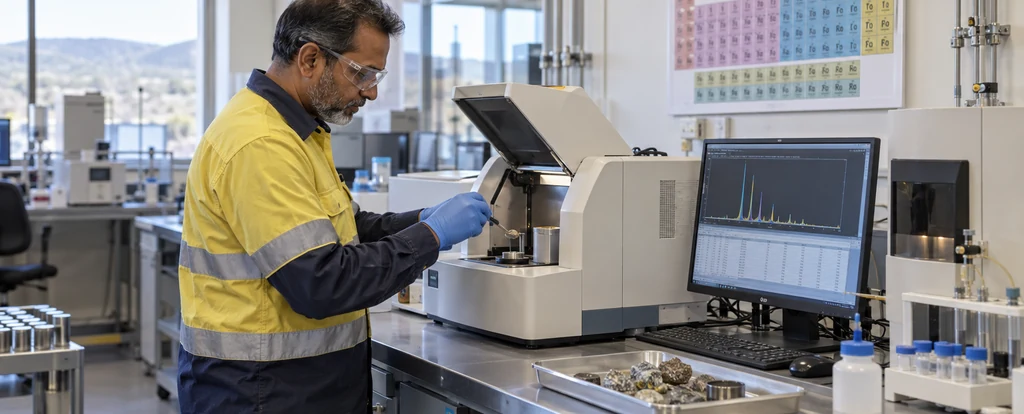
Metallurgical technicians test ore, concentrate and metal samples, and their results tell a processing plant how much metal it is recovering and where it is losing it.
- Median salary*
- $98,800
3.7%vs last year, before tax
- People employed
- 4,100
0.0%vs last year
- Projected growth
- +11.7%
to 2035
- AI exposure*
- Moderate
- automation risk
- Average hours
- 50/wk
+10h vs all jobs
- Shortage status
- Not in shortage
national
Metallurgical technicians work in mine site laboratories, mineral processing plants and smelters, testing samples to find out how much metal they contain and how readily it can be extracted. They sit between the bench and the circuit: metallurgists design the process and set the targets, while technicians run the tests, monitor plant performance and report what the numbers mean. Much of the work follows the production schedule, so the week is shaped by sample batches and shift handovers rather than a fixed office day.
How much do metallurgical technicians earn?
The median full-time salary for a metallurgical technician is $98,800 per annum, before tax, up $21,100 since 2018.
Where the work sits matters more than the job title: mine sites and remote operations usually pay above city laboratories, often through site allowances and roster arrangements. Shift work, fly-in, fly-out rosters and enterprise agreements at large producers lift earnings further, while manufacturing and commercial analytical laboratories tend to sit lower. A metallurgy degree opens the higher-paying process and senior technical roles, which is one reason some technicians study part time while working.
What does a metallurgical technician do day to day?
The list below is what fills most weeks; the exact mix shifts with seniority and whatever stage the current work is at.
- Collecting and preparing ore, concentrate and metal samples, often from running plant streams
- Running chemical and physical analyses to measure metal content and recovery rates
- Calibrating and maintaining laboratory instruments such as XRF and atomic absorption spectrometers
- Recording results in laboratory information systems and writing up daily and weekly test reports
- Walking the plant to check sampling points and recommending process adjustments when recovery drops
What skills do metallurgical technicians need?
Employers look for laboratory analysis, field inspection and testing, process improvement, backed by Laboratory Information Management System (LIMS) fluency and strong attention to detail.
Specialist skills
- Laboratory analysis
- Field inspection and testing
- Process improvement
- Operations management
- Data analysis
Software and tools
- Laboratory Information Management System (LIMS)
- X-ray fluorescence (XRF) analyser
- Atomic absorption spectrometer
- Microsoft Excel
- Python
General skills
- Attention to detail
- Problem solving
- Safety and compliance awareness
Is the job growing?
About 4,100 people work as metallurgical technicians in Australia, and employment is projected to grow 11.7% over the decade to 2035. That's healthy, above-average growth, and the role should stay in solid demand.
How do you become a metallurgical technician?
Here's the path most metallurgical technicians take, step by step.
- 1Finish Year 12 with maths, chemistry and physics
These are the subjects certificate and diploma courses assume, and they make the first year of study much easier.
- 2Take a Certificate IV or diploma in metallurgy, mineral processing or laboratory technology
TAFE and other registered training organisations offer these, usually over six months to two years, and some mining companies take on trainees who study while they work.
- 3Start in a laboratory or on a plant, often as a sample preparer or laboratory assistant
These entry roles are paid and give you the sample handling and instrument time that employers look for when hiring technicians.
- 4Complete site inductions and safety training before working on a plant
Mine sites require a general induction plus site-specific training, and laboratory work brings its own chemical handling and hazardous substances requirements.
- 5Study a metallurgy or materials engineering degree if you want to move up
Metallurgist and materials engineer roles generally require a degree, and many technicians complete one part time while staying in work.
Ready to apply as a metallurgical technician?
Whether you're working toward becoming a metallurgical technician or already are one and want a hand with the next step (sharpening your resume for ATS screening, tightening your cover letter, or knowing what you'll actually be asked at interview), here are examples grounded in this specific role, not generic templates.
What jobs can a metallurgical technician move to?
Moving into Refinery Operator typically comes with the biggest pay rise, worth $84,900 a year more on average.
| Move to | Typical pay change | Overlap | Retraining |
|---|---|---|---|
| Refinery Operator Plant experience and process sampling knowledge help metallurgical technicians move into refinery operator roles with additional process training.Known move | +$84,900 | 17% | reskill |
| Metallurgist Metallurgical technicians who complete a metallurgy degree can progress into metallurgist roles focused on process design and optimisation.Known move | +$13,000 | 83% | requalify |
| Materials Engineer Metallurgical technicians can move into materials engineering roles by completing a materials engineering degree. | +$10,400 | 44% | requalify |
| Laboratory Technician Analytical and sample preparation skills carry into laboratory technician work, with extra training in laboratory methods and instrumentation.Known move | −$5,500 | 38% | reskill |
Moves are chosen from Jobs and Skills Australia's Data on Occupation Mobility, which follows income tax records between 2011-12 and 2020-21, together with entry requirements and skill overlap. A known move is one people were seen making in that data. Pay change compares median full-time pay for the two roles.
Who works as a metallurgical technician?
The typical metallurgical technician is 38 years old; 72% are men, 86% work full-time, and full-timers average 50 hours a week.
- 38
- Median age
- 28%
- Female share
- 86%
- Full-time
- +10h
- vs all-jobs avg
What's it like being a metallurgical technician?
The job moves between a laboratory bench and the plant floor, with the week organised around sample batches, shift handovers and reporting deadlines. Full-time hours average 50 a week because many roles sit on mine site rosters with long shifts and travel. It suits people who like turning a sample into a clear number and then finding out what the plant is doing with it.
What people like
- Results you can trace back to the circuit. When a recovery figure moves, you can usually work out why, whether the cause was feed grade, reagent dosing or a sampling problem.
- Time split between lab and plant. Some shifts are spent at the bench and others out at the sampling points or thickeners, which breaks up the routine.
- Skills that carry across industries. Instrument work and sample handling transfer to manufacturing, environmental laboratories and commercial assay labs, so the experience is portable.
What people find hard
- Remote rosters and long shifts. A large share of the work is at mine sites on fly-in, fly-out or shift rosters, which means stretches away from home and hours that do not suit everyone.
- Repetitive preparation work. Crushing, splitting and weighing samples takes up much of the week, and the analysis itself can be over in minutes.
- Results are wanted immediately. When a plant is losing recovery, the metallurgist and the shift crew want an answer the same day, and an error in preparation can send the whole circuit the wrong way.
- A ceiling without a degree. Progress into metallurgist or process engineering work generally means going back to study, so the technician role can feel like a stopping point for people who do not want that.
Based on our synthesis of professional-body surveys and public accounts of the role, not first-person verified reviews.
Which industries employ metallurgical technicians?
Professional, Scientific and Technical Services employs the largest share of metallurgical technicians, followed by Mining.
Top employing industries
- 1Professional, Scientific and Technical Services
- 2Mining
- 3Manufacturing
Ranked by employment share; the source doesn't publish an exact percentage per industry.
| Year 12 or below | 28.2% | |
|---|---|---|
| Certificate III/IV | 27% | |
| Bachelor degree | 16.5% | |
| Diploma / Advanced Diploma | 14.7% | |
| Postgraduate | 5.7% |
Will AI replace metallurgical technicians?
Automation reaches parts of this job rather than the whole of it. Laboratory instruments now log results directly and software does the calculations and standard reporting, while sample preparation, calibration, plant checks and the judgement about what a result means for the circuit still sit with the technician.
Share of typical working time by exposure level
- Monitoring plant performance and recommending changesSoftware models the circuit and flags where recovery slips, which narrows the search, but deciding what to adjust and checking the effect on the plant is down to the technician and the metallurgist.35%moderate
- Running analyses on XRF and atomic absorption instrumentsInstruments largely run and log results once loaded, but choosing the method, checking standards and spotting drift is still the technician's call.25%moderate
- Collecting and preparing samplesCrushing, splitting and weighing ore and concentrate is still physical work, and how a sample is taken decides whether the result means anything.20%low
- Recording and reporting test resultsLaboratory information systems capture readings automatically and templates assemble the daily report, so this part of the week keeps shrinking.20%high
Common questions about becoming a metallurgical technician
Straight answers to the questions people ask most.
How much do metallurgical technicians earn?
Metallurgical technicians earn a median of $98,800 per annum, before tax. It is a median, so site-based roles on remote rosters, shift work and enterprise agreements at large producers push earnings above it, while city laboratory roles often sit below.
How do you become a metallurgical technician?
Most people start with a Certificate IV or diploma in metallurgy, mineral processing or laboratory technology, then pick up instrument and sample handling experience on the job. Many enter through paid roles as a sample preparer or laboratory assistant and move into testing once they know the plant.
Are metallurgical technicians in demand?
Metallurgical technicians are currently not in shortage, and employment is projected to grow 11.7% over the decade to 2035. Openings come from new positions as well as from technicians retiring or moving into metallurgist and engineering roles, so a qualification plus hands-on instrument time is what employers ask for.
Will AI and automation replace metallurgical technicians?
The clerical side of the role is the most exposed: analysers log readings straight into laboratory systems and software handles the calculations and standard reports. Sample preparation, instrument calibration, plant checks and the judgement about what a result means for the circuit still need someone on site, which is why the work is only partly affected.
What is the difference between a metallurgical technician and a metallurgist?
A metallurgist designs the process, sets recovery targets and decides what to change when the circuit underperforms. A technician runs the tests and monitoring that show whether those targets are being met, and usually needs a diploma or certificate rather than a degree.
Where can metallurgical technicians move next?
Metallurgical technicians who complete a metallurgy degree can move into metallurgist roles, where pay is $13,000 more and the focus shifts to process design. Staying on the plant side, refinery operator roles pay $84,900 more and build on the same sampling and process knowledge. A move into laboratory technician work pays $5,500 less and uses the analytical skills, though the work moves away from plant processes.
Related roles
- Metallurgist
- Laboratory Technician
- Materials Engineer
- Refinery Operator
- Laboratory Technician
- Mechanical Engineering Technician
Not sure this is you? Take the career quiz and get a ranked shortlist of roles that fit how you like to work.