Biotechnologist
Biotechnologists use living cells and molecular techniques to develop products and processes, from medicines and vaccines to diagnostic tests and improved crops.
- Median salary*
- $101,400
4.1%vs last year, before tax
- People employed
- 950
5.6%vs last year
- Projected growth
- +19.8%
to 2035
- AI exposure*
- Moderate
- automation risk
- Average hours
- 40/wk
matches all-jobs average
- Shortage status
- Not in shortage
national
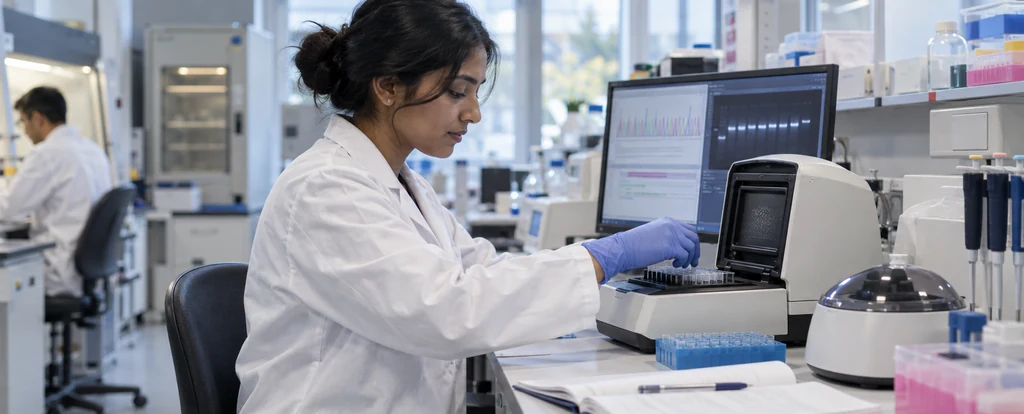
Biotechnologists work in laboratories run by research institutes, universities, pharmaceutical and diagnostics companies, and government agencies. Their focus is usually on developing a product or improving a process rather than on discovery-led research, though the bench techniques overlap heavily with biology and biochemistry. Many roles are tied to a grant or a product development program, so fixed-term contracts are common early in a career.
How much do biotechnologists earn?
The median full-time salary for a biotechnologist is $101,400 per annum, before tax, up $21,200 since 2018.
Sector moves pay more than almost anything else: pharmaceutical, medical technology and contract manufacturing employers typically pay above university research groups and public laboratories. Qualifications matter too, with a PhD or a postgraduate specialisation opening higher bands, and shift or on-call work in manufacturing and diagnostics usually attracting loadings on top of base pay.
What does a biotechnologist do day to day?
The list below is what fills most weeks; the exact mix shifts with seniority and whatever stage the current work is at.
- Culturing cells, bacteria and other microorganisms under controlled conditions
- Extracting and analysing DNA, RNA and proteins using molecular techniques
- Running assays such as PCR, gel electrophoresis and chromatography
- Recording, interpreting and reporting experimental data
- Maintaining laboratory equipment and following safety and quality standards
What skills do biotechnologists need?
Employers look for laboratory analysis, data analysis, statistical modelling, backed by Benchling fluency and strong attention to detail.
Specialist skills
- Laboratory analysis
- Data analysis
- Statistical modelling
- Regulatory compliance
- Process improvement
Software and tools
- Benchling
- SnapGene
- GraphPad Prism
- RStudio
- Laboratory Information Management Systems (LIMS)
General skills
- Attention to detail
- Problem solving
Is the job growing?
About 950 people work as biotechnologists in Australia, and employment is projected to grow 19.8% over the decade to 2035. That's healthy, above-average growth, and the role should stay in solid demand.
How do you become a biotechnologist?
Here's the path most biotechnologists take, step by step.
- 1Complete a bachelor degree in biotechnology or a related life science
Three years full time in a field such as biotechnology, molecular biology, biochemistry or genetics, covering cell biology, chemistry, genetics and laboratory technique. This is the minimum most employers ask for and the base for further study.
- 2Get laboratory experience while you study
A research placement, vacation project or honours year gives you real bench time and a referee who has seen you work. Employers hiring graduates weigh supervised laboratory experience heavily because techniques are learned by doing.
- 3Add a postgraduate qualification
Around 68% of people working as biotechnologists hold a postgraduate qualification, and research and development roles generally expect at least an honours year or a master's. It also gives you a specialisation, such as genomics, protein engineering or bioprocessing.
- 4Consider a PhD for research careers
Four years of supervised research, usually funded by a scholarship. It is the standard entry point for independent research, grant-funded positions and senior scientific roles in industry, though many quality, manufacturing and regulatory jobs do not require one.
- 5Build industry-specific compliance knowledge
No national registration applies to biotechnologists, but laboratories work to standards such as Good Manufacturing Practice and ISO 17025 accreditation, and employers provide training in these. Experience with quality systems, documentation and audit preparation is what makes you portable between sectors.
Ready to apply as a biotechnologist?
Whether you're working toward becoming a biotechnologist or already are one and want a hand with the next step (sharpening your resume for ATS screening, tightening your cover letter, or knowing what you'll actually be asked at interview), here are examples grounded in this specific role, not generic templates.
What jobs can a biotechnologist move to?
Moving into Chemist typically comes with the biggest pay rise, worth $12,700 a year more on average.
| Move to | Typical pay change | Overlap | Retraining |
|---|---|---|---|
| Chemist Biotechnologists can move into chemistry with a short course, as analytical and laboratory skills are shared.Known move | +$12,700 | 52% | short course |
| Medical Laboratory Scientist Biotechnologists can become medical laboratory scientists after requalifying, applying molecular skills to diagnostic testing.Known move | +$5,500 | 52% | requalify |
| Biochemist Biotechnologists move into biochemistry with shared analytical and molecular techniques, needing only a short course to specialise.Known move | −$1,600 | 52% | short course |
| Biologist Biotechnologists bring molecular and cell culture skills to biological research roles, with a short course bridging any gaps.Known move | −$5,200 | 46% | short course |
| Microbiologist Biotechnologists move into microbiology directly, as cell culture and molecular skills carry across with minimal retraining.Known move | −$21,100 | 67% | minimal |
Moves are chosen from Jobs and Skills Australia's Data on Occupation Mobility, which follows income tax records between 2011-12 and 2020-21, together with entry requirements and skill overlap. A known move is one people were seen making in that data. Pay change compares median full-time pay for the two roles.
Who works as a biotechnologist?
The typical biotechnologist is 36 years old; 53% are women, 78% work full-time, and full-timers average 40 hours a week.
- 36
- Median age
- 53%
- Female share
- 78%
- Full-time
- +0h
- vs all-jobs avg
What's it like being a biotechnologist?
The work runs in cycles: long stretches of careful bench work and analysis, punctuated by results that either open the next experiment or send you back to troubleshoot. Much of it is collaborative, with scientists, quality staff and manufacturing teams working to shared protocols and deadlines. It suits people who like precision, can stay patient through repetition and are comfortable with a result being inconclusive the first time.
What people like
- Results you can point to. A validated assay, a working diagnostic or a batch that passes release testing is a concrete outcome, and much of the work shows up in the final product.
- A mix of bench and computer work. Weeks rarely look the same. Time at the bench, sequence and statistical analysis, writing up results and planning the next experiment all sit in the same role.
- Small teams with shared problems. Projects are usually run by teams of a handful of scientists, so your experiments matter to the group and troubleshooting tends to happen out loud.
- Techniques that keep developing. Methods such as CRISPR, sequencing and automation change quickly, and labs that adopt them early give you skills that transfer to the next employer.
What people find hard
- Experiments that fail for small reasons. Contamination, a reagent past its date or a temperature drift can waste a week of work, and repeating a run is a normal part of the job rather than a setback.
- Fixed-term contracts early on. Grant-funded and project-funded positions are often offered on one to three year contracts, which makes income and location less settled until you move into permanent industry or government roles.
- Documentation takes real time. Protocols, batch records and quality reports have to be accurate enough to withstand an audit, and writing them up can take as long as the work they describe.
- Long timelines from bench to product. A promising result can take years of testing and regulatory approval before it reaches a clinic or a market, and many projects stop well before that point.
Based on our synthesis of professional-body surveys and public accounts of the role, not first-person verified reviews.
Which industries employ biotechnologists?
Professional, Scientific and Technical Services employs the largest share of biotechnologists, followed by Education and Training.
Top employing industries
- 1Professional, Scientific and Technical Services
- 2Education and Training
- 3Health Care and Social Assistance
Ranked by employment share; the source doesn't publish an exact percentage per industry.
| Postgraduate | 68.4% | |
|---|---|---|
| Bachelor degree | 29.1% | |
| Year 12 or below | 1.1% | |
| Diploma / Advanced Diploma | 0.8% | |
| Certificate III/IV | 0.3% |
Will AI replace biotechnologists?
AI and automation are a steady presence in this job rather than a threat to the whole of it, which is why exposure sits at a moderate level. Sequence analysis, statistical modelling and data handling are increasingly done by software, and laboratory information management systems have taken over much of the sample tracking that used to be manual. The physical work of growing cells, running assays and troubleshooting a contaminated culture is not something current tools do.
Share of typical working time by exposure level
- Bench work such as cell culture, PCR and cloningLiquid handlers and colony pickers automate some repetitive steps, but growing cells, preparing samples and spotting a failed reaction remain hands-on.30%low
- Designing and planning experimentsLiterature search and protocol drafting are much faster with AI tools, but deciding what to test next still comes from understanding the system you are working with.25%moderate
- Analysing sequence and experimental dataTools such as RStudio, GraphPad Prism and sequence analysis platforms now do much of the alignment, statistics and visualisation that once took days of manual work.25%high
- Records, reports and quality documentationLaboratory information management systems capture results automatically and AI drafting speeds up reports, though the scientist still signs off on what goes into a batch record or regulatory submission.20%high
Common questions about becoming a biotechnologist
Straight answers to the questions people ask most.
How much do biotechnologists earn?
Biotechnologists earn $101,400 per annum, before tax. That is a median for full-time workers rather than a starting salary, and sector, qualification level and shift work move it up or down.
How do you become a biotechnologist?
Most people start with a bachelor degree in biotechnology or a related life science, then add an honours year, master's or PhD. Supervised laboratory experience is the other thing employers look for, so research placements and vacation projects during study matter.
Are biotechnologists in demand?
Biotechnologists are currently not in shortage. Employment is projected to grow 19.8% over the decade to 2035 over the decade to 2035, and the occupation is small, with about 950 people working in it, so openings tend to be concentrated in a few cities and in specific sectors such as diagnostics, therapeutics and contract manufacturing.
Will AI replace biotechnologists?
Not the bench work, but it already handles a lot of the analysis around it. Sequence alignment, statistical modelling and data management are increasingly automated, and laboratory information management systems track samples and results with less manual entry. Designing experiments, growing cells and troubleshooting a failed run still need a person at the bench, which keeps overall exposure moderate.
What other jobs can biotechnologists move into?
Microbiology is a common move, because cell culture and molecular skills carry across with minimal retraining. Medical laboratory science applies the same techniques to diagnostic testing and pays $5,500 more, though it requires requalifying, and chemistry is a short-course move that pays $12,700 more.
Do biotechnologists need a PhD?
Not for every role. Quality control, manufacturing, regulatory affairs and many industry development positions are filled by people with a bachelor or master's degree, and a PhD is what research institutes and senior research roles expect.
Related roles
Not sure this is you? Take the career quiz and get a ranked shortlist of roles that fit how you like to work.