Chemist
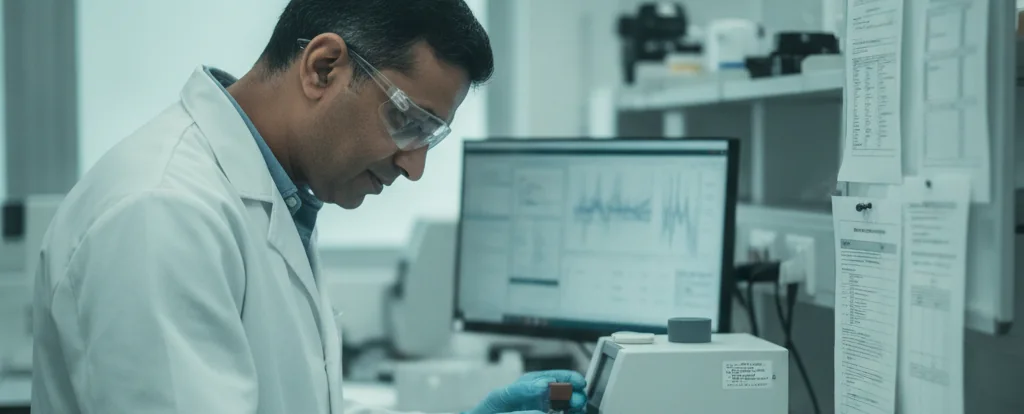
Chemists study what substances are made of and how they react, then use that to develop new materials, test product quality or improve a manufacturing process.
- Median salary
- $114,100
3.8%vs last year, before tax
- People employed
- 3,700
2.8%vs last year
- Projected growth
- +19.6%
to 2035
- AI exposure*
- Moderate
- automation risk
- Average hours
- 41/wk
+1h vs all jobs
- Shortage status
- Not in shortage
national
Chemists design and run experiments to work out what a substance contains, how it behaves and how to change it, across industries from pharmaceuticals to food and mining. Most work in a laboratory attached to a production site, a research institute or a testing company, moving between bench work and writing up results for regulators or other scientists. The role differs from a laboratory technician, who usually carries out routine tests that a chemist has designed rather than setting the research question.
How much do chemists earn?
The median full-time salary for a chemist is $114,100 per annum, before tax, up $23,700 since 2018.
Pay moves with the industry and the employer, the instruments and methods you can run independently, and whether the site operates shifts, which usually adds loadings or penalty rates. A chemist who can develop and validate a method for a new product tends to earn more than one who runs tests someone else designed, because method development is the harder skill to hire.
What does a chemist do day to day?
The list below is what fills most weeks; the exact mix shifts with seniority and whatever stage the current work is at.
- Setting up samples and running them through instruments such as HPLC and GC-MS, then reading the output to work out what a sample actually contains
- Repeating an experiment with one variable changed when the first result doesn't hold up
- Adjusting a formulation or a process step based on what the last batch showed, and testing it again
- Writing up methods and results precisely enough for another chemist to repeat the work
- Keeping chemical handling, storage and disposal rules front of mind, and recording them for audits
What skills do chemists need?
Employers look for laboratory analysis, data analysis, regulatory compliance, backed by HPLC (High Performance Liquid Chromatography) fluency and strong problem solving.
Specialist skills
- Laboratory analysis
- Data analysis
- Regulatory compliance
- Project management
Software and tools
- HPLC (High Performance Liquid Chromatography)
- Gas Chromatograph-Mass Spectrometer (GC-MS)
- Spectrophotometer
- Laboratory Information Management System (LIMS)
- Python or R for data analysis
General skills
- Problem solving
- Attention to detail
- Written communication
Is the job growing?
About 3,700 people work as chemists in Australia, and employment is projected to grow 19.6% over the decade to 2035. That's healthy, above-average growth, and the role should stay in solid demand.
How do you become a chemist?
Here's the path most chemists take, step by step.
- 1Complete a science degree majoring in chemistry
A Bachelor of Science with a chemistry major takes three years full time and is the standard entry point. Choose a course with substantial laboratory hours, because bench confidence is what employers screen for first.
- 2Add an honours year for analytical or research work
A fourth-year honours degree is common for chemists heading into analytical, pharmaceutical or research roles, and it is usually the minimum for a PhD pathway. Around 53% of people working as chemists hold a Bachelor degree.
- 3Build laboratory experience before you graduate
Vacation work, industry placements and part-time roles in a university or commercial lab give you something concrete to talk about at interview. Graduate programs at manufacturers, testing companies and government labs often close applications in the first half of your final year.
- 4Apply for graduate and entry-level roles
Most chemists start in quality control, analytical services, product development or process support. The first job usually teaches a specific instrument or method thoroughly, and that specialisation shapes the roles you can move into next.
- 5Specialise or move into supervision
Chartered Chemist accreditation through the Royal Australian Chemical Institute recognises experience and continued practice, and it helps for senior technical and consulting work. Moving into laboratory management usually needs a short course in management rather than another degree.
Ready to apply as a chemist?
Whether you're working toward becoming a chemist or already are one and want a hand with the next step (sharpening your resume for ATS screening, tightening your cover letter, or knowing what you'll actually be asked at interview), here are examples grounded in this specific role, not generic templates.
What jobs can a chemist move to?
Moving into University Lecturer typically comes with the biggest pay rise, worth $37,900 a year more on average.
| Move to | Typical pay change | Overlap | Retraining |
|---|---|---|---|
| University Lecturer Chemists bring laboratory and research expertise to teaching and academic research, though a doctorate and academic experience are usually required.Known move | +$37,900 | 4% | requalify |
| Research and Development Manager Chemists move into research leadership, applying scientific knowledge to product and process development, with management training and further study.Known move | +$36,000 | 10% | requalify |
| Laboratory Manager Chemists bring bench, quality and compliance knowledge to supervising laboratory teams, with a short course in management.Known move | +$5,500 | 48% | short course |
| Environmental Scientist Chemists bring sampling and analytical skills to environmental monitoring and assessment, with a short course in environmental science methods.Known move | −$12,500 | 50% | short course |
| Biochemist Chemists apply analytical chemistry skills to biological systems and molecular research, though further study in biochemistry is required.Known move | −$14,300 | 67% | reskill |
Moves are chosen from Jobs and Skills Australia's Data on Occupation Mobility, which follows income tax records between 2011-12 and 2020-21, together with entry requirements and skill overlap. A known move is one people were seen making in that data. Pay change compares median full-time pay for the two roles.
Who works as a chemist?
The typical chemist is 40 years old; 58% are men, 80% work full-time, and full-timers average 41 hours a week.
- 40
- Median age
- 42%
- Female share
- 80%
- Full-time
- +1h
- vs all-jobs avg
What's it like being a chemist?
Most chemists work a regular weekday in a laboratory, with project deadlines and batch releases setting the rhythm rather than shift rosters. The week alternates between hands-on bench time and the paperwork that makes a result usable for a regulator, a customer or a production team. It suits people who like a problem they can chip away at, and who would rather be accurate than quick.
What people like
- You find out how things actually work. A formulation that keeps failing, a contaminant nobody can identify: the answer is somewhere in the data, and the job is to track it down.
- Results you can point to. A validated method, a batch that passes, a product that reaches the market. The finish lines are clearer than in many jobs, even when they take months to reach.
- Specialist knowledge that builds. Instrument skills, method development and regulatory knowledge take years to acquire and are hard to replace, which is what makes an experienced chemist valuable to an employer.
- Mostly structured, focused days. Labs run on schedules and safety rules, and much of the day is quiet concentration rather than meetings or customer contact.
What people find hard
- Experiments that should have worked. Troubleshooting an assay or a failed batch can take a week, and the cause is often something small and unglamorous, such as a contaminated reagent or a drifting instrument.
- Documentation takes as long as the bench work. Methods, results and records have to be written up for audits, regulators and whoever runs the test next, and that record-keeping is not optional.
- Pressure from whoever is waiting on the result. Production managers want a batch released and sales want a product approved, so part of the job is holding the line on what the evidence actually supports.
- The ladder is short with some employers. A small lab may have one senior chemist and one manager, so progression often means changing employer, moving to a larger company or stepping into management.
Based on our synthesis of professional-body surveys and public accounts of the role, not first-person verified reviews.
Which industries employ chemists?
Manufacturing employs the largest share of chemists, followed by Professional, Scientific and Technical Services.
Top employing industries
- 1Manufacturing
- 2Professional, Scientific and Technical Services
- 3Education and Training
Ranked by employment share; the source doesn't publish an exact percentage per industry.
| Bachelor degree | 52.8% | |
|---|---|---|
| Postgraduate | 33% | |
| Year 12 or below | 6.1% | |
| Diploma / Advanced Diploma | 4.5% | |
| Certificate III/IV | 1.4% |
Will AI replace chemists?
Chemists have moderate exposure. Software handles a growing share of the data processing, literature searching and structure prediction, and automated instruments run samples with less hands-on input than they once did. Someone still has to prepare the sample, interpret a result that doesn't match expectations, decide whether a batch can be released and answer for that decision to a regulator.
Share of typical working time by exposure level
- Running samples on instruments such as HPLC and GC-MSAutosamplers and software handle the runs and the peak integration, but a chemist still prepares the sample, checks results against expected values and reruns anything that looks wrong.30%moderate
- Designing and troubleshooting experimentsWorking out why a reaction or a method failed, and what to change next, is where experience counts, and AI tools offer suggestions rather than answers.25%low
- Testing formulations and production processes on siteScaling a formulation from the bench to a production line involves equipment, timing and the people running it, none of which is captured in a model.25%low
- Writing up methods, reports and regulatory documentationDrafting methods, summaries and compliance reports is the most exposed part of the job, though a chemist still checks every figure before it is signed off.20%high
Moves least exposed to AI
These career moves from chemist work are rated low for AI exposure:
- Research and Development Manager
Some skill overlap (10%), requalify to get there, and a low automation-risk profile.
Common questions about becoming a chemist
Straight answers to the questions people ask most.
How much do chemists earn in Australia?
The median full-time chemist earns $114,100 per year before tax, which means half earn more and half earn less. Pay moves with the industry and employer, the instruments and methods you can run independently, and whether the work involves shift rosters.
How do you become a chemist?
Study a Bachelor of Science majoring in chemistry, get as much laboratory experience as you can while you study, then apply for graduate or entry-level roles in an analytical, quality control or product development lab. An honours year helps if you are aiming at research or specialist analytical work.
Are chemists in demand in Australia?
Chemists are currently not in shortage, and employment is projected to grow 19.6% over the decade to 2035. The work sits mainly in manufacturing, professional and technical services, and education, so it is worth checking where those employers are before you settle on a location.
Will AI replace chemists?
AI tools already handle parts of the job, including data analysis, structure prediction and literature searching, and they speed up the desk side of the work. They don't prepare a sample, run an instrument or decide whether an unexpected result is real, so the bench work and the judgement around it stay with the chemist.
What can chemists move into?
Laboratory manager is a common move, using the same bench, quality and compliance knowledge with a short course in management, and the pay difference is small. Research and development manager is a bigger step into product and process leadership, and it pays $36,000 more. Moving into biochemistry or environmental science is possible too, though each needs further study because the disciplines diverge.
Is a chemist the same as a pharmacist?
No. In everyday Australian English 'chemist' often means a pharmacy, but a chemist in this occupation is a laboratory scientist who studies and tests substances. A pharmacist dispenses medicines and needs a pharmacy degree and registration, so the training and daily work are different even though both draw on chemistry.
Related roles
- University Lecturer
- Research and Development Manager
- Laboratory Manager
- Biochemist
- Environmental Scientist
- Laboratory Technician
Not sure this is you? Take the career quiz and get a ranked shortlist of roles that fit how you like to work.