Secondary School Teacher
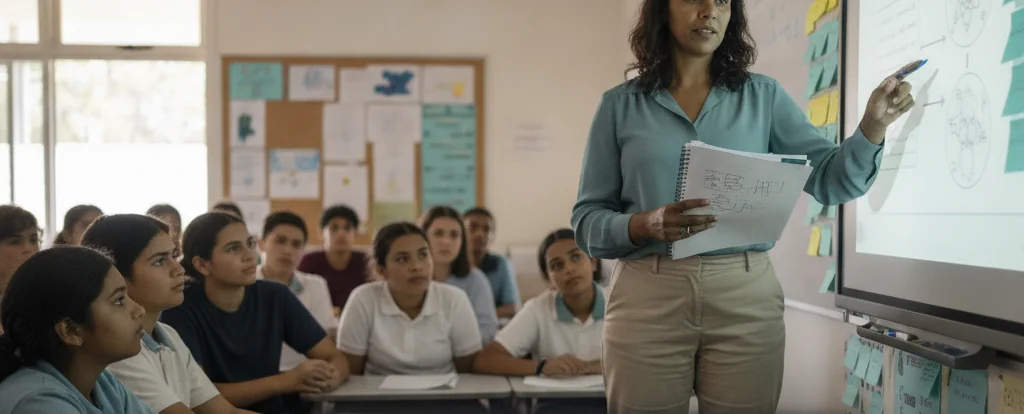
Secondary school teachers teach one or two specialist subjects to students in years 7 to 12, planning the lessons, marking the work and tracking how each student is progressing.
- Median salary
- $120,700
4.1%vs last year, before tax
- People employed
- 161,400
1.2%vs last year
- Projected growth
- +11.7%
to 2035
- AI exposure*
- Moderate
- automation risk
- Average hours
- 45/wk
+5h vs all jobs
- Shortage status
- In shortage
national
Secondary school teachers design and deliver lessons in one or two specialist subjects, such as English, mathematics, science or a language, to students moving through years 7 to 12. They assess and report on progress, manage classroom behaviour and provide pastoral care, and work with colleagues to plan a curriculum that lines up with the Australian Curriculum or a state senior syllabus such as the VCE or the HSC. Most work in government, Catholic or independent schools, and the subject specialisation is what separates the role from primary teaching, where one teacher covers every subject for a single class.
How much do secondary school teachers earn?
The median full-time salary for a secondary school teacher is $120,700 per annum, before tax, up $25,300 since 2018.
Pay is set by the industrial agreement covering your employer. State and territory education departments negotiate their own agreements, and Catholic and independent schools have theirs, so the same qualification and years of service can pay differently across sectors. Within a system, pay rises with years of service and classification, and allowances apply to promoted positions such as head of faculty and to remote or hard-to-staff schools.
What does a secondary school teacher do day to day?
The list below is what fills most weeks; the exact mix shifts with seniority and whatever stage the current work is at.
- Teaching timetabled classes across several year levels, often repeating the same lesson for different groups on the same day
- Marking assessments and preparing the next lessons in the directed time that continues after the last bell
- Supervising yard duty, a form group or an extracurricular activity such as a school production or a sports team
- Contacting parents and pastoral staff when a student's progress or wellbeing starts to slip
- Meeting with the faculty to adjust a unit of work or a senior syllabus for the year ahead
What skills do secondary school teachers need?
Employers look for teaching and instruction, curriculum and lesson design, classroom and behaviour management, backed by Learning Management Systems (Google Classroom, Canvas) fluency and strong written communication.
Specialist skills
- Teaching and instruction
- Curriculum and lesson design
- Classroom and behaviour management
- Student assessment and reporting
- Pastoral care and wellbeing
Software and tools
- Learning Management Systems (Google Classroom, Canvas)
- Microsoft Office / Google Workspace
- Smartboard / Interactive whiteboards
- Assessment platforms (Turnitin, Gradebook software)
- Video conferencing (Zoom, Teams)
General skills
- Written communication
- Presenting and data storytelling
- People leadership
Is the job growing?
About 161,400 people work as secondary school teachers in Australia, and employment is projected to grow 11.7% over the decade to 2035. That's healthy, above-average growth, and the role should stay in solid demand.
How do you become a secondary school teacher?
Here's the path most secondary school teachers take, step by step.
- 1Complete a secondary teaching degree
A four-year Bachelor of Education (Secondary), or a double degree that pairs an arts, science or commerce degree with education. Both include supervised professional experience placements in schools, which are usually what tells you whether the job suits you.
- 2Or add teaching to a degree you already hold
If you have a degree with a teachable major, a two-year Master of Teaching (Secondary) is the standard route for career changers and leads to the same registration.
- 3Register in the state or territory where you want to teach
Each state and territory has its own authority, such as NESA in New South Wales or VIT in Victoria, with different requirements. Registration involves a working with children check and, in some states, a literacy and numeracy test.
- 4Apply for positions and complete induction
Government schools recruit through the state education department, while Catholic and independent schools advertise directly. Most systems require an induction or probation period before you move to ongoing appointment.
- 5Keep registration current
Registered teachers complete a set number of professional development hours each year. Taking on faculty coordination or mentoring is the usual way to build a case for a leadership role later.
Ready to apply as a secondary school teacher?
Whether you're working toward becoming a secondary school teacher or already are one and want a hand with the next step (sharpening your resume for ATS screening, tightening your cover letter, or knowing what you'll actually be asked at interview), here are examples grounded in this specific role, not generic templates.
What jobs can a secondary school teacher move to?
Moving into Middle School Teacher typically comes with the biggest pay rise, worth $5,300 a year more on average.
| Move to | Typical pay change | Overlap | Retraining |
|---|---|---|---|
| Middle School Teacher Teaching the middle years uses the same registration and pedagogy, shifting focus to young adolescent learners and their transition through school.Known move | +$5,300 | 84% | minimal |
| Head of Faculty Coordinating a subject department is a natural leadership step drawing on the teacher's specialist curriculum knowledge and mentoring experience.Known move | −$1,100 | 50% | short course |
| Special Education Teacher Teaching students with disability and additional learning needs builds on classroom practice, adding further study in inclusive education.Known move | −$8,400 | 80% | short course |
| School Principal Leading a whole school builds on classroom and curriculum experience, with principal endorsement and leadership preparation required.Known move | −$8,900 | 17% | requalify |
| VET Trainer Delivering vocational training to adults applies subject expertise and lesson design, with a certificate in training and assessment added.Known move | −$10,000 | 70% | short course |
Moves are chosen from Jobs and Skills Australia's Data on Occupation Mobility, which follows income tax records between 2011-12 and 2020-21, together with entry requirements and skill overlap. A known move is one people were seen making in that data. Pay change compares median full-time pay for the two roles.
Who works as a secondary school teacher?
The typical secondary school teacher is 40 years old; 58% are women, 77% work full-time, and full-timers average 45 hours a week.
- 40
- Median age
- 58%
- Female share
- 77%
- Full-time
- +5h
- vs all-jobs avg
What's it like being a secondary school teacher?
The job runs on the school calendar, with terms of intense contact time separated by holidays that most teachers use to catch up on marking and planning. A secondary teacher stands in front of a full class several times a day, so the work is social and public, and a lesson that lands with one group can fall flat with the next. Most enjoy the subject they teach and the students they get to know across several years, but the marking and administration follow the work home.
What people like
- A subject you keep getting better at. Teaching the same texts, experiments or problem sets year after year builds a store of explanations, and syllabus changes keep the material from going stale.
- The moment a class clicks. A group that has been struggling with a concept starts arguing about it on their own, which is the part of the job that is hard to get anywhere else.
- Students you teach across several years. A form group or a subject that runs into the senior years means you watch the same young people grow up and change.
- The school holidays. The breaks are longer than in most jobs, even allowing for the days spent on marking, preparation and professional development.
What people find hard
- The marking follows you home. A full load produces hundreds of pieces of work to assess each term, and much of it gets done at night and on weekends.
- Administration crowds out preparation. Duty rosters, compliance records, meetings and emails take hours that would otherwise go into planning better lessons.
- Managing disengaged students. Some classes test your behaviour management, and the follow-up with year coordinators and parents takes patience and consistency.
- The job is visible. Parents, senior staff and the wider school community see how your classes are going, and criticism of your teaching can feel personal.
Based on our synthesis of professional-body surveys and public accounts of the role, not first-person verified reviews.
Which industries employ secondary school teachers?
Education and Training employs the largest share of secondary school teachers.
Top employing industries
- 1Education and Training
Ranked by employment share; the source doesn't publish an exact percentage per industry.
| Bachelor degree | 54.3% | |
|---|---|---|
| Postgraduate | 41.8% | |
| Diploma / Advanced Diploma | 1.9% | |
| Year 12 or below | 0.9% | |
| Certificate III/IV | 0.3% |
Will AI replace secondary school teachers?
Teaching sits in the middle: AI is changing the preparation and paperwork around the job faster than the classroom itself. Lesson planning, resource creation and the marking of routine answers are increasingly assisted by software, while school systems stay cautious about student data. The parts that hold the job together, a room of teenagers, a parent interview, a judgement call about a piece of work, are the hardest to automate and the reason the role remains largely human.
Share of typical working time by exposure level
- Teaching and managing classesReading a room, re-explaining a concept on the spot and keeping a class on task happen in real time, and no tool does that part.40%low
- Marking and reportingMultiple choice and short answer marking can be automated, while extended responses and report comments still need a teacher's read of each student.25%moderate
- Planning lessons and building resourcesAI can supply a starter activity or a set of practice questions, but the teacher still decides what fits this class and matches the syllabus.20%moderate
- Pastoral care and parent contactA conversation with a struggling student or an upset parent depends on knowing the family and the history, which sits outside any system.15%low
Moves least exposed to AI
These career moves from secondary school teacher work are rated low for AI exposure:
- School Principal
Some skill overlap (17%), requalify to get there, and a low automation-risk profile.
- Special Education Teacher
High skill overlap (80%), short course to get there, and a low automation-risk profile.
- Head of Faculty
Solid skill overlap (50%), short course to get there, and a low automation-risk profile.
- Middle School Teacher
High skill overlap (84%), little retraining to get there, and a low automation-risk profile.
Common questions about becoming a secondary school teacher
Straight answers to the questions people ask most.
How much do secondary school teachers earn?
$120,700 per year before tax for full-time secondary school teachers. That is a median, so what you earn depends on the state or territory system you work in, your years of service and classification, and any leadership or remote allowances.
How do you become a secondary school teacher?
Complete a secondary teaching degree, or a Master of Teaching if you already hold a degree in a teachable subject, then register with the teacher authority in your state or territory. Government schools recruit through the state education department, while Catholic and independent schools advertise vacancies directly.
Are secondary school teachers in demand?
Secondary school teachers are currently in shortage nationally, and employment is projected to grow 11.7% over the decade to 2035. For your own job search, the subjects you are qualified to teach and how far you are willing to travel matter most, because schools hire to fill specific timetable gaps each year.
Will AI replace secondary school teachers?
AI is changing the preparation and paperwork around teaching more than the teaching itself. It can draft lesson plans, generate practice questions and speed up marking of routine answers, and some schools use it to help write report comments from existing data. Standing in front of a class, managing behaviour and talking with parents stay with the teacher, and senior assessment still relies on reading how a student reasoned their way to an answer.
What can secondary school teachers move into later?
Experienced teachers often take on a head of faculty role coordinating a subject department, or move into special education teaching students with disability and additional learning needs, which builds on classroom practice with further study. Becoming a school principal usually requires principal endorsement and leadership preparation. Some teachers move across to vocational training with adults, adding a certificate in training and assessment.
Do you have to teach a subject you studied at university?
In most cases, yes. Your teaching areas come from the majors and minors in your degree, and schools hire to fill timetable gaps, so your qualified subjects shape which jobs are open to you. Adding a method in a second area, such as a language or a technology subject, widens the options.
Related roles
- School Principal
- Special Education Teacher
- Head of Faculty
- Middle School Teacher
- VET Trainer
- Teacher Aide
Not sure this is you? Take the career quiz and get a ranked shortlist of roles that fit how you like to work.