Teacher Aide
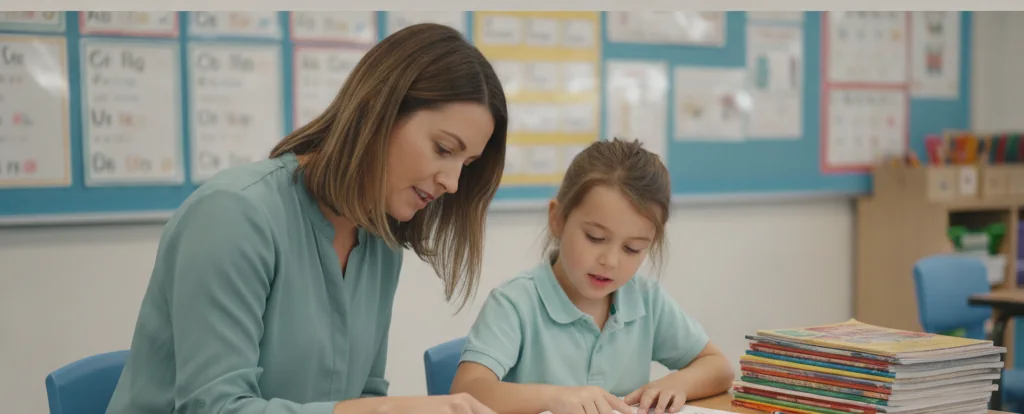
Teacher aides work alongside a classroom teacher, supporting students one to one or in small groups so the rest of the class can keep learning.
- Median salary
- $69,800
4.3%vs last year, before tax
- People employed
- 74,800
1.2%vs last year
- Projected growth
- +9.7%
to 2035
- AI exposure*
- Low
- automation risk
- Average hours
- 39/wk
−1h vs all jobs
- Shortage status
- Not in shortage
national
Teacher aides work in primary, secondary and special education settings, usually attached to a class, a year group or an individual student rather than running lessons themselves. What separates the role from a classroom teacher's is that an aide carries out someone else's lesson plan and behaviour approach, and is often placed specifically to support a student with a disability or an additional learning need. Most aides are employed directly by a school, so the daily work and the person you report to depend on whether that school is public, Catholic or independent.
How much do teacher aides earn?
The median full-time salary for a teacher aide is $69,800 per annum, before tax, up $14,700 since 2018.
Pay depends heavily on which school system employs you and on the classification level you're appointed at, which rises with qualifications such as a Certificate IV or a diploma. Many positions are part-time or term-time only, so annual earnings can sit below what a full-time year would suggest, and casual relief work attracts a loading but nothing during school holidays.
What does a teacher aide do day to day?
The list below is what fills most weeks; the exact mix shifts with seniority and whatever stage the current work is at.
- Sitting with a student who has additional needs through a mainstream lesson, keeping them on task and stepping in when they lose focus
- Running a small reading or numeracy group while the teacher works with the rest of the class
- Preparing materials before a lesson and packing them away afterwards, which means photocopying, laminating and sorting resources
- Supervising students in the playground, at recess and during transitions between rooms, since duty rosters usually include aides
- Writing brief observations of a student's progress for the teacher, the learning support team or a parent meeting
What skills do teacher aides need?
Employers look for teaching and instruction, classroom and behaviour management, student assessment and reporting, backed by Learning management systems (Google Classroom, Seqta) fluency and strong written communication.
Specialist skills
- Teaching and instruction
- Classroom and behaviour management
- Student assessment and reporting
- Pastoral care and wellbeing
Software and tools
- Learning management systems (Google Classroom, Seqta)
- Microsoft Office (Word, Excel)
- Educational apps (Phonics Boost, MathsSeeds)
- Behaviour tracking software
General skills
- Written communication
- Attention to detail
- Problem solving
- Empathy and interpersonal care
Is the job growing?
About 74,800 people work as teacher aides in Australia, and employment is projected to grow 9.7% over the decade to 2035. That's modest growth: demand is steady rather than booming.
How do you become a teacher aide?
Here's the path most teacher aides take, step by step.
- 1Check what local schools actually ask for
Some schools hire on experience and temperament alone, while others list a Certificate III in School Based Education Support (CHC30221) as essential. Reading current job ads for your area tells you which applies before you spend money on a course.
- 2Complete a Certificate III in School Based Education Support
TAFE and other registered training providers offer it over roughly six months to a year, and it includes supervised placement in a school. The placement is often how people get their first offer of paid work.
- 3Get your clearances and first aid
A Working with Children Check is mandatory, and it goes by different names across states, such as the Blue Card in Queensland. Schools also commonly ask for a first aid certificate covering anaphylaxis and asthma, so it's worth holding both before you apply.
- 4Apply through the sector you want to work in
Public schools recruit casual and temporary staff through the state education department's pools, while Catholic and independent schools advertise directly. Casual relief is the usual way in and often leads to ongoing hours at the same school.
- 5Add a Certificate IV or a specialisation
A Certificate IV in School Based Education Support (CHC40225), or training in disability support, can move you into learning support roles and a higher classification. It also opens work with students who have more complex needs.
Ready to apply as a teacher aide?
Whether you're working toward becoming a teacher aide or already are one and want a hand with the next step (sharpening your resume for ATS screening, tightening your cover letter, or knowing what you'll actually be asked at interview), here are examples grounded in this specific role, not generic templates.
What jobs can a teacher aide move to?
Moving into Secondary School Teacher typically comes with the biggest pay rise, worth $50,900 a year more on average.
| Move to | Typical pay change | Overlap | Retraining |
|---|---|---|---|
| Secondary School Teacher Teacher aides who know classroom management and student support can move into secondary teaching, requiring a teaching degree and registration.Known move | +$50,900 | 62% | requalify |
| Primary School Teacher Classroom experience and understanding of student learning help teacher aides become primary teachers, though a teaching degree and registration are required.Known move | +$46,000 | 70% | requalify |
| Special Education Teacher Supporting students with additional needs gives teacher aides a strong base for special education teaching, but a teaching degree and registration are required.Known move | +$42,500 | 79% | requalify |
| Early Childhood Educator A teacher aide's classroom support and child development knowledge carry into early childhood education, with a short course to meet certification.Known move | +$29,300 | 79% | short course |
| Aboriginal and Torres Strait Islander Education Worker Teacher aides with cultural knowledge and student support experience can specialise in supporting Aboriginal and Torres Strait Islander students, needing a short course.Known move | −$15,200 | 50% | short course |
Moves are chosen from Jobs and Skills Australia's Data on Occupation Mobility, which follows income tax records between 2011-12 and 2020-21, together with entry requirements and skill overlap. A known move is one people were seen making in that data. Pay change compares median full-time pay for the two roles.
Who works as a teacher aide?
The typical teacher aide is 46 years old; 88% are women, 22% work full-time, and full-timers average 39 hours a week.
- 46
- Median age
- 88%
- Female share
- 22%
- Full-time
- −1h
- vs all-jobs avg
What's it like being a teacher aide?
The job runs on the school timetable, so the rhythm is set by bells, terms and the teacher standing at the front of the room. Aides move between the routine of small-group reading and the unpredictability of a student who is having a hard day, and much of the skill is reading the room quickly and adjusting without disrupting the lesson. It suits people who like being around children and teenagers, are comfortable working in a supporting role, and want work that finishes when the school day does.
What people like
- School hours and school holidays. Most aides work while students are at school and take the term breaks off, which is rare in work at this level and suits anyone arranging care for their own children.
- Progress you can see. Because you often stay with the same student or group, you notice the small gains, like a child reading a passage they couldn't manage last term, that a class teacher only sees in passing.
- Being in the middle of school life. You know the students, the staff and the routines, and you're part of how a classroom runs rather than on the edge of it.
- The responsibility sits with someone else. You follow the teacher's plan and behaviour approach, so programming, assessment and reporting to parents stay with them.
What people find hard
- Working to another person's approach. Every teacher runs a room differently, and a strategy that worked last term may not be welcome in the next classroom, so you adjust constantly.
- Part-time and term-time hours. Many roles are a few hours a day or cover only the school year, which makes a full-time income hard to build and leaves casuals unpaid over the holidays.
- Hard moments with students. Some of the students you support become distressed or dysregulated, and you'll often be the person sitting with them through it while the lesson carries on around you.
- Slow movement up the scale. Progression is tied to qualifications and classification rather than performance, so pay rises come mainly when you add a certificate or change roles.
Based on our synthesis of professional-body surveys and public accounts of the role, not first-person verified reviews.
Which industries employ teacher aides?
Education and Training employs the largest share of teacher aides.
Top employing industries
- 1Education and Training
Ranked by employment share; the source doesn't publish an exact percentage per industry.
| Certificate III/IV | 35.6% | |
|---|---|---|
| Year 12 or below | 23.9% | |
| Diploma / Advanced Diploma | 14.7% | |
| Bachelor degree | 13.3% | |
| Postgraduate | 6.7% |
Will AI replace teacher aides?
Teacher aide work sits at the low end of AI exposure because most of it is physical presence, supervision and a relationship with one particular student. Learning management systems, adaptive literacy and numeracy apps and rostering software have absorbed some record keeping and practice drills, but they don't change who sits beside a child who is stuck. Schools are hiring for the judgement and calm in the room, and that part hasn't moved.
Share of typical working time by exposure level
- Supervising playground, transitions and group activitiesDuty supervision is physical presence and quick judgement, and no system is watching the far side of the oval.35%low
- Supporting a student one to one in classReading a student's mood, rephrasing an instruction and knowing when to step back happen in the moment and depend on a relationship built over weeks.30%low
- Preparing and adapting learning materialsAI can draft a simpler version of a worksheet or a set of phonics words, but someone still has to match it to the student and the teacher's plan.20%moderate
- Writing up observations and progress notesTools built into learning management systems can tidy a comment or summarise a teacher's notes, though the observation itself comes from watching the student.15%high
Common questions about becoming a teacher aide
Straight answers to the questions people ask most.
How much do teacher aides earn?
Median pay for teacher aides is $69,800 per annum, before tax, as a guide. What you actually earn depends on the state or territory agreement, the school sector and the classification level you're appointed at, and a Certificate IV or diploma moves you up a step.
How do you become a teacher aide?
Most people start with a Certificate III in School Based Education Support (CHC30221), which includes supervised placement in a school, along with a Working with Children Check and usually a first aid certificate. Some schools hire on experience alone, so check current job ads in your area before you enrol.
Are teacher aides in demand?
Teacher aides are currently not in shortage, and employment is projected to grow 9.7% over the decade to 2035. Schools hire directly and through state education department pools, so getting onto a relief list is usually the fastest way to start.
Will AI replace teacher aides?
The work sits at the low end of AI exposure because so much of it is physical presence, supervision and a relationship with a particular student. Learning management systems, adaptive literacy and numeracy apps and rostering software have taken over some record keeping and drill practice, but they don't change who sits beside a struggling student. What schools hire for is calm judgement in the room, and that hasn't moved.
What can a teacher aide move on to?
Early childhood education is a common move, since classroom support and child development knowledge carry over with a short course, and the pay difference is $29,300 more. Becoming a primary or special education teacher means a teaching degree and registration, with a pay difference of $46,000 more or $42,500 more. If you already hold a degree, a graduate teaching qualification is the shorter route.
Do teacher aides work full time?
About 22% of teacher aides work full time, and full-time aides average around 39 hours a week. The rest work part time or casually, often school hours and term time only, which is one reason the role appeals to people fitting work around family.
Related roles
- Early Childhood Educator
- Aboriginal and Torres Strait Islander Education Worker
- Primary School Teacher
- Special Education Teacher
- Secondary School Teacher
- Out of School Hours Care Educator
Not sure this is you? Take the career quiz and get a ranked shortlist of roles that fit how you like to work.