Primary School Teacher
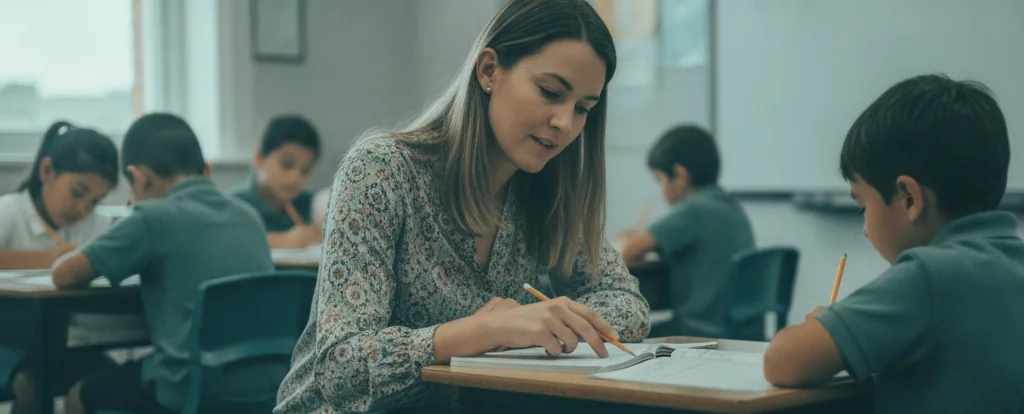
Primary school teachers teach every subject to the same class of children aged about five to twelve, from reading and maths to art and sport.
- Median salary
- $115,800
4.2%vs last year, before tax
- People employed
- 165,900
1.3%vs last year
- Projected growth
- +11.7%
to 2035
- AI exposure*
- Low
- automation risk
- Average hours
- 45/wk
+5h vs all jobs
- Shortage status
- In shortage
national
Primary school teachers plan and deliver lessons in English, maths, science and humanities to one class across Years K to 6, covering every subject themselves rather than handing classes over to specialist teachers the way high schools do. Alongside the teaching, they assess progress, manage behaviour, report to parents and carers, and adjust the day for the wide spread of abilities and needs in a single room. Most work in government, Catholic and independent schools, in cities and in regional areas.
How much do primary school teachers earn?
The median full-time salary for a primary school teacher is $115,800 per annum, before tax, up $24,400 since 2018.
Pay is set by the industrial agreement covering your school sector, so teachers in government, Catholic and independent schools can be on different scales for the same work. Progression comes mainly through years of service and classification, with extra for leading teacher and curriculum leadership roles, and several states pay allowances for rural and remote schools. Relief teaching is usually paid at a daily rate instead of a salary.
What does a primary school teacher do day to day?
The list below is what fills most weeks; the exact mix shifts with seniority and whatever stage the current work is at.
- Teaching every subject to the same class across the day, moving from reading groups to fractions to art before lunch
- Running the yard or playground at recess and lunch, and often eating while on duty
- Planning the next week's lessons in the relief-from-face-to-face time the timetable allows, then finishing the rest after the last bell
- Meeting parents and carers one to one alongside staff meetings, report deadlines and the paperwork that comes with a class
- Reading the room and changing tack mid-lesson, because one primary class spans a wide range of reading levels and behaviour needs
What skills do primary school teachers need?
Employers look for teaching and instruction, curriculum and lesson design, classroom and behaviour management, backed by Learning Management Systems (Seqta, Compass) fluency and strong written communication.
Specialist skills
- Teaching and instruction
- Curriculum and lesson design
- Classroom and behaviour management
- Student assessment and reporting
- Pastoral care and wellbeing
Software and tools
- Learning Management Systems (Seqta, Compass)
- Microsoft Office / Google Workspace
- Interactive whiteboards (Smartboard, Promethean)
- Assessment tracking software
- Digital content libraries (TES, Canva)
General skills
- Written communication
- Stakeholder management
- Problem solving
Is the job growing?
About 165,900 people work as primary school teachers in Australia, and employment is projected to grow 11.7% over the decade to 2035. That's healthy, above-average growth, and the role should stay in solid demand.
How do you become a primary school teacher?
Here's the path most primary school teachers take, step by step.
- 1Complete a teaching degree
A Bachelor of Education (Primary) usually takes four years, or you can take a bachelor degree in another field and follow it with a Master of Teaching (Primary) of about two years. Both include supervised placements in schools, which are the clearest way to find out how you cope with a room of children.
- 2Get a Working with Children Check
You need one before starting placements, and the process runs through your state or territory rather than your university, so apply early.
- 3Register with your state or territory teacher authority
Each jurisdiction has its own body, such as NESA in New South Wales, VIT in Victoria or the QCT in Queensland. Graduates start on provisional registration and move to full registration after a period of teaching.
- 4Apply for school jobs
Government schools often recruit through central rounds advertised a few months before the school year, while Catholic and independent schools hire directly. Relief or short-term contract work is a common entry point and lets a school see you teach before a permanent vacancy opens.
- 5Move to full registration
After roughly a year of teaching you apply to move from provisional to full registration, usually with a mentor and a portfolio of evidence. Some states set a deadline for this, so check the requirement where you work.
Ready to apply as a primary school teacher?
Whether you're working toward becoming a primary school teacher or already are one and want a hand with the next step (sharpening your resume for ATS screening, tightening your cover letter, or knowing what you'll actually be asked at interview), here are examples grounded in this specific role, not generic templates.
What jobs can a primary school teacher move to?
Moving into Middle School Teacher typically comes with the biggest pay rise, worth $10,200 a year more on average.
| Move to | Typical pay change | Overlap | Retraining |
|---|---|---|---|
| Middle School Teacher Primary training in child development and curriculum transfers well to middle years, needing little extra retraining.Known move | +$10,200 | 84% | minimal |
| English Language Teacher Primary literacy teaching and classroom practice transfer to English language teaching, with light additional training.Known move | +$7,200 | 84% | minimal |
| Secondary School Teacher A primary teacher brings curriculum knowledge and classroom management, but secondary teaching usually needs additional subject specialisation study.Known move | +$4,900 | 80% | reskill |
| Special Education Teacher Classroom management and curriculum adaptation carry across, with extra study in inclusive and special education needed.Known move | −$3,500 | 89% | short course |
| School Principal An experienced primary teacher can step into school leadership, though principal roles require further formal preparation and registration.Known move | −$4,000 | 21% | requalify |
Moves are chosen from Jobs and Skills Australia's Data on Occupation Mobility, which follows income tax records between 2011-12 and 2020-21, together with entry requirements and skill overlap. A known move is one people were seen making in that data. Pay change compares median full-time pay for the two roles.
Who works as a primary school teacher?
The typical primary school teacher is 41 years old; 82% are women, 63% work full-time, and full-timers average 45 hours a week.
- 41
- Median age
- 82%
- Female share
- 63%
- Full-time
- +5h
- vs all-jobs avg
What's it like being a primary school teacher?
The job runs on the school year: intense term-time weeks with a clear calendar of assessments, reports and events, then breaks that fall at the same time every year. Days are high-energy and almost entirely social, spent in front of a class with very few quiet minutes to yourself. It suits someone who likes thinking on their feet in front of a room and building a long relationship with one group of children.
What people like
- The moment a child gets it. A struggling reader works out a word, or a class finally grasps a concept, and you were the person who got them there. It is the part teachers describe when they talk about why they stay.
- One class, all year. You teach the same children every day, so you learn how each one reads, what sets them off and what will make them laugh, and you see the progress rather than just a mark.
- The school calendar. The year has built-in breaks in April, July, September and over summer, though some of that time goes on planning and preparation for the term ahead.
- Being part of a school community. Assemblies, sports carnivals and parent evenings put you in contact with families and colleagues in a way that few other jobs match, and the school becomes a familiar place to work.
What people find hard
- The work follows you home. Planning, marking and reports do not fit inside the school day, so evenings and part of most weekends go on them, and the load is heaviest in the first few years.
- Reporting and admin deadlines. Assessment schedules, parent reports and compliance paperwork stack up alongside the teaching, and term ends can be dominated by documentation rather than lessons.
- Behaviour management never stops. A handful of students can absorb a large share of the day, and how much support you get for that varies from school to school.
- Little say over the wider conditions. Class sizes, funding and curriculum change are decided well above the classroom, so teachers often carry the consequences of decisions they had no part in.
Based on our synthesis of professional-body surveys and public accounts of the role, not first-person verified reviews.
Which industries employ primary school teachers?
Education and Training employs the largest share of primary school teachers.
Top employing industries
- 1Education and Training
Ranked by employment share; the source doesn't publish an exact percentage per industry.
| Bachelor degree | 69.2% | |
|---|---|---|
| Postgraduate | 24.2% | |
| Diploma / Advanced Diploma | 4.3% | |
| Year 12 or below | 1.1% | |
| Certificate III/IV | 0.3% |
Will AI replace primary school teachers?
AI exposure for primary school teachers is low, because the core of the job is a room full of children who need a person in front of them. Learning management systems such as Seqta and Compass, interactive whiteboards and assessment tracking software already handle attendance, records and data, but they do not teach a reading group or settle a disagreement in the playground. What the technology changes is the paperwork around the teaching, not the teaching itself.
Share of typical working time by exposure level
- Teaching the classExplaining a concept, listening to a child read and knowing when the room has lost interest all depend on being there, and no tool can pick up the cue that a lesson needs to change.40%low
- Planning lessons and unitsAI tools can draft activities, worksheets and assessment tasks, but a teacher still has to match them to the class in front of them and to the curriculum being taught that term.25%moderate
- Marking, assessment and reportsAssessment software speeds up recording and analysis, and AI can draft report comments, but a teacher still has to know what each child can actually do to say anything useful to their parents.20%moderate
- Talking with parents, carers and colleaguesConversations about a child's progress, a behaviour issue or a learning plan are sensitive and specific, and they rely on the relationship and history a teacher has built with that family.15%low
Common questions about becoming a primary school teacher
Straight answers to the questions people ask most.
How much do primary school teachers earn?
Primary school teachers earn a median of $115,800 per year before tax. Pay is set by the industrial agreement covering your sector and state and rises with years of service and classification, so what you take home depends on where you work and how long you have been teaching.
How do you become a primary school teacher?
You need a teaching qualification and registration in the state or territory where you plan to work. That usually means a four-year Bachelor of Education (Primary), or a bachelor degree in another field plus a two-year Master of Teaching (Primary), both with supervised placements in schools. Registration begins as provisional and moves to full after about a year of teaching.
Are primary school teachers in demand?
Primary school teachers are currently in shortage nationally, and employment is projected to grow 11.7% over the decade to 2035. Teaching is a large occupation with steady turnover, so vacancies appear across the year rather than in one hiring round, and relief work is often the quickest way in.
Will AI replace primary school teachers?
The exposure here is low. Software already drafts lesson activities, tracks assessment data and helps generate report comments, but running a room of children, noticing who is struggling and changing the plan mid-lesson are not tasks a tool can take over. Registration requirements also mean a qualified teacher has to be in the classroom.
What other jobs can primary school teachers move into?
Primary teaching opens into nearby classroom roles without starting over. Middle school teaching shares most of the same work, because child development and curriculum knowledge carry across with little extra retraining, and middle school teachers typically earn $10,200 more. Secondary teaching usually needs additional subject specialisation study, while special education teaching calls for extra study in inclusive education, though behaviour management and curriculum adaptation transfer to both.
What are the hours like?
Primary school teachers work an average of 45 hours a week on full-time hours, which is more than the school day suggests. The rest goes on planning, marking, meetings and reporting, and many teachers do part of it at home, particularly early in their careers.
Related roles
- Secondary School Teacher
- School Principal
- Middle School Teacher
- Special Education Teacher
- English Language Teacher
- Teacher Aide
Not sure this is you? Take the career quiz and get a ranked shortlist of roles that fit how you like to work.