Early Childhood Educator
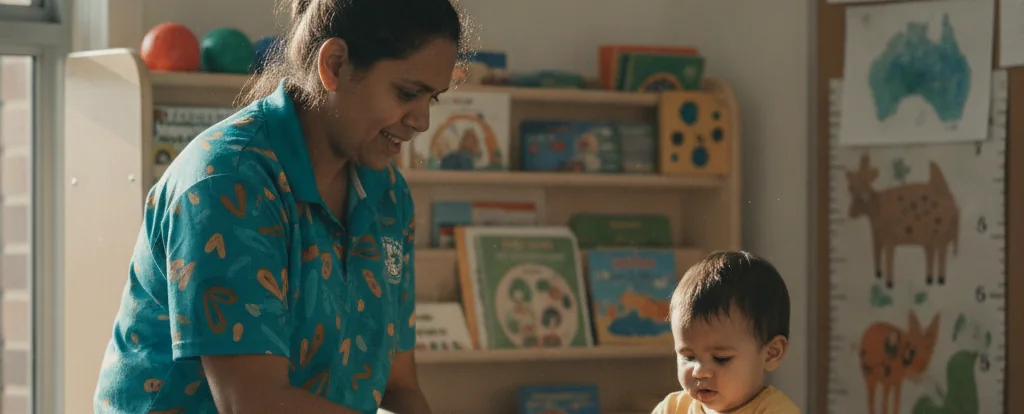
Early childhood educators care for and teach children from birth to school age in long day care, preschool and kindergarten rooms.
- Median salary
- $99,100
3.6%vs last year, before tax
- People employed
- 71,900
0.7%vs last year
- Projected growth
- +12.1%
to 2035
- AI exposure*
- Low
- automation risk
- Average hours
- 41/wk
+1h vs all jobs
- Shortage status
- In shortage
national
Early childhood educators work with children from birth to five in long day care centres, preschools and kindergartens, planning play-based activities against the Early Years Learning Framework. They observe each child's development, keep families informed and keep the room safe and inclusive across a wide range of ages and needs. The role is often confused with early childhood teacher, which usually requires a teaching degree and registration, while educators typically hold a VET qualification.
How much do early childhood educators earn?
The median full-time salary for an early childhood educator is $99,100 per annum, before tax, up $21,100 since 2018.
Pay follows the children's services award or an enterprise agreement, and it moves with your qualification and role: a diploma and a room leader or educational leader position sits above a certificate III assistant role. Long day care chains, community preschools and government-funded kindergarten programs each set their own rates within those frameworks, and penalty rates for early starts, late finishes and split shifts add to take-home pay. What you are qualified to do usually counts for more than which suburb the service is in, though services covered by a union agreement tend to pay better than those that aren't.
What does an early childhood educator do day to day?
The list below is what fills most weeks; the exact mix shifts with seniority and whatever stage the current work is at.
- Running play-based activities that double as quiet checks on how each child is developing
- Settling disputes over toys and helping children name and manage big feelings, often several at once
- Writing up observations against the learning outcomes for families and licensing
- Talking with parents at pickup about a hard day, a new milestone or a concern that needs following up
- Resetting and safety-checking indoor and outdoor spaces between activities and across age groups
What skills do early childhood educators need?
Employers look for teaching and instruction, curriculum and lesson design, classroom and behaviour management, backed by Observations documentation software (e.g. Storypark, Kinderloop) fluency and strong written communication.
Specialist skills
- Teaching and instruction
- Curriculum and lesson design
- Classroom and behaviour management
- Student assessment and reporting
- Pastoral care and wellbeing
Software and tools
- Observations documentation software (e.g. Storypark, Kinderloop)
- Early Years Learning Framework (EYLF)
- Child development assessment tools
- Microsoft Office
- Learning management systems
General skills
- Written communication
- Empathy and interpersonal care
- Problem solving
Is the job growing?
About 71,900 people work as early childhood educators in Australia, and employment is projected to grow 12.1% over the decade to 2035. That's healthy, above-average growth, and the role should stay in solid demand.
How do you become an early childhood educator?
Here's the path most early childhood educators take, step by step.
- 1Get your clearances and first aid certificate
A Working with Children Check (or the state equivalent) and a first aid certificate including anaphylaxis and asthma training are needed before you can be left alone with children. Most employers ask for both at interview, so it pays to start here.
- 2Complete a Certificate III in Early Childhood Education and Care
The Certificate III (CHC30121) is the standard entry qualification and takes around a year including a supervised work placement. It qualifies you for assistant educator roles, and some services will take you on as a trainee and support you through it while you work.
- 3Add a Diploma of Early Childhood Education and Care
A diploma (CHC50121) takes roughly 18 months to two years and qualifies you as a room leader, with more responsibility for planning, documentation and guiding other staff. Many educators study it part time while working.
- 4Consider a teaching degree if you want to lead a kindergarten program
A bachelor degree in early childhood education leads to early childhood teacher roles, which require registration with the state teacher authority. Requirements differ between states and territories, so check the rules where you plan to work.
Ready to apply as an early childhood educator?
Whether you're working toward becoming an early childhood educator or already are one and want a hand with the next step (sharpening your resume for ATS screening, tightening your cover letter, or knowing what you'll actually be asked at interview), here are examples grounded in this specific role, not generic templates.
What jobs can an early childhood educator move to?
Moving into Primary School Teacher typically comes with the biggest pay rise, worth $16,700 a year more on average.
| Move to | Typical pay change | Overlap | Retraining |
|---|---|---|---|
| Primary School Teacher Early childhood educators bring child development knowledge and room experience to primary teaching, but need a teaching degree and registration.Known move | +$16,700 | 89% | requalify |
| Childcare Centre Manager Early childhood educators bring practical room leadership and compliance knowledge to centre management, with a diploma adding business and staff oversight.Known move | +$4,000 | 17% | reskill |
| Early Childhood Teacher Early childhood educators bring hands-on care and child development knowledge to early childhood teaching, but need a teaching degree and registration. | −$23,700 | 89% | requalify |
| Out of School Hours Care Educator Early childhood educators bring play-based learning and supervision skills to school-aged care, with a short course adjusting to the setting.Known move | −$39,300 | 55% | short course |
| Family Day Care Educator Early childhood educators bring curriculum and child safety skills to home-based family day care, needing a short course for approval.Known move | −$44,000 | 55% | short course |
Moves are chosen from Jobs and Skills Australia's Data on Occupation Mobility, which follows income tax records between 2011-12 and 2020-21, together with entry requirements and skill overlap. A known move is one people were seen making in that data. Pay change compares median full-time pay for the two roles.
Who works as an early childhood educator?
The typical early childhood educator is 37 years old; 95% are women, 57% work full-time, and full-timers average 41 hours a week.
- 37
- Median age
- 95%
- Female share
- 57%
- Full-time
- +1h
- vs all-jobs avg
What's it like being an early childhood educator?
The day runs on routine: arrivals and breakfast, indoor play, rest, meals, outdoor time, then handover at pickup. Most of the work happens in the room with the children, so the pressure comes from staying attentive for hours at a time and from the documentation that has to be finished around it. Educators who stay in the job tend to enjoy the company of small children and the steady familiarity of the same families and team each day.
What people like
- Watching a child get it. A toddler who has been working on shoes for weeks finally does them up, and you were standing right there. Milestones come often in the early years.
- The same faces, most days. You build a relationship with each child and their family over months or years rather than starting fresh with a new class every January.
- Play is the curriculum. Songs, sand, paint and blocks are the teaching materials, so the day holds more variety than a desk job and the planning is genuinely creative.
- A second adult in the room. Most rooms run with two or more educators, which means someone to share a hard moment with and to check your read on a child against.
What people find hard
- Documentation in your own time. Observations, learning stories and planning usually get written after the children leave or at home, because staff-to-child ratios mean you cannot step away during the day.
- Covering when someone is away. Ratios are legislated, so an absent colleague means moving staff between rooms or asking someone to stay back, and relief educators can be hard to find.
- The weight of what you notice. Educators are often the first to see signs of neglect or family stress, and raising a concern about a family you know well is confronting.
- Small furniture, heavy lifting. The job is physical: lifting babies and toddlers, sitting on the floor, and a noise level that rarely lets up.
Based on our synthesis of professional-body surveys and public accounts of the role, not first-person verified reviews.
Which industries employ early childhood educators?
Education and Training employs the largest share of early childhood educators, followed by Health Care and Social Assistance.
Top employing industries
- 1Education and Training
- 2Health Care and Social Assistance
Ranked by employment share; the source doesn't publish an exact percentage per industry.
| Bachelor degree | 60.4% | |
|---|---|---|
| Postgraduate | 21.4% | |
| Diploma / Advanced Diploma | 10.4% | |
| Certificate III/IV | 3.4% | |
| Year 12 or below | 2.6% |
Will AI replace early childhood educators?
This is a low-exposure job, because the core of it is being physically present with small children: supervising, feeding, comforting and noticing small changes in how a child is going. Where automation does reach in is the paperwork, with observation and documentation apps drafting summaries, suggesting linking to the learning outcomes and flagging records that are overdue. Rostering and enrolment systems sit in the office rather than the room, so they change how the service is run, not who is on the floor.
Share of typical working time by exposure level
- Being with the children through the daySupervision, meals, rest, nappy changes and play happen with an adult in the room, and the ratio rules require a person, not a system.45%low
- Observing and documenting each child's learningAn app can turn your notes into a draft learning story and prompt you on which outcomes are missing, but deciding what a moment actually shows about the child is your call.20%moderate
- Planning play-based experiencesAI can suggest activity ideas or templates for a theme, though you still adapt them to the group in front of you and to what the room's resources allow.20%moderate
- Talking with families about their childHandover conversations at pickup, and the harder ones about development or behaviour, depend on a relationship built over months.15%low
Common questions about becoming an early childhood educator
Straight answers to the questions people ask most.
How much do early childhood educators earn?
Early childhood educators earn $99,100 per year before tax at the median. Pay moves with your qualification, whether you hold a room leader or educational leader position, and the award or enterprise agreement covering your service. Median figures are a guide, since the agreement sets the actual rate.
How do you become an early childhood educator?
The usual route is a Certificate III in Early Childhood Education and Care (CHC30125), which takes about a year and includes a work placement, plus a Working with Children Check and a first aid certificate. A diploma adds room leader responsibility, and a teaching degree leads to early childhood teacher roles with registration. Some services take on trainees and support them through the certificate while they work.
Are early childhood educators in demand?
Early childhood educators are currently in shortage nationally, and employment is projected to grow 12.1% over the decade to 2035. Services must keep enough qualified educators on the floor to meet ratios before they can open a room, so hiring tracks the number of children enrolled. For someone looking for work, that means vacancies across long day care, preschool and kindergarten settings.
Will AI replace early childhood educators?
No. The job is physical, relational and regulated, which keeps exposure to AI and automation low. Documentation software such as Storypark and Kinderloop can draft observation summaries and flag missing records, but it does not supervise a room, settle a distressed child or notice that someone is quiet today.
What can early childhood educators move into?
Primary school teaching is a common move and pays $16,700 more, and your child development knowledge carries over, though you need a teaching degree and registration. Childcare centre management pays $4,000 more and builds on room leadership and compliance experience, usually with a diploma covering business and staff oversight. Some educators move into family day care, running their own small service from home after a short course and an approval process.
What is the difference between an early childhood educator and an early childhood teacher?
Educators usually hold a Certificate III or diploma and are counted in the room's staff-to-child ratio, while early childhood teachers hold a teaching degree and are registered with the state teacher authority. Many services employ both, and an educator who completes an approved teaching degree can move into a teacher role without leaving the sector.
Related roles
- Primary School Teacher
- Childcare Centre Manager
- Family Day Care Educator
- Early Childhood Teacher
- Out of School Hours Care Educator
- Family Day Care Educator
Not sure this is you? Take the career quiz and get a ranked shortlist of roles that fit how you like to work.