Microbiologist
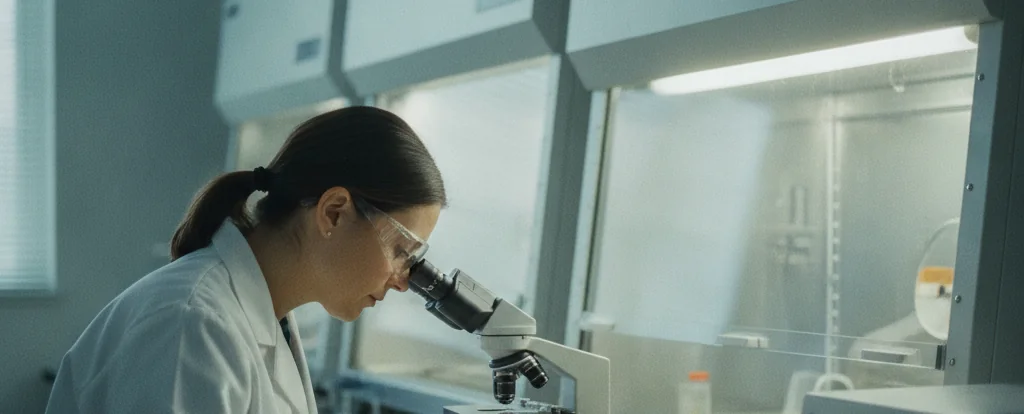
Microbiologists study bacteria, viruses, fungi and other microscopic organisms to understand how they behave and what they do to people, food and the environment.
- Median salary
- $80,300
3.6%vs last year, before tax
- People employed
- 760
8.6%vs last year
- Projected growth
- +19.8%
to 2035
- AI exposure*
- Moderate
- automation risk
- Average hours
- 41/wk
+1h vs all jobs
- Shortage status
- Not in shortage
national
Microbiologists work in laboratories run by hospitals, food manufacturers, water authorities, universities and biotechnology companies, culturing and identifying organisms too small to see. In a diagnostic lab the job is working out which bacterium or virus is behind an infection and which antibiotic will treat it, while other microbiologists test food batches, monitor water supplies or help develop vaccines. It is often confused with laboratory technician work, but a microbiologist interprets what the results mean rather than only running the tests.
How much do microbiologists earn?
The median full-time salary for a microbiologist is $80,300 per annum, before tax, up $17,100 since 2018.
Where you work moves the figure more than the job title does. Diagnostic pathology labs pay penalty rates for evening, weekend and on-call testing, food and water testing labs usually keep conventional hours, and research salaries follow grant funding and university scales. A postgraduate qualification is generally what takes someone into a senior or specialist grade.
What does a microbiologist do day to day?
The list below is what fills most weeks; the exact mix shifts with seniority and whatever stage the current work is at.
- Culturing samples and reading plates each morning to see what has grown overnight
- Running sensitivity tests to work out which antibiotic will treat an infection
- Identifying an organism through staining, microscopy or molecular testing when the plate alone will not say
- Writing results that clinicians, food safety teams or water authorities can act on the same day
- Keeping cultures sterile and free of contamination through strict bench technique
What skills do microbiologists need?
Employers look for laboratory analysis, field research and sampling, data analysis, backed by Optical and electron microscopes fluency and strong attention to detail.
Specialist skills
- Laboratory analysis
- Field research and sampling
- Data analysis
- Regulatory compliance
- Statistical modelling
Software and tools
- Optical and electron microscopes
- PCR machines
- Bacterial culture media and incubators
- LIMS (Laboratory Information Management System)
- Spectrophotometer
General skills
- Attention to detail
- Problem solving
- Written communication
Is the job growing?
About 760 people work as microbiologists in Australia, and employment is projected to grow 19.8% over the decade to 2035. That's healthy, above-average growth, and the role should stay in solid demand.
How do you become a microbiologist?
Here's the path most microbiologists take, step by step.
- 1Study a science degree with a microbiology major
A three-year Bachelor of Science is the standard entry point, covering microbiology, immunology, biochemistry and genetics, with practical time at the bench built into most programs.
- 2Add an honours year or a postgraduate qualification
An honours year, a Master of Microbiology or a graduate diploma is common, and around 41% of people working in the role hold a postgraduate qualification as their highest level of study.
- 3Get laboratory experience while you study
Casual or vacation work as a laboratory assistant, or a placement in a pathology, food or water testing lab, is what employers look for alongside the degree, because pipetting, plating and sterile technique are learned at the bench rather than in a lecture.
- 4Check accreditation if you want hospital diagnostic work
Many hospital pathology employers ask for a degree accredited by the Australian Institute of Medical and Clinical Scientists, which is a different pathway from research, food or environmental microbiology.
- 5Apply for graduate or entry-level positions
Graduate programs in pathology providers, food manufacturers and government labs are the usual first jobs, and they are competitive because the occupation is small, with about 760 people working as microbiologists.
Ready to apply as a microbiologist?
Whether you're working toward becoming a microbiologist or already are one and want a hand with the next step (sharpening your resume for ATS screening, tightening your cover letter, or knowing what you'll actually be asked at interview), here are examples grounded in this specific role, not generic templates.
What jobs can a microbiologist move to?
Moving into Quality Manager typically comes with the biggest pay rise, worth $67,600 a year more on average.
| Move to | Typical pay change | Overlap | Retraining |
|---|---|---|---|
| Quality Manager Microbiologists can move into quality management, using laboratory and testing knowledge to oversee food or pharmaceutical quality, with further study.Known move | +$67,600 | 29% | reskill |
| Medical Laboratory Scientist A microbiologist's laboratory and culture skills transfer to medical laboratory science, but clinical diagnostic work requires a further qualification.Known move | +$26,600 | 57% | requalify |
| Biotechnologist Microbiologists bring sterile technique and microbial knowledge to biotechnology, applying them to industrial and pharmaceutical processes.Known move | +$21,100 | 67% | minimal |
| Biologist Microbiologists move easily into biologist roles, applying shared research and laboratory skills to broader biological study.Known move | +$15,900 | 71% | minimal |
Moves are chosen from Jobs and Skills Australia's Data on Occupation Mobility, which follows income tax records between 2011-12 and 2020-21, together with entry requirements and skill overlap. A known move is one people were seen making in that data. Pay change compares median full-time pay for the two roles.
Who works as a microbiologist?
The typical microbiologist is 37 years old; 65% are women, 78% work full-time, and full-timers average 41 hours a week.
- 37
- Median age
- 65%
- Female share
- 78%
- Full-time
- +1h
- vs all-jobs avg
What's it like being a microbiologist?
The work runs on the clock the organisms keep rather than the one on the wall, so a diagnostic day starts early and includes scheduled plate readings, and many labs run a weekend and on-call roster. Much of it is careful, repetitive benchwork that now and then turns into a puzzle worth the patience. It suits people who like evidence, precision and getting to a definite answer, and an outbreak or contamination event can lift the pace sharply for a few days.
What people like
- The detective work. Building an answer from a plate, a stain and a genetic sequence, often when the obvious tests have come back negative.
- Results that change something. A sensitivity result that steers a patient's treatment or a pathogen found in a food batch that triggers a recall is the point of the job.
- Skills that travel across industries. The same culture and molecular techniques apply in hospitals, food manufacturing, water authorities and biotechnology companies, so the work can move with your interests.
- Time at the bench with good instruments. Microscopes, PCR machines and sequencing platforms give a hands-on element that desk-based science roles do not have.
What people find hard
- Cultures grow at their own pace. Incubation cannot be rushed, so plate readings, subcultures and weekend checks land on the organism's schedule rather than yours.
- A contaminated plate can waste a week. One stray organism in a culture or a failed extraction can mean starting a slow experiment again.
- Long stretches of repetitive benchwork. Pipetting, plating and record keeping fill many days, especially in high-volume diagnostic or food testing labs.
- Grant funding brings uncertainty. Research positions are often fixed-term contracts tied to project funding, which makes long-term planning harder than in a hospital or industry lab.
Based on our synthesis of professional-body surveys and public accounts of the role, not first-person verified reviews.
Which industries employ microbiologists?
Professional, Scientific and Technical Services employs the largest share of microbiologists, followed by Manufacturing.
Top employing industries
- 1Professional, Scientific and Technical Services
- 2Manufacturing
- 3Health Care and Social Assistance
Ranked by employment share; the source doesn't publish an exact percentage per industry.
| Bachelor degree | 51% | |
|---|---|---|
| Postgraduate | 41.2% | |
| Diploma / Advanced Diploma | 5.1% | |
| Year 12 or below | 0.9% | |
| Certificate III/IV | 0.4% |
Will AI replace microbiologists?
Automation reaches into microbiology through colony counters, automated plate readers, PCR platforms and laboratory information systems, which handle the repetitive measurement and record keeping that once filled a technician's day. The exposure is moderate because the interpretation is not automated: deciding whether growth is significant, what it means for a patient or a food batch and what should happen next stays with the microbiologist.
Share of typical working time by exposure level
- Reading and identifying culturesAutomated counters flag and count colonies on a plate, but mixed or unusual growth still needs a person to work out what is growing and whether it matters.30%moderate
- Molecular testing and PCRExtraction, amplification and analysis run through instruments and software, so most of the bench time is sample preparation and checking that the run behaved.25%high
- Interpreting results and advising on actionJudging whether a finding is clinically or commercially significant, and what a clinician or food safety team should do about it, is the part that stays human.25%low
- Documentation and reportingLaboratory information systems track samples and draft standard reports, which trims the paperwork but still needs a scientist to review and sign off the result.20%moderate
Common questions about becoming a microbiologist
Straight answers to the questions people ask most.
How much does a microbiologist earn in Australia?
Microbiologists earn $80,300 per year before tax at the median for full-time work, so it is a middle figure rather than a starting salary. Sector matters most: hospital pathology, food manufacturing, government and research labs sit on different agreements, and penalty rates for after-hours testing add to the total in diagnostic work.
How do you become a microbiologist?
Start with a Bachelor of Science majoring in microbiology, then build laboratory experience through placements or assistant work while you study. Many go on to an honours year or a master's degree, and hospital diagnostic roles usually ask for a degree accredited by the Australian Institute of Medical and Clinical Scientists.
Are microbiologists in demand in Australia?
Microbiologists are currently not in shortage, and employment is projected to grow 19.8% over the decade to 2035. The occupation is small, with about 760 people in it, so vacancies appear in modest numbers each year and graduate programs in pathology and food testing are competitive.
Will AI and automation replace microbiologists?
Parts of the work are already automated: colony counters read plates, PCR platforms run extraction and amplification, and laboratory information systems draft standard reports. Interpretation is the part that holds, because deciding whether a result is significant and what should happen next still needs a scientist.
What can a microbiologist move into?
Biologist and biotechnologist roles draw on the same laboratory and culture skills, with biologist pay $15,900 more and biotechnologist pay $21,100 more. Medical laboratory science pays $26,600 more and usually needs a further clinical qualification, so it suits someone willing to study again.
Do you need a postgraduate degree to work as a microbiologist?
No, a bachelor degree is enough for entry-level laboratory work, but further study is common and around 41% of microbiologists hold a postgraduate qualification as their highest level of study. It is usually what opens senior scientist, specialist and research leadership roles.
Related roles
- Medical Laboratory Scientist
- Biologist
- Biotechnologist
- Quality Manager
- Medical Laboratory Scientist
- Laboratory Technician
Not sure this is you? Take the career quiz and get a ranked shortlist of roles that fit how you like to work.