Pharmacologist
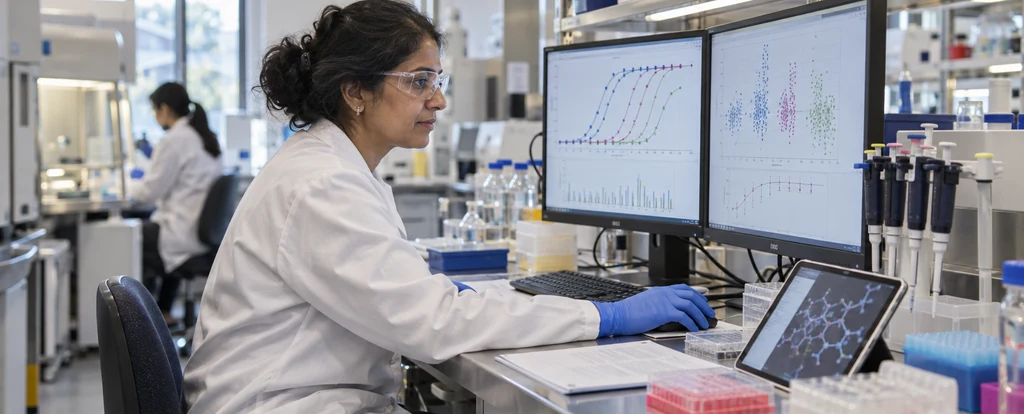
Pharmacologists study how a drug moves through the body and what it does there, which is how a promising compound is judged safe enough to test in people.
- Median salary*
- $109,200
4.5%vs last year, before tax
- People employed*
- 1,800
0.0%vs last year
- Projected growth*
- +8%
to 2035
- AI exposure*
- Moderate
- automation risk
- Average hours*
- 40/wk
matches all-jobs average
- Shortage status*
- Not in shortage
national
Pharmacologists work in laboratories run by pharmaceutical companies, contract research organisations, universities and government agencies, and their studies sit between basic biology and the clinical trials that follow. The role is easily confused with pharmacy: pharmacists dispense medicines to patients, while pharmacologists study how those medicines behave in cells, animals and people. Much of the work is team-based, with chemists, biologists, clinicians and regulatory staff all relying on the same results.
How much do pharmacologists earn?
The median full-time salary for a pharmacologist is $109,200 per annum, before tax, up $23,200 since 2018.
The sector you work in shifts the figure more than the job title does: pharmaceutical and biotechnology companies generally pay above universities and government agencies, where pay follows enterprise agreements and classification levels. Contract and grant-funded roles often add a loading in place of paid leave and job security. A PhD, or specialist skills in pharmacokinetics, safety assessment or regulatory affairs, usually moves you up a classification.
What does a pharmacologist do day to day?
The list below is what fills most weeks; the exact mix shifts with seniority and whatever stage the current work is at.
- Designing laboratory experiments to test how a drug is absorbed, distributed, metabolised and excreted
- Running assays on cell cultures, tissue samples and animal models to measure a drug's effect and its safety margin
- Analysing dose-response and pharmacokinetic data in tools such as R or GraphPad Prism, then interpreting what the numbers mean for dosing
- Writing study protocols, reports and regulatory submissions that describe the methods, the results and any adverse effects
- Reviewing published research and safety data to work out which questions the next experiment should answer
What skills do pharmacologists need?
Employers look for laboratory analysis, data analysis, statistical modelling, backed by GraphPad Prism fluency and strong attention to detail.
Specialist skills
- Laboratory analysis
- Data analysis
- Statistical modelling
- Regulatory compliance
Software and tools
- GraphPad Prism
- R
- SPSS
- Python
- Excel
General skills
- Attention to detail
- Problem solving
- Written communication
Is the job growing?
About 1,800 people work as pharmacologists in Australia, and employment is projected to grow 8% over the decade to 2035. That's modest growth: demand is steady rather than booming.
How do you become a pharmacologist?
Here's the path most pharmacologists take, step by step.
- 1Complete a bachelor degree in pharmacology or a related science
Pharmacology, biomedical science, biochemistry and chemistry degrees all lead in, and most take three years full time. Check that the degree covers biochemistry and physiology, because the work depends on both.
- 2Get laboratory experience while you study
A vacation research scholarship, an honours year or casual work as a research assistant gives you the bench skills employers ask about. A good deal of hiring happens through people who have already seen you work in a lab.
- 3Add honours, a master's or a PhD for research roles
A fourth honours year or a master's is common, and a PhD is usually expected for roles that design studies rather than run them. That adds three to four years, often on a stipend rather than a full salary.
- 4Choose a specialism and build depth in it
Clinical pharmacology, pharmacokinetics, safety assessment and regulatory affairs each demand different knowledge, and moving between them later is easier once you have a few years in one.
- 5Know that registration is not required
Unlike pharmacists, pharmacologists are not registered with AHPRA, so no licence stands between you and the work. Employers look instead at your qualifications, your laboratory record and any publications.
Ready to apply as a pharmacologist?
Whether you're working toward becoming a pharmacologist or already are one and want a hand with the next step (sharpening your resume for ATS screening, tightening your cover letter, or knowing what you'll actually be asked at interview), here are examples grounded in this specific role, not generic templates.
What jobs can a pharmacologist move to?
None of the roles pharmacologists typically move into pay more than the role itself. Toxicologist is the closest match. If a bigger salary is the goal, moving up into a senior or principal position within the role is usually the faster route than moving sideways.
| Move to | Typical pay change | Overlap | Retraining |
|---|---|---|---|
| Toxicologist Pharmacologists bring expertise in drug actions and safety, moving into toxicology to assess the harmful effects of substances. | −$6,200 | 62% | minimal |
| Biotechnologist Pharmacologists apply their knowledge of drug development and biological systems to biotechnology, creating new therapies and diagnostic tools. | −$7,800 | 78% | minimal |
| Biochemist Pharmacologists' strong foundation in biochemistry supports a move into biochemical research, exploring molecular mechanisms and drug targets. | −$9,400 | 67% | minimal |
| Neuroscientist Pharmacologists with a focus on the nervous system move into neuroscience, studying how drugs affect brain function and behaviour. | −$10,400 | 75% | minimal |
| Microbiologist Pharmacologists' laboratory and biological skills transfer to microbiology, investigating microorganisms and their role in health and disease. | −$28,900 | 83% | minimal |
Moves are chosen from Jobs and Skills Australia's Data on Occupation Mobility, which follows income tax records between 2011-12 and 2020-21, together with entry requirements and skill overlap. A known move is one people were seen making in that data. Pay change compares median full-time pay for the two roles.
Who works as a pharmacologist?
The typical pharmacologist is 40 years old; 55% are women, 80% work full-time, and full-timers average 40 hours a week.
- 40
- Median age
- 55%
- Female share
- 80%
- Full-time
- +0h
- vs all-jobs avg
What's it like being a pharmacologist?
The work runs in projects rather than a daily routine: a study is planned, run, analysed and written up, then the next question starts. Much of it happens at a bench or in front of data, with stretches of routine measurement interrupted by the analysis that decides what happens next. It suits people who are patient with detail and comfortable when an experiment returns an answer they did not expect.
What people like
- Results you can trace back to your own experiment. There is a clear line from the study you designed to the data on the screen, and you usually know which step produced it.
- A mix of bench and desk work. A week can move between cell or animal work, statistical analysis and writing, which suits people who do not want one setting all day.
- Seeing a compound move forward. When a drug you tested clears another hurdle on the way to trials, the contribution is concrete, even if it takes years to get there.
What people find hard
- Experiments that fail without explaining why. An assay sometimes produces nothing usable after weeks of preparation, and you have to work out whether the compound, the method or the sample is at fault.
- Documentation and regulatory paperwork. Protocols, standard operating procedures and safety records take up a real share of the week, and a missed detail can invalidate a study.
- Funding and contract cycles. Many roles are grant-funded or fixed-term, so projects can end when a grant does, and you may need to move cities to follow the work.
- Slow timelines. A compound can take a decade or more to reach patients, so the payoff for a good result is often years away.
Based on our synthesis of professional-body surveys and public accounts of the role, not first-person verified reviews.
Which industries employ pharmacologists?
Pharmaceutical and medicine manufacturing employs the largest share of pharmacologists, followed by Scientific research services.
Top employing industries
- 1Pharmaceutical and medicine manufacturing
- 2Scientific research services
- 3Biotechnology
- 4Hospitals
- 5Government administration
Ranked by employment share; the source doesn't publish an exact percentage per industry.
| Bachelor degree | 52% | |
|---|---|---|
| Postgraduate | 26% | |
| Diploma / Advanced Diploma | 13% | |
| Other | 9% |
Will AI replace pharmacologists?
Pharmacology sits in the middle: the analysis and writing that surround the science are already partly automated, while the laboratory work and the judgement about what a result means are not. Software handles curve fitting, pharmacokinetic modelling and literature searching faster than a person can, which shortens the gap between running a study and understanding it. What it does not do is decide whether an odd reading is a real effect, an assay artefact or a reason to stop work on a compound.
Share of typical working time by exposure level
- Running assays at the benchCell culture, binding assays and animal dosing still need trained hands, and small differences in technique change the result.30%moderate
- Statistical analysis and dose-response modellingSoftware fits curves, estimates pharmacokinetic parameters and runs routine statistics, leaving you to check that the model suits the data.25%high
- Interpreting results and planning the next studyDeciding whether an unexpected finding changes the dose, the method or the whole program relies on experience with the science and the compound.25%low
- Literature reviews and study reportsDrafting background sections and summarising published safety data is quick to automate, though a regulatory submission still needs a named author who signs it off.20%high
Common questions about becoming a pharmacologist
Straight answers to the questions people ask most.
How much do pharmacologists earn?
Pharmacologists earn a median $109,200 per year before tax, based on full-time workers. Half earn more than that and half earn less, and the figure moves with your sector, your classification and whether the role is permanent or contract.
How do you become a pharmacologist?
The usual route is a bachelor degree in pharmacology or a related science, followed by laboratory experience and often an honours year or postgraduate study. Research roles that design studies generally ask for a PhD. No registration is required, so your qualifications, techniques and publications carry the weight.
Are pharmacologists in demand?
Pharmacologists are currently not in shortage, and employment is projected to grow 8% over the decade to 2035. The occupation is small, so openings tend to appear with new research programs or when experienced staff move into related fields, and hands-on laboratory experience is what separates applicants.
Will AI replace pharmacologists?
Not the whole job. Data analysis, dose-response modelling and literature review are already partly automated, which speeds up routine work, while laboratory technique and the judgement about whether a result is real stay with the scientist. The effect so far is more about how quickly results are produced than about removing the role.
What other jobs can pharmacologists move into?
Toxicology and biotechnology are the closest moves, since drug safety and laboratory work overlap; toxicologists earn $6,200 less and biotechnologists earn $7,800 less. Neuroscience and biochemistry also attract pharmacologists who specialise in the nervous system or in molecular mechanisms. Biochemists and chemists move into pharmacology from the other direction, and laboratory technicians can make the switch after completing a science degree.
Do pharmacologists need a licence?
No. Pharmacology is not a registered profession in Australia, unlike pharmacy, so there is no licence or board registration to maintain. Employers rely on your degree, laboratory skills and publication record instead.
Related roles
Not sure this is you? Take the career quiz and get a ranked shortlist of roles that fit how you like to work.