Neuroscientist
Neuroscientists investigate how the brain and nervous system work, and what changes in neurological and mental health conditions.
- Median salary*
- $98,800
3.7%vs last year, before tax
- People employed*
- 1,500
0.0%vs last year
- Projected growth*
- +8%
to 2035
- AI exposure*
- Moderate
- automation risk
- Average hours*
- 42/wk
+2h vs all jobs
- Shortage status*
- Not in shortage
national
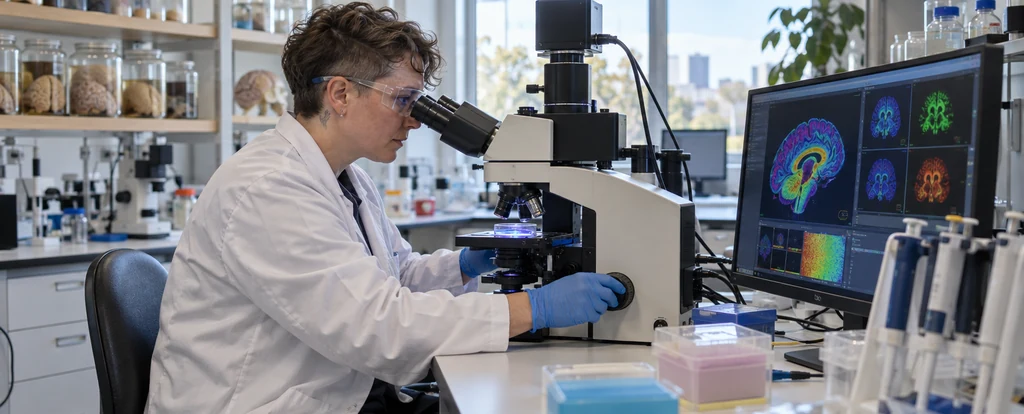
Neuroscientists work in university laboratories, medical research institutes, hospital research departments, and in some pharmaceutical and biotechnology companies. The role is research rather than clinical: neuroscientists study how the brain works but do not diagnose or treat patients, although many work alongside clinicians on studies that involve them. The field is small, and most positions depend on grant funding or fixed-term contracts.
How much do neuroscientists earn?
The median full-time salary for a neuroscientist is $98,800 per annum, before tax, up $20,300 since 2018.
Pay follows the employer and the funding more than the job title: university roles are set by academic classification and increment levels, while medical research institutes, government agencies and pharmaceutical and biotechnology companies set their own ranges. Industry and senior research positions generally sit above the university scale, and a grant-funded contract can pay less than a continuing role at the same level. Sector and appointment level move pay more than location does.
What does a neuroscientist do day to day?
The list below is what fills most weeks; the exact mix shifts with seniority and whatever stage the current work is at.
- Designing experiments to test how neurons, circuits or behaviour work
- Collecting data from tissue samples, animal models or human participants in imaging studies
- Analysing recordings and images with tools such as MATLAB, Python and ImageJ
- Writing papers and grant applications to fund the next round of work
- Supervising students and presenting results at lab meetings and conferences
What skills do neuroscientists need?
Employers look for laboratory analysis, data analysis, statistical modelling, backed by MATLAB fluency and strong problem solving.
Specialist skills
- Laboratory analysis
- Data analysis
- Statistical modelling
Software and tools
- MATLAB
- Python (SciPy/NumPy)
- R
- GraphPad Prism
- ImageJ/Fiji
General skills
- Problem solving
- Attention to detail
- Written communication
- Presenting and data storytelling
Is the job growing?
About 1,500 people work as neuroscientists in Australia, and employment is projected to grow 8% over the decade to 2035. That's modest growth: demand is steady rather than booming.
How do you become a neuroscientist?
Here's the path most neuroscientists take, step by step.
- 1Start with a science degree
A Bachelor of Science, Bachelor of Neuroscience or similar degree with a major in neuroscience, physiology or psychology, usually three years full time. Choose a course with laboratory units, because research roles assume you can handle basic lab technique.
- 2Add an honours year
A fourth year built around a supervised research project in a lab. Honours is the minimum for most research assistant jobs and the entry point to a PhD, and it is usually where people find out whether research suits them.
- 3Complete a PhD
Three to four years of supervised research producing original findings and a thesis. Most academic, medical research institute and industry scientist roles expect one, and it can be started after some years of paid work.
- 4Take one or more postdoctoral positions
Two to six years of fixed-term research, often interstate or overseas, building publications, techniques and grant experience. This is where most neuroscientists settle on a specialty such as neuroimaging, electrophysiology or molecular neuroscience.
- 5Move into a continuing or industry role
Fellowships, lectureships, senior research positions and industry scientist roles follow, though they are limited in number and often tied to grant funding. Some neuroscientists move instead into science policy, publishing or data work.
Ready to apply as a neuroscientist?
Whether you're working toward becoming a neuroscientist or already are one and want a hand with the next step (sharpening your resume for ATS screening, tightening your cover letter, or knowing what you'll actually be asked at interview), here are examples grounded in this specific role, not generic templates.
What jobs can a neuroscientist move to?
Moving into Pharmacologist typically comes with the biggest pay rise, worth $10,400 a year more on average.
| Move to | Typical pay change | Overlap | Retraining |
|---|---|---|---|
| Pharmacologist Neuroscientists bring deep knowledge of brain chemistry and drug targets to pharmacology research. | +$10,400 | 75% | minimal |
| Toxicologist Neuroscientists bring expertise in neural mechanisms to toxicology, especially neurotoxicity and drug safety assessment. | +$4,200 | 45% | short course |
| Data Analyst Neuroscientists bring statistical modelling and experimental design skills to analyst roles in research and industry. | +$2,600 | 69% | minimal |
| Biochemist Neuroscientists bring molecular and cellular research skills to biochemistry, especially in protein and signalling studies. | +$1,000 | 75% | minimal |
Moves are chosen from Jobs and Skills Australia's Data on Occupation Mobility, which follows income tax records between 2011-12 and 2020-21, together with entry requirements and skill overlap. A known move is one people were seen making in that data. Pay change compares median full-time pay for the two roles.
Who works as a neuroscientist?
The typical neuroscientist is 38 years old; 50% are women, 78% work full-time, and full-timers average 42 hours a week.
- 38
- Median age
- 50%
- Female share
- 78%
- Full-time
- +2h
- vs all-jobs avg
What's it like being a neuroscientist?
Neuroscience research runs on cycles: designing a study, gathering data for months, then analysing and writing it up, with grant deadlines cutting across all of it. A week mixes hands-on lab or imaging work, computer time and meetings with students and collaborators. It suits people who can tolerate slow results and stay motivated through long stretches where nothing works.
What people like
- Questions no one has answered yet. Much of the work is genuinely open, whether that is how a circuit produces a behaviour or why a treatment works for some people and not others.
- Working with your hands and with code. A week can move between tissue preparation, recording equipment and statistical modelling, which suits people who like switching modes rather than doing one thing all day.
- Findings that feed into medicine. Neuroscience research underpins trials for conditions such as epilepsy, Parkinson's disease, depression and chronic pain, even when the path from lab to clinic is long.
- A small, well-connected field. Conferences and collaborations cross countries, and labs often host visiting researchers, so the community is more connected than its size suggests.
What people find hard
- Funding decides what you can do. Grant rounds set the size of a lab, and a project can end because an application failed rather than because the science did.
- Short contracts through your thirties. Postdoctoral positions are usually fixed-term, often two or three years, and moving city or country for the next one is common.
- Experiments fail more often than they work. Optimising a technique or an animal model can take months before any usable data appears, and some approaches never come good.
- Slow publication. From finished experiment to published paper is often a year or more once peer review, revisions and resubmission are counted.
Based on our synthesis of professional-body surveys and public accounts of the role, not first-person verified reviews.
Which industries employ neuroscientists?
Universities and higher education employs the largest share of neuroscientists, followed by Medical research institutes.
Top employing industries
- 1Universities and higher education
- 2Medical research institutes
- 3Hospitals and healthcare
- 4Government research agencies
- 5Pharmaceutical and biotechnology companies
Ranked by employment share; the source doesn't publish an exact percentage per industry.
| Bachelor degree | 52% | |
|---|---|---|
| Postgraduate | 26% | |
| Diploma / Advanced Diploma | 13% | |
| Other | 9% |
Will AI replace neuroscientists?
AI reaches parts of this job rather than the whole role, which is why neuroscience sits at a moderate level of exposure. Image processing, spike sorting and statistical modelling increasingly rely on machine learning, speeding up analysis that once took months by hand. The experimental work itself, from tissue preparation and animal procedures to running an imaging session with a participant, still needs trained hands and a judgement about whether a signal is real.
Share of typical working time by exposure level
- Running experiments and collecting dataRecording from tissue, animals or participants depends on rig setup, technique and immediate decisions about whether what you are seeing is artefact or signal.35%low
- Analysing dataAutomated tools now handle much of the spike sorting, image segmentation and statistical modelling, though someone still has to judge whether the output makes biological sense.30%high
- Writing papers and grant applicationsLanguage models draft sections and tidy references, but the argument, the framing of the finding and the response to reviewers remain the researcher's work.20%moderate
- Supervising students and presenting resultsTraining a student at the rig or defending a result in a seminar needs a person in the room who knows the experiment and the field.15%low
Common questions about becoming a neuroscientist
Straight answers to the questions people ask most.
How much do neuroscientists earn in Australia?
Full-time neuroscientists earn a median of $98,800 per year before tax, though pay varies more by employer and funding than by experience alone. University salaries follow academic classification levels, while medical research institutes, government agencies and pharmaceutical companies set their own ranges. Industry and senior research positions generally sit above the university scale, and a grant-funded contract can pay less than a continuing role at the same level.
How do you become a neuroscientist?
The usual route is a bachelor degree with a neuroscience or physiology major, followed by an honours year that includes a research project. A PhD, usually three to four years, is the standard qualification for independent research, and most academic and institute roles expect one. Honours graduates can work as research assistants while deciding whether to continue.
Are neuroscientists in demand in Australia?
Neuroscientists are currently not in shortage, and employment is projected to grow 8% over the decade to 2035. With a workforce of about 1,500 people, openings tend to appear through research groups, institutes and grant-funded projects rather than large graduate intakes. A PhD and a strong publication record matter more here than the overall job count does.
Will AI replace neuroscientists?
AI affects parts of this job rather than the whole role. Machine learning tools now handle much of the spike sorting, image segmentation and statistical modelling that once took months by hand, and they draft sections of papers and grant applications. The experimental work itself, from tissue preparation and animal procedures to running imaging sessions with participants, still needs trained hands and a judgement about whether the data is sound.
What else can a neuroscientist do?
Pharmacology is one move, since both fields work on drug targets and brain chemistry, and median pay there is $10,400 more. Toxicology draws on the same background for neurotoxicity and drug safety assessment ($4,200 more), and researchers who spend most of their week on modelling and image analysis can move into data analysis roles ($2,600 more).
Do neuroscientists treat patients?
Generally no: neuroscience is a research field, and diagnosing and treating patients is the work of neurologists, psychiatrists and other clinicians. Some neuroscientists work in hospitals alongside clinicians, running studies that use patient data or involve participants. If treating patients is the goal, a medical degree or a clinical psychology pathway is the one to take.
Related roles
Not sure this is you? Take the career quiz and get a ranked shortlist of roles that fit how you like to work.