Mechanical Engineering Technician
Mechanical engineering technicians support engineers by preparing drawings, testing components and keeping mechanical plant running to specification.
- Median salary*
- $93,600
3.8%vs last year, before tax
- People employed
- 1,200
0.0%vs last year
- Projected growth
- +12.6%
to 2035
- AI exposure*
- Moderate
- automation risk
- Average hours
- 46/wk
+6h vs all jobs
- Shortage status
- In shortage
national
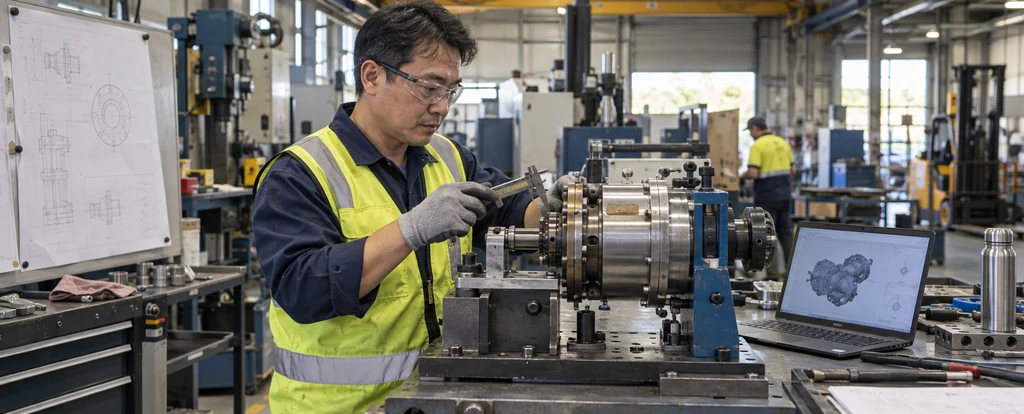
They work under the direction of engineers and technologists in manufacturing plants, mining operations, workshops and engineering consultancies. The role sits between the trades and professional engineering: technicians usually hold a diploma or advanced diploma rather than a degree, and they spend more of the week at the machine, the test rig or the site than at a design desk. Manufacturing and engineering services are the main employers, with technicians typically working as part of a small technical team on a larger project.
How much do mechanical engineering technicians earn?
The median full-time salary for a mechanical engineering technician is $93,600 per annum, before tax, up $19,400 since 2018.
Pay depends heavily on the sector, with technicians in mining, oil and gas and heavy manufacturing usually earning more than those in light manufacturing or repair workshops, and enterprise agreements setting rates on many large sites. Overtime, shift work and site allowances add to the base, which is part of why average full-time hours in this role run above a standard week. Registration is not required, so a technician's pay rests on their qualifications, the systems they can work on and how much responsibility they take for installation and commissioning.
What does a mechanical engineering technician do day to day?
The list below is what fills most weeks; the exact mix shifts with seniority and whatever stage the current work is at.
- Preparing detailed mechanical drawings, plans and specifications in CAD software such as SolidWorks, AutoCAD or Inventor
- Testing components and assemblies against the tolerances and standards a design specifies, then recording the results
- Installing, commissioning and maintaining mechanical plant and equipment
- Inspecting equipment in the field and diagnosing faults before they stop production
- Estimating materials, quantities and costs for mechanical engineering projects
What skills do mechanical engineering technicians need?
Employers look for engineering design and analysis, cAD and technical drawing, installation and maintenance, backed by SolidWorks fluency and strong problem solving.
Specialist skills
- Engineering design and analysis
- CAD and technical drawing
- Installation and maintenance
- Project engineering and delivery
- Worksite safety management
Software and tools
- SolidWorks
- AutoCAD
- Inventor
- ANSYS
- MATLAB
General skills
- Problem solving
- Attention to detail
Is the job growing?
About 1,200 people work as mechanical engineering technicians in Australia, and employment is projected to grow 12.6% over the decade to 2035. That's healthy, above-average growth, and the role should stay in solid demand.
How do you become a mechanical engineering technician?
Here's the path most mechanical engineering technicians take, step by step.
- 1Finish Year 12 with maths and physics
Most diplomas assume a solid grounding in maths, and physics helps with the mechanics and materials units you meet early. Some providers accept Year 11 or a trade background instead.
- 2Take a Diploma of Engineering (Technical) or an advanced diploma
A diploma of about two years full time is the standard entry point, with the certificate IV in engineering a shorter route that can lead into it. TAFE and some universities offer both, and studying part time while working is common.
- 3Get hands-on experience while you study
Cadetships, traineeships and workshop jobs build the fitting, machining and measurement skills employers ask for, and many large employers hire from their own cadet intakes.
- 4Consider an apprenticeship if you would rather start on the tools
A Certificate III in Engineering (Mechanical Trade) leads into technician work later, and a number of technicians come across from fitting, machining or maintenance trades after a few years.
- 5Build a specialty employers recognise
Commissioning, condition monitoring, testing and quality inspection are the areas where technicians move quickest, because those skills are specific and in demand across manufacturing, mining and engineering services.
Ready to apply as a mechanical engineering technician?
Whether you're working toward becoming a mechanical engineering technician or already are one and want a hand with the next step (sharpening your resume for ATS screening, tightening your cover letter, or knowing what you'll actually be asked at interview), here are examples grounded in this specific role, not generic templates.
What jobs can a mechanical engineering technician move to?
Moving into Engineering Manager typically comes with the biggest pay rise, worth $89,400 a year more on average.
| Move to | Typical pay change | Overlap | Retraining |
|---|---|---|---|
| Engineering Manager Experienced technicians who lead teams or projects can move into engineering management, using their technical knowledge with further study.Known move | +$89,400 | 13% | requalify |
| Mechanical Engineer Technicians who take on design and analysis work move up to engineering roles, building on testing and drafting experience, though a degree is required.Known move | +$42,300 | 50% | requalify |
| Metal Machinist Technicians with hands-on machining skills can move into machining work, applying their understanding of components, tolerances and production equipment.Known move | +$41,900 | 17% | requalify |
| Engineering Technologist A step up that applies the same practical engineering knowledge, with further study bridging the technician diploma to technologist work.Known move | +$13,000 | 57% | requalify |
| Electrical Engineering Technician A parallel technician role for those with electrical and control systems experience, needing only a short course to cover the electrical side.Known move | −$2,100 | 57% | short course |
Moves are chosen from Jobs and Skills Australia's Data on Occupation Mobility, which follows income tax records between 2011-12 and 2020-21, together with entry requirements and skill overlap. A known move is one people were seen making in that data. Pay change compares median full-time pay for the two roles.
Who works as a mechanical engineering technician?
The typical mechanical engineering technician is 42 years old; 96% are men, 90% work full-time, and full-timers average 46 hours a week.
- 42
- Median age
- 4%
- Female share
- 90%
- Full-time
- +6h
- vs all-jobs avg
What's it like being a mechanical engineering technician?
Mechanical engineering technicians work to someone else's design and their own judgement about how it behaves in practice. The week mixes desk time on drawings, test results and reports with time at a machine, a test rig or a site, and the pressure arrives when a fault stops production or a commissioning deadline slips. The role suits people who like being close to the equipment and can explain clearly what they found to engineers and trades alike.
What people like
- Your drawings become real equipment. A design often moves from a CAD model to a fabricated, installed and working machine within a single project, which is faster feedback than engineers further upstream get.
- The week moves between desk and site. Drafting and reporting time balances against time in a workshop, a plant or a client's site, which suits people who dislike sitting at a screen all day.
- Fault finding rewards careful thinking. Diagnosing why a machine is vibrating or overheating means reading the symptom, testing a hypothesis and narrowing down the cause, and the answer is rarely in the manual.
- Employers often back further study. Many large employers pay for or roster around a diploma or degree, which is the usual way technicians move into engineering and technologist roles.
What people find hard
- Production comes first. When a line is down, your inspection or repair happens under time pressure, sometimes on night shift, because every hour of stoppage carries a cost.
- You inherit someone else's decisions. You are implementing and testing designs made upstream, so a drawing error or an unrealistic tolerance becomes your problem on the floor.
- Site conditions can be rough. Commissioning and inspection work can mean heat, noise, dust and long stretches away from home, particularly in mining and heavy industry.
- The paperwork is a real part of the job. Test records, inspection reports and revision control can take up more of the week than the hands-on work people picture when they choose the role.
Based on our synthesis of professional-body surveys and public accounts of the role, not first-person verified reviews.
Which industries employ mechanical engineering technicians?
Manufacturing employs the largest share of mechanical engineering technicians, followed by Other Services.
Top employing industries
- 1Manufacturing
- 2Other Services
- 3Professional, Scientific and Technical Services
Ranked by employment share; the source doesn't publish an exact percentage per industry.
| Certificate III/IV | 51.5% | |
|---|---|---|
| Diploma / Advanced Diploma | 15.2% | |
| Bachelor degree | 13.1% | |
| Year 12 or below | 13.1% | |
| Postgraduate | 5.2% |
Will AI replace mechanical engineering technicians?
This role sits in the middle: the drafting, modelling and reporting parts of the job are already software-heavy, while installation, testing and fault finding on site remain physical. CAD and simulation tools such as SolidWorks and ANSYS, along with sensor-based condition monitoring, take over more of the first pass of analysis, but someone still has to decide what the results mean and what to do about them.
Share of typical working time by exposure level
- Drafting and design documentationMost of this runs through CAD software, and automated drawing generation and clash checking have taken over much of the routine work.30%high
- Installing, aligning and repairing equipmentPhysical work on site, from aligning a drive train to replacing a failed bearing, still needs hands and a read on the conditions in front of you.30%low
- Testing and measurement analysisSoftware handles the recording and first-pass analysis of test data, but setting up a valid test and judging whether a result is believable stays with the technician.25%moderate
- Project reporting, cost estimates and quotesEstimating tools and standard templates speed up the paperwork, though quantities and costs still depend on someone knowing how the job actually gets built.15%moderate
Common questions about becoming a mechanical engineering technician
Straight answers to the questions people ask most.
How much do mechanical engineering technicians earn?
Mechanical engineering technicians earn a median of $93,600 per year before tax. Pay depends most on the sector, with mining, oil and gas and heavy industry paying above light manufacturing, and on overtime, shift work and site allowances that top up the base rate.
How do you become a mechanical engineering technician?
Most technicians start with a Diploma of Engineering (Technical) or an advanced diploma, usually about two years of full-time study, or complete a Certificate III in Engineering (Mechanical Trade) apprenticeship and move across later. A cadetship or workshop job while you study gives you the fitting, machining and measurement experience employers ask for. Some enter straight from a trade after several years on the tools.
Are mechanical engineering technicians in demand?
Mechanical engineering technicians are currently in shortage nationally, and employment is projected to grow 12.6% over the decade to 2035. About 1,200 people work in the role nationally, so vacancies tend to appear one at a time rather than in large intakes, and a qualification plus hands-on experience is what gets you shortlisted.
Will AI replace mechanical engineering technicians?
Parts of the job are already automated, particularly drafting, standard calculations and routine condition monitoring, where CAD and simulation software and sensor data do more of the first pass. Installing, aligning, testing and diagnosing equipment on site is much harder to automate, and someone still has to judge what the sensors and models are reporting. The role is more likely to shift towards supervising and interpreting automated systems than to disappear.
What can mechanical engineering technicians move into?
With a degree, technicians move into mechanical engineering, where they earn $42,300 more and the work shifts towards design, analysis and signing off on decisions. Further study in engineering technology is a smaller step that keeps the hands-on side of the work and pays $13,000 more. Technicians with electrical and control systems experience can also move across to electrical engineering technician work after a short course.
What is the difference between a mechanical engineering technician and a mechanical engineer?
Mechanical engineers hold a degree and carry responsibility for design decisions, analysis and compliance, while technicians put those designs into practice through drafting, testing, installation and fault finding. Technicians usually hold a diploma or trade qualification, work under an engineer's direction and spend more of the week with the equipment itself. The two roles work closely together on most projects.
Related roles
- Mechanical Engineer
- Engineering Manager
- Engineering Technologist
- Electrical Engineering Technician
- Metal Machinist
- Metal Machinist
Not sure this is you? Take the career quiz and get a ranked shortlist of roles that fit how you like to work.