Materials Engineer
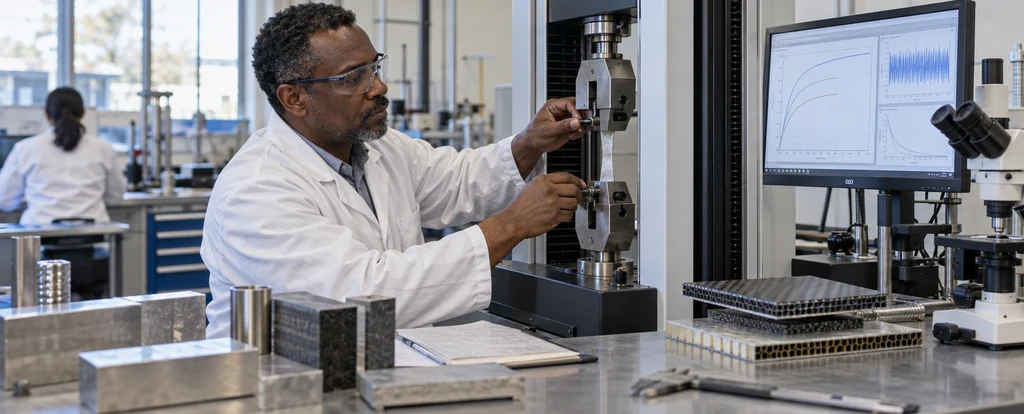
Materials engineers work out which materials a product or structure should be made from, and test them to prove the choice holds up.
- Median salary*
- $109,200
4.1%vs last year, before tax
- People employed
- 700
0.0%vs last year
- Projected growth*
- +4%
to 2035
- AI exposure*
- Moderate
- automation risk
- Average hours*
- 42/wk
+2h vs all jobs
- Shortage status*
- Not in shortage
national
Materials engineers split their time between laboratories, testing houses and plant sites, selecting what a product is made from and then proving it will survive the conditions it meets. The role is broader than metallurgy, because metals, polymers, ceramics and composites all fall within it, and the same engineer might assess a pipeline coating, a medical implant and a car panel in the same year. Employers are concentrated in manufacturing, mining, construction and engineering consultancies, and many materials engineers are the only specialist of their kind on a project team.
How much do materials engineers earn?
The median full-time salary for a materials engineer is $109,200 per annum, before tax, up $22,800 since 2018.
Pay varies more by sector than by job title, with mining, oil and gas generally paying above manufacturing, construction and public sector laboratories. Site based and fly-in fly-out roles usually carry allowances on top of base salary, and chartered engineers in consultancy or specialist testing work tend to earn more than those in routine production support. A postgraduate qualification can also lift the range in research heavy roles.
What does a materials engineer do day to day?
The list below is what fills most weeks; the exact mix shifts with seniority and whatever stage the current work is at.
- Testing metals, polymers, ceramics and composites for strength, fatigue and corrosion
- Selecting materials that meet a design brief, a budget and the relevant standards
- Investigating failures, such as a cracked casting or a coating that blistered, to find the cause
- Running laboratory trials on new alloys, coatings and composites before they reach production
- Writing material specifications and advising design and production teams on how a material should be processed
What skills do materials engineers need?
Employers look for engineering design and analysis, laboratory analysis, data analysis, backed by ANSYS fluency and strong problem solving.
Specialist skills
- Engineering design and analysis
- Laboratory analysis
- Data analysis
- Regulatory compliance
- Process improvement
Software and tools
- ANSYS
- Granta Selector (CES EduPack)
- MATLAB
- SolidWorks
- Instron Bluehill
General skills
- Problem solving
- Attention to detail
- Written communication
Is the job growing?
About 700 people work as materials engineers in Australia, and employment is projected to grow 4% over the decade to 2035. That's modest growth: demand is steady rather than booming.
How do you become a materials engineer?
Here's the path most materials engineers take, step by step.
- 1Complete an engineering degree
A four year Bachelor of Engineering (Honours) majoring in materials, or a closely related field such as metallurgy or chemical engineering, is the standard entry point. Look for a program accredited by Engineers Australia, because that accreditation is what later supports chartered status and, in some roles, registration.
- 2Get laboratory or site experience while you study
Vacation work with a manufacturer, miner, testing laboratory or consultancy gives you a feel for the equipment and the standards, and it is how many graduates are first noticed by an employer.
- 3Take a graduate engineering role
The first two to three years are usually spent under supervision, learning how plants actually run, how test programs are scoped and how specifications are written. Much of the work is documenting results and checking other people's assumptions, which is where the judgement gets built.
- 4Apply for chartered status
Chartered Professional Engineer status through Engineers Australia is assessed against competency standards after a few years of practice. It carries weight with clients and insurers, and it is often expected for consulting and expert witness work.
- 5Specialise or add postgraduate study
Engineers who move into research, advanced alloys or failure analysis often add a master's or doctorate. It narrows the work you are considered for but opens roles in universities, defence, aerospace and specialist laboratories.
Ready to apply as a materials engineer?
Whether you're working toward becoming a materials engineer or already are one and want a hand with the next step (sharpening your resume for ATS screening, tightening your cover letter, or knowing what you'll actually be asked at interview), here are examples grounded in this specific role, not generic templates.
What jobs can a materials engineer move to?
Moving into Chemical Engineer typically comes with the biggest pay rise, worth $38,900 a year more on average.
| Move to | Typical pay change | Overlap | Retraining |
|---|---|---|---|
| Chemical Engineer Brings materials and process knowledge to chemical plant design and optimisation, though substantial retraining in chemical engineering is required. | +$38,900 | 38% | reskill |
| Mechanical Engineer Applies materials expertise to mechanical design and manufacturing, needing substantial retraining in mechanical engineering principles and practice. | +$26,700 | 36% | reskill |
| Metallurgist Applies materials selection, testing and failure analysis to metal extraction and alloy development, with a short course in metallurgical practice. | +$2,600 | 50% | short course |
| Production Engineer Uses materials and manufacturing knowledge to improve production processes, with substantial retraining in production engineering. | −$1,000 | 44% | reskill |
| Quality Engineer Brings materials testing and process knowledge to quality systems and improvement, with substantial retraining in quality engineering. | −$30,200 | 38% | reskill |
Moves are chosen from Jobs and Skills Australia's Data on Occupation Mobility, which follows income tax records between 2011-12 and 2020-21, together with entry requirements and skill overlap. A known move is one people were seen making in that data. Pay change compares median full-time pay for the two roles.
Who works as a materials engineer?
The typical materials engineer is 37 years old; 82% are men, 83% work full-time, and full-timers average 42 hours a week.
- 37
- Median age
- 18%
- Female share
- 83%
- Full-time
- +2h
- vs all-jobs avg
What's it like being a materials engineer?
The work runs in projects rather than a daily routine: a stretch of testing and measurement in the lab, then reporting, specifications and meetings with designers or production staff. Teams are small, so a materials engineer is often the person who has to say whether a design is feasible, and that judgement carries weight when a part fails or a supplier changes. It suits people who like moving between physics, chemistry and the practical realities of how something is made.
What people like
- A mix of laboratory and design work. You can spend the morning preparing specimens on a tensile rig and the afternoon arguing about wall thickness with a design team, so the week rarely sits in one place.
- Failure investigations that reach a cause. When a part cracks in service, the evidence is usually still there in the fracture surface and the processing records, and tracing the sequence back to a cause is satisfying work that also stops it happening again.
- Skills that carry across industries. Materials questions turn up in mining, aerospace, medical devices, construction and energy, so the expertise you build is portable rather than tied to one employer or one sector.
- Choices that outlast the project. A specification you write can stay in production for years, and seeing a material you selected still performing in the field is a tangible measure of your work.
What people find hard
- Test programs run on their own timetable. Corrosion and fatigue testing can take weeks or months, and results often arrive well after the meeting that needed them, which frustrates engineers who like fast answers.
- Documentation takes up a large share of the week. Specifications, test reports, certificates of conformity and traceability records are unavoidable in this work, and the writing is as important as the testing.
- A narrow set of employers. Most roles sit with manufacturers, mining companies, testing laboratories and consultancies, so the choice of employer and location is smaller than in larger engineering disciplines.
- Being the person who says a material is unsuitable. When a preferred material does not meet the spec, you are the one holding up the design, and the conversation can be difficult even when the evidence is clear.
Based on our synthesis of professional-body surveys and public accounts of the role, not first-person verified reviews.
Which industries employ materials engineers?
Manufacturing employs the largest share of materials engineers, followed by Professional, Scientific and Technical Services.
Top employing industries
- 1Manufacturing
- 2Professional, Scientific and Technical Services
- 3Mining
- 4Construction
- 5Electricity, Gas, Water and Waste Services
Ranked by employment share; the source doesn't publish an exact percentage per industry.
| Bachelor degree | 52% | |
|---|---|---|
| Postgraduate | 26% | |
| Diploma / Advanced Diploma | 13% | |
| Other | 9% |
Will AI replace materials engineers?
Materials engineering sits at a moderate level of AI exposure. The screening side of the job, searching property databases, running simulation and fitting models to test data, has sped up considerably with tools like Granta Selector and ANSYS, and those tools now do work that once took a week of handbook reading. Physical testing, failure investigation and the professional sign-off on a specification remain largely manual and accountable to a person.
Share of typical working time by exposure level
- Running mechanical and corrosion testsTensile rigs, salt spray cabinets and furnaces need specimens prepared, aligned and watched, and the readings still have to be checked against the standard before they count.30%low
- Screening candidate materials against a design briefProperty databases and machine learning models can shortlist alloys and polymers in minutes, though an engineer still has to judge whether the listed data matches the real service conditions.25%high
- Investigating why a part failedSimulation can map stress and corrosion paths and search past reports quickly, but the answer usually rests on evidence from the failed component and how it was made and used.25%moderate
- Writing specifications and advising design teamsTemplates and drafting tools speed up the standard clauses, while the call on whether a material suits a particular product stays with the engineer and the client.20%moderate
Common questions about becoming a materials engineer
Straight answers to the questions people ask most.
How much do materials engineers earn?
Materials engineers earn a median $109,200 per annum, before tax, for full-time work. Pay is highest in mining, oil and gas and in specialist consulting, while manufacturing and public sector laboratory roles sit lower in the range. Chartered status and site allowances are the two things most likely to move an individual offer.
How do you become a materials engineer?
The usual route is a four year accredited engineering degree majoring in materials, metallurgy or a closely related field, followed by a graduate role under supervision. Engineers Australia accreditation matters, because it is the pathway to chartered status a few years later. Technicians already working in testing or metallurgy can move across by completing an engineering degree.
Are materials engineers in demand?
Materials engineers are currently not in shortage, and employment is projected to grow 4% over the decade to 2035. The occupation is small, so hiring tends to follow particular projects and plant upgrades rather than steady annual intakes. That makes networking and a willingness to move for the right employer more useful here than in larger professions.
Will AI replace materials engineers?
AI has made parts of the job faster but has not taken over the work. Property databases such as Granta Selector, simulation in ANSYS and machine learning models can shortlist materials and predict behaviour from existing test data, which cuts the time spent on early screening. Deciding what a material is fit for still depends on physical testing, service conditions and accountability for the specification, which is why exposure sits at a moderate level rather than a high one.
What can materials engineers move into?
Metallurgy is a close move, needing only a short course in metallurgical practice and paying $2,600 more. Chemical engineering pays $38,900 more but requires substantial retraining in process design, and mechanical engineering follows a similar pattern. Experienced engineers also set up consulting practices in failure investigation, materials testing or expert witness work, which is often where earnings grow.
What is the difference between materials engineering and metallurgy?
Metallurgy concentrates on extracting metals from ore and developing alloys, while materials engineering covers metals alongside polymers, ceramics and composites. In practice the two overlap heavily on testing, specification and failure analysis, which is why engineers move between them with a short course rather than a new degree.
Related roles
- Metallurgist
- Chemical Engineer
- Mechanical Engineer
- Production Engineer
- Quality Engineer
- Metallurgical Technician
Not sure this is you? Take the career quiz and get a ranked shortlist of roles that fit how you like to work.