Home Manufacturing & Production
Quality Engineer
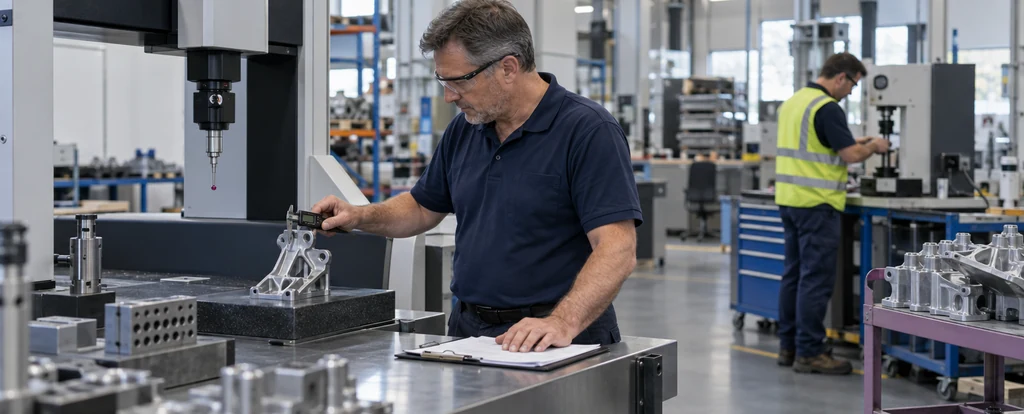
Quality engineers test and improve manufacturing processes so that the products coming off a line meet their specification.
- Median salary*
- $79,000
3.7%vs last year, before tax
- People employed*
- 8,900
0.0%vs last year
- Projected growth*
- +3.2%
to 2035
- AI exposure*
- Moderate
- automation risk
- Average hours*
- 38/wk
−2h vs all jobs
- Shortage status*
- Not in shortage
national
Quality engineers work on the factory floor and in the lab, checking that raw materials, components and finished products meet a specification before they reach a customer. Unlike a quality inspector, who checks individual items against a standard, a quality engineer looks at the whole process, using production data to work out why defects happen and changing the process so they stop. Most work inside a manufacturer's quality management system and report across both production and engineering.
How much do quality engineers earn?
The median full-time salary for a quality engineer is $79,000 per annum, before tax, up $16,300 since 2018.
Pay varies with the sector you work in and the agreement covering your site, since larger manufacturers often set it through an enterprise agreement with shift and overtime loadings built in. Holding a lead auditor qualification, or looking after a site's quality management system, gives you more to negotiate with. Roles in heavily regulated manufacturing, such as food and pharmaceuticals, carry more documentation and compliance responsibility, and that is usually reflected in the offer.
What does a quality engineer do day to day?
The list below is what fills most weeks; the exact mix shifts with seniority and whatever stage the current work is at.
- Running tests on raw materials, components and finished products, then comparing the results with the specification
- Analysing defect and process data to work out which part of the line is causing a problem
- Investigating product failures and writing up the corrective action, often with the operator who spotted the fault
- Auditing production workflows against the quality management system and following up the findings
- Preparing quality reports and presenting them to production and engineering managers
What skills do quality engineers need?
Employers look for data analysis, process improvement, risk and internal controls, backed by Statistical Process Control software fluency and strong attention to detail.
Specialist skills
- Data analysis
- Process improvement
- Risk and internal controls
- Statistical modelling
Software and tools
- Statistical Process Control software
- CAD and blueprint reading tools
- Laboratory testing equipment
- Quality management systems
- Data logging and spreadsheet software
General skills
- Attention to detail
- Problem solving
- Written communication
Is the job growing?
About 8,900 people work as quality engineers in Australia, and employment is projected to grow 3.2% over the decade to 2035. That's modest growth: demand is steady rather than booming.
How do you become a quality engineer?
Here's the path most quality engineers take, step by step.
- 1Study engineering, science or a related diploma
A bachelor degree in mechanical, industrial, manufacturing or mechatronic engineering is the standard route, and about 38% of the quality engineers working today hold one. A diploma or advanced diploma in engineering, laboratory technology or a related trade leads to the same work from a technician start, usually with a few extra years on the floor.
- 2Get onto a production site
Graduate programs, quality technician and inspector roles, and lab assistant jobs all put you next to the process. This is where you learn to read drawings, use statistical process control software and see how a defect actually shows up on a line, none of which a degree covers in much depth.
- 3Learn the quality management system and auditing
Most manufacturers run ISO 9001, and food and pharmaceutical sites work to additional standards on top. A lead auditor course takes about five days and is often paid for by an employer, and the internal audit experience that follows is what employers look for next.
- 4Add professional recognition if you want to lead
Engineers Australia membership and chartered status are not required to work as a quality engineer, but they help when you apply for quality manager roles. A postgraduate qualification in quality or engineering management is a longer option for people moving into systems and audit leadership.
Ready to apply as a quality engineer?
Whether you're working toward becoming a quality engineer or already are one and want a hand with the next step (sharpening your resume for ATS screening, tightening your cover letter, or knowing what you'll actually be asked at interview), here are examples grounded in this specific role, not generic templates.
What jobs can a quality engineer move to?
Moving into Quality Manager typically comes with the biggest pay rise, worth $68,900 a year more on average.
| Move to | Typical pay change | Overlap | Retraining |
|---|---|---|---|
| Quality Manager Quality engineers bring process control and auditing skills to quality manager roles, stepping up to lead quality systems. | +$68,900 | 50% | short course |
| Materials Engineer Quality engineers bring testing and compliance expertise to materials engineer roles, focusing on material performance. | +$30,200 | 38% | reskill |
| Production Engineer Quality engineers bring a strong understanding of manufacturing processes and standards to production engineer roles. | +$29,200 | 32% | reskill |
| Operations Analyst Quality engineers bring analytical and process improvement skills to operations analyst roles. | +$0 | 47% | short course |
Moves are chosen from Jobs and Skills Australia's Data on Occupation Mobility, which follows income tax records between 2011-12 and 2020-21, together with entry requirements and skill overlap. A known move is one people were seen making in that data. Pay change compares median full-time pay for the two roles.
Who works as a quality engineer?
The typical quality engineer is 42 years old; 72% are men, 92% work full-time, and full-timers average 38 hours a week.
- 42
- Median age
- 28%
- Female share
- 92%
- Full-time
- −2h
- vs all-jobs avg
What's it like being a quality engineer?
The job runs to the rhythm of production: quiet stretches of data analysis and documentation, broken by a defect, an audit or a customer complaint that needs an answer quickly. Much of the pressure comes from being the person who has to say a batch can't ship, and from holding that line when a deadline is tight. It suits people who prefer evidence to opinion, and who don't mind explaining a technical finding to operators, engineers and managers in the same afternoon.
What people like
- You can point to what you fixed. A defect rate that falls after a process change is visible on the chart, and the reason for it is usually traceable to something you did.
- The work crosses the whole plant. A quality engineer sees incoming materials, supplier parts, the line and the customer complaint, which is more variety than most roles on site.
- Testing and data suit a methodical mind. Running a capability study or an experiment gives a clear, defensible answer where the argument had been about opinion.
- The skills move between industries. Statistical process control and auditing work in much the same way in food, automotive and pharmaceutical manufacturing, so the experience carries across.
What people find hard
- You are often the one who says no. Stopping a batch or holding up a shipment puts you at odds with production targets, and those conversations can be uncomfortable.
- Pressure when a line stops. When a fault halts production, everyone waits on your investigation, which can mean long hours on the floor until it is resolved.
- The audit and documentation load. Corrective action reports, traceability records and audit preparation take up time that isn't spent on the technical work.
- Good work is invisible. When nothing goes wrong there is little to show, and credit tends to arrive only when a problem has been caught.
Based on our synthesis of professional-body surveys and public accounts of the role, not first-person verified reviews.
Which industries employ quality engineers?
Automotive manufacturing employs the largest share of quality engineers, followed by Food and beverage manufacturing.
Top employing industries
- 1Automotive manufacturing
- 2Food and beverage manufacturing
- 3Metal product manufacturing
- 4Machinery and equipment manufacturing
- 5Chemical and pharmaceutical manufacturing
Ranked by employment share; the source doesn't publish an exact percentage per industry.
| Bachelor degree | 38% | |
|---|---|---|
| Diploma / Advanced Diploma | 24% | |
| Certificate III/IV | 20% | |
| Postgraduate | 10% | |
| Other | 8% |
Will AI replace quality engineers?
Automation reaches the data and documentation side of this job rather than the plant floor. Machine vision, statistical process control software and quality management systems already do a lot of the measuring, charting and report drafting, which takes real time out of the role. What they don't replace is standing at a stopped line, working out why a batch failed and persuading a production team to change how it works.
Share of typical working time by exposure level
- Investigating failures on the lineTracing a defect back to a machine setting, a supplier batch or a shift handover means being at the line, pulling parts apart and talking to the people who ran it.30%low
- Analysing defect and process dataStatistical process control software and vision systems flag out-of-tolerance trends on their own, so manual charting has shrunk; reading what the pattern means for the process is still your call.25%high
- Auditing production against the quality management systemSoftware gathers the evidence and drafts the findings, but judgement about whether a non-conformance matters, and how to raise it with the production team, stays with the auditor.25%moderate
- Writing inspection and test proceduresDraft procedures, checklists and audit forms can be generated from standards and past reports, though someone still has to check them against the line they describe.20%high
Common questions about becoming a quality engineer
Straight answers to the questions people ask most.
How much does a quality engineer earn?
The median is $79,000 per year before tax for full-time quality engineers. It is a midpoint rather than a promise, so what you are offered depends on the sector, the enterprise agreement covering your site, and whether you hold auditing or quality system responsibility.
How do you become a quality engineer?
Most people come in through an engineering degree, often mechanical, industrial or manufacturing, followed by a graduate or technician role on a production site. A diploma or advanced diploma in engineering or laboratory technology is a second route: start as a quality technician, learn the process and the quality system, then move across. Learning statistical process control and completing a lead auditor course early makes that step easier.
Are quality engineers in demand?
Quality engineers are currently not in shortage, and employment is projected to grow 3.2% over the decade to 2035. Openings also come from people retiring or moving into management, so the advertised roles in your area are a better guide than the national figure alone. Food, pharmaceutical and automotive manufacturers carry the most quality headcount, and those are the sites worth watching.
Will AI take over quality engineering?
Not in the near term, though automated inspection, machine vision and quality management software are taking over more of the measuring, charting and report writing. The parts that involve standing at a stopped line, running a root cause investigation and holding a supplier to account are the least exposed. Engineers who can work with the data those tools produce tend to get more out of them.
What can a quality engineer move into?
Quality manager is the usual step up: it uses the same auditing and process control skills, with responsibility for the whole quality system, and those roles pay $68,900 more. Production engineering takes your knowledge of how a line runs out onto the floor, with a pay difference of $29,200 more. Materials engineering suits engineers who enjoy the testing and compliance side more than the process side, and the pay difference there is $30,200 more.
Do you need an engineering degree to work as a quality engineer?
Not always. Employers ask for an engineering or science degree for the title itself, but plenty of quality engineers start as technicians, inspectors or lab staff and build the same skills on the job. A diploma plus experience with statistical process control and internal auditing can get you there without one.
Related roles
- Quality Manager
- Production Engineer
- Materials Engineer
- Operations Analyst
- Production Engineer
- Materials Engineer
Not sure this is you? Take the career quiz and get a ranked shortlist of roles that fit how you like to work.