Asbestos Removalist
Asbestos removalists take asbestos containing materials out of buildings and sites under sealed containment, so the fibres that cause serious disease don't reach workers or the public.
- Median salary*
- $75,400
3.7%vs last year, before tax
- People employed
- 1,200
0.0%vs last year
- Projected growth*
- +2%
to 2035
- AI exposure*
- Low
- automation risk
- Average hours*
- 40/wk
matches all-jobs average
- Shortage status*
- Not in shortage
national
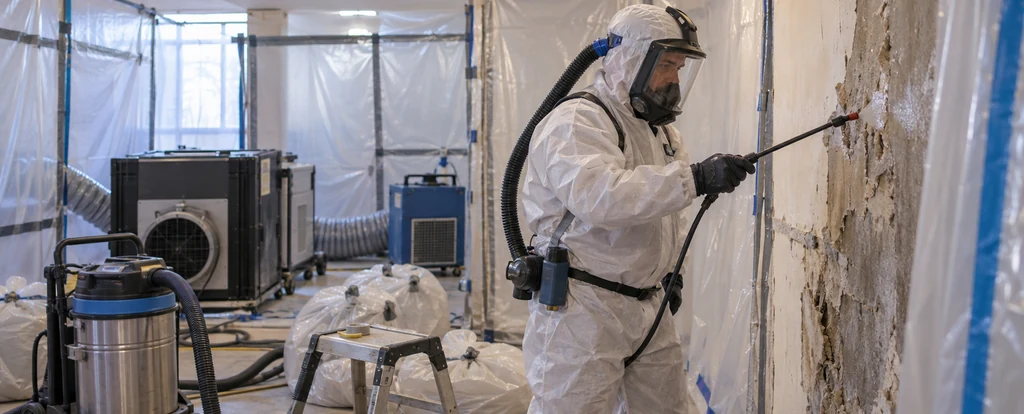
Asbestos removalists work on renovation, demolition and remediation projects wherever a building or structure contains asbestos, from suburban houses to schools, hospitals and industrial plants. The job is slower and more procedural than most construction trades because the material is the hazard: exclusion zones, negative air pressure units, respirators and decontamination are the work itself. In most states and territories the removal licence is held by the business rather than the worker, so removalists are usually employed by specialist remediation contractors or labour hire companies.
How much do asbestos removalists earn?
The median full-time salary for an asbestos removalist is $75,400 per annum, before tax, up $15,600 since 2018.
Asbestos removalists are usually paid an hourly rate, often through a labour hire or specialist remediation contractor, so annual earnings depend on how many hours and weeks the work provides. Friable removal under a Class A licence pays more than non-friable work, and commercial, industrial and mine site projects pay more than small residential jobs, with site and travel allowances sometimes added. Because much of the work is casual or project based, income can be uneven between jobs.
What does an asbestos removalist do day to day?
The list below is what fills most weeks; the exact mix shifts with seniority and whatever stage the current work is at.
- Setting up the exclusion zone with plastic sheeting, warning signage and negative air pressure units so fibres cannot escape the work area
- Removing and bagging friable and non-friable asbestos with wet sprays and hand tools while wearing a full-face respirator and coveralls
- Decontaminating tools, equipment and themselves through the decontamination unit at the end of every shift
- Running air monitoring pumps through the job and checking respirator filters and negative air unit seals
- Loading sealed, labelled waste for transport to a licensed disposal facility and completing the waste tracking paperwork
What skills do asbestos removalists need?
Employers look for worksite safety management, regulatory compliance, cleaning and grounds maintenance, backed by Negative air pressure units fluency and strong physical stamina and dexterity.
Specialist skills
- Worksite safety management
- Regulatory compliance
- Cleaning and grounds maintenance
- Plant and equipment operation
- Hand and power tool work
Software and tools
- Negative air pressure units
- HEPA vacuum cleaners
- Powered air purifying respirators (PAPR)
- Wet sprayers and hand tools
- Air monitoring pumps
General skills
- Physical stamina and dexterity
- Attention to detail
Is the job growing?
About 1,200 people work as asbestos removalists in Australia, and employment is projected to grow 2% over the decade to 2035. That's modest growth: demand is steady rather than booming.
How do you become an asbestos removalist?
Here's the path most asbestos removalists take, step by step.
- 1Get a general construction induction card
The White Card is required before you can work on a construction site in any state or territory, and removal contractors ask for it before anything else. It is a short course, usually one day.
- 2Complete the nationally recognised removal training
Most people start with the unit for removing non-friable asbestos (CPCCDE3014), which registered training organisations run over a day or two. The friable unit (CPCCDE3015) follows if you move into Class A work. Both give you a statement of attainment rather than a full qualification.
- 3Have a baseline health assessment
Work health and safety regulations require health monitoring before your first removal job, then further checks at least every two years while you keep working with asbestos. Your employer keeps the records and must give you copies.
- 4Find work with a licensed removal business
Class A and Class B asbestos removal licences are issued to the business, not the individual, so you work under a licensed contractor. Many people enter through labour hire or from labouring and demolition jobs, and larger contractors often pay for the training.
- 5Add the supervisor competency to lead jobs
The licence holder must nominate a supervisor who has completed the supervisory unit (CPCCDE4008) and has relevant experience. That is the usual route to running crews and, eventually, holding a licence of your own.
Ready to apply as an asbestos removalist?
Whether you're working toward becoming an asbestos removalist or already are one and want a hand with the next step (sharpening your resume for ATS screening, tightening your cover letter, or knowing what you'll actually be asked at interview), here are examples grounded in this specific role, not generic templates.
What jobs can an asbestos removalist move to?
Moving into Miner typically comes with the biggest pay rise, worth $75,800 a year more on average.
| Move to | Typical pay change | Overlap | Retraining |
|---|---|---|---|
| Miner Asbestos removalists bring site safety, protective equipment and labouring experience to mining, where induction and tickets are gained on the job. | +$75,800 | 62% | minimal |
| Demolition Worker Asbestos removalists already work around demolition sites, hazardous materials and safety controls, so moving into demolition adds structural dismantling skills with a short course. | +$2,600 | 58% | short course |
| Restoration Technician Asbestos removalists bring hazardous material handling, protective equipment and site safety to restoration work, which needs a short course in remediation. | −$5,200 | 65% | short course |
| Pest Controller Asbestos removalists bring chemical handling, protective equipment and compliance experience to pest control, which requires a short course and licensing. | −$5,200 | 68% | short course |
Moves are chosen from Jobs and Skills Australia's Data on Occupation Mobility, which follows income tax records between 2011-12 and 2020-21, together with entry requirements and skill overlap. A known move is one people were seen making in that data. Pay change compares median full-time pay for the two roles.
Who works as an asbestos removalist?
The typical asbestos removalist is 39 years old; 97% are men, 69% work full-time, and full-timers average 40 hours a week.
- 39
- Median age
- 3%
- Female share
- 69%
- Full-time
- +0h
- vs all-jobs avg
What's it like being an asbestos removalist?
The job has a strict rhythm: set up containment, take the material out, clean everything down, wait for clearance, then move to the next site. Days are physical and hot, because full protective equipment is worn from the moment you enter the zone, and the pace is deliberately slow compared with other construction trades. People who do well tend to prefer procedure and precision over speed, and are comfortable working in small crews where getting the controls right is your responsibility.
What people like
- The work is measured, not rushed. Removal follows a set sequence and the pace is set by the controls, so there is rarely the time pressure that comes with other construction trades.
- Small crews and a lot of trust. Most jobs run with a handful of people who know the plan, and once you are trained you are expected to follow it without being watched.
- Every project is a different puzzle. A 1970s brick home, a hospital plant room and a demolition site each need their own containment plan, and working out how to seal and reach the material takes some thinking.
- A clear ladder to climb. Training is short and stacks up, from non-friable work to friable work to supervising crews, so there is an obvious next step whenever you want one.
What people find hard
- Full protective equipment in the heat. A full-face respirator, disposable coveralls, gloves and boots are worn for the whole shift, often in roof spaces or sealed rooms where there is no airflow.
- Decontamination eats into the day. Every exit from the zone means showering, changing and cleaning equipment, so a shift includes a lot of dressing and undressing around the actual removal work.
- The hazard is genuine. Asbestos causes mesothelioma, asbestosis and lung cancer, no level of exposure is considered safe, and health monitoring is a condition of the job for as long as you do it.
- Work is project to project. Removal jobs finish and the crew moves on, so casual and labour hire arrangements are common, with gaps and travel between projects.
Based on our synthesis of professional-body surveys and public accounts of the role, not first-person verified reviews.
Which industries employ asbestos removalists?
Building construction employs the largest share of asbestos removalists, followed by Demolition and site preparation services.
Top employing industries
- 1Building construction
- 2Demolition and site preparation services
- 3Waste remediation and materials recovery services
- 4Heavy and civil engineering construction
- 5Building cleaning, pest control and other support services
Ranked by employment share; the source doesn't publish an exact percentage per industry.
| Certificate III/IV | 34% | |
|---|---|---|
| Diploma / Advanced Diploma | 26% | |
| Bachelor degree | 20% | |
| Year 12 or below | 20% |
Will AI replace asbestos removalists?
Removing asbestos is physical work in a sealed, controlled space, and none of it can be done from a desk, so AI and automation reach very little of the job. Software helps with the surrounding paperwork: asbestos registers, removal control plans, air monitoring records and waste tracking. Deciding whether a material contains asbestos, planning the containment and signing off that a site is safe to reoccupy all sit with trained removalists and, for clearance, an independent licensed assessor.
Share of typical working time by exposure level
- Removing and bagging asbestos materialFriable asbestos has to be wetted, cut and wrapped by hand inside the containment, and no machine on site can do that safely.40%low
- Building and maintaining the containmentFitting plastic sheeting, sealing penetrations and keeping negative air pressure units running depends on the shape of the building.25%low
- Compliance paperwork and record keepingAsbestos registers, removal control plans, air monitoring logs and waste tracking can be drafted, checked and filed with software, which is where most of the automation sits.20%high
- Decontaminating people, tools and the siteShowering, changing and wiping down equipment at the end of a shift follows a fixed procedure that someone has to carry out.15%low
Common questions about becoming an asbestos removalist
Straight answers to the questions people ask most.
How much do asbestos removalists earn?
Full-time asbestos removalists earn $75,400 per year before tax, though many work casually or project to project, so annual earnings vary with how much work is available. The rate rises with the class of work: friable removal under a Class A licence, and commercial, industrial or mine site jobs, pay more than non-friable residential work.
How do you become an asbestos removalist?
Start with a general construction induction card, then complete the nationally recognised unit for removing non-friable asbestos, which most training providers run as a short course. The removal licence is held by the business rather than the worker, so the practical next step is to apply to a specialist removal contractor or labour hire company, which will put you through the friable unit if the work calls for it. You also need a baseline health assessment before your first removal job.
Are asbestos removalists in demand?
Employment is projected to grow 2% over the decade to 2035, and asbestos removalists are currently not in shortage. Most of the work comes from renovating and demolishing older buildings rather than new construction, so demand follows that activity rather than the wider building cycle.
Will AI or automation replace asbestos removalists?
AI and automation have little effect on the removal work itself, which is done by hand inside a sealed containment. Software is more useful around the edges: drafting removal control plans, holding asbestos register data and tracking waste. The clearance decision stays with an independent licensed assessor.
What can asbestos removalists move into?
Asbestos removalists already work around hazardous materials, containment and site safety, so moving into demolition is a short course away and pays $2,600 more. Mining pays $75,800 more more and mainly needs site inductions, though it usually means roster work away from home. Because the removal licence sits with the business rather than the worker, the bigger step is into supervision or running your own licensed removal company, which is often where earnings grow.
Is asbestos removal dangerous?
It carries a real health risk, and that is exactly why the job is built around containment, protective equipment and health monitoring. Asbestos fibres cause mesothelioma, asbestosis and lung cancer, and no level of exposure is considered safe. Follow the controls and the work is done every day by trained crews across Australia.
Related roles
Not sure this is you? Take the career quiz and get a ranked shortlist of roles that fit how you like to work.