Bush Regenerator
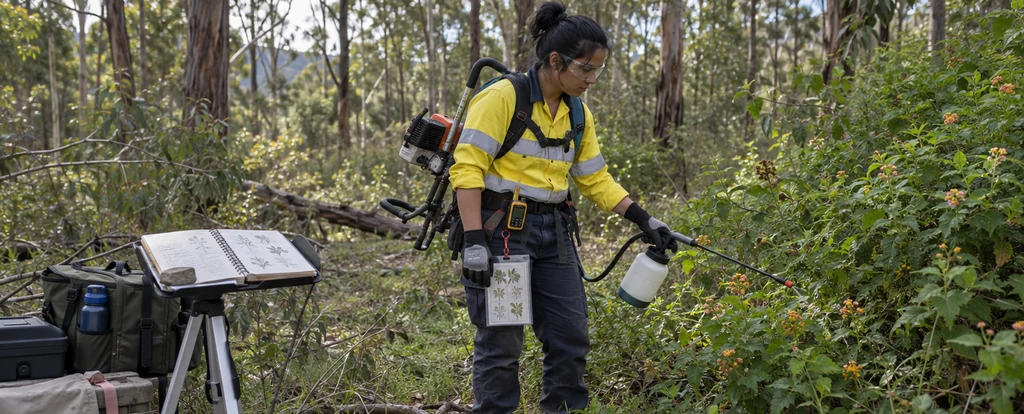
Bush regenerators restore degraded bushland by controlling weeds, replanting local species and tracking how a site recovers.
- Median salary*
- $65,000
3.8%vs last year, before tax
- People employed
- 1,700
0.0%vs last year
- Projected growth*
- +8%
to 2035
- AI exposure*
- Low
- automation risk
- Average hours*
- 38/wk
−2h vs all jobs
- Shortage status*
- Not in shortage
national
The work happens on the ground in national parks, council reserves, creeklines and private rural land, usually in small crews of two to six. Most bush regenerators are employed by local councils, environmental and conservation services contractors, or Landcare and catchment groups working to funding agreements. It sits close to gardening and horticulture, but the aim is ecological repair rather than a well-kept garden, which means native species, weed ecology and site plans rather than ornamental plantings.
How much do bush regenerators earn?
The median full-time salary for a bush regenerator is $65,000 per annum, before tax, up $13,500 since 2018.
Pay depends heavily on who employs you. Local government crews generally pay above small private contractors and offer steadier hours, while grant-funded restoration projects often run as casual or fixed-term work with gaps between contracts. Allowances for chemical handling, chainsaw work, first aid and travel to remote sites add to a base rate, and experienced supervisors move onto a higher band.
What does a bush regenerator do day to day?
The list below is what fills most weeks; the exact mix shifts with seniority and whatever stage the current work is at.
- Identifying weeds and native plants before deciding what to remove
- Cutting and spraying invasive species such as lantana, blackberry and madeira vine
- Planting and propagating local native seedlings suited to the site
- Monitoring regeneration and recording what has come back, with photos, GPS points and species lists
- Maintaining brushcutters, chainsaws and spray equipment and keeping to safety and chemical handling rules
What skills do bush regenerators need?
Employers look for environmental assessment, field research and sampling, hand and power tool work, backed by GIS software fluency and strong physical stamina and dexterity.
Specialist skills
- Environmental assessment
- Field research and sampling
- Hand and power tool work
- Worksite safety management
Software and tools
- GIS software
- GPS devices
- Brushcutters
- Chainsaws
- Herbicide sprayers
General skills
- Physical stamina and dexterity
- Attention to detail
- Problem solving
- Written communication
Is the job growing?
About 1,700 people work as bush regenerators in Australia, and employment is projected to grow 8% over the decade to 2035. That's modest growth: demand is steady rather than booming.
How do you become a bush regenerator?
Here's the path most bush regenerators take, step by step.
- 1Join a bushcare or Landcare group
Volunteer weeding days are run by most councils and catchment groups and need no qualification. They are the usual way to learn local plant identification and get comfortable with the tools before applying for paid work.
- 2Complete a Certificate III in Conservation and Ecosystem Management
This is the standard entry qualification, taking about a year full time at TAFE or a registered training organisation, and covering plant identification, weed control, ecological restoration and site assessment. A Certificate II can lead in for people without a science background.
- 3Take a traineeship or entry crew role
Many people learn on the job through paid traineeships or as crew members with council bushland teams and environmental contractors. The work is physical and stamina matters as much as marks.
- 4Add chemical and safety qualifications
Spraying herbicide requires chemical accreditation such as ChemCert or an equivalent, and employers commonly also ask for a chainsaw unit, a first aid certificate and a manual driver's licence. A White Card is needed where restoration work borders construction sites.
- 5Study a diploma if you want to lead
A Diploma of Conservation and Ecosystem Management (AHC51120) opens up supervisor, team leader and project officer roles, and land management positions in local government usually expect one.
Ready to apply as a bush regenerator?
Whether you're working toward becoming a bush regenerator or already are one and want a hand with the next step (sharpening your resume for ATS screening, tightening your cover letter, or knowing what you'll actually be asked at interview), here are examples grounded in this specific role, not generic templates.
What jobs can a bush regenerator move to?
Moving into Park Ranger typically comes with the biggest pay rise, worth $36,600 a year more on average.
| Move to | Typical pay change | Overlap | Retraining |
|---|---|---|---|
| Park Ranger Field skills in conservation and pest control suit park management, though a diploma in conservation and land management is required. | +$36,600 | 28% | reskill |
| Weeds Officer Knowledge of weed ecology and control transfers to weeds officer, with further study in legislation and biosecurity. | +$10,400 | 13% | reskill |
| Arborist Experience with native trees and chainsaw safety leads to arboriculture, with a short course covering climbing and pruning. | +$7,800 | 48% | short course |
| Horticulturist Bush regenerators bring plant and soil knowledge to horticulture, with a short course adding garden design and propagation. | +$3,600 | 55% | short course |
Moves are chosen from Jobs and Skills Australia's Data on Occupation Mobility, which follows income tax records between 2011-12 and 2020-21, together with entry requirements and skill overlap. A known move is one people were seen making in that data. Pay change compares median full-time pay for the two roles.
Who works as a bush regenerator?
The typical bush regenerator is 33 years old; 70% are men, 48% work full-time, and full-timers average 38 hours a week.
- 33
- Median age
- 30%
- Female share
- 48%
- Full-time
- −2h
- vs all-jobs avg
What's it like being a bush regenerator?
The week follows the weather and the weed season. Spraying works best on warm, calm days after rain, planting waits for the cooler months, and saturated ground can put a crew on hold for days. Days are physical, often on steep or uneven country, and much of the work is repetitive and slow, so it rewards care over speed.
What people like
- Seeing a site come back. The turn-around is slow but visible: a creek bank cleared two winters ago now carries young eucalypts and the weeds are thinner each visit.
- Working in real country. Days are spent in bushland, along rivers and on ridgelines rather than indoors, and the site changes with the season.
- Skills that carry across. Plant identification, weed ecology, chainsaw and spray experience build quickly and transfer into horticulture, arboriculture and land management.
- Small crews and clear tasks. Teams are usually two to six people, and everyone knows what the day's block is before the ute leaves the depot.
What people find hard
- Weather and terrain. Heat, rain, mud, blackberry thorns and insect bites are part of most weeks, and some sites are steep enough to slow everything down.
- Spraying in summer. Herbicide work means full protective gear on hot days, careful mixing and record keeping, and attention to which plants you must not touch.
- Short contracts and funding cycles. A lot of work is tied to grant rounds, so positions can be casual or seasonal with gaps between projects, while council roles are steadier.
- Repetition. Clearing the same weed across the same hectare for days on end is common, and progress is measured in hectares rather than finished jobs.
Based on our synthesis of professional-body surveys and public accounts of the role, not first-person verified reviews.
Which industries employ bush regenerators?
Local Government employs the largest share of bush regenerators, followed by Environmental and Conservation Services.
Top employing industries
- 1Local Government
- 2Environmental and Conservation Services
- 3Landscape and Horticultural Services
- 4Agriculture, Forestry and Fishing
- 5Professional, Scientific and Technical Services
Ranked by employment share; the source doesn't publish an exact percentage per industry.
| Certificate III/IV | 34% | |
|---|---|---|
| Diploma / Advanced Diploma | 26% | |
| Bachelor degree | 20% | |
| Year 12 or below | 20% |
Will AI replace bush regenerators?
AI exposure for this role is low, because the job is done with tools in the field. Robotic sprayers and remote sensing exist in agriculture and land management, but bush regeneration works on rough, uneven ground where species are mixed and the decision about what to keep is made plant by plant. Where technology does change the job is planning and reporting: GIS, GPS apps, drone imagery and satellite data make mapping and monitoring faster, but someone still has to walk the site and interpret what is there.
Share of typical working time by exposure level
- Weed control with brushcutters and chainsawsCutting lantana or blackberry on a steep bank takes hands, balance and a judgement about what to leave standing.40%low
- Herbicide application and follow-upWhich plants to treat, at what rate and in what weather is read off the site on the day, then recorded by hand in the spray log.20%low
- Planting and monitoring regenerationGPS points and photo records make it easier to compare a site across visits, but the assessment of what has returned is still made on foot.20%moderate
- Mapping, planning and reporting to clientsSite plans, grant reports and vegetation maps are largely assembled from GIS and satellite data before a person edits them.20%high
Common questions about becoming a bush regenerator
Straight answers to the questions people ask most.
How much does a bush regenerator earn?
Full-time bush regenerators earn a median of $65,000 per year before tax. What moves that figure is the employer and the agreement: local government crews usually sit above small contracting businesses, and chemical, chainsaw and travel allowances add to the base rate.
How do you become a bush regenerator?
Most people complete a Certificate III in Conservation and Ecosystem Management (AHC31424), which takes about a year full time, and add chemical accreditation and a chainsaw unit along the way. Volunteer days with a local bushcare or Landcare group are a common entry point, because they build the plant identification and tool skills employers look for. Traineeships with councils are paid and combine the study with the field work.
Are bush regenerators in demand?
Bush regenerators are currently not in shortage, and employment is projected to grow 8% over the decade to 2035 over the decade to 2035. The workforce is small, so openings tend to follow council budgets and restoration funding rounds rather than steady expansion. A qualification and some volunteer field experience give you something concrete to show when a crew is hiring.
Will AI replace bush regenerators?
AI has little purchase on the physical side of this work, since recognising weeds, cutting and spraying, and planting on rough ground are still done by hand. Where it does help is the office end, with GIS, GPS records, drone imagery and satellite data making mapping and monitoring faster, though someone still has to walk the site and decide what it needs.
What roles can a bush regenerator move into?
Plant, tree and chainsaw experience carries into horticulture and arboriculture with only a short course to cover garden design, climbing or pruning, while a weeds officer role applies the same weed ecology in a regulatory setting after further study in biosecurity and legislation. Pay shifts with each move: $3,600 more in horticulture, $7,800 more in arboriculture and $10,400 more as a weeds officer. Experienced regenerators also set up their own restoration contracting businesses for councils and private landholders, which is often where earnings grow.
Do you need a university degree to be a bush regenerator?
No. The most common qualification among people in the role is Certificate III/IV, held by about 34% of the workforce, and field crews are hired on practical skills rather than degrees. A Certificate III gets you started, and a diploma becomes useful when you want to lead a crew or work as a project officer.
Related roles
Not sure this is you? Take the career quiz and get a ranked shortlist of roles that fit how you like to work.