Forestry Worker
Forestry workers plant, tend and harvest trees, and keep the plantations and native forests they work in safe and productive.
- Median salary*
- $65,000
4.0%vs last year, before tax
- People employed
- 1,300
0.0%vs last year
- Projected growth
- +6.3%
to 2035
- AI exposure*
- Low
- automation risk
- Average hours
- 42/wk
+2h vs all jobs
- Shortage status*
- Not in shortage
national
Forestry work happens in plantations and native forests, often well away from the nearest town, and it covers everything from planting seedlings to getting logs ready for the mill. The tools are chainsaws, brushcutters and hand tools, with harvesters and forwarders on larger operations. Timber companies, plantation managers, forestry contractors and state forest agencies are the main employers.
How much do forestry workers earn?
The median full-time salary for a forestry worker is $65,000 per annum, before tax, up $13,600 since 2018.
Most operations pay under the Timber Industry Award 2020, while larger employers often have an enterprise agreement on top, so two crews doing similar work can be on different rates. Penalty rates, remote-area allowances and shift rosters add to the base, and operators running harvesting machinery sit higher than planting and brushcutting crews. Contract and seasonal hiring also changes what a year of forestry work adds up to.
What does a forestry worker do day to day?
The list below is what fills most weeks; the exact mix shifts with seniority and whatever stage the current work is at.
- Planting and tending seedlings through to the point they can be harvested
- Pruning, thinning and felling trees with chainsaws and hand tools
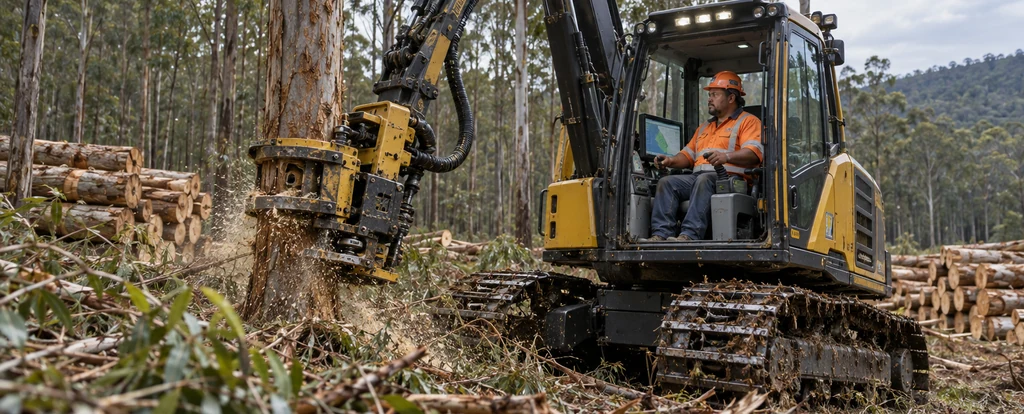
- Operating harvesting machinery such as forwarders and harvesters
- Cutting and maintaining firebreaks and forest access tracks
- Spraying or removing weeds and checking trees for pests and disease
What skills do forestry workers need?
Employers look for hand and power tool work, plant and equipment operation, worksite safety management, backed by Chainsaw fluency and strong physical stamina and dexterity.
Specialist skills
- Hand and power tool work
- Plant and equipment operation
- Worksite safety management
- Environmental assessment
- Field inspection and testing
Software and tools
- Chainsaw
- Brushcutter
- Pruning saw
- GPS mapping software
- Forestry harvester
General skills
- Physical stamina and dexterity
- Safety and compliance awareness
Is the job growing?
About 1,300 people work as forestry workers in Australia, and employment is projected to grow 6.3% over the decade to 2035. That's modest growth: demand is steady rather than booming.
How do you become a forestry worker?
Here's the path most forestry workers take, step by step.
- 1Get a start through a traineeship
Traineeships with plantation companies, forestry contractors and state forest agencies combine paid work with a Certificate II or III in Forest and Forest Products, and they are the usual way in when you have no prior experience.
- 2Pick up the safety and machinery qualifications
You will need chainsaw competency, first aid and often a White Card before you set foot on site, plus chemical handling certification such as ChemCert if the job includes weed spraying.
- 3Complete a Certificate III in Forest and Forest Products
The certificate covers silviculture, harvesting, safety and environmental practice, and most people finish it part time while working. It is what employers look for when hiring leading hands and machine operators.
- 4Build hours on the machinery
Time on forwarders, harvesters and skidders is what moves you off planting and brushcutting crews into operator roles, which pay more and run for more of the year.
- 5Specialise as you go
From there you can head towards tree felling, fire management or crew supervision, each of which needs its own short course and assessment.
Ready to apply as a forestry worker?
Whether you're working toward becoming a forestry worker or already are one and want a hand with the next step (sharpening your resume for ATS screening, tightening your cover letter, or knowing what you'll actually be asked at interview), here are examples grounded in this specific role, not generic templates.
What jobs can a forestry worker move to?
Moving into Truck Driver typically comes with the biggest pay rise, worth $36,900 a year more on average.
| Move to | Typical pay change | Overlap | Retraining |
|---|---|---|---|
| Truck Driver Forestry workers often move into truck driving, using forest road and heavy load experience while gaining a heavy vehicle licence.Known move | +$36,900 | 4% | reskill |
| Tree Faller Tree felling and chainsaw skills carry into specialised tree falling work, with additional safety and felling tickets required.Known move | +$12,000 | 58% | short course |
| Sawmill Operator Sawmill operators build on forestry workers' log handling and timber knowledge, with training in milling and grading equipment.Known move | +$10,500 | 42% | reskill |
| Logging Plant Operator Forestry workers can move into logging plant operation, using their tree felling and harvesting knowledge with a short machinery ticket.Known move | +$10,400 | 45% | short course |
| Arborist Forestry workers bring tree knowledge and outdoor skills to arboriculture, needing a short course in climbing and pruning. | +$7,800 | 84% | short course |
Moves are chosen from Jobs and Skills Australia's Data on Occupation Mobility, which follows income tax records between 2011-12 and 2020-21, together with entry requirements and skill overlap. A known move is one people were seen making in that data. Pay change compares median full-time pay for the two roles.
Who works as a forestry worker?
The typical forestry worker is 32 years old; 84% are men, 66% work full-time, and full-timers average 42 hours a week.
- 32
- Median age
- 16%
- Female share
- 66%
- Full-time
- +2h
- vs all-jobs avg
What's it like being a forestry worker?
The job runs on seasons and daylight: planting through winter, thinning and harvesting in the drier months, and fire season reshaping the calendar in summer. Days start early, usually with a drive to a coupe before the crew briefs on hazards and gets to work. People who stay in forestry tend to like the outdoor setting and the machinery more than a routine, and are comfortable in a small crew a long way from town.
What people like
- Working outside in real country. Plantations and native forest are the workplace, and the job moves across the landscape through the year rather than staying in one spot.
- Machinery and hand skills together. Running a chainsaw well, reading how a tree will fall and handling a forwarder are skills you can watch yourself get better at.
- Visible results. A planted block or a finished coupe shows exactly what the crew got through that week.
- Room to work on your own. Once you know the job, much of the day is yours to get through, with the crew checking in rather than supervising every step.
What people find hard
- The weather sets the schedule. Rain, wind and total fire bans can stop work at short notice, and a washed-out day usually means a day without work.
- Hard on the body. Chainsaw work, steep ground and carrying gear all day add up, and the injury risk is real if safety slips.
- Remote sites and long drives. Many crews camp near the coupe or drive hours to reach it, which stretches the working week well beyond the shift itself.
- Contract and seasonal hiring. A lot of the work is hired by the block or the season, so steady year-round employment depends on the contractor you are with.
Based on our synthesis of professional-body surveys and public accounts of the role, not first-person verified reviews.
Which industries employ forestry workers?
Agriculture, Forestry and Fishing employs the largest share of forestry workers, followed by Administrative and Support Services.
Top employing industries
- 1Agriculture, Forestry and Fishing
- 2Administrative and Support Services
- 3Public Administration and Safety
Ranked by employment share; the source doesn't publish an exact percentage per industry.
| Year 12 or below | 52.1% | |
|---|---|---|
| Certificate III/IV | 22.6% | |
| Bachelor degree | 9.8% | |
| Diploma / Advanced Diploma | 7% | |
| Postgraduate | 2.2% |
Will AI replace forestry workers?
Forestry work rates low for AI exposure because almost everything happens at the tree: judging a dangerous limb, deciding which way a trunk will fall, and working around weather and terrain. Technology is already in the job, with GPS mapping used to plan coupes and harvester computers measuring and cutting logs to length, but it assists the operator rather than replacing them. Planning, mapping and record-keeping are the parts most affected.
Share of typical working time by exposure level
- Felling, pruning and chainsaw workJudging lean, escape routes and how a tree will fall is a call made in seconds on the spot, and no machine makes it for you.30%low
- Planting and tending seedlingsMapping software helps plan spacing and site preparation, but planting, checking survival and hand-releasing weeds is still done on foot.25%low
- Operating harvesters and forwardersOnboard computers measure and cut logs to length and automate some functions, though the operator still reads the terrain and the timber in front of them.25%moderate
- Firebreak maintenance, weed and pest controlSpray records and mapping apps help with planning and compliance, but cutting breaks and walking the rows to spot disease is manual work.20%low
Common questions about becoming a forestry worker
Straight answers to the questions people ask most.
How much do forestry workers earn?
Forestry workers earn a median of $65,000 per year before tax, for full-time hours that average about 42 a week. The rate is set by the Timber Industry Award 2020 or an enterprise agreement at larger employers, so shift work, remote allowances and machinery qualifications move it up or down.
How do you become a forestry worker?
Most people start with a traineeship at a plantation company, forestry contractor or state forest agency, which pairs paid work with a Certificate II or III in Forest and Forest Products. You will need chainsaw competency, first aid and often a White Card, plus chemical handling certification if you spray weeds. A degree is not required; Year 12 or below is the most common level of education in the job, held by 52% of the workforce.
Are forestry workers in demand?
Forestry workers are currently not in shortage, and employment is projected to grow 6.3% over the decade to 2035. With about 1,300 people in the occupation, most openings come from workers leaving or retiring rather than from new positions, so they tend to appear with particular employers in the timber regions.
Will AI or automation replace forestry workers?
Forestry work has low exposure to AI and automation because the core tasks depend on reading a tree, the ground and the weather in front of you. GPS mapping, drone surveys and harvester computers already handle planning, measurement and record-keeping, and that side is likely to grow. Planting, felling, chainsaw work and hazard assessment are still done by hand.
What can forestry workers move into?
Tree felling is a common next step, since felling and chainsaw skills carry over and the move pays $12,000 more once you hold the extra safety and felling qualifications. Arboriculture uses the same tree knowledge and has the closest skill match of the nearby roles, paying $7,800 more, though it needs a short course in climbing and pruning. Experienced workers also set up their own harvesting or silviculture contracting crew, which is often where earnings grow.
Is forestry work seasonal?
Planting and tending work is seasonal, with the heaviest planting in winter and thinning and harvesting through the drier months, while summer fire season can pause forest work altogether. Contractors hire by the block, so a crew may be busy for months and then have a slow stretch. Permanent roles with plantation companies and state agencies are the steadiest option, though there are fewer of them.
Related roles
Not sure this is you? Take the career quiz and get a ranked shortlist of roles that fit how you like to work.