Safety Consultant
Safety consultants assess the hazards in a workplace and advise the business on the controls and systems it needs to meet work health and safety law.
- Median salary
- $118,800
3.8%vs last year, before tax
- People employed
- 20,600
1.5%vs last year
- Projected growth
- +19.8%
to 2035
- AI exposure*
- Moderate
- automation risk
- Average hours
- 45/wk
+5h vs all jobs
- Shortage status
- Not in shortage
national
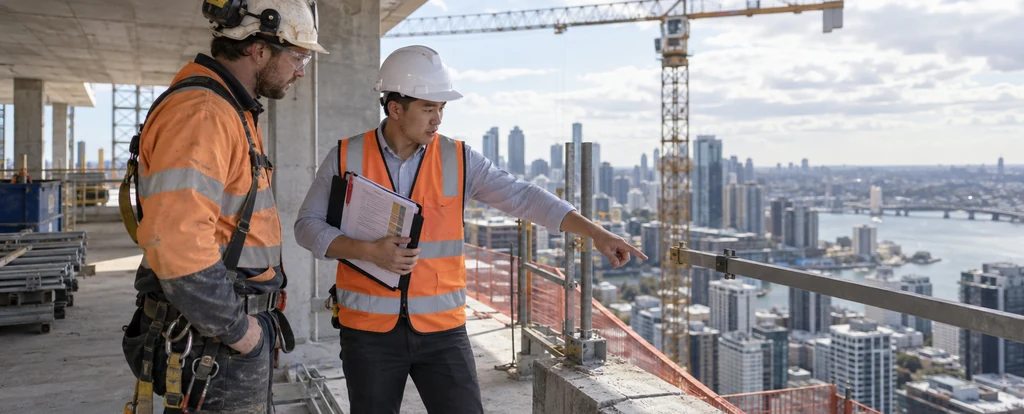
Safety consultants work across a mix of clients and sites rather than inside one company's safety team, moving between construction sites, warehouses, hospitals and mine sites depending on who needs help. They audit current practice against work health and safety legislation, investigate incidents and near misses, and advise managers on the systems, training and records needed to close the gaps. The role is often confused with a work health and safety officer, who is usually employed on one site; a consultant is more often brought in for a specific audit, incident or compliance deadline.
How much do safety consultants earn?
The median full-time salary for a safety consultant is $118,800 per annum, before tax, up $24,600 since 2018.
Consultants employed by a firm are usually paid a salary against a billable hours target, while those running their own practice set their own rates and carry the gaps between engagements. Pay also moves with the sector: mining, construction and heavy industry tend to pay above health care and community services, and work that involves regular travel or fly-in fly-out arrangements usually carries a loading. Qualifications and professional certification affect rates too, because clients and tender panels often ask about them before they engage a consultant.
What does a safety consultant do day to day?
The list below is what fills most weeks; the exact mix shifts with seniority and whatever stage the current work is at.
- Inspecting sites and assessing hazards with risk matrices and inspection checklists
- Investigating incidents and near misses, then writing up findings and corrective actions
- Reviewing safety policies and procedures against current work health and safety legislation, which differs by state and territory
- Running inductions and training sessions for staff and contractors
- Auditing a client's records and site practice ahead of a regulator visit or certification renewal
What skills do safety consultants need?
Employers look for risk and internal controls, regulatory compliance, auditing and assurance, backed by Risk assessment matrices fluency and strong problem solving.
Specialist skills
- Risk and internal controls
- Regulatory compliance
- Auditing and assurance
- Project management
Software and tools
- Risk assessment matrices
- Incident management software
- Site inspection checklists
- SafeWork NSW resources
General skills
- Problem solving
- Written communication
- Stakeholder management
Is the job growing?
About 20,600 people work as safety consultants in Australia, and employment is projected to grow 19.8% over the decade to 2035. That's healthy, above-average growth, and the role should stay in solid demand.
How do you become a safety consultant?
Here's the path most safety consultants take, step by step.
- 1Start in a workplace that carries real risk
Many safety consultants come from construction, manufacturing, mining, health care or emergency services, where they learn the hazards first-hand, and that time on the tools or on the ward is paid work rather than study.
- 2Complete a work health and safety qualification
The Certificate IV in Work Health and Safety (BSB41419) is the common entry point, while a diploma or a bachelor degree in occupational health and safety or a related field opens the advisory and consulting roles that pay the most.
- 3Learn incident investigation and auditing
Short courses in incident investigation methods and internal auditing, plus familiarity with ISO 45001 and the guidance published by your state or territory work health and safety regulator, are what turn general safety knowledge into consulting work.
- 4Work as an officer, coordinator or advisor first
Most consultants spend a few years in a work health and safety role inside one organisation before moving to a consultancy, because clients are buying experience of the hazards in their own industry.
- 5Consider certification, then going out on your own
No licence is required to practise, but some tenders and senior job ads ask for professional certification, such as Chartered OHS Professional status administered through the Australian Institute of Health and Safety. From there, many consultants move into their own practice, where the rates and the volume of work are theirs to set.
Ready to apply as a safety consultant?
Whether you're working toward becoming a safety consultant or already are one and want a hand with the next step (sharpening your resume for ATS screening, tightening your cover letter, or knowing what you'll actually be asked at interview), here are examples grounded in this specific role, not generic templates.
What jobs can a safety consultant move to?
Moving into Quality Manager typically comes with the biggest pay rise, worth $29,100 a year more on average.
| Move to | Typical pay change | Overlap | Retraining |
|---|---|---|---|
| Quality Manager Safety consultants use auditing and systems thinking that suit quality management, where compliance and continuous improvement skills carry across.Known move | +$29,100 | 50% | short course |
| Human Resources Manager Safety consultants with workplace relations and injury management experience can move into human resources management, though broader people leadership study is needed.Known move | +$25,100 | 30% | reskill |
| Work Health and Safety Inspector Safety consultants bring hazard assessment and knowledge of work health and safety law to regulatory inspection and enforcement.Known move | +$5,100 | 27% | reskill |
| Occupational Hygienist Safety consultants can specialise in occupational hygiene, assessing exposure risks, but further study in hygiene science is required. | −$7,000 | 43% | reskill |
| Environment, Health and Safety Manager Safety consultants can broaden into environmental health and safety management, applying risk controls and compliance systems across a wider portfolio. | −$22,600 | 47% | short course |
Moves are chosen from Jobs and Skills Australia's Data on Occupation Mobility, which follows income tax records between 2011-12 and 2020-21, together with entry requirements and skill overlap. A known move is one people were seen making in that data. Pay change compares median full-time pay for the two roles.
Who works as a safety consultant?
The typical safety consultant is 45 years old; 55% are men, 83% work full-time, and full-timers average 45 hours a week.
- 45
- Median age
- 45%
- Female share
- 83%
- Full-time
- +5h
- vs all-jobs avg
What's it like being a safety consultant?
The work runs on a project rhythm: a client brief, a site visit, an audit or an incident, a written report, then the next job, so consultants move between industries rather than settling into one team. That variety is the appeal for people who like seeing how different businesses operate, but it also means travel, unfamiliar sites and delivering recommendations a manager may not want to hear. It suits someone comfortable being an outsider with authority, asking blunt questions and putting the answer in writing.
What people like
- Every client is a different workplace. One month is a warehouse and a hospital, the next a mine site or a food processor, which builds a broad picture of how work is organised across industries.
- You see a fix actually get built. When a guarding change or a revised procedure goes in and the near misses stop, the result is visible in a way that office-based compliance work rarely is.
- You advise rather than police. Consultants are usually hired because a manager wants a problem solved, so the conversation starts from a shared goal rather than from an inspection finding.
- The work can be scaled to suit you. Experienced consultants can work as sole traders or build a small practice, choosing the industries they take on and how many days a week they work.
What people find hard
- You deliver the message nobody wants. Recommending that a line stops, a job is redesigned or money is spent on controls can put you at odds with the manager paying the bill.
- Site conditions are part of the job. Inspections mean heat, dust, noise and PPE, and full-time hours average 45 a week before travel between sites is counted.
- The rules keep changing. Work health and safety legislation, codes of practice and guidance are updated regularly, and each state and territory runs its own version, so staying current is ongoing work rather than a one-off.
- Billable targets in consultancy. Firms measure consultants on the hours charged to clients, which can push report writing and travel into unpaid time.
Based on our synthesis of professional-body surveys and public accounts of the role, not first-person verified reviews.
Which industries employ safety consultants?
Public Administration and Safety employs the largest share of safety consultants, followed by Construction.
Top employing industries
- 1Public Administration and Safety
- 2Construction
- 3Health Care and Social Assistance
Ranked by employment share; the source doesn't publish an exact percentage per industry.
| Diploma / Advanced Diploma | 26.2% | |
|---|---|---|
| Bachelor degree | 24.4% | |
| Postgraduate | 18.7% | |
| Certificate III/IV | 18% | |
| Year 12 or below | 9.7% |
Will AI replace safety consultants?
Automation has reached the documentation and record-keeping side of this job more than the assessment itself, which puts the role at a moderate level of exposure. Incident management platforms now log reports, track corrective actions and flag overdue training, and drafting tools can turn a page of site notes into a workable first report. What they cannot do is walk a site, talk to the crew and judge whether a proposed control will hold up on a busy Tuesday afternoon.
Share of typical working time by exposure level
- Writing up findings and corrective action reportsDrafting tools can build a first version from inspection notes, which shifts the consultant's time towards checking the recommendations and the legislative references.30%high
- Site inspections and hazard walksJudging a scaffold, a chemical store or a loading dock depends on seeing the work as it happens and reading how the crew actually use the space.25%low
- Training sessions and advising managersGetting a supervisor to accept a change to a procedure is still a conversation, and it depends on credibility built on the site rather than on a slide deck.25%low
- Tracking compliance, audits and document controlCompliance software flags expired licences, outstanding actions and review dates automatically, so the consultant interprets the exceptions rather than chasing the register.20%moderate
Moves least exposed to AI
These career moves from safety consultant work are rated low for AI exposure:
- Work Health and Safety Inspector
Some skill overlap (27%), reskill to get there, and a low automation-risk profile.
- Environment, Health and Safety Manager
Solid skill overlap (47%), short course to get there, and a low automation-risk profile.
Common questions about becoming a safety consultant
Straight answers to the questions people ask most.
How much do safety consultants earn?
$118,800 per year before tax is the median for full-time safety consultants. Pay moves with the sector and the level of risk involved, so mining, construction and heavy industry usually pay more than health care or community services, and a sole trader's income depends on the rates and the volume of work they win.
How do you become a safety consultant?
Most people get there through a Certificate IV in Work Health and Safety (BSB41419), then a diploma or degree, combined with several years working in a high-risk industry or as a work health and safety officer. Clients are buying judgement about their hazards, so experience in the industry you want to advise usually matters as much as the qualification.
Are safety consultants in demand?
Safety consultants are currently not in shortage, and employment in the role is projected to grow 19.8% over the decade to 2035. Demand follows the regulatory cycle as much as the economy: when work health and safety laws or codes are updated, organisations look for outside help to check their compliance.
Will AI replace safety consultants?
AI has taken over parts of the paperwork rather than the advisory work. Drafting tools can turn site notes into a first version of a report, and compliance platforms track training, inspections and corrective actions automatically, but the assessment itself still depends on walking the site, talking to the crew and judging what a control will do in that particular workplace.
What can safety consultants move into?
Running your own practice or a small consultancy is a common route, and it is where earnings grow once you have a client base. Quality management is the closest salaried move, where the auditing and systems skills carry across and median pay is $29,100 more, while others move into human resources management or into regulatory work as a work health and safety inspector.
What is the difference between a safety consultant and a work health and safety officer?
A work health and safety officer usually works inside one organisation, on its sites, day to day. A consultant is engaged from outside for a defined piece of work, such as an audit, an incident investigation or getting a site ready for a regulator, and may hold several clients at once.
Related roles
- Work Health and Safety Inspector
- Environment, Health and Safety Manager
- Human Resources Manager
- Quality Manager
- Occupational Hygienist
- Work Health and Safety Officer
Not sure this is you? Take the career quiz and get a ranked shortlist of roles that fit how you like to work.